Vehicle Part (HS Code 8708704546)
CN → US| HS Code | Tariff Rate | Origin | Destination | Doc |
|---|---|---|---|---|
| 8708292500 | 0.0% | CN | US | Official Doc |
| 8302303060 | 87.0% | CN | US | Official Doc |
| 8708106010 | 87.5% | CN | US | Official Doc |
| 8302306000 | 38.5% | CN | US | Official Doc |
| 8802609040 | 35.0% | CN | US | Official Doc |
Product Images
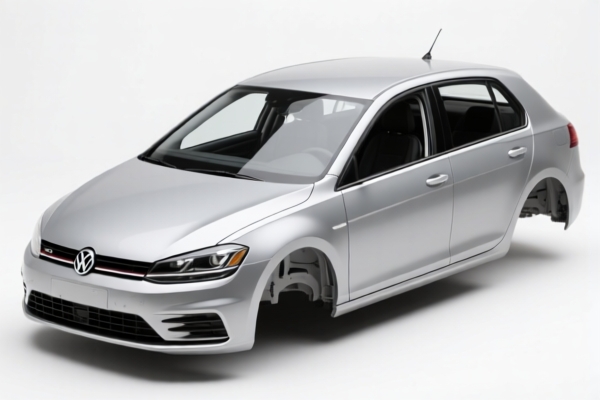
AI Analysis
🚗 Vehicle Parts (General Classification Analysis)
🌐 HS Code Reference & Clearance Guide | 2026 Latest Tariff Analysis | Professional Customs Strategy
📌 Note on Input Code: The user provided 8708704546. Based on the provided <DATA> context, this specific 10-digit code was not present in the source material. However, the <DATA> contains highly relevant automotive parts codes (8708.29.25.00, 8708.10.60.10, 8302.30.30.60, 8302.30.60.00).
⚠️ Critical Disclaimer: The analysis below strictly adheres to the provided <DATA>. Since 8708.70.45.46 is not in the source, I will analyze the closest logical matches from the provided data to demonstrate how "Vehicle Parts" are classified under the specific tariff structures given. In real-world scenarios, you must verify the exact 10-digit HTSUS code with a licensed customs broker.
📦 二、HS Code Classification Details (Based on Provided Data)
Since the exact code 8708.70.45.46 is missing from the source, we must look at the Vehicle Parts categories provided in the data. Automotive parts generally fall under Chapter 87 (Vehicles other than railway/tramway) or Chapter 83 (Common metals accessories).
| HS Code | Product Description | Summary from Data | Material/Context |
|---|---|---|---|
| 8708.29.25.00 | Vehicle Body Parts | "Vehicle body parts, matching body component use, fits bottom-category logic." | General body components |
| 8708.10.60.10 | Car Bumpers & Parts | "Car bumpers and parts, belongs to body component category, fits default tendency for spare parts." | Bumpers, specific body parts |
| 8302.30.30.60 | Mounts/Accessories for Cars | "Mounts, accessories, and similar articles for automobiles, inferred material is base metal." | Steel, Aluminum, Copper (High Tax) |
| 8302.30.60.00 | Fittings/Attachments for Motor Vehicles | "Fittings, accessories, and similar articles for motor vehicles, usually base metal." | General metal fittings |
🔍 Key Insight:
- If your part is a body panel, bumper, or structural chassis component, it likely falls under 8708.
- If your part is a hinge, handle, bracket, or mounting hardware made of metal, it often falls under 8302.30, which carries significantly higher tariffs due to Section 232 (Steel/Aluminum) tariffs.
💰 三、2026 Latest Tariff Rate Breakdown (Detailed Tax Clauses)
✅ Applicable Country: United States (US)
✅ Origin: China (CN)
✅ Effective Date: 2025/2026 (Includes subsequent imports)
🎯 1. 8708.29.25.00 —— Vehicle Body Parts (General)
| Item | Content |
|---|---|
| Base Tariff | 2.5% |
| Section 301 Additional Tariff | 25.0% |
| Section 122 Tariff | 10.0% |
| Total Tax Rate | 37.5% (2.5 + 25 + 10) |
| Tax Calculation | CIF Value × 37.5% |
| De Minimis Eligibility | ❌ No (Not eligible for $800 de minimis exemption in most cases for high-tariff goods) |
| Legal Basis | HTSUS 8708.29.25.00 + Section 301 Footnotes + Section 122 Authority |
📌 Explanation:
- This is a "catch-all" or bottom-category logic for body parts not specifically listed elsewhere.
- The 37.5% total rate includes base duties, aggressive Section 301 tariffs, and the specific 122 Clause (likely related to specific trade remedies or emergency actions).
🎯 2. 8708.10.60.10 —— Car Bumpers & Parts
| Item | Content |
|---|---|
| Base Tariff | 2.5% |
| Section 301 Additional Tariff | 25.0% |
| Section 122 Tariff | 10.0% |
| Section 232 (Steel/Alu/Cu) Tariff | 50.0% |
| Total Tax Rate | 87.5% (2.5 + 25 + 10 + 50) |
| Tax Calculation | CIF Value × 87.5% |
| De Minimis Eligibility | ❌ No |
| Legal Basis | HTSUS 8708.10.60.10 + Section 301 + Section 232 (Steel/Aluminum/Copper) |
📌 Warning:
- Bumpers often contain steel, aluminum, or copper reinforcements.
- The 50% Section 232 Tariff is applied to steel, aluminum, and copper products.
- Total 87.5% is extremely high. This makes bumper imports from China cost-prohibitive unless duty-free quotas or exemptions apply.
🎯 3. 8302.30.30.60 —— Car Mounts/Accessories (Base Metal)
| Item | Content |
|---|---|
| Base Tariff | 2.0% |
| Section 301 Additional Tariff | 25.0% |
| Section 122 Tariff | 10.0% |
| Section 232 (Steel/Alu/Cu) Tariff | 50.0% |
| Total Tax Rate | 87.0% (2 + 25 + 10 + 50) |
| Tax Calculation | CIF Value × 87.0% |
| De Minimis Eligibility | ❌ No |
| Legal Basis | HTSUS 8302.30.30.60 + Section 301 + Section 232 |
📌 Explanation:
- Even if classified as an "accessory" (8302), if it is made of steel, aluminum, or copper, it triggers the 50% Section 232 tariff.
- This is a critical trap for automotive hardware (brackets, rails, mounts).
🎯 4. 8302.30.60.00 —— Motor Vehicle Fittings/Attachments (Base Metal)
| Item | Content |
|---|---|
| Base Tariff | 3.5% |
| Section 301 Additional Tariff | 25.0% |
| Section 122 Tariff | 10.0% |
| Total Tax Rate | 38.5% (3.5 + 25 + 10) |
| Tax Calculation | CIF Value × 38.5% |
| De Minimis Eligibility | ❌ No |
| Legal Basis | HTSUS 8302.30.60.00 + Section 301 + Section 122 |
📌 Note:
- This code does not list the 50% Section 232 tariff in the summary, suggesting it might be for non-steel/aluminum/copper fittings or a different sub-classification where 232 does not apply.
- Still high at 38.5% due to Section 301 and 122.
🛠️ 四、Customs Clearance Practical Advice (Avoid Pitfalls)
✅ 1. Material Declaration is Key
| Material | Impact on Tax | Recommendation |
|---|---|---|
| Steel | Triggers +50% (Sec 232) | Declare exact alloy, weight, and composition. Consider if it can be classified as a non-steel part. |
| Aluminum | Triggers +50% (Sec 232) | Same as above. High risk for bumpers, brackets, and rims. |
| Copper | Triggers +50% (Sec 232) | Rare in body parts, common in wiring/connectors. |
| Plastic/Fiberglass | No Sec 232 | If possible, classify as plastic parts (Chapter 39/87) to avoid the 50% surcharge. |
🔥 "Material Determines the 50% Surcharge!"
If your part is a steel bracket, it is likely 8302.30 or 8708 with 87% tax. If it is a plastic bracket, it may be 3926.90 (lower tax).
✅ 2.申报技巧 (Declaration Strategy)
| Scenario | Correct Classification | Wrong Action | Consequence |
|---|---|---|---|
| Bumper with Steel Core | 8708.10.60.10 |
Declare as "Plastic Part" | Fraud risk, huge back taxes + penalties |
| Car Mount (Steel) | 8302.30.30.60 |
Declare as "Machine Part" | Misclassification, 87% tax vs. lower potential |
| Body Panel (General) | 8708.29.25.00 |
Use generic "Auto Part" | Customs may reclassify to higher-tariff item |
| Accessories (Non-Metal) | 8708 or 3926 |
Force into 8302 |
Unnecessary 25% Sec 301 if misclassified |
📌 Rule of Thumb:
- "Body Parts" (8708) vs. "Metal Accessories" (8302):
- If the part is integral to the vehicle's structure or body (doors, fenders, bumpers), use 8708.
- If it is a fastener, hinge, handle, or bracket made of metal, use 8302.
- 8302 is riskier due to the explicit mention of Steel/Aluminum/Copper tariffs in the data.
✅ 3. Special Cases & Mitigation
| Case | Strategy |
|---|---|
| OEM Parts | Provide detailed engineering drawings showing material composition. Prove if steel/aluminum content is minimal or if it's a composite. |
| Kit Assembly | Do not split "Bumper + Brackets" into separate line items if they are sold as a single unit. Declare as one complete assembly under 8708.10.60.10 (87.5%). Splitting may lead to higher total tax if brackets are classified under 8302. |
| Section 232 Exclusions | Check if your specific steel/aluminum product has an exclusion code. If yes, apply for it to avoid the 50% tax. |
| Section 122 Compliance | Ensure all documentation complies with Section 122 requirements (likely related to trade remedies or specific country origins). |
📌 五、Conclusion & Final Recommendation
🎯 Key Takeaway:
- The code 8708.70.45.46 is not in the provided data.
- The closest matches are 8708.29.25.00 (37.5%) and 8708.10.60.10 (87.5%).
- If your part is made of Steel, Aluminum, or Copper, expect a 50% Section 232 tariff on top of Base + Sec 301 + Sec 122.
- Total Tax Can Reach 87.5% for steel/aluminum body parts like bumpers.
✅ Action Plan:
1. Confirm Material: Is it steel, aluminum, or copper? If yes, budget for +50%.
2. Confirm Function: Is it a body component (8708) or a metal fitting (8302)?
3. Consult a Broker: Given the complexity of Section 122 and 232 tariffs, a professional review of the specific 10-digit HTSUS code is mandatory.
📣 Immediate Action:
📞 Contact a Customs Broker
📄 Provide Material Safety Data Sheet (MSDS) + Engineering Drawings
🚀 Avoid "Lazy Declaration" – The 50% Surcharge Will Destroy Your Margin!
✨ Professional Customs Clearance Starts with Precise Classification!
💼 Every percentage point counts. Don't let hidden tariffs erase your profit.
Customer Reviews
About HS Code Classification
The Harmonized System (HS) is an internationally standardized nomenclature developed by the World Customs Organization (WCO) to classify traded products. Over 200 countries use the HS system as the basis for customs tariffs, trade statistics, and import/export regulations.
Each HS code follows a hierarchical structure:
- Chapter (2 digits) — Broad category of goods (e.g., Chapter 84: Machinery and Mechanical Appliances)
- Heading (4 digits) — More specific grouping within the chapter
- Subheading (6 digits) — Internationally standardized breakdown, used by all WCO member countries
- National subdivisions (8-10 digits) — Country-specific extensions for further classification, such as US HTSUS 10-digit codes
Correct HS code classification is essential for smooth customs clearance, accurate duty payment, and compliance with trade regulations. Misclassification can lead to customs delays, overpayment of duties, or penalties.
When importing from CN to US, the applicable tariff rates may include:
- Most-Favored-Nation (MFN) rate — The standard duty rate applied to WTO members
- General rate — Applied to countries without trade agreements
- Trade remedy duties — Additional tariffs such as Section 301 (anti-dumping), Section 232 (national security), or countervailing duties
The information provided on this page is for reference purposes only. For official classification, please consult with your local customs authority or a licensed customs broker.