Vinyl Acetate Copolymers Aqueous Dispersion for Coatings
CN → US| HS Code | Tariff Rate | Origin | Destination | Doc |
|---|---|---|---|---|
| 3905290000 | 39.0% | CN | US | Official Doc |
| 3809100000 | 0.0% | CN | US | Official Doc |
| 3905210000 | 39.0% | CN | US | Official Doc |
| 5903902500 | 42.5% | CN | US | Official Doc |
| 3905290000 | 39.0% | CN | US | Official Doc |
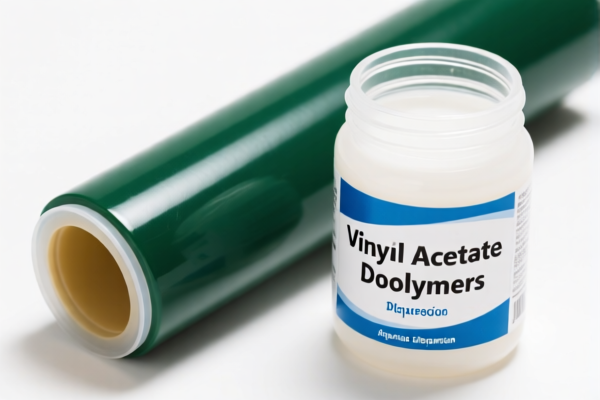
Product Images


AI Analysis
🎨 Vinyl Acetate Copolymers Aqueous Dispersion (VAC) – Coatings Application
🌐 HS Code Reference & Clearance Guide | 2026 Latest Tariff Analysis | Professional Clearance Strategy
📌 1. Product Definition: What is "Vinyl Acetate Copolymers Aqueous Dispersion"?
Vinyl Acetate Copolymers (VAC) Aqueous Dispersion is a water-based polymer solution, widely used as a binder in paints, coatings, adhesives, and textile processing. In international trade, its classification depends heavily on its primary use and physical state.
⚠️ Key Distinction:
- If classified as a chemical product (used as a textile auxiliary or generic chemical): → HS 3809 or 3905
- If classified as a finished textile auxiliary (specifically for textiles): → HS 3809
- If classified as a plastic resin (primary form): → HS 3905
- If classified as a impregnated textile/plastic-coated fabric (if applied to fabric): → HS 5903
📦 2. HS Code Classification Details (2026 Latest Tariff Authority Cross-Reference)
| HS Code | Product Description | Applicable Scenario | Tariff Category |
|---|---|---|---|
3905.29.00.00 |
Vinyl Acetate Copolymers, aqueous dispersion, other | Generic chemical/resin classification; texturizing or sizing | ✅ Resin/Chemical |
3809.10.00.00 |
Finishing agents, dyestuffs, and other preparations (Textile Industry) | Specifically used as textile auxiliaries (sizing, stiffening) | ✅ Textile Auxiliary |
3905.21.00.00 |
Vinyl Acetate Copolymers, in primary forms | General classification for raw polymer resins | ✅ Primary Form |
5903.90.25.00 |
Textile fabrics impregnated, coated, covered or laminated with plastics | If the dispersion is already applied to fabric or considered a coated fabric | ❌ High Risk (Misclassification) |
3905.29.00.00 |
(Duplicate) Vinyl Acetate Copolymers, aqueous dispersion, other | Same as above; commonly cited in textile contexts | ✅ Resin/Chemical |
🔍 Critical Reminder:
-3905.21.00.00and3905.29.00.00are for the raw chemical product. -3809.10.00.00is for the functional use in textiles. -5903.90.25.00is for finished coated fabrics. Do not classify bulk liquid dispersion here unless it is already on fabric!
💰 3. 2026 Latest Tariff Rate Details (Including Surtax & Policy Surcharges)
✅ Applicable Country: USA (US)
✅ Origin: China (CN)
✅ Effective Date: Nov 10, 2025 (Includes subsequent imports)
🎯 1. 3905.29.00.00 / 3905.21.00.00 – Vinyl Acetate Copolymers (Resin/Chemical)
| Item | Content |
|---|---|
| Base Tariff | 4.0% (Ad Valorem) |
| USITC Surtax (Section 301) | +25.0% |
| IEEPA Surtax (Section 122) | +10.0% |
| Total Tariff | 39.0% |
| Calculation | CIF Value × 39.0% |
| De Minimis Eligibility | ❌ No (deny_de_minimis) |
| Legal Basis Path | IEEPA:9903.01.25 → USITC:3905.29.00.00 → FOOTNOTE:9903.88.01 |
📌 Explanation:
- 25% comes from USITC Section 301 tariffs on Chinese chemical products. - 10% comes from IEEPA Section 122 surcharges on Chinese goods. - Total 39% is a high tariff rate. Must be budgeted in advance!
🎯 2. 3809.10.00.00 – Textile Industry Chemical Preparations
| Item | Content |
|---|---|
| Base Tariff | 2.2¢/kg + 3.0% (Specific + Ad Valorem) |
| USITC Surtax (Section 301) | +7.5% (Note: Specific calculation applies) |
| IEEPA Surtax (Section 122) | +10.0% |
| Total Tariff | 2.2¢/kg + 3.0% + 17.5% (Combined Surtax) |
| Calculation | (Quantity in kg × 2.2¢) + (CIF Value × 3.0%) + (CIF Value × 17.5%) |
| De Minimis Eligibility | ❌ No (deny_de_minimis) |
| Legal Basis Path | IEEPA:9903.01.25 → USITC:3809.10.00.00 → FOOTNOTE:9903.88.01 |
📌 Note:
- This classification is only applicable if the product is explicitly declared and proven to be a textile auxiliary. - If misclassified, customs may reassess under 3905 (39% total tariff), leading to back taxes + penalties. - The 2.2¢/kg is a specific duty, while the percentages are ad valorem.
🎯 3. 5903.90.25.00 – Coated Textile Fabrics (HIGH RISK)
| Item | Content |
|---|---|
| Base Tariff | 7.5% |
| USITC Surtax (Section 301) | +25.0% |
| IEEPA Surtax (Section 122) | +10.0% |
| Total Tariff | 42.5% |
| Calculation | CIF Value × 42.5% |
| De Minimis Eligibility | ❌ No (deny_de_minimis) |
| Legal Basis Path | IEEPA:9903.01.25 → USITC:5903.90.25.00 → FOOTNOTE:9903.88.01 |
📌 Warning:
- This HS code is for finished coated fabrics, not bulk liquid dispersion. - Misclassification Penalty: If you declare bulk liquid as "coated fabric," customs will reject it or reassess at 42.5% with potential fines. - Do not use this HS code for raw chemical dispersion!
🛠️ 4. Practical Clearance Advice (Real-World Pitfall Guide)
✅ 1. Required Documentation Checklist (Essential)
| Document | Required | Description |
|---|---|---|
| ✅ Product Specification Sheet | ✔️ | Must state: "Vinyl Acetate Copolymer Aqueous Dispersion," solids content, pH, viscosity. |
| ✅ Formula/Composition | ✔️ | Prove it is a chemical resin or textile auxiliary, not a finished coated fabric. |
| ✅ Product Photos (Liquid State) | ✔️ | Show it in drums/bulk, not on fabric. |
| ✅ MSDS (Material Safety Data Sheet) | ✔️ | Required for hazmat classification (usually UN 3082 or UN 1263). |
| ✅ Commercial Invoice | ✔️ | Clear description: "VAC Dispersion for Coating/Textile Use." |
| ✅ Origin Certificate (CO) | ✔️ | For determining country of origin and surtax applicability. |
| ✅ Packing List | ✔️ | Net weight and gross weight for specific duty calculation (if under 3809). |
✅ 2. Declaration Tips (Key Mnemonics)
🔥 "Liquid is Chemical, Not Fabric; Name It Right, Tariff is Light!"
| Scenario | Correct Declaration | Wrong Practice |
|---|---|---|
| Bulk Liquid Dispersion | 3905.29.00.00 or 3905.21.00.00 |
Misdeclare as 5903 → 42.5% + Penalty |
| Explicit Textile Auxiliary | 3809.10.00.00 |
Misdeclare as 3905 → 39% vs 17.5%+Surtax |
| Resin for Paints | 3905.29.00.00 |
Misdeclare as 3809 → Requires proof of textile use |
| Coated Fabric (Finished) | 5903.90.25.00 |
Declare as liquid → Rejection |
✅ 3. Special Case Handling
| Situation | Handling Advice |
|---|---|
| OEM Custom Dispersion | Provide client order + technical data sheet to prove specific use (textile vs. general resin). |
| Mixed Shipment (Chemicals + Tools) | Declare separately. Do not bundle liquid chemical with non-hazardous tools to avoid inspection delays. |
| Transshipment via Third Country | Ensure no "substantial transformation" occurs. Origin remains China → Surtaxes still apply. |
| Low-Value Samples | No De Minimis Exemption for China-origin chemicals under IEEPA/Section 301. Even $100 samples are subject to full tariff. |
🌍 5. Global Market Clearance Comparison (2026 Latest)
| Country/Region | Recommended HS Code | Tariff | Certification | Notes |
|---|---|---|---|---|
| 🇺🇸 USA | 3905.29.00.00 |
39.0% | MSDS + DOT | High surtaxes (301 + IEEPA) |
| 🇪🇺 EU | 3905.29.00 |
~6.5% | REACH Registration | No US-style surtaxes |
| 🇬🇧 UK | 3905.29.00 |
~6.5% | UK REACH | Post-Brexit standards apply |
| 🇨🇦 Canada | 3905.29.00 |
5.0% | WHMIS | No Section 301 equivalent |
| 🇦🇺 Australia | 3905.29.00 |
5.0% | AICIS | No additional surtaxes |
📌 Conclusion:
- USA is the only market with extremely high surtaxes (39-42.5%) for Chinese-origin VAC dispersions. - EU/UK/Canada/Australia have standard MFN tariffs (~5-7%), making them more cost-effective for Chinese suppliers. - Strategic Advice: If selling to the US, consider value-engineering or supply chain diversification (e.g., production in Vietnam/Mexico) to avoid 301/IEEPA tariffs.
📌 6. Common Errors & Pitfall Guide (Lessons Learned)
❌ Error 1: Declaring liquid dispersion as "Coated Fabric" (5903)
👉 Consequence: Customs rejects due to physical mismatch. Reassessment at 42.5% + Storage Fees.
❌ Error 2: Using 3809.10.00.00 without proof of textile use
👉 Consequence: Customs reclassifies to 3905.29.00.00. Back taxes of ~21.5% difference + Interest.
❌ Error 3: Ignoring Hazmat Classification
👉 Consequence: Liquid chemical may be UN 3082 (Environmentally Hazardous Substance). Requires DOT Declaration and Hazmat Handling Fees at US ports.
❌ Error 4: Assuming De Minimis ($800) applies
👉 Consequence: All China-origin goods under IEEPA/301 are excluded from de minimis. Every shipment, even samples, is taxed.
✅ Correct Practice:
"Vinyl Acetate-Ethylene Copolymer Aqueous Dispersion, Solid Content 40%, pH 7.0, for Textile Sizing, UN 3082, Made in China"
🎯 7. Conclusion: Precision Classification Saves Money!
🎯 Remember the Mnemonic:
🔹 "Liquid is Chemical, Not Fabric; Name It Right, Tariff is Light!"
🔹 "HS Code is Life; 3905 is 39%, 3809 is 17.5%+, 5903 is 42.5%+ Penalty!"
🔹 "No De Minimis for China Chemicals!"
📌 Pro Tip:
If your VAC dispersion is originated from Vietnam, Mexico, Thailand, or Malaysia, you may apply for IEEPA/301 Exemption, reducing tariffs to 0%~5%.
Recommend Apply for Advance Ruling (CBP Ruling) before first shipment to US to avoid clearance risks.
📣 Immediate Action:
📞 Contact Professional Customs Broker + Provide Product Specs + Apply for HS Code Pre-Ruling
🚀 Let your VAC Dispersion Clear Smoothly, Export Efficiently, Profit Doubles!
✨ Professional Clearance Starts with Accurate Classification!
💼 Every Penny of Cost Deserves Precise Calculation!
Customer Reviews
About HS Code Classification
The Harmonized System (HS) is an internationally standardized nomenclature developed by the World Customs Organization (WCO) to classify traded products. Over 200 countries use the HS system as the basis for customs tariffs, trade statistics, and import/export regulations.
Each HS code follows a hierarchical structure:
- Chapter (2 digits) — Broad category of goods (e.g., Chapter 84: Machinery and Mechanical Appliances)
- Heading (4 digits) — More specific grouping within the chapter
- Subheading (6 digits) — Internationally standardized breakdown, used by all WCO member countries
- National subdivisions (8-10 digits) — Country-specific extensions for further classification, such as US HTSUS 10-digit codes
Correct HS code classification is essential for smooth customs clearance, accurate duty payment, and compliance with trade regulations. Misclassification can lead to customs delays, overpayment of duties, or penalties.
When importing from CN to US, the applicable tariff rates may include:
- Most-Favored-Nation (MFN) rate — The standard duty rate applied to WTO members
- General rate — Applied to countries without trade agreements
- Trade remedy duties — Additional tariffs such as Section 301 (anti-dumping), Section 232 (national security), or countervailing duties
The information provided on this page is for reference purposes only. For official classification, please consult with your local customs authority or a licensed customs broker.