Waste Textile Rags and Similar Items
CN → US| HS Code | Tariff Rate | Origin | Destination | Doc |
|---|---|---|---|---|
| 6310102010 | 17.5% | CN | US | Official Doc |
| 6310102020 | 17.5% | CN | US | Official Doc |
Product Images
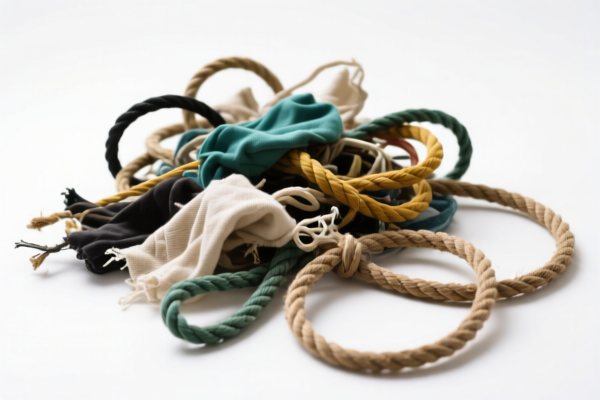
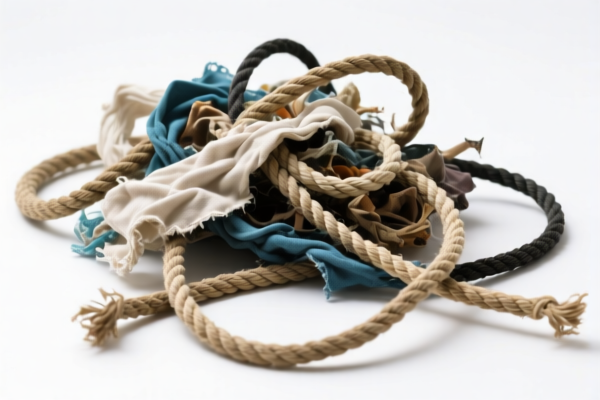
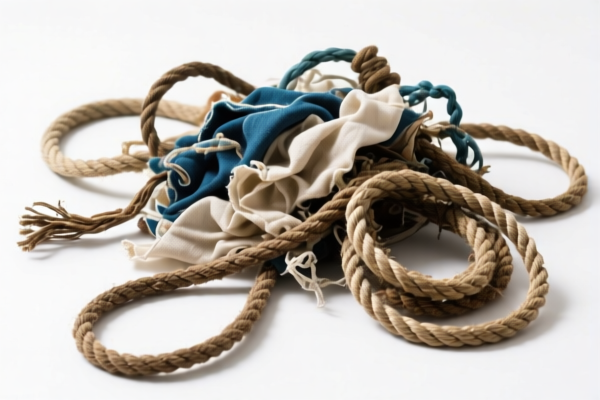
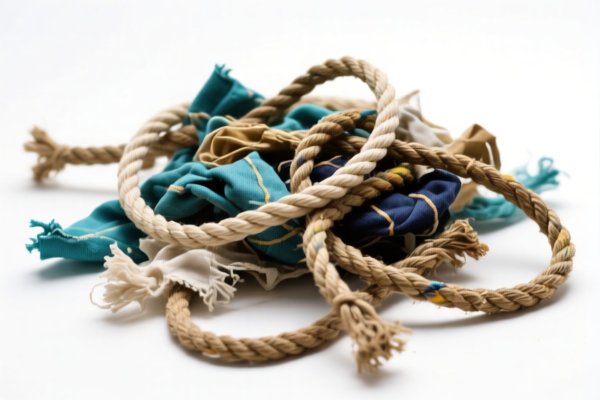
AI Analysis
🧶 Waste Textile Rags & Scrap Cordage (Used/New Rags, Twine, Rope, Cables)
🌐 HS Code Reference & Customs Clearance Guide | 2026 Latest Tariff Analysis | Professional Clearance Strategy
📌 I. Product Definition: What Exactly Are "Textile Waste Items"?
In international trade, "Waste Textile Rags and Similar Items" refer to discarded, worn-out, or scrap textile materials that retain some utility for recycling, cleaning, or industrial processing. They are not new finished goods but classified as waste/scrap.
The key distinction lies in the material composition: * Of Cotton: Includes used cleaning rags, worn-out cotton garments, cotton rope scraps, and cotton cordage waste. * Of Man-Made Fibers: Includes synthetic rags (polyester, nylon, acrylic), synthetic rope waste, plastic-coated cable scraps, and other synthetic textile waste.
⚠️ Critical Note:
- "Used" or "Worn-out" is mandatory. New, unused rags intended for sale as cleaning products may fall under different chapters (e.g., Chapter 63 for other made-up articles).
- "Sorted" implies the goods have been separated by type/color/quality, reducing contamination for recycling.
- Ropes, Cables, and Twine are explicitly included if they are of textile materials and are scrap/worn-out.
📦 II. HS Code Classification Details (2026 Tariff Schedule)
Based on the provided data, only two HS Codes apply to this product category. Misclassification can lead to significant delays or penalties.
| HS Code | Product Description | Material | Condition |
|---|---|---|---|
6310.10.20.10 |
Used or new rags, scrap twine, cordage, rope, and cables; Sorted; Of cotton | 🧵 100% Cotton or Cotton-blend | Used, worn-out, or scrap (including new rags sorted as waste) |
6310.10.20.20 |
Used or new rags, scrap twine, cordage, rope, and cables; Sorted; Of man-made fibers | 🧬 Synthetic (Polyester, Nylon, Acrylic, etc.) | Used, worn-out, or scrap (including new rags sorted as waste) |
🔍 Key Distinction:
-6310.10.20.10: Must be cotton-based. If mixed with synthetic fibers >50%, it may be classified under20(man-made).
-6310.10.20.20: Must be man-made fibers. Includes synthetic ropes, plastic-coated cables (if textile core), and synthetic rags.
- "Sorted": Both codes require the goods to be sorted (e.g., by color, fiber type, or quality). Unsorted bales may be rejected or misclassified.
💰 III. 2026 Tariff Rate Breakdown (Detailed Tax Clause Analysis)
✅ Applicable Country: United States (US)
✅ Origin: China (CN) (Assumed based on typical 7.5% total tax pattern; verify if origin differs)
✅ Effective Time: Current rates apply as per provided data
🎯 1. 6310.10.20.10 – Textile Waste Rags/Cordage (Cotton)
| Item | Content |
|---|---|
| Base Duty Rate | 0.0% |
| Section 301 Surcharge | 7.5% |
| Total Tax Rate | 7.5% |
| Tax Calculation | CIF Value × 7.5% |
| Legal Basis | HTSUS 6310.10.20.10 + USITC Footnote 9903.88.01 (if applicable) |
📌 Explanation:
- Base Duty is 0%: The US treats most textile waste as non-competing with domestic industry, so no base tariff applies.
- 7.5% Surcharge: This is likely a Section 301 or specific USITC additional duty applied to certain Chinese-origin goods.
- No De Minimis Exemption: Goods under $800 may still be subject to documentation requirements, but duty is low.
🎯 2. 6310.10.20.20 – Textile Waste Rags/Cordage (Man-Made Fibers)
| Item | Content |
|---|---|
| Base Duty Rate | 0.0% |
| Section 301 Surcharge | 7.5% |
| Total Tax Rate | 7.5% |
| Tax Calculation | CIF Value × 7.5% |
| Legal Basis | HTSUS 6310.10.20.20 + USITC Footnote 9903.88.01 (if applicable) |
📌 Explanation:
- Identical tax treatment to cotton waste.
- Man-made fibers (polyester, nylon) are often more valuable for recycling, so ensure accurate material declaration to avoid duty evasion claims.
🛠️ IV. Customs Clearance Practical Advice (Step-by-Step Guide)
✅ 1. Required Documentation Checklist
| Document | Required? | Description |
|---|---|---|
| ✅ Commercial Invoice | ✔️ | Must specify "Waste Textile Rags" or "Scrap Cordage", not "Cleaning Cloths" (which may have different HS). |
| ✅ Packing List | ✔️ | Detail weights, volumes, and number of bales. |
| ✅ Certificate of Origin (CO) | ✔️ | To prove origin for duty calculation. |
| ✅ Material Composition Statement | ✔️ | Explicitly state "100% Cotton" or "100% Polyester" to determine HS Code 20.10 vs 20.20. |
| ✅ Photos of Goods | ✔️ | Show sorting, labeling, and condition (used/worn-out). |
| ✅ Recycling Facility Certificate | ✔️ | Proof that goods are intended for recycling (not illegal dumping). |
✅ 2. Declaration Tips (Critical for Accuracy)
🔥 "Be Specific: 'Waste', 'Scrap', 'Sorted', and 'Material Type'"
| Scenario | Correct Declaration | Incorrect Declaration | Risk |
|---|---|---|---|
| Cotton Rags | "Used Cotton Cleaning Rags, Sorted, HS: 6310.10.20.10" | "Cotton Rags" | Misclassification → Higher duty |
| Polyester Rope | "Scrap Synthetic Cordage, Man-Made Fibers, HS: 6310.10.20.20" | "Rope" | Misclassification → Higher duty |
| Mixed Bales | Do Not Ship Mixed | "Mixed Textile Waste" | Rejection or forced separation |
| New Rags | "New Cotton Rags, Sorted for Recycling, HS: 6310.10.20.10" | "New Cleaning Cloths" | May fall under Chapter 63, different duty |
📌 Warning:
- Do NOT declare as "Cleaning Cloths" or "Household Linens" if they are waste/scrap. These have different HS codes and potentially higher duties.
- "Sorted" is Key: Unsorted waste may be considered "garbage" and denied entry.
- Cable vs. Cordage: If cables have metal cores, they may fall under Chapter 85. Ensure only textile-based cables are declared here.
✅ 3. Special Cases & Pitfalls
| Case | Handling Advice |
|---|---|
| Mixed Cotton/Synthetic | If >50% synthetic, declare under 6310.10.20.20. If mixed, specify percentage. |
| Plastic-Coated Cables | If the textile core is the primary material, use 6310.10.20.20. If mostly plastic, check Chapter 39. |
| Origin Non-China | If from Vietnam/Mexico, base duty may still be 0%, but verify if 7.5% surcharge applies. |
| De Minimis (Section 321) | If shipped via postal/courier < $800, no duty may apply, but declaration must still be accurate. |
🌍 V. Global Market Comparison (2026)
| Country | HS Code | Duty Rate | Certification | Note |
|---|---|---|---|---|
| 🇺🇸 USA | 6310.10.20.10 / .20 |
7.5% | CO, Material Statement | Low duty, high scrutiny on "waste" classification |
| 🇨🇳 China | 6310.10.20 |
5% | CCC (if recycled product) | Importing waste requires environmental permits |
| 🇪🇺 EU | 6310.10 |
0% | REACH, Waste Shipment Reg. | Strict rules on waste imports; may require EIR |
| 🇬🇧 UK | 6310.10 |
0% | UKCA, Waste Rules | Post-Brexit rules apply |
📌 Conclusion:
- USA is the most common market for this classification with a low but non-zero duty.
- EU has stricter environmental regulations; ensure proper waste shipment documentation.
- China restricts import of waste textiles; verify if goods meet "recycled material" standards.
📌 VI. Common Mistakes & Pitfalls (Learn from Others)
❌ Mistake 1: Declaring "Used Rags" as "New Cleaning Cloths"
👉 Consequence: Duty may increase from 7.5% to 10-15% + potential fraud investigation.
❌ Mistake 2: Mixing Cotton and Synthetic in One Bale
👉 Consequence: Customs may reject or force re-sorting, leading to storage fees and delays.
❌ Mistake 3: Not Specifying "Sorted"
👉 Consequence: Goods may be classified as "Unsorted Waste" → Higher duty or denial.
❌ Mistake 4: Ignoring "Scrap/Worn-Out" Description
👉 Consequence: If goods are clean/new, they may not qualify for HS 6310.10 → Misclassification.
✅ Correct Approach:
"Used Cotton Rags, Sorted, Baled, For Recycling, HS 6310.10.20.10, Origin China"
🎯 VII. Conclusion: Precise Classification Saves Money
🎯 Key Takeaways:
🔹 "Waste" + "Sorted" + "Material Type" = Correct HS Code
🔹 7.5% Total Duty is low, but accuracy is critical to avoid penalties.
🔹 Separate Cotton from Man-Made Fibers in declaration and physical bales.
📌 Pro Tip:
If your goods are new but destined for recycling, provide a Letter of Intent from a recycling facility to prove their end-use. This can help justify the "waste" classification.
📣 Immediate Action:
📞 Contact Customs Broker + Provide Material Test Report + Verify Origin
🚀 Ensure Smooth Clearance with Accurate Classification!
✨ Professional Customs Clearance Starts with Accurate Classification!
💼 Every Dollar Saved on Duty is a Dollar Earned!
Customer Reviews
About HS Code Classification
The Harmonized System (HS) is an internationally standardized nomenclature developed by the World Customs Organization (WCO) to classify traded products. Over 200 countries use the HS system as the basis for customs tariffs, trade statistics, and import/export regulations.
Each HS code follows a hierarchical structure:
- Chapter (2 digits) — Broad category of goods (e.g., Chapter 84: Machinery and Mechanical Appliances)
- Heading (4 digits) — More specific grouping within the chapter
- Subheading (6 digits) — Internationally standardized breakdown, used by all WCO member countries
- National subdivisions (8-10 digits) — Country-specific extensions for further classification, such as US HTSUS 10-digit codes
Correct HS code classification is essential for smooth customs clearance, accurate duty payment, and compliance with trade regulations. Misclassification can lead to customs delays, overpayment of duties, or penalties.
When importing from CN to US, the applicable tariff rates may include:
- Most-Favored-Nation (MFN) rate — The standard duty rate applied to WTO members
- General rate — Applied to countries without trade agreements
- Trade remedy duties — Additional tariffs such as Section 301 (anti-dumping), Section 232 (national security), or countervailing duties
The information provided on this page is for reference purposes only. For official classification, please consult with your local customs authority or a licensed customs broker.