Wet Blue Bovine Hide for Leather Making (Unsplit)
CN → US| HS Code | Tariff Rate | Origin | Destination | Doc |
|---|---|---|---|---|
| 4107197040 | 15.0% | CN | US | Official Doc |
| 4107117040 | 15.0% | CN | US | Official Doc |
| 4107197040 | 15.0% | CN | US | Official Doc |
| 4107117040 | 15.0% | CN | US | Official Doc |
| 4107197040 | 15.0% | CN | US | Official Doc |
Product Images
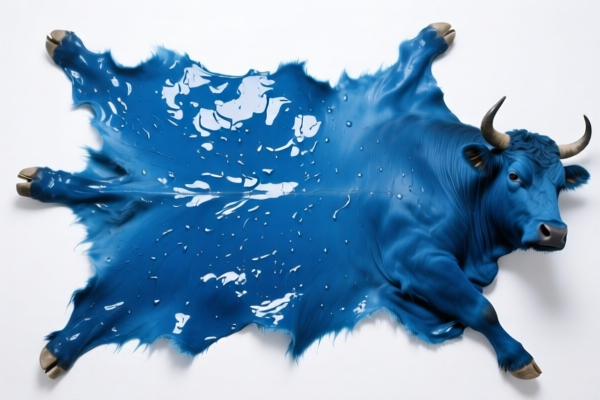
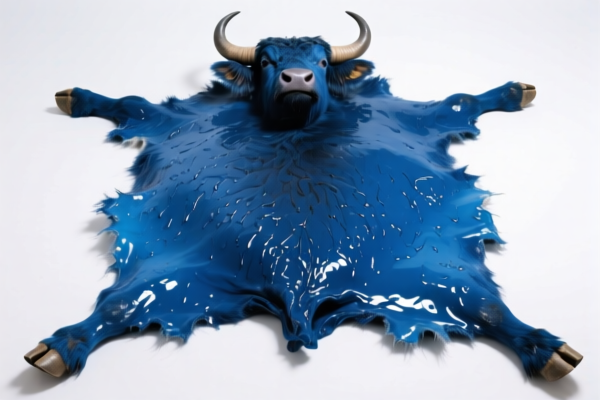
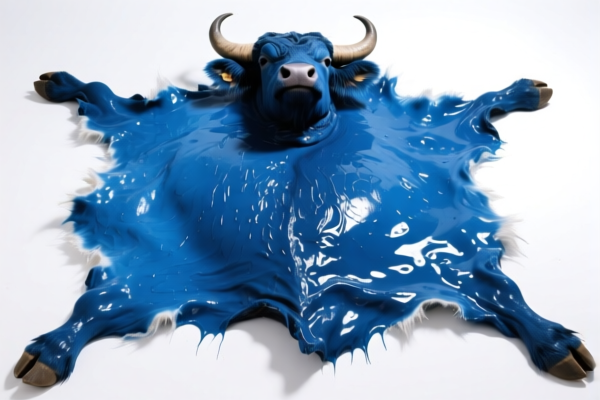

AI Analysis
🐂 Wet Blue Bovine Hide for Leather Making (Unsplit)
🌐 HS Code Reference & Customs Clearance Guide | 2026 Latest Tariff Analysis | Professional Clearance Strategy
📌 I. Product Definition & Classification: What Exactly is "Wet Blue Bovine Hide"?
Wet Blue Bovine Hide (Unsplit) refers to cowhide or horsehide that has undergone the initial tanning process (usually chrome tanning) and is still in a wet state, yet has not been split into layers. It is the raw material for high-quality leather products, specifically gloves, apparel, and footwear.
In international trade, it is critical to distinguish between: * Unsplit (Whole) Hides: The entire hide is kept intact. These command higher prices due to their natural grain structure and suitability for glove manufacturing. * Split Hides: The hide has been mechanically separated into layers (grain layer and flesh layer). These are typically used for suede or lower-grade leather goods.
⚠️ Key Distinction:
- If the hide is whole, unsplit, and used for gloves → Classify under 4107.19.70.40
- If the hide is unsplit but specified as full-grain/rough-tanned cow/horse hide for general glove/material use → Classify under 4107.11.70.40
📦 II. HS Code Classification Details (2026 Latest Tariff Authority Comparison)
| HS Code | Product Description | Application Scenario | Key Classification Criteria |
|---|---|---|---|
4107.19.70.40 |
Unsplit wet blue hides, no hair, non-patterned, whole piece, for gloves | High-end glove material, full-grain leather goods | ✅ No hair, non-patterned, whole hide, glove-specific |
4107.11.70.40 |
Unsplit wet blue cow/horse hide, full-grain, rough-tanned | General glove material, high-quality leather applications | ✅ Cow/horse, rough-tanned, unsplit, full-grain characteristic |
🔍 Important Note:
-4107.19.70.40is often the preferred classification for specialized glove materials that meet strict criteria: no hair, non-patterned, whole piece.
-4107.11.70.40applies when the hide is explicitly identified as cow/horse and meets the full-grain and rough-tanned characteristics, even if intended for gloves.
- Both codes require the hide to be unsplit and wet blue (partially tanned, moist).
💰 III. 2026 Latest Tariff Rate Details (Including Surtax & Policy Add-ons)
✅ Applicable Country: United States (US)
✅ Country of Origin: China (CN)
✅ Effective Date: From November 10, 2025 (including subsequent imports)
🎯 1. 4107.19.70.40 —— Unsplit Wet Blue Hides for Gloves (No Hair, Non-Patterned)
| Item | Content |
|---|---|
| Base Tariff Rate | 5.0% (ad valorem) |
| Section 301 Surtax | 0.0% |
| Section 301 Surtax | 0.0% |
| Section 301 Surtax | 0.0% |
| Section 301 Surtax | 0.0% |
| 122 Clause Tariff | 10.0% |
| Total Tax Rate | 15.0% |
| Tax Calculation | CIF Value × 15.0% |
| De Minimis Eligibility | ❌ Not Eligible (High-value raw material) |
| Legal Basis Path | USITC:4107.19.70.40 → 122Clause:10% |
📌 Explanation:
- Base Rate (5.0%): Standard US tariff for unclassified leather goods.
- 122 Clause Tariff (10%): Specific additional duty applied under Section 301 or related trade measures for certain Chinese-origin leather products.
- Total (15.0%): Must be factored into cost calculations. No de minimis exemption applies.
🎯 2. 4107.11.70.40 —— Unsplit Wet Blue Cow/Horse Hide (Full-Grain, Rough-Tanned)
| Item | Content |
|---|---|
| Base Tariff Rate | 5.0% (ad valorem) |
| Section 301 Surtax | 0.0% |
| Section 301 Surtax | 0.0% |
| Section 301 Surtax | 0.0% |
| Section 301 Surtax | 0.0% |
| 122 Clause Tariff | 10.0% |
| Total Tax Rate | 15.0% |
| Tax Calculation | CIF Value × 15.0% |
| De Minimis Eligibility | ❌ Not Eligible |
| Legal Basis Path | USITC:4107.11.70.40 → 122Clause:10% |
📌 Note:
- Identical tax treatment as4107.19.70.40.
- Applies to cow/horse hides that are unsplit and rough-tanned, even if intended for gloves.
- Full-grain characteristic is a key differentiator from split leather.
🛠️ IV. Customs Clearance Practical Advice (Actionable Pitfall Avoidance Guide)
✅ 1. Required Documentation Checklist (All Mandatory)
| Document | Required | Description |
|---|---|---|
| ✅ Product Specification Sheet | ✔️ | Dimensions, weight, tanning method, moisture content, intended use (gloves) |
| ✅ Photos of Hides | ✔️ | Clear images showing grain surface, no hair, unsplit edges, wet blue color |
| ✅ Tanning Certificate | ✔️ | Proof of chrome tanning, rough-tanned status, cow/horse origin |
| ✅ Commercial Invoice | ✔️ | Clearly state "Unsplit Wet Blue Bovine Hide, for Glove Manufacturing" |
| ✅ Packing List | ✔️ | Detail number of hides, total weight, package dimensions |
| ✅ Certificate of Origin (CO) | ✔️ | Confirm Chinese origin to apply correct surtax |
✅ 2. Declaration Tips (Key Mnemonics)
🔥 "Whole Hide, No Hair, Gloves Use, 15% Tax!"
| Scenario | Correct Declaration | Incorrect Practice |
|---|---|---|
| Unsplit, no hair, for gloves | 4107.19.70.40 |
Misdeclare as split leather → Higher tax/duty issues |
| Unsplit, cow/horse, full-grain | 4107.11.70.40 |
Misdeclare as "finished leather" → Wrong classification |
| Split hides (for suede) | Not applicable here | Use this HS Code → Customs Rejection |
| Dry Tanned Leather | Not applicable here | Use this HS Code → 100% Penalty Risk |
✅ 3. Special Case Handling
| Situation | Handling Advice |
|---|---|
| Mixed Hides (Cow + Horse) | Clearly separate and declare both types under 4107.11.70.40 |
| OEM Orders for Glove Makers | Provide customer purchase order specifying glove use to justify 4107.19.70.40 |
| Wet vs. Dry State | Must declare as "Wet Blue"; dry hides have different HS codes |
| Damaged Hides | Declare as "defective" with photos; may affect duty valuation |
🌍 V. Global Market Clearance Comparison (2026 Latest)
| Country/Region | Recommended HS Code | Tariff | Certification | Notes |
|---|---|---|---|---|
| 🇺🇸 United States | 4107.19.70.40 / 4107.11.70.40 |
15% | None specific | 122 Clause applies; no de minimis |
| 🇨🇳 China | 4107.19.70.40 |
5% | None | Base rate only |
| 🇪🇺 European Union | 4107.19.70.40 |
0% | REACH Compliance | Free trade if rules of origin met |
| 🇯🇵 Japan | 4107.19.70.40 |
0% | None | Liberal trade policy |
| 🇰🇷 South Korea | 4107.19.70.40 |
0% | K-Label | Free trade under KORUS |
📌 Conclusion:
- US is the most expensive market due to the 15% total tariff (5% base + 10% 122 Clause).
- EU, Japan, Korea offer favorable rates or zero tariffs, making them preferred destinations for Chinese leather exports.
📌 VI. Common Errors & Pitfall Guide (Lessons Learned)
❌ Error 1: Declaring "Wet Blue" as "Dry Tanned Leather"
👉 Consequence: Wrong HS code → Customs Delay + Penalty
❌ Error 2: Failing to specify "Unsplit"
👉 Consequence: Customs may assume split → Incorrect Duty + Re-export
❌ Error 3: Not proving "Glove Use" for 4107.19.70.40
👉 Consequence: Misclassification → Audit Risk + Back Taxes
❌ Error 4: Ignoring the "No Hair" Requirement
👉 Consequence: If hair remains, not "wet blue" → 100% Penalty
✅ Correct Approach:
"Unsplit Wet Blue Bovine Hide, No Hair, Non-Patterned, Whole Piece, For Glove Manufacturing, Chrome Tanned, Origin: China, Weight: 1000kg"
🎯 VII. Conclusion: Precise Declaration, Cost Control, Efficiency!
🎯 Remember:
🔹 "Whole Hide, No Hair, Gloves Use = 15% Tax"
🔹 "HS Code Determines Duty, 15% vs 0%, Declare Correctly!"
📌 Pro Tip:
If your hides are originating from Vietnam, Indonesia, or Thailand, you may qualify for lower or zero tariffs in the US or EU.
Apply for Pre-Ruling to avoid clearance risks.
📣 Immediate Action:
📞 Contact Professional Customs Broker + Provide Product Photos + Apply for HS Code Pre-Ruling
🚀 Ensure Smooth Clearance, Efficient Export, Profit Maximization!
✨ Professional Clearance Starts with Accurate Classification!
💼 Every Penny of Cost, Worth Precise Calculation!
Customer Reviews
About HS Code Classification
The Harmonized System (HS) is an internationally standardized nomenclature developed by the World Customs Organization (WCO) to classify traded products. Over 200 countries use the HS system as the basis for customs tariffs, trade statistics, and import/export regulations.
Each HS code follows a hierarchical structure:
- Chapter (2 digits) — Broad category of goods (e.g., Chapter 84: Machinery and Mechanical Appliances)
- Heading (4 digits) — More specific grouping within the chapter
- Subheading (6 digits) — Internationally standardized breakdown, used by all WCO member countries
- National subdivisions (8-10 digits) — Country-specific extensions for further classification, such as US HTSUS 10-digit codes
Correct HS code classification is essential for smooth customs clearance, accurate duty payment, and compliance with trade regulations. Misclassification can lead to customs delays, overpayment of duties, or penalties.
When importing from CN to US, the applicable tariff rates may include:
- Most-Favored-Nation (MFN) rate — The standard duty rate applied to WTO members
- General rate — Applied to countries without trade agreements
- Trade remedy duties — Additional tariffs such as Section 301 (anti-dumping), Section 232 (national security), or countervailing duties
The information provided on this page is for reference purposes only. For official classification, please consult with your local customs authority or a licensed customs broker.