Whole Buffalo Hide, Unsplit
CN → US| HS Code | Tariff Rate | Origin | Destination | Doc |
|---|---|---|---|---|
| 4101501020 | 17.5% | CN | US | Official Doc |
| 4101201010 | 17.5% | CN | US | Official Doc |
| 4101901020 | 17.5% | CN | US | Official Doc |
| 4107194000 | 12.5% | CN | US | Official Doc |
| 4107124000 | 12.5% | CN | US | Official Doc |
Product Images
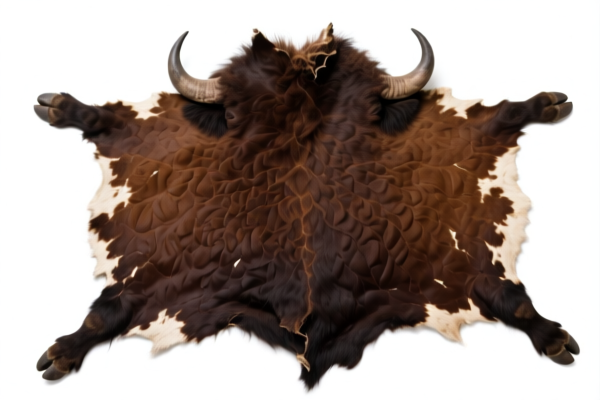
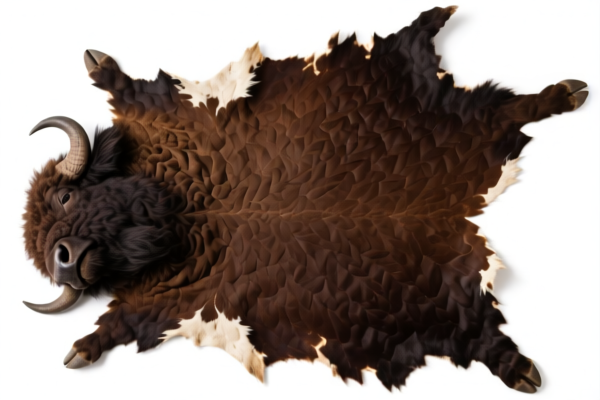
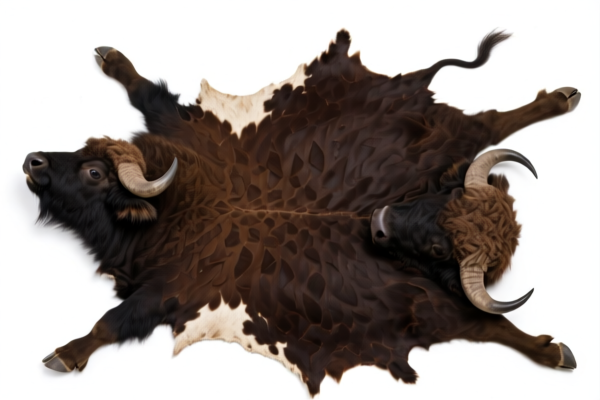
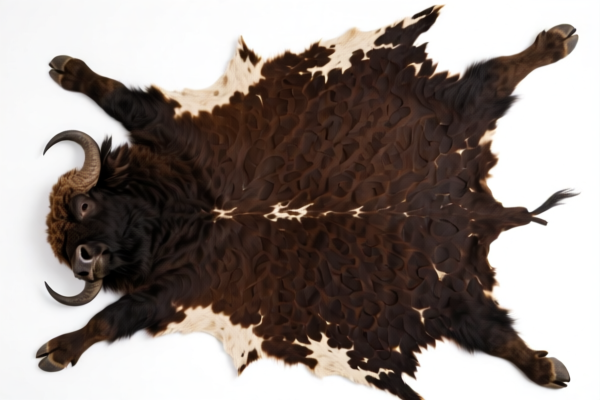
AI Analysis
🐃 Whole Buffalo Hide, Unsplit (未处理水牛皮/整张无毛水牛皮)
🌐 HS Code Reference & Customs Clearance Guide | 2026 Latest Tariff Analysis | Professional Level Clearance Strategy 📌 I. Product Definition & Classification: Do You Really Understand "Buffalo Hide"?
Buffalo hide is a critical raw material in the global leather industry. In international trade, it is strictly categorized based on its processing status (raw vs. tanned) and physical state (wet/salted vs. dry).
Category A: Raw/Unprocessed Skins
* Characteristics: Fresh, salted, or dried hides that have not undergone the tanning process. They retain the natural hair/fur or are in the stage of being prepared for tanning.
* Key HS Codes: 4101.50.10.20, 4101.20.10.10, 4101.90.10.20
Category B: Tanned/半-Tanned Skins (No Hair)
* Characteristics: The hair has been removed, and the hide has undergone chemical or mechanical tanning to become stable leather. It is no longer "raw."
* Key HS Codes: 4107.19.40.00, 4107.12.40.00
⚠️ Critical Distinction Point: - If the hide is raw (salted, fresh, or dried) but not tanned → It falls under Chapter 41, Heading 4101. - If the hide is tanned (even partially) and hairless → It falls under Chapter 41, Heading 4107. - Misclassification Risk: Declaring a tanned hide as "raw" or vice versa can lead to severe customs penalties or shipment delays.
📦 II. HS Code Classification Details (2026 Latest Tariff Authority Comparison)
| HS Code | Product Description | Application Scenario | Processing Status | Hair/Fur? |
|---|---|---|---|---|
4101.50.10.20 |
Whole Buffalo Hides, Unsplit, Unprocessed (Meets characteristics of complete raw bovine hides) | Fresh or salted buffalo hides, ready for tanning | Raw / Unprocessed | ✅ Yes (Natural) |
4101.20.10.10 |
Un-tanned Buffalo Hides, Unsplit (Fits bovine animal category and un-tanned form) | Bulk raw hides, often in salted condition | Raw / Un-tanned | ✅ Yes (Natural) |
4101.90.10.20 |
Dried Raw Buffalo Hides, Pre-tanned Not Yet Dried (Preserved in Dried State) | Dried raw hides, often used for specific leather goods | Raw / Dried | ✅ Yes (Natural) |
4107.19.40.00 |
Whole Buffalo Hides, Tanned or Semi-Tanned, Hairless | Tanned leather, no hair remaining | Tanned / Semi-Tanned | ❌ No |
4107.12.40.00 |
Whole Buffalo Hides, Tanned or Semi-Tanned, No Hair Content | High-quality tanned leather, hair removal complete | Tanned / Semi-Tanned | ❌ No |
🔍 Key Reminder: - All raw hides (whether fresh, salted, or dried) but not tanned are classified under 4101 series. - All tanned hides, regardless of whether they are "whole" or "split," but without hair, are classified under 4107 series.
💰 III. 2026 Latest Tariff Rate Breakdown (Including Surtaxes & Policy Add-ons)
✅ Applicable Country: USA (US) ✅ Country of Origin: China (CN) ✅ Effective Date: From November 10, 2025 (including subsequent imports)
🎯 1. Raw Buffalo Hides (4101.50.10.20, 4101.20.10.10, 4101.90.10.20)
| Item | Content |
|---|---|
| Base Tariff Rate | 0.0% (ad valorem) |
| Section 301 Surcharge | +7.5% |
| Section 122 Tariff | +10% |
| Total Tariff Rate | 17.5% |
| Tax Calculation | CIF Value × 17.5% |
| De Minimis Eligibility | ❌ Not Eligible (deny_de_minimis applies to most leather products under these codes) |
| Legal Basis Path | Base: 0% → Sec301: 7.5% → Sec122: 10% |
📌 Explanation: - "Base Tariff 0%": Raw hides often have low base duties due to trade agreements or specific exemptions. - "Section 301 Surcharge 7.5%": Standard additional tariff on Chinese goods. - "Section 122 Tariff 10%": Specific additional tariff on certain agricultural/leather products. - Total 17.5%: This is a significant cost factor. Must be calculated into your landed cost.
🎯 2. Tanned/No-Hair Buffalo Hides (4107.19.40.00, 4107.12.40.00)
| Item | Content |
|---|---|
| Base Tariff Rate | 2.5% (ad valorem) |
| Section 301 Surcharge | 0.0% (Exempted or not applicable under current specific rules for this subheading) |
| Section 122 Tariff | +10% |
| Total Tariff Rate | 12.5% |
| Tax Calculation | CIF Value × 12.5% |
| De Minimis Eligibility | ❌ Not Eligible |
| Legal Basis Path | Base: 2.5% → Sec122: 10% → Total: 12.5% |
📌 Note: - Lower Total Rate: Tanned hides enjoy a lower total tariff (12.5%) compared to raw hides (17.5%). - Why? The "Section 301 surcharge" is 0% for these specific tanned hide codes, while the "Section 122 tariff" of 10% still applies. - Strategic Advantage: If your supply chain allows, importing tanned hides may be more cost-effective than raw hides, despite the higher base duty (2.5% vs. 0%).
🛠️ IV. Customs Clearance Practical Advice (Real-World Pitfall Guide)
✅ 1. Required Documentation Checklist (No Exceptions)
| Document | Must Provide | Description |
|---|---|---|
| ✅ Product Specification Sheet | ✔️ | Must clearly state: "Buffalo Hide," "Unsplit," "Raw/Tanned," "Dried/Salted," "Weight," "Dimensions." |
| ✅ Processing Flowchart | ✔️ | Essential to prove whether the hide is Raw (4101) or Tanned (4107). Include tanning agents used if applicable. |
| ✅ Product Photos (Including Labels) | ✔️ | Clear images showing the hair side (if raw) vs. grain side (if tanned). Must show "No Hair" or "Hair On." |
| ✅ Commercial Invoice | ✔️ | Must explicitly state: "Buffalo Hides, Unsplit, [Raw/Tanned]." Do not use vague terms like "Leather." |
| ✅ Packing List | ✔️ | Detail weight, number of hides, and packaging type (e.g., wooden crate, plastic wrap). |
| ✅ Certificate of Origin (CO) | ✔️ | Required for origin verification. If non-Chinese, check for preferential rates. |
✅ 2. Declaration Tips (Key Mantras)
🔥 “Raw is 4101, Tanned is 4107; Hair On vs. Hair Off, Get it Right!”
| Scenario | Correct Declaration | Wrong Practice |
|---|---|---|
| Raw, Salted Buffalo Hides | 4101.50.10.20 or 4101.20.10.10 |
Misdeclared as "Tanned Leather" → Higher duty? No, but may trigger inspection. |
| Raw, Dried Buffalo Hides | 4101.90.10.20 |
Misdeclared as "Raw" without specifying "Dried" → Delay. |
| Tanned, Hairless Buffalo Hides | 4107.19.40.00 or 4107.12.40.00 |
Misdeclared as "Raw" → 17.5% instead of 12.5% → Overpaid Tax! |
| Split Hides (Not Whole) | Not covered in this data | Ensure "Unsplit" is declared. Split hides may have different HS codes. |
✅ 3. Special Case Handling
| Scenario | Handling Advice |
|---|---|
| OEM Custom Hides | Provide customer order + design specs. Avoid "non-standard" labels. |
| Hides with Minor Damage | Disclose damage level. May affect valuation but not HS code. |
| Mixed Containers (Raw & Tanned) | Do not mix in one declaration line. Declare separately to avoid confusion and potential misclassification. |
| Hides Used for Medical Devices | If processed specifically for medical use, may qualify for different tariff treatment, but requires proof. |
🌍 V. Global Major Market Customs Comparison (2026 Latest)
| Country/Region | Recommended HS Code | Tariff (CN Origin) | Certification Requirement | Notes |
|---|---|---|---|---|
| 🇺🇸 USA | 4101.xxxx.xxxx (Raw) / 4107.xxxx.xxxx (Tanned) |
17.5% (Raw) / 12.5% (Tanned) | None specific, but strict origin rules | Section 122 + 301 apply |
| 🇨🇳 China | Same | 0% - 5% | None | No additional surcharges |
| 🇪🇺 EU | Same | 0% - 2.5% | REACH Compliance | No Section 122/301 |
| 🇬🇧 UK | Same | 0% - 5% | UKCA Marking (if applicable) | Post-Brexit rules apply |
| 🇯🇵 Japan | Same | 0% - 3% | FSC (if forestry-related) | No surcharges |
📌 Conclusion: - USA is the most complex market due to Section 122 and Section 301 surcharges. - Importing Tanned Hides (4107) saves 5% in tariffs compared to Raw Hides (4101) in the US. - Always verify "Unsplit" status. Split hides may have different classifications.
📌 VI. Common Mistakes & Pitfall Guide (Lessons Learned)
❌ Mistake 1: Declaring "Tanned Hides" as "Raw Hides" to avoid Section 301? 👉 Consequence: Customs may inspect, find tanning agents, and reclassify, leading to back taxes + penalties.
❌ Mistake 2: Using vague terms like "Leather" or "Hides" without specifying "Raw/Tanned" or "Unsplit." 👉 Consequence: Customs cannot determine the correct HS code → Shipment Delay / Inspection.
❌ Mistake 3: Ignoring the "Section 122 Tariff" of 10%. 👉 Consequence: Underestimating landed cost by 10% → Profit Margin Erosion.
❌ Mistake 4: Mixing Raw and Tanned Hides in one declaration. 👉 Consequence: Complex clearance, potential for misclassification → High Risk.
✅ Correct Approach:
"Buffalo Hides, Whole, Unsplit, Raw, Salted, Weight: 50kg/hide, HS Code: 4101.50.10.20" OR "Buffalo Hides, Whole, Unsplit, Tanned, Hairless, Weight: 45kg/hide, HS Code: 4107.19.40.00"
🎯 VII. Conclusion: Professional Declaration, Time-Saving, Cost-Effective!
🎯 Remember the Mantra:
🔹 "Raw is 4101, Tanned is 4107; Hair On vs. Hair Off, Get it Right!" 🔹 "HS Code Determines Tariff; 5% Difference, Huge Impact!" 🔹 "Section 122 Applies to Both, But Section 301 Only to Raw!"
📌 Pro Tip:
- If your hides are tanned, declare them as 4107 to save 5% in tariffs in the US.
- Always provide clear photos and processing details to avoid customs suspicion.
- Consult a licensed customs broker for complex cases.
📣 Act Now:
📞 Contact a professional customs broker + Provide product specs + Apply for Advance Ruling (if possible) 🚀 Ensure your buffalo hides clear customs smoothly, reduce costs, and boost profits!
✨ Professional clearance starts with accurate classification! 💼 Every cent of your cost deserves precise calculation!
Customer Reviews
About HS Code Classification
The Harmonized System (HS) is an internationally standardized nomenclature developed by the World Customs Organization (WCO) to classify traded products. Over 200 countries use the HS system as the basis for customs tariffs, trade statistics, and import/export regulations.
Each HS code follows a hierarchical structure:
- Chapter (2 digits) — Broad category of goods (e.g., Chapter 84: Machinery and Mechanical Appliances)
- Heading (4 digits) — More specific grouping within the chapter
- Subheading (6 digits) — Internationally standardized breakdown, used by all WCO member countries
- National subdivisions (8-10 digits) — Country-specific extensions for further classification, such as US HTSUS 10-digit codes
Correct HS code classification is essential for smooth customs clearance, accurate duty payment, and compliance with trade regulations. Misclassification can lead to customs delays, overpayment of duties, or penalties.
When importing from CN to US, the applicable tariff rates may include:
- Most-Favored-Nation (MFN) rate — The standard duty rate applied to WTO members
- General rate — Applied to countries without trade agreements
- Trade remedy duties — Additional tariffs such as Section 301 (anti-dumping), Section 232 (national security), or countervailing duties
The information provided on this page is for reference purposes only. For official classification, please consult with your local customs authority or a licensed customs broker.