Whole Mink Skin (with Claws)
CN → US| HS Code | Tariff Rate | Origin | Destination | Doc |
|---|---|---|---|---|
| 4301100010 | 17.5% | CN | US | Official Doc |
| 4301100020 | 17.5% | CN | US | Official Doc |
| 4302110010 | 37.1% | CN | US | Official Doc |
| 4302110020 | 37.1% | CN | US | Official Doc |
| 4103901190 | 17.5% | CN | US | Official Doc |
Product Images
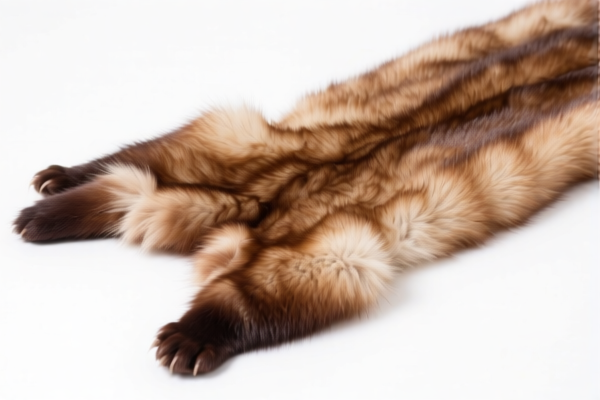
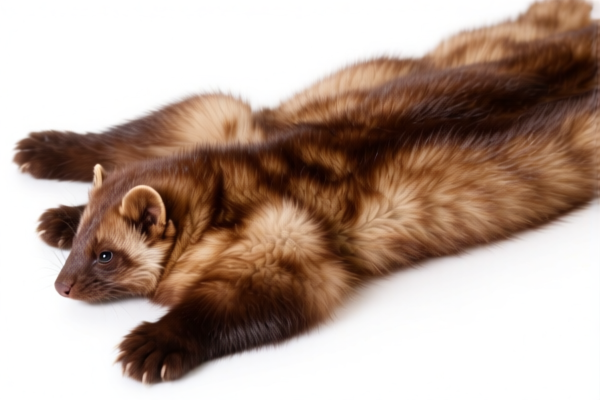
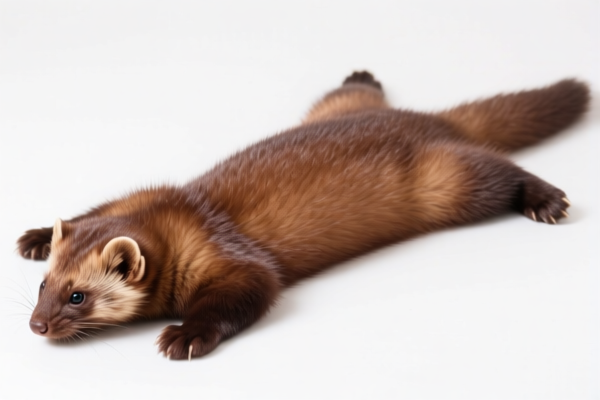
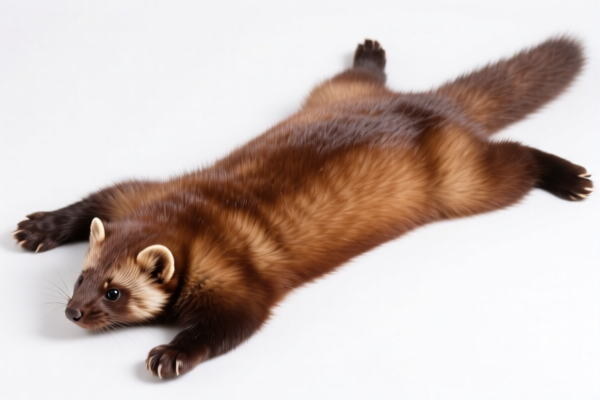
AI Analysis
🦊 Whole Mink Fur (with Claws) | Raw & Processed Skins
🌐 HS Code Reference & Customs Clearance Guide | 2026 Latest Tariff Analysis | Professional Clearance Strategy
📌 I. Product Definition & Classification: Do You Really Know "Mink Skin"?
Mink skin is a high-value luxury raw material. In international trade, the classification depends entirely on the processing stage and the presence of specific features (head, tail, claws). The key distinction lies between:
Raw/Unprocessed Skins (Chapter 41/43 - Raw Headers): Whole pelts, potentially with head/tail/claws, but not tanned or dyed.
Processed/Tanned Skins (Chapter 43 - Tanned): Tanned, dyed, or further prepared skins. These are ready for manufacturing garments.
⚠️ Critical Distinction Point:
- If the skin is not tanned (raw hair-on hide) → Classified under 4103 or 4301.
- If the skin is tanned or dyed → Classified under 4302.
- Claws/Head/Tail: Their presence is explicitly mentioned in the summary for most codes below, indicating these are "whole" skins, not cut pieces.
📦 II. HS Code Classification Details (2026 Latest Tariff Authority对照)
| HS Code | Product Description | Scenario | Processing State |
|---|---|---|---|
4301.10.00.10 |
Whole Mink Skins, with/without head/tail/claws | Raw mink pelts, natural wild/natural fur characteristics | ✅ Raw (Not Tanned) |
4301.10.00.20 |
Mink Skins, Complete, with Claws | Raw mink pelts specifically featuring intact claws | ✅ Raw (Not Tanned) |
4103.90.11.90 |
Other Raw Hides, Mink Whole with Head, Tail, Claws | Other types of raw hides (non-mink specific or general category) | ✅ Raw (Not Tanned) |
4302.11.00.10 |
Mink Skins, including Head, Tail, Claws | Tanned or Dyed Mink Skins | ❌ Tanned/Dyed |
4302.11.00.20 |
Tanned or Dyed Mink Skins, with Claws | Finished raw material for garment manufacturing | ❌ Tanned/Dyed |
🔍 Key Reminder:
- Raw Skins (4301.10/4103) have a lower base tariff but are subject to heavy additional duties.
- Tanned Skins (4302.11) have a slightly higher base tariff but are classified under the finished raw material chapter.
- Claws/Head/Tail: Ensure your description explicitly states "With Claws/Head/Tail" if the goods are whole. Omitting this may lead to incorrect classification as "cut skins," which have different HS codes not listed here.
💰 III. 2026 Latest Tariff Rate Details (Including Surtaxes & Policy Add-ons)
✅ Applicable Country: United States (US)
✅ Origin: China (CN)
✅ Effective Date: From November 10, 2025 (including subsequent imports)
🎯 1. 4301.10.00.10 —— Whole Mink Skins (Raw)
| Item | Content |
|---|---|
| Base Tariff | 0.0% (Ad Valorem) |
| Surtax (Section 301) | +7.5% |
| IEEPA Surtax | +10% (For China/Hong Kong products, from Nov 10, 2025) |
| Total Tariff | 17.5% |
| Tax Calculation | CIF Value × 17.5% |
| De Minimis Eligibility | ❌ Not Applicable (Deny De Minimis) |
| Legal Basis Path | IEEPA:9903.01.25 → IEEPA:9903.01.24 → USITC:4301.10.00.10 → Surtax:7.5% |
📌 Explanation:
- Although the base tariff is 0%, the 7.5% Section 301 surtax and 10% IEEPA surtax apply.
- Total 17.5% is a significant cost for raw fur.
- Note: Some classifications might attract 25% surtax depending on specific USITC footnotes, but based on the provided data, it is 7.5% + 10%.
🎯 2. 4301.10.00.20 —— Mink Skins, Complete, with Claws (Raw)
| Item | Content |
|---|---|
| Base Tariff | 0.0% |
| Surtax (Section 301) | +7.5% |
| IEEPA Surtax | +10% |
| Total Tariff | 17.5% |
| Tax Calculation | CIF × 17.5% |
| De Minimis Eligibility | ❌ Not Applicable |
| Legal Basis Path | IEEPA:9903.01.25 → IEEPA:9903.01.24 → USITC:4301.10.00.20 → Surtax:7.5% |
📌 Note:
- Identical tax treatment to4301.10.00.10.
- The distinction is purely descriptive: "Complete with Claws" vs. "Whole (with/without head/tail/claws)."
🎯 3. 4103.90.11.90 —— Other Raw Hides, Mink Whole with Head, Tail, Claws
| Item | Content |
|---|---|
| Base Tariff | 0.0% |
| Surtax (Section 301) | +7.5% |
| IEEPA Surtax | +10% |
| Total Tariff | 17.5% |
| Tax Calculation | CIF × 17.5% |
| De Minimis Eligibility | ❌ Not Applicable |
| Legal Basis Path | IEEPA:9903.01.25 → IEEPA:9903.01.24 → USITC:4103.90.11.90 → Surtax:7.5% |
📌 Note:
- This code is for "Other Raw Hides." If the product is clearly "Mink,"4301.10is more specific. However, if customs allows this classification, the tax rate is the same.
- Warning: Misclassification here could lead to disputes if the goods are strictly mink.
🎯 4. 4302.11.00.10 —— Tanned/Dyed Mink Skins (with Head, Tail, Claws)
| Item | Content |
|---|---|
| Base Tariff | 2.1% |
| Surtax (Section 301) | +25.0% |
| IEEPA Surtax | +10% |
| Total Tariff | 37.1% |
| Tax Calculation | CIF × 37.1% |
| De Minimis Eligibility | ❌ Not Applicable |
| Legal Basis Path | IEEPA:9903.01.25 → IEEPA:9903.01.24 → USITC:4302.11.00.10 → Surtax:25.0% |
📌 Explanation:
- Base Tariff is higher (2.1%) for tanned goods.
- Surtax is higher (25.0%) compared to raw skins (7.5%). This is likely due to specific USITC footnotes for processed animal products.
- Total 37.1% is a very high burden for processed fur imports from China.
🎯 5. 4302.11.00.20 —— Tanned or Dyed Mink Skins, with Claws
| Item | Content |
|---|---|
| Base Tariff | 2.1% |
| Surtax (Section 301) | +25.0% |
| IEEPA Surtax | +10% |
| Total Tariff | 37.1% |
| Tax Calculation | CIF × 37.1% |
| De Minimis Eligibility | ❌ Not Applicable |
| Legal Basis Path | IEEPA:9903.01.25 → IEEPA:9903.01.24 → USITC:4302.11.00.20 → Surtax:25.0% |
📌 Note:
- Identical to4302.11.00.10.
- The key difference is the explicit mention of "Claws" in the description. Ensure your commercial invoice matches the HS code description exactly.
🛠️ IV. Customs Clearance Practical Advice (Live Pit-Avoidance Guide)
✅ 1. Preparation Checklist (Missing Items Will Cause Delays)
| Document | Required | Explanation |
|---|---|---|
| ✅ Commercial Invoice | ✔️ | Must specify "Mink Skin," "Raw/Tanned," "With Head/Tail/Claws," and "Country of Origin: China." |
| ✅ Packing List | ✔️ | Detail the number of skins, weight, and dimensions. Note if claws/heads are intact. |
| ✅ Product Photos | ✔️ | Clear images showing the skin, including head, tail, and claws if claimed. |
| ✅ Certificate of Origin | ✔️ | Required for proving Chinese origin, triggering surtaxes. |
| ✅ Veterinary/Health Certificate | ✔️ | Some raw animal products require health certs to prevent disease spread. |
| ✅ Processing Certificate | ✔️ | If tanned/dyed, provide proof of processing to classify under 4302 instead of 4103/4301. |
✅ 2. Declaration Tips (Key Mantras)
🔥 "Be Specific: Raw vs. Tanned, Whole vs. Cut, Claws vs. No Claws!"
| Scenario | Correct Declaration | Wrong Practice |
|---|---|---|
| Raw Mink Skin (Whole) | 4301.10.00.10 or 4301.10.00.20 |
Misdeclare as "Garment" → Higher tax or rejection |
| Tanned Mink Skin | 4302.11.00.10 or 4302.11.00.20 |
Misdeclare as "Raw" → 17.5% instead of 37.1% (or vice versa, leading to audit) |
| Skin without Claws | Check if it fits 4301.10.00.10 ("with/without") |
Misdeclare as "With Claws" → Potential misclassification |
| Mixed Pack (Raw & Tanned) | Split Declaration | Combine into one line item → Seizure risk |
✅ 3. Special Cases
| Situation | Handling Advice |
|---|---|
| CITES Compliance | Mink is often not CITES-listed, but verify if it's wild-caught vs. farmed. Wild mink may require additional permits. |
| OEM/Custom Orders | Provide buyer's PO and design specs. If it's a finished coat, it may fall under a different chapter (e.g., 4303), but the input is "Skin." |
| Small Samples | Even small samples are subject to De Minimis denial. Do not send via low-value packages to avoid duty evasion scrutiny. |
| Hygienic Treatment | Ensure raw skins are properly cured and treated to prevent odor/disease. US Customs may inspect for biosecurity risks. |
🌍 V. Global Market Clearance Comparison (2026 Latest)
| Country/Region | Recommended HS Code | Tariff | Certification | Remarks |
|---|---|---|---|---|
| 🇺🇸 USA | 4301.10.00.10 / 4302.11.00.10 |
17.5% (Raw) / 37.1% (Tanned) | No specific CE/FCC | High surtaxes apply. De Minimis denied. |
| 🇨🇳 China | 4301.10 / 4302.11 |
0-13% (Varies) | No specific | Lower tariffs for import into China. |
| 🇪🇺 EU | 4301.10 / 4302.11 |
0-4% (If Treated) | REACH Compliance | Strict animal welfare laws. Check CITES. |
| 🇬🇧 UK | 4301.10 / 4302.11 |
0-6% | UKCA Mark (if finished) | Post-Brexit rules apply. |
| 🇯🇵 Japan | 4301.10 / 4302.11 |
0-15% | No specific | Varies by processing. |
📌 Conclusion:
- USA is the most expensive market due to Section 301 and IEEPA surtaxes.
- Raw skins (17.5%) are cheaper than Tanned skins (37.1%) in the US due to the 25% surtax on processed animal products.
- EU/UK have stricter environmental and animal welfare regulations but lower tariffs.
📌 VI. Common Errors & Pitfalls (Blood & Tears Lessons)
❌ Error 1: Declaring "Tanned Mink Skin" as "Raw Mink Skin" to save tax.
👉 Consequence: Customs audit, fines, and potential seizure. The 25% surtax difference is a major red flag.
❌ Error 2: Omitting "With Claws/Head" in the description.
👉 Consequence: If the physical goods have claws but the declaration says "without," it leads to misclassification and penalties.
❌ Error 3: Using "De Minimis" (Section 321) for small shipments.
👉 Consequence: Denied. Animal products and goods subject to IEEPA surtaxes are excluded from de minimis relief. Expect duties on every package.
❌ Error 4: Mixing Raw and Tanned skins in one shipment without separate lines.
👉 Consequence: Customs will likely classify the entire shipment under the higher tariff code or require splitting, causing delays.
✅ Correct Practice:
"Mink Skin, Tanned, Dyed, Whole, With Head, Tail, and Claws, Origin: China, Model: XYZ, For Garment Manufacturing"
🎯 VII. Conclusion: Professional Declaration Saves Money!
🎯 Remember the Mantra:
🔹 "Raw is 17.5%, Tanned is 37.1%, Claws Must Be Stated, Don't Hide Features!"
🔹 "De Minimis is Dead for Fur, Duties Are High, Declare Correctly!"
🔹 "HS Code Determines Your Cost, 20% Difference Changes Everything!"
📌 Tip:
If your mink skin is originating from Canada, Russia, or other non-China countries, the IEEPA surtax may not apply.
- Non-China Origin: Base tariff + USITC surtax only.
- China Origin: Base tariff + 25% Surtax + 10% IEEPA.
Verify Origin Certificate carefully!
📣 Immediate Action:
📞 Contact a Professional Customs Broker + Provide Product Photos + Apply for Advance Ruling (if possible)
🚀 Ensure your fur, smoothly cleared, efficiently exported, profit protected!
✨ Professional Customs Clearance Starts with Accurate Classification!
💼 Every Cent of Your Cost Deserves Precise Calculation!
Customer Reviews
About HS Code Classification
The Harmonized System (HS) is an internationally standardized nomenclature developed by the World Customs Organization (WCO) to classify traded products. Over 200 countries use the HS system as the basis for customs tariffs, trade statistics, and import/export regulations.
Each HS code follows a hierarchical structure:
- Chapter (2 digits) — Broad category of goods (e.g., Chapter 84: Machinery and Mechanical Appliances)
- Heading (4 digits) — More specific grouping within the chapter
- Subheading (6 digits) — Internationally standardized breakdown, used by all WCO member countries
- National subdivisions (8-10 digits) — Country-specific extensions for further classification, such as US HTSUS 10-digit codes
Correct HS code classification is essential for smooth customs clearance, accurate duty payment, and compliance with trade regulations. Misclassification can lead to customs delays, overpayment of duties, or penalties.
When importing from CN to US, the applicable tariff rates may include:
- Most-Favored-Nation (MFN) rate — The standard duty rate applied to WTO members
- General rate — Applied to countries without trade agreements
- Trade remedy duties — Additional tariffs such as Section 301 (anti-dumping), Section 232 (national security), or countervailing duties
The information provided on this page is for reference purposes only. For official classification, please consult with your local customs authority or a licensed customs broker.