Wireless Synchronous Belt
CN → US| HS Code | Tariff Rate | Origin | Destination | Doc |
|---|---|---|---|---|
| 8483901050 | 37.8% | CN | US | Official Doc |
| 8483908080 | 37.8% | CN | US | Official Doc |
| 4010359000 | 38.3% | CN | US | Official Doc |
| 4010369000 | 38.3% | CN | US | Official Doc |
| 5910001020 | 39.0% | CN | US | Official Doc |
Product Images
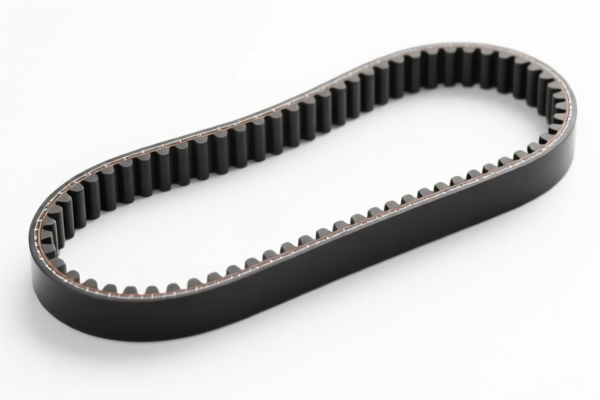
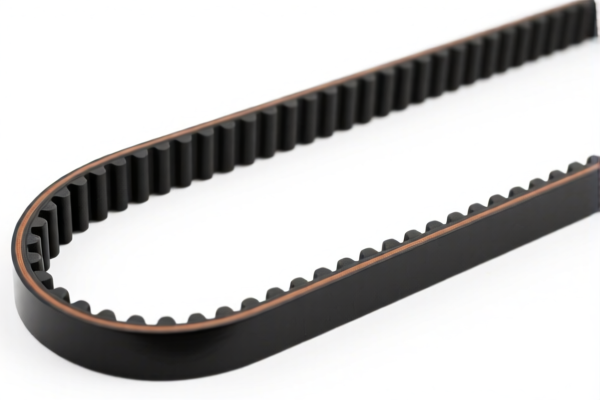
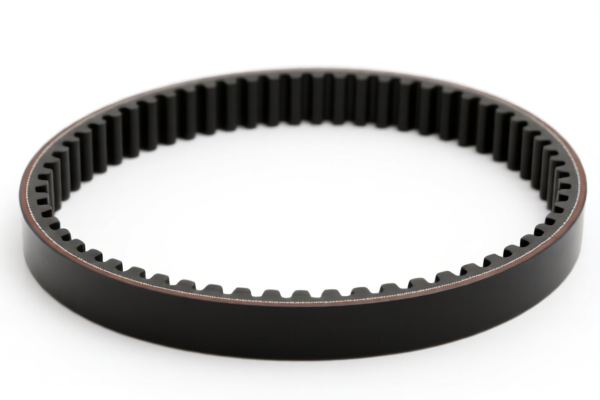
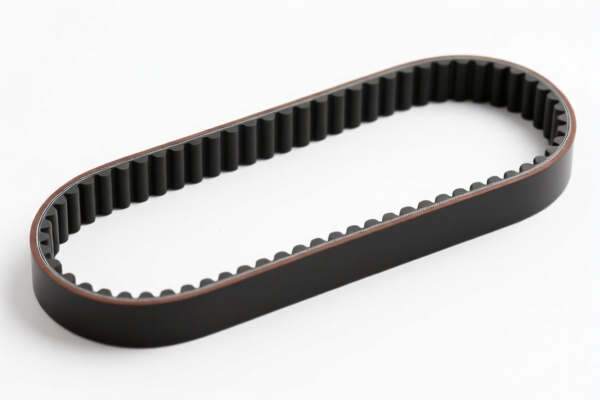
AI Analysis
🌀 Wireless Synchronous Belt? Wait... It’s a Timing Belt!
⚠️ Critical Clarification: The term "Wireless Synchronous Belt" is a logical contradiction.
- Belt = Physical, mechanical power transmission component.
- Wireless = No physical medium (e.g., radio waves).Conclusion: This product is almost certainly a Synchronous Belt (Timing Belt) used in machinery. The "Wireless" part is likely a marketing error, a typo for "Wide," or a misunderstanding of a product that controls wireless devices but is itself a physical belt.
For customs clearance purposes, we treat this as a standard Mechanical Transmission Belt.
📦 HS Code Classification Deep Dive (Based on Provided Data)
Since the product is a Synchronous Belt (also known as a Timing Belt), it falls into specific categories based on its material and function. The data provided highlights five potential HS Codes, ranging from mechanical components to rubber/textile goods.
🌐 HS Code Reference & Clearance Guide | 2026 Latest Tariff Analysis | Professional Strategy
📌 1. Product Definition & Classification
A Synchronous Belt is a toothed belt designed to transmit motion and power between shafts without slippage. It consists of a flexible backbone with teeth on the inner surface.
Key Classification Factors: 1. Material: Is it rubber-based? Textile-based? Metal-based? 2. Function: Is it a general transmission element or part of a specific machine? 3. Construction: Is it molded rubber or woven fabric with rubber coating?
📊 2. HS Code Breakdown & Tax Analysis (2026 Data)
Based on the provided JSON data, here are the five potential classifications. Note: All listed HS Codes attract high additional tariffs (Total ~37.8% - 39.0%) for US imports from China.
🎯 Option A: Mechanical Transmission Components (Non-Rubber/Metal Parts)
| HS Code | Summary & Rationale | Total Tax | Tax Detail Breakdown |
|---|---|---|---|
| 8483.90.10.50 | Classification: Other transmission components. Rationale: Fits the category of mechanical transmission parts. No material conflict if the belt is made of composite materials not primarily classified as rubber or textile. Risk: Lower base tariff (2.8%) but still high total due to add-ons. |
37.8% | - Base: 2.8% - Add-on (Sec 301): 25.0% - Add-on (Sec 122): 10.0% |
| 8483.90.80.80 | Classification: Other transmission components (Catch-all). Rationale: Fits into the "other" category for transmission devices and pulleys. Used when no specific subheading for belts exists in Chapter 84. Risk: Same high tax burden as above. |
37.8% | - Base: 2.8% - Add-on (Sec 301): 25.0% - Add-on (Sec 122): 10.0% |
💡 When to use 8483?
Use these codes if the belt contains significant metal components (e.g., steel cords) or if customs authorities classify it strictly as a mechanical part rather than a manufactured rubber/textile good.
🎯 Option B: Rubber-Based Belts (Most Common)
| HS Code | Summary & Rationale | Total Tax | Tax Detail Breakdown |
|---|---|---|---|
| 4010.35.90.00 | Classification: V-belts, flat belts, or toothed belts of vulcanized rubber. Rationale: Most synchronous belts are molded from rubber with fabric reinforcement. This is the most common classification for standard rubber timing belts. Risk: Slightly higher base tariff (3.3%) than 8483, but widely accepted for rubber goods. |
38.3% | - Base: 3.3% - Add-on (Sec 301): 25.0% - Add-on (Sec 122): 10.0% |
| 4010.36.90.00 | Classification: Other toothed belts of vulcanized rubber. Rationale: Similar to 4010.35 but may apply to different dimensions or specific sub-categories within rubber belts. No material conflict. Risk: Same tax structure as 4010.35. |
38.3% | - Base: 3.3% - Add-on (Sec 301): 25.0% - Add-on (Sec 122): 10.0% |
💡 When to use 4010?
Use these codes if the belt is predominantly rubber (vulcanized) with fabric or cord reinforcement. This is the standard for automotive and industrial timing belts.
🎯 Option C: Textile/Fiber-Based Belts (Industrial/Heavy Duty)
| HS Code | Summary & Rationale | Total Tax | Tax Detail Breakdown |
|---|---|---|---|
| 5910.00.10.20 | Classification: Transmission belts of textile material. Rationale: If the belt is made of woven fabric, canvas, or artificial fibers with a rubber or plastic coating, it may fall here. Risk: Highest base tariff (4.0%) among the options, leading to the highest total tax. |
39.0% | - Base: 4.0% - Add-on (Sec 301): 25.0% - Add-on (Sec 122): 10.0% |
💡 When to use 5910?
Use this if the belt is textile-dominated (e.g., heavy-duty conveyor belts with teeth, or belts made primarily of woven synthetic fibers rather than molded rubber).
💰 3. Tariff Structure Deep Dive (Why is it so high?)
All five HS Codes share a similar tax structure due to US Trade Policy. Here is the detailed breakdown:
✅ Applicable Country: United States (US)
✅ Origin: China (CN)
✅ Effective Date: November 10, 2025 (and subsequent imports)
| Tax Component | Rate | Legal Basis | Explanation |
|---|---|---|---|
| Base Tariff | 2.8% – 4.0% | HTSUS Chapter 84/40/59 | The standard Most Favored Nation (MFN) rate for the specific HS code. |
| Section 301 Tariff | +25.0% | USITC Footnote 9903.88.01 | Additional duty imposed on Chinese imports under the 2018 Trade Act. Applies to transmission parts and rubber goods. |
| Section 122 Tariff | +10.0% | IEEPA:9903.01.24/25 | Additional duty under the International Emergency Economic Powers Act, targeting specific Chinese goods. |
| TOTAL EFFECTIVE RATE | 37.8% – 39.0% | Sum of all above | This is the cost you MUST pay at the border. |
🚨 Crucial Note:
- De Minimis Exemption: ❌ NOT APPLICABLE. These goods cannot use the $800 de minimis rule.
- Voluntary Disclosure: If misclassified, you risk penalties + interest.
- Pre-Ruling: Highly recommended to apply for an Advance Ruling from CBP to confirm the correct HS Code.
🛠️ 4. Customs Clearance Practical Advice
✅ 1. Preparation Checklist
| Document | Required? | Purpose |
|---|---|---|
| Product Specifications | ✅ Mandatory | Detail: Material (Rubber/Fabric/Metal), Dimensions, Tooth Profile, Application. |
| Material Composition Statement | ✅ Mandatory | Declare % of rubber, fabric, steel, or other materials. Critical for distinguishing between 4010 (Rubber) and 5910 (Textile). |
| Photos (Clear & Detailed) | ✅ Mandatory | Show the belt teeth, cross-section (to reveal material layers), and any metal cords. |
| Commercial Invoice | ✅ Mandatory | Must clearly state: "Synchronous Belt" or "Timing Belt." Avoid vague terms like "Wireless Belt." |
| Packing List | ✅ Mandatory | List net/gross weight. Ensure no misleading "electronics" are included in the same package unless declared separately. |
✅ 2. Declaration Tips
| Scenario | Correct Declaration | Incorrect Declaration | Consequence |
|---|---|---|---|
| Standard Rubber Belt | "Rubber Synchronous Belt, Model XYZ" | "Wireless Sync Belt" | CBP may reject due to unclear description; delay in clearance. |
| Belt with Metal Cords | "Reinforced Rubber Transmission Belt" | "Mechanical Part" | If misclassified under 8483, may face scrutiny on material content. |
| Textile Belt | "Textile-Backed Rubber Belt" | "Rubber Belt" | Misclassification as 4010 instead of 5910 leads to underpayment (38.3% vs 39.0%). |
✅ 3. Special Handling
- "Wireless" Misnomer:
If the product is NOT a belt (e.g., it’s a wireless controller), you are declaring the wrong product. - If it’s a wireless device, it belongs in Chapter 85 (e.g., 8517.62).
- If it’s a belt, remove "Wireless" from the name.
-
Recommendation: Contact the supplier to clarify. If it’s a belt, the "Wireless" tag is likely a mistake. Declare as "Synchronous Timing Belt."
-
Material Verification:
- Rubber-Dominant → 4010.35/36 (Most Likely)
- Textile-Dominant → 5910.00.10
- Metal/Composite Mechanical Part → 8483.90
🌍 5. Global Market Comparison (2026)
| Market | Recommended HS Code | Estimated Total Duty (China Origin) | Notes |
|---|---|---|---|
| 🇺🇸 USA | 4010.35.90.00 or 8483.90.10.50 | 37.8% – 39.0% | High tariffs due to Section 301 & 122. |
| 🇨🇳 China | 4010.35.90.00 | ~5% | No additional trade war tariffs. |
| 🇪🇺 EU | 4010.35.00.00 | ~3.5% | No Section 301 tariffs. CE marking required. |
| 🇬🇧 UK | 4010.35.00.00 | ~3.5% | Post-Brexit rules apply. |
| 🇯🇵 Japan | 4010.35.00.00 | ~3.0% | JIS standards may apply. |
📌 Key Takeaway:
The USA is the most expensive market for importing synchronous belts from China due to add-on tariffs. Consider transshipment or duty mitigation strategies if volume is high.
📌 6. Common Mistakes & Pitfalls
❌ Mistake 1: Using "Wireless" in the declaration.
👉 Result: CBP flags the entry for review, causing delays.
✅ Fix: Use accurate technical names: "Synchronous Belt" or "Timing Belt."
❌ Mistake 2: Misclassifying Rubber Belts as Mechanical Parts (8483).
👉 Result: May be accepted, but if material is >50% rubber, customs may reclassify to 4010, leading to interest on underpaid duties.
✅ Fix: Provide a material composition sheet proving the primary character.
❌ Mistake 3: Ignoring the "Section 122" tariff.
👉 Result: Unexpected 10% additional duty at the border.
✅ Fix: Budget for the full 37.8%–39.0% tax rate.
🎯 7. Conclusion: Strategic Recommendation
- Clarify Product Name: Remove "Wireless." It is a Synchronous Belt.
- Choose the Right HS Code:
- If Rubber: 4010.35.90.00 (Most Common).
- If Textile: 5910.00.10.20.
- If Mechanical/Composite: 8483.90.10.50.
- Budget for Tax: Expect ~38% total duty for US imports.
- Document Rigorously: Provide material composition, photos, and clear descriptions.
- Seek Pre-Ruling: Apply to CBP for an Advance Ruling to lock in the correct HS Code and avoid post-import penalties.
🚀 Final Tip:
"Accurate Material Declaration is Key. Rubber = 4010, Textile = 5910, Mechanical = 8483. Pay the 38% tax, or face the consequences!"
✨ Professional Clearance, Start with Precision!
💼 Every cent saved in classification is a cent earned in profit!
Customer Reviews
About HS Code Classification
The Harmonized System (HS) is an internationally standardized nomenclature developed by the World Customs Organization (WCO) to classify traded products. Over 200 countries use the HS system as the basis for customs tariffs, trade statistics, and import/export regulations.
Each HS code follows a hierarchical structure:
- Chapter (2 digits) — Broad category of goods (e.g., Chapter 84: Machinery and Mechanical Appliances)
- Heading (4 digits) — More specific grouping within the chapter
- Subheading (6 digits) — Internationally standardized breakdown, used by all WCO member countries
- National subdivisions (8-10 digits) — Country-specific extensions for further classification, such as US HTSUS 10-digit codes
Correct HS code classification is essential for smooth customs clearance, accurate duty payment, and compliance with trade regulations. Misclassification can lead to customs delays, overpayment of duties, or penalties.
When importing from CN to US, the applicable tariff rates may include:
- Most-Favored-Nation (MFN) rate — The standard duty rate applied to WTO members
- General rate — Applied to countries without trade agreements
- Trade remedy duties — Additional tariffs such as Section 301 (anti-dumping), Section 232 (national security), or countervailing duties
The information provided on this page is for reference purposes only. For official classification, please consult with your local customs authority or a licensed customs broker.