Wood (HS Code 4407990295)
CN → US| HS Code | Tariff Rate | Origin | Destination | Doc |
|---|---|---|---|---|
| 4407990295 | 35.0% | CN | US | Official Doc |
| 4407990261 | 35.0% | CN | US | Official Doc |
Product Images
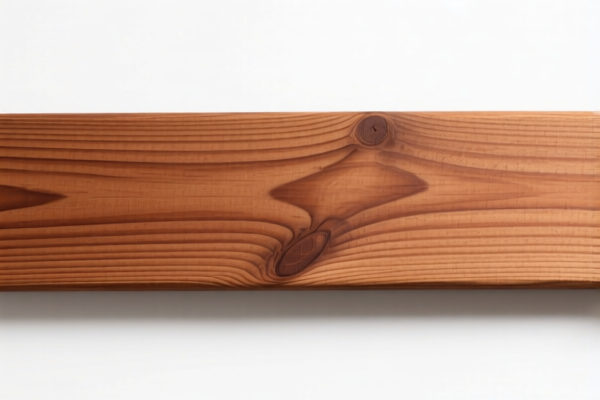
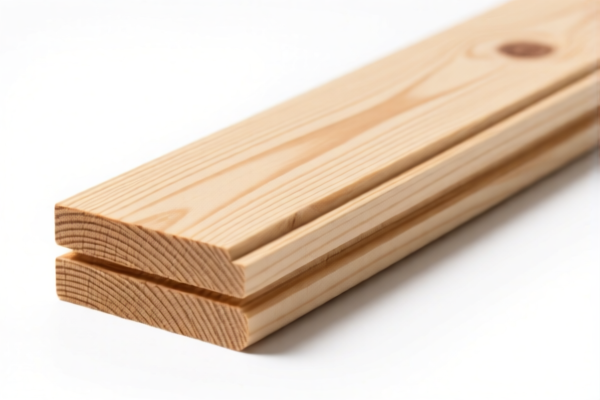
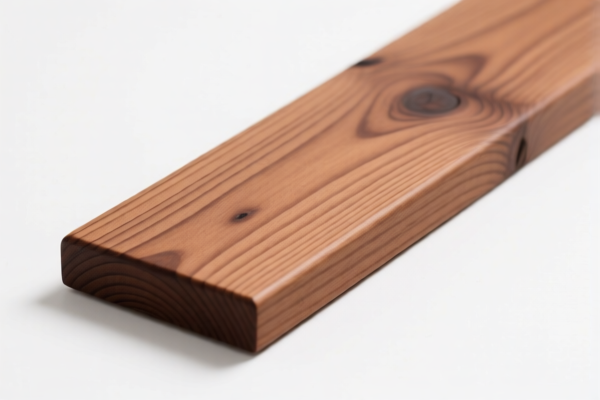
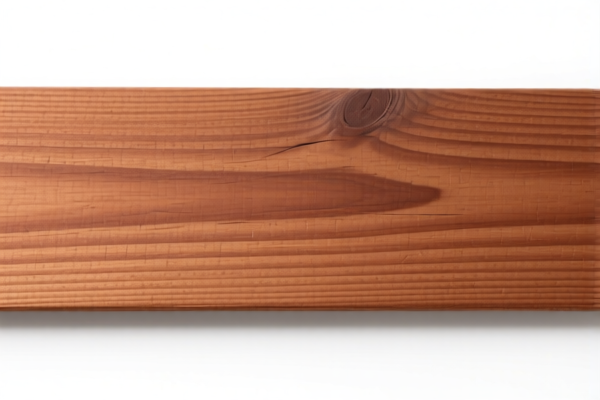
AI Analysis
🪵 Non-Coniferous Sawn Wood (HS Code: 4407.99.02.95)
🌐 HS Code Reference & Customs Clearance Guide | 2026 Latest Tariff Analysis | Professional Clearance Strategy
📌 I. Product Definition & Classification: Do You Truly Understand "Non-Coniferous Sawn Wood"?
Sawn wood is the primary material for construction, furniture, and packaging. In international trade, wood is strictly categorized by botanical origin (Coniferous vs. Non-Coniferous) and processing method.
HS Code 4407.99.02.95 specifically refers to:
"Other Non-Coniferous Wood" that is sawn or chipped lengthwise, sliced, or peeled, with a thickness exceeding 6 mm.
- Non-Coniferous (Hardwood): Includes species like Oak, Maple, Cherry, Walnut, Teak, Mahogany, etc. (Excludes Pine, Fir, Spruce).
- Processing State: The wood has been mechanically processed (sawn, sliced, peeled). It may be planed, sanded, or end-jointed.
- Thickness Constraint: Must be > 6 mm. (If ≤ 6 mm, it generally falls under HS 4408 veneer sheets).
- "Other": This code is a residual category for non-coniferous woods that do not fit specific sub-categories like Walnut (
4407.99.02.61) or specific high-value tropical hardwoods that might have distinct codes in other jurisdictions (though in this specific dataset, Walnut is separated).
⚠️ Key Distinction Point: * If the wood is Coniferous (Softwood like Pine) → Go to HS 4407.10.xxxx. * If the wood is Walnut → Go to HS 4407.99.02.61 (as seen in the data). * If the wood is Non-Coniferous and NOT Walnut → This is
4407.99.02.95.
📦 II. HS Code Classification Details (Based on Provided Data)
The provided data contains two relevant entries. We must distinguish between them to ensure accuracy.
| HS Code | Product Description | Applicable Scenario | Tax Rate (Total) |
|---|---|---|---|
4407.99.02.95 |
Other Non-Coniferous Wood (Thickness > 6mm, Not Walnut) | Oak, Maple, Birch, Teak, Mahogany, Acacia, etc. | 25.0% |
4407.99.02.61 |
Walnut (Juglans spp) (Thickness > 6mm) | True Walnut logs/planks | 25.0% |
🔍 Critical Reminder: * Do NOT misclassify Walnut as
4407.99.02.95. Although the tax rate is the same (25%), accurate classification is required for customs audits and potential future tariff changes. * Non-Coniferous means Hardwood. If you are importing Pine, Fir, or Spruce, this code is incorrect.
💰 III. 2026 Latest Tariff Rate Breakdown
✅ Applicable Country: United States (US)
✅ Origin: China (CN) (Implied by the 25% Section 301 tariff context in the data)
✅ Effective Date: Current rates apply
🎯 1. 4407.99.02.95 —— Other Non-Coniferous Sawn Wood
| Item | Content |
|---|---|
| Base Tariff | 0.0% (Ad Valorem) |
| Section 301 Additional Tariff | +25.0% |
| Total Tax Rate | 25.0% |
| Tax Calculation | CIF Value × 25% |
| De Minimis Exemption | ❌ Not Applicable (Wood products typically do not qualify for de minimis duty-free entry for high-value shipments, and Section 301 tariffs are strictly enforced). |
| Legal Basis Path | HTSUS:4407.99.02.95 → USITC Footnote 9903.88.01 (Section 301) |
📌 Explanation: * Base Rate 0%: Most wood products have a low or zero base MFN (Most Favored Nation) rate. * 25% Additional Tariff: This is a Section 301 tariff imposed on Chinese goods. It is non-negotiable and applies to almost all Chinese-origin wood products unless a specific exclusion is granted (which are rare and time-limited). * Total Cost Impact: For every $10,000 of wood, you pay $2,500 in duties.
🛠️ IV. Customs Clearance Practical Advice (Pitfall Avoidance Guide)
✅ 1. Documentation Checklist (Non-Negotiable)
| Document | Required | Notes |
|---|---|---|
| ✅ Commercial Invoice | ✔️ | Must clearly state: "Sawn Hardwood, Non-Coniferous, Thickness > 6mm, Origin: China". |
| ✅ Packing List | ✔️ | Detail weight, volume, and number of bundles/packages. |
| ✅ Phytosanitary Certificate | ✔️ | Crucial. Issued by the country of origin. Must certify wood is free from pests/diseases. |
| ✅ Fumigation Certificate | ✔️ | Proof that the wood/ packaging has been treated against pests (ISPM 15 standard for pallets). |
| ✅ Species Declaration | ✔️ | Must specify the botanical name (e.g., Quercus alba for White Oak). Do not just write "Oak". |
| ✅ Bill of Lading/Air Waybill | ✔️ | Standard shipping document. |
⚠️ Warning:
If the wood is untreated or lacks a valid Phytosanitary Certificate, CBP (Customs and Border Protection) will detain the shipment and order re-export or destruction at your expense.
✅ 2. Classification Tips (Key Mantra)
🔥 "Hardwood over 6mm, not Walnut, is 4407.99.02.95!"
| Scenario | Correct Classification | Risk of Error |
|---|---|---|
| Oak Planks, 8mm thick | 4407.99.02.95 |
High. Misclassifying as Softwood (4407.10) leads to penalty. |
| Walnut Boards, 10mm thick | 4407.99.02.61 |
High. Even though tax is same, wrong code triggers audit. |
| Pine Planks, 10mm thick | 4407.10.xxxx |
Critical. Pine is Coniferous. Wrong code = 4407.10, not 4407.99. |
| Wood Veneer, 5mm thick | 4408.xxxx |
Medium. Veneer (≤6mm) has different duties and rules. |
| Chips/Wood Waste | 4401.xxxx |
Medium. If it’s not sawn/plank but chipped, it’s fuel/feedstock, not sawn wood. |
✅ 3. Special Handling
| Situation | Handling Advice |
|---|---|
| Mixed Species Cargo | If a shipment contains both Walnut and Oak, you must split the declaration. Use 4407.99.02.61 for Walnut and 4407.99.02.95 for Oak. |
| End-Jointed Wood | Even if end-jointed (like parquet or finger-jointed lumber), it remains under 4407 if thickness > 6mm. Do not classify as furniture parts (4421). |
| Treated Wood | Ensure the treatment method (e.g., heat treatment, chemical) is noted on the Phytosanitary Certificate. Some countries restrict certain chemicals. |
🌍 V. Global Market Comparison (2026)
| Country/Region | Recommended HS Code | Tariff Rate (China Origin) | Certification Requirement | Notes |
|---|---|---|---|---|
| 🇺🇸 USA | 4407.99.02.95 |
25.0% (Base 0% + 301) | Phytosanitary + Fumigation | High duty. Plan cost accordingly. |
| 🇨🇳 China | 4407.99.02.95 |
~10-15% (VAT + Tariff) | None specific for import | China is a major exporter; imports are less common but subject to standard duties. |
| 🇪🇺 EU | 4407.99.00 |
~0% (Most MFN are 0%) | EUTR (EU Timber Regulation) Compliance | Strict legality proof. Must prove wood is legal. No high tariff, but high compliance cost. |
| 🇬🇧 UK | 4407.99.00 |
~0-5% | UK Timber Regulation | Similar to EU. |
| 🇨🇦 Canada | 4407.99.00 |
0% (CUSMA if Canadian/Mexican) | CITES (if endangered species) | Free trade under CUSMA for North American wood. |
📌 Conclusion:
USA: The 25% tariff is the biggest cost driver. * EU/UK: The focus is on legality verification (EUTR), not high duties. * Canada:* Preferential rates if originating from US/Mexico.
📌 VI. Common Mistakes & Pitfall Guide (Lessons Learned)
❌ Mistake 1: Classifying Walnut as 4407.99.02.95 ("Other").
👉 Consequence: Even if the rate is the same, it’s an incorrect declaration. Customs may audit, causing delays. Walnut is a high-value commodity; accuracy is key.
❌ Mistake 2: Calling Pine/Spruce "Non-Coniferous Wood".
👉 Consequence: Severe Misclassification. Pine is Coniferous (Softwood). HS Code 4407.10 applies. Misclassification can lead to penalties and back-tariffs.
❌ Mistake 3: Ignoring the 6mm Thickness Rule.
👉 Consequence: If thickness is ≤ 6mm, it is considered Veneer (HS 4408), not Sawn Wood. The duty structure and inspection requirements differ.
❌ Mistake 4: Missing Phytosanitary Certificate.
👉 Consequence: Seizure and Destruction. Wood is a high-risk commodity for pests. No cert = No entry.
✅ Correct Action:
"Sawn Non-Coniferous Wood, Hardwood (e.g., Oak), Thickness 8mm, Not Walnut, Origin: China, With Valid Phytosanitary Certificate."
🎯 VII. Conclusion: Professional Declaration, Cost Control, Risk Mitigation
🎯 Remember the Mantra:
🔹 "Non-Coniferous, >6mm, Not Walnut = 4407.99.02.95"
🔹 "25% Tariff for China Origin in USA – Budget It!"
🔹 "Phytosanitary Cert is King – Don’t Ship Without It!"
📌 Pro Tip:
If your wood is sourced from Vietnam, Malaysia, or Thailand, the Section 301 (25%) tariff does not apply. You may benefit from lower or zero tariffs, depending on the FTA (e.g., ASEAN-US trade dynamics).
Always verify the Country of Origin!
📣 Immediate Action:
📞 Consult a licensed Customs Broker
📄 Ensure Phytosanitary & Fumigation Certs are in hand
🧮 Calculate CIF + 25% Duty in your pricing model
🚀 Smooth Customs Clearance = Profit Protection!
✨ Professional Customs Clearance Starts with Accurate Classification!
💼 Every Percentage Point of Tariff Matters!
Customer Reviews
About HS Code Classification
The Harmonized System (HS) is an internationally standardized nomenclature developed by the World Customs Organization (WCO) to classify traded products. Over 200 countries use the HS system as the basis for customs tariffs, trade statistics, and import/export regulations.
Each HS code follows a hierarchical structure:
- Chapter (2 digits) — Broad category of goods (e.g., Chapter 84: Machinery and Mechanical Appliances)
- Heading (4 digits) — More specific grouping within the chapter
- Subheading (6 digits) — Internationally standardized breakdown, used by all WCO member countries
- National subdivisions (8-10 digits) — Country-specific extensions for further classification, such as US HTSUS 10-digit codes
Correct HS code classification is essential for smooth customs clearance, accurate duty payment, and compliance with trade regulations. Misclassification can lead to customs delays, overpayment of duties, or penalties.
When importing from CN to US, the applicable tariff rates may include:
- Most-Favored-Nation (MFN) rate — The standard duty rate applied to WTO members
- General rate — Applied to countries without trade agreements
- Trade remedy duties — Additional tariffs such as Section 301 (anti-dumping), Section 232 (national security), or countervailing duties
The information provided on this page is for reference purposes only. For official classification, please consult with your local customs authority or a licensed customs broker.