Wood Sawdust Powder
CN → US| HS Code | Tariff Rate | Origin | Destination | Doc |
|---|---|---|---|---|
| 4401394210 | 35.0% | CN | US | Official Doc |
| 4405000000 | 38.2% | CN | US | Official Doc |
| 4401310000 | 35.0% | CN | US | Official Doc |
| 4401220000 | 35.0% | CN | US | Official Doc |
| 4401210000 | 35.0% | CN | US | Official Doc |
Product Images
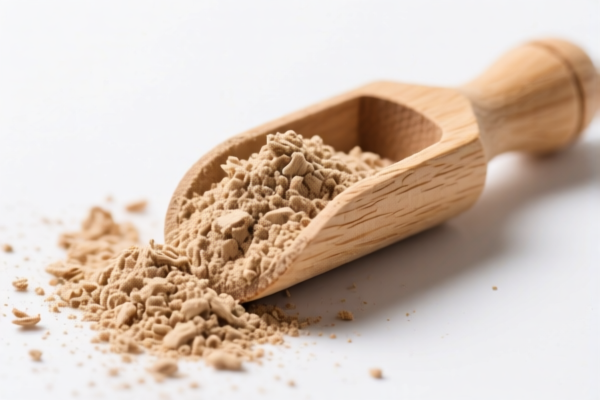
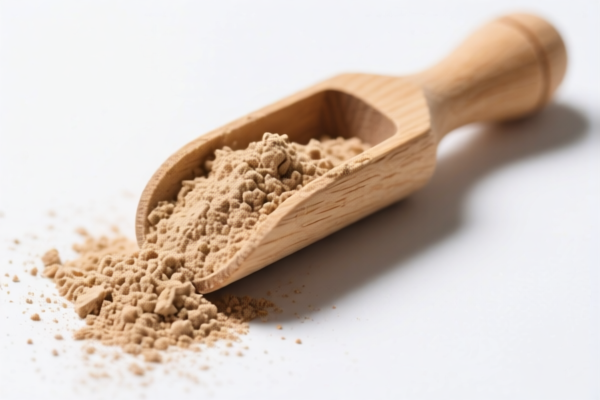
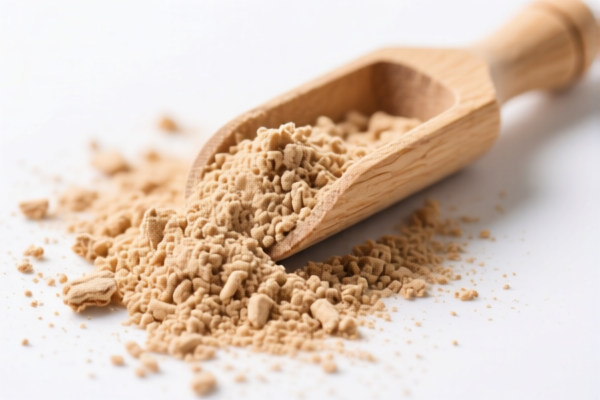
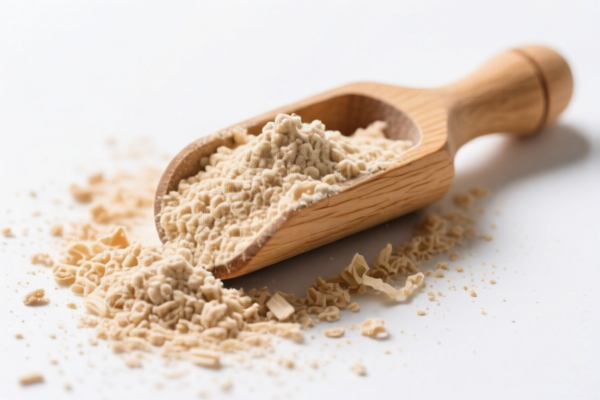
AI Analysis
🌲 Wood Sawdust Powder (Wood Pellets & Wood Waste)
🌐 HS Code Reference & Customs Clearance Guide | 2026 Latest Tariff Analysis | Professional Entry Strategies
📌 I. Product Definition & Classification: What Exactly Is "Wood Sawdust Powder"?
In international trade, "Wood Sawdust Powder" is not a single uniform product but a category often encompassing wood chips, sawdust, shavings, waste, and wood pellets. The correct HS Code classification depends strictly on the physical form (powder vs. pellet/chip) and processing level (raw waste vs. processed biomass fuel).
Key Distinction Criteria: * Form: Is it fine powder (sawdust/chips) or compressed cylinders (pellets)? * Composition: Is it pure wood (4401) or does it contain binders/additives that change its classification? * Usage: Primarily for fuel/biomass energy or for industrial processing?
⚠️ Critical Classification Trap:
- If it is pure wood waste/chips/powder used as fuel → Likely 4401 Series.
- If it is highly refined wood flour/powder used for adhesives/industrial use → Might fall under 4405 (though pellets are often argued as 4401).
- Pellets are specifically defined as compressed wood waste, often falling under 4401.39 or 4401.31.
📦 II. HS Code Classification Details (2026 Latest Tariff Authority Comparison)
Based on the provided data, here are the specific HS Codes, their summaries, and tax implications for US imports from China.
| HS Code | Summary of Classification Logic | Total Tax Rate | Tax Detail Breakdown |
|---|---|---|---|
| 4401.39.42.10 | Wood Pellets/Waste: Classified as wood waste form. Fits the definition of fuel wood, sawdust, or pellets in material and form. | 35.0% | Base: 0.0% Additional: 25.0% Sec 122: 10% |
| 4405.00.00.00 | Wood Flour/Powder: Material (wood) and form (granular/powder) fully match the definition of wood flour/wood fiber. | 38.2% | Base: 3.2% Additional: 25.0% Sec 122: 10% |
| 4401.31.00.00 | Wood Pellets: Fully meets the material and form requirements in the classification explanation for pellets. | 35.0% | Base: 0.0% Additional: 25.0% Sec 122: 10% |
| 4401.22.00.00 | Wood Chips/Shavings: Sawdust falls under wood chip/pellet form, matching the primary product attribute of fuel wood. | 35.0% | Base: 0.0% Additional: 25.0% Sec 122: 10% |
| 4401.21.00.00 | Wood Chips (Raw): Sawdust/raw material form matches the fuel wood category and material consistency. | 35.0% | Base: 0.0% Additional: 25.0% Sec 122: 10% |
🔍 Key Insight:
- 4405.00.00.00 has the highest total tax (38.2%) due to a non-zero base tariff (3.2%).
- The 4401 series codes have a 0% base tariff, resulting in a lower total tax (35.0%), driven entirely by additional tariffs.
- "Pellets" (4401.31/4401.39) and "Chips/Sawdust" (4401.21/4401.22) are grouped similarly in terms of tax rate (35%), but the description must match the physical product exactly to avoid customs rejection.
💰 III. 2026 Latest Tariff Rate Breakdown (Including Surcharges & Policy Add-ons)
✅ Applicable Country: United States (US)
✅ Country of Origin: China (CN)
✅ Effective Date: November 10, 2025 (and subsequent imports)
🎯 1. 4401.39.42.10 & 4401.31.00.00 & 4401.22.00.00 & 4401.21.00.00
(Wood Waste, Pellets, Chips, and Sawdust Forms)
| Item | Content |
|---|---|
| Base Tariff | 0.0% (Ad valorem) |
| Section 301 Surcharge | +25.0% (Additional Duty) |
| Section 122 Tariff | +10.0% (Policy Additional Duty) |
| Total Effective Rate | 35.0% |
| Tax Calculation | CIF Value × 35.0% |
| De Minimis Eligibility | ❌ No (High tariff rate excludes small package exemption) |
| Legal Basis Path | USITC:4401.xxxx.xxxx → Section 301: 25% → Section 122: 10% |
📌 Explanation:
- The 25% surcharge applies under Section 301 of the Trade Act of 1974 against Chinese imports.
- The 10% surcharge is added under Section 122 (often related to national security or specific trade remedies).
- Base tariff is 0%, so the total is simply the sum of the surcharges (25% + 10%).
- Critical Note: Misclassifying this as a non-surgearged item can lead to severe penalties and back taxes.
🎯 2. 4405.00.00.00
(Wood Flour/Wood Powder for Industrial Use)
| Item | Content |
|---|---|
| Base Tariff | 3.2% |
| Section 301 Surcharge | +25.0% (Additional Duty) |
| Section 122 Tariff | +10.0% (Policy Additional Duty) |
| Total Effective Rate | 38.2% |
| Tax Calculation | CIF Value × 38.2% |
| De Minimis Eligibility | ❌ No |
| Legal Basis Path | USITC:4405.00.00.00 → Section 301: 25% → Section 122: 10% |
📌 Caution:
- This code carries a higher total tax (38.2%) because the base tariff is 3.2%, not 0%.
- Use this code only if the product is specifically wood flour/powder for industrial bonding or paper making, NOT for fuel pellets.
- If you ship fuel pellets under this code, customs may reclassify and penalize for misdeclaration.
🛠️ IV. Customs Clearance Practical Advice (Battle-Tested Pitfall Avoidance)
✅ 1. Required Documentation Checklist (Non-Negotiable)
| Document | Mandatory? | Notes |
|---|---|---|
| ✅ Product Specification Sheet | ✔️ | Must detail: Moisture content, density, diameter (for pellets), particle size (for powder), wood species. |
| ✅ MSDS (Material Safety Data Sheet) | ✔️ | Required for safety classification, especially if dust explosion risk is a concern. |
| ✅ Commercial Invoice | ✔️ | Must clearly state: "Wood Sawdust/Pellets," HS Code, and Country of Origin (China). |
| ✅ Packing List | ✔️ | Must show net/gross weight and packaging type (bags, pallets). |
| ✅ Phytosanitary Certificate | ✔️ | Crucial: US CBP and USDA require proof that wood is free of pests/diseases. Without this, goods will be refused entry. |
| ✅ ISPM 15 Mark (if wooden packaging) | ✔️ | If pallets/crates are used, they must be heat-treated/fumigated and marked. |
📌 Warning:
- No Phytosanitary Certificate = Automatic Rejection.
- Incorrect Wood Species Declaration = Fines. Be honest about the species (e.g., Pine, Oak, Mixed).
✅ 2. Declaration Strategy (Key Mantras)
🔥 "Form Matters: Pellets vs. Powder. Origin is China, Taxes Are High."
| Scenario | Correct Declaration | Wrong Practice | Consequence |
|---|---|---|---|
| Compressed Pellets | 4401.31.00.00 or 4401.39.42.10 |
Declare as "Wood Chips" | Potential reclassification, delays. |
| Fine Sawdust/Powder | 4405.00.00.00 (if industrial) OR 4401.2x (if fuel) |
Vague description "Wood Waste" | Customs will assign worst-case tariff or hold cargo. |
| Mixed Packaging | Declare as one lot if identical | Split into multiple vague items | Increases inspection risk. |
| Origin | China | Hide origin or claim Vietnam | Severe penalties, fraud charges. |
📌 Note on 4401 vs 4405:
- If your "sawdust" is compressed into pellets, it is NOT 4405 (Wood Flour). It is 4401 (Fuel Wood/Waste).
- If it is loose fine powder for glue production, it IS 4405.
- Misclassification cost: 35% vs 38.2% + potential penalties.
✅ 3. Special Case Handling
| Scenario | Handling Advice |
|---|---|
| High Moisture Content | Must declare accurately. High moisture may be considered "non-commodity" or subject to additional inspection. |
| Chemical Treatment | If wood is treated with preservatives, it may no longer be pure wood. May require different HS Code or additional declarations. |
| Small Sample Shipments | De Minimis ($800) DOES NOT APPLY due to high tariffs. Even small samples are subject to 35-38.2% tax. |
| Biomass Fuel Certification | Provide proof of burning quality if importing as fuel to avoid quality disputes. |
🌍 V. Global Market Comparison (2026 Latest)
| Country/Region | Recommended HS Code | Approx. Total Tax (China Origin) | Certification Required | Notes |
|---|---|---|---|---|
| 🇺🇸 USA | 4401.31/39 or 4405.00 |
35.0% - 38.2% | Phytosanitary Cert, ISPM 15 | High Tariffs. Strict biosecurity. |
| 🇨🇳 China | 4401 or 4405 |
~5-10% (Varies) | None specific | Lower entry barrier. |
| 🇪🇺 EU | 4401 or 4405 |
~0-3% (Base) | PEFC/FSC Certification | Focus on sustainability proof. |
| 🇬🇧 UK | 4401 or 4405 |
~0-3% (Base) | Timber Due Diligence | Post-Brexit rules apply. |
📌 Conclusion:
- USA is the most challenging market due to the 35-38.2% effective tariff rate.
- Biosecurity is the biggest hurdle in the US (Phytosanitary Cert is mandatory).
- EU/UK focus more on sustainability certifications (FSC/PEFC) than high tariffs.
📌 VI. Common Mistakes & Pitfall Guide (Blood Lessons)
❌ Mistake 1: Declaring Pellets as Wood Chips (4401.21 vs 4401.31)
👉 Result: Minor difference, but if the physical form is clearly pelletized, customs may reject. Stick to the correct sub-heading.
❌ Mistake 2: Forgetting the Phytosanitary Certificate
👉 Result: Cargo held at port, incurs demurrage, or is returned/destructed. This is the #1 cause of failure.
❌ Mistake 3: Using "Sawdust" for Compressed Pellets
👉 Result: Confusion in classification. If it’s compressed, it’s a "Pellet" (4401.31/39), not just "Sawdust" (4401.21).
❌ Mistake 4: Ignoring Section 122
👉 Result: Underestimating total cost. Many importers calculate only 25% (Section 301) and forget the additional 10%, leading to budget shortfalls.
✅ Correct Approach:
"Wood Pellets, Compressed, 8mm Diameter, Moisture Content <10%, HS Code 4401.31.00.00, Origin: China, Phytosanitary Cert Attached, ISPM 15 Pallets."
🎯 VII. Conclusion: Professional Declaration, Save Money, Speed Up Clearance!
🎯 Remember the Mantras:
🔹 "Pellets are 4401, Powder is 4405. Tax is 35-38%, Don't Forget the Cert!"
🔹 "Phytosanitary Cert is King in the US. Without it, your cargo stops."
🔹 "Section 301 + 122 = 35%+. Plan your budget accordingly."
📌 Pro Tip:
If your wood sawdust/pellets are sourced from Vietnam, Thailand, or Malaysia (and meet Rules of Origin), you MIGHT be able to avoid the Section 301/122 surcharges, reducing taxes to base rate only (0% for 4401, 3.2% for 4405).
However, transshipment fraud is heavily penalized. Ensure legitimate origin.
📣 Immediate Action:
📞 Contact a licensed customs broker.
📄 Secure Phytosanitary Certificate from the exporting country.
📋 Verify ISPM 15 marking on all wooden packaging.
🚀 Ensure smooth customs clearance and maximize profit margins!
✨ Professional clearance starts with precise classification!
💼 Every percentage point counts in the tariff game!
Customer Reviews
About HS Code Classification
The Harmonized System (HS) is an internationally standardized nomenclature developed by the World Customs Organization (WCO) to classify traded products. Over 200 countries use the HS system as the basis for customs tariffs, trade statistics, and import/export regulations.
Each HS code follows a hierarchical structure:
- Chapter (2 digits) — Broad category of goods (e.g., Chapter 84: Machinery and Mechanical Appliances)
- Heading (4 digits) — More specific grouping within the chapter
- Subheading (6 digits) — Internationally standardized breakdown, used by all WCO member countries
- National subdivisions (8-10 digits) — Country-specific extensions for further classification, such as US HTSUS 10-digit codes
Correct HS code classification is essential for smooth customs clearance, accurate duty payment, and compliance with trade regulations. Misclassification can lead to customs delays, overpayment of duties, or penalties.
When importing from CN to US, the applicable tariff rates may include:
- Most-Favored-Nation (MFN) rate — The standard duty rate applied to WTO members
- General rate — Applied to countries without trade agreements
- Trade remedy duties — Additional tariffs such as Section 301 (anti-dumping), Section 232 (national security), or countervailing duties
The information provided on this page is for reference purposes only. For official classification, please consult with your local customs authority or a licensed customs broker.