Wood Shavings
CN → US| HS Code | Tariff Rate | Origin | Destination | Doc |
|---|---|---|---|---|
| 4401394210 | 35.0% | CN | US | Official Doc |
| 4401310000 | 35.0% | CN | US | Official Doc |
| 4405000000 | 38.2% | CN | US | Official Doc |
| 4401220000 | 35.0% | CN | US | Official Doc |
| 4401210000 | 35.0% | CN | US | Official Doc |
Product Images
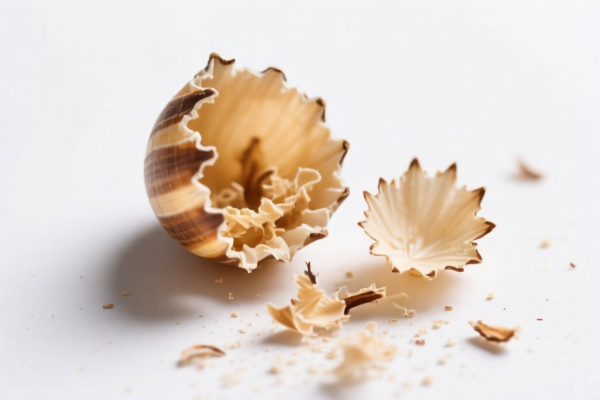
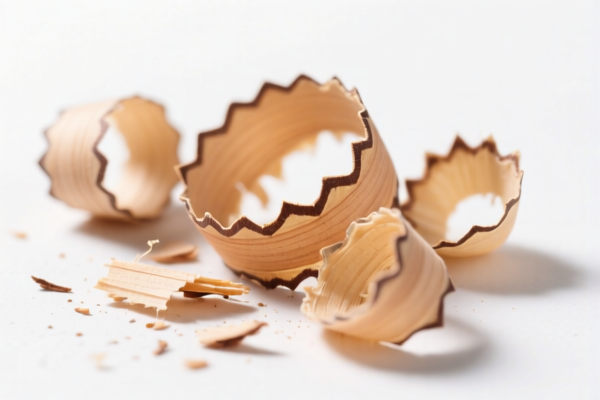
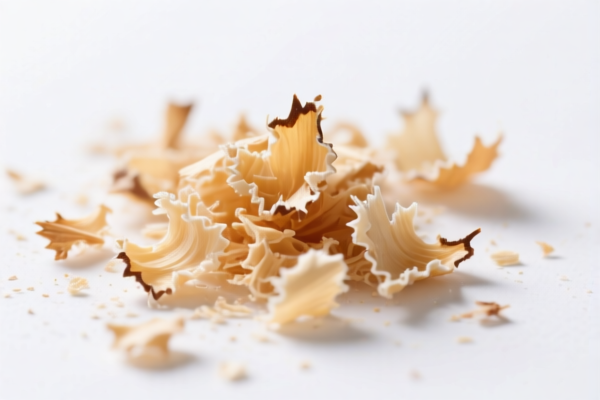

AI Analysis
🪵 Wood Shavings (Pellets & Sawdust)
🌐 HS Code Reference & Customs Clearance Guide | 2026 Latest Tariff Analysis | Professional Clearance Strategy
📌 I. Product Definition & Classification: Do You Truly Understand "Wood Shavings"?
In international trade, "Wood Shavings" is not a single, unified category. It is broadly defined as fuel wood, chips, or particles derived from timber. The correct HS Code depends heavily on the specific form (pellets vs. raw chips vs. sawdust) and whether it is classified under general fuel wood or specific wood powder categories.
Primary Forms: * Wood Pellets: Compressed biomass in cylindrical form. * Wood Chips/Shavings: Loose or fragmented wood pieces used as fuel. * Sawdust/Wood Wool: Finer particulate matter.
⚠️ Key Distinction Point: - If the material is in the form of pellets or raw chips/shavings, it falls under 4401 (Fuel wood). - If the material is processed into finer powder or wool-like structures, it may potentially fall under 4405 (Wood wool and wood flour). - Note: For general trade purposes involving standard biomass fuel, 4401 is the most common classification.
📦 II. HS Code Classification Details (2026 Latest Tariff Authoritative Comparison)
Based on the provided data, here are the specific HS Codes, summaries, and tax implications for Wood Shavings and related forms:
| HS Code | Product Description | Classification Summary | Total Tax Rate |
|---|---|---|---|
4401.39.42.10 |
Wood Pellets | Classified as wood waste form,符合燃料木、木屑或颗粒的材质与形态定义 (Meets material/form definition for fuel wood, sawdust, or pellets). | 35.0% |
4401.31.00.00 |
Wood Shavings/Pellets | Wood shavings and pellets fully meet the material and form requirements of the classification explanation. | 35.0% |
4405.00.00.00 |
Wood Wool/Flour | Material and form match the definition of wood powder/wood wool. | 38.2% |
4401.22.00.00 |
Wood Chips/Pellets | Wood chips belong to wood slicing/pellet form, conforming to the primary product attribute of fuel wood. | 35.0% |
4401.21.00.00 |
Wood Pellets/Raw Material | Material/form of wood shavings/raw materials is consistent with the defined fuel wood category. | 35.0% |
🔍 Focus Reminder: - Most wood shavings and pellets fall under 4401 with a base tax of 0% but are subject to heavy surcharges. - Only if the product is specifically categorized as Wood Wool or Wood Flour (
4405) does the base tax increase to 3.2%, leading to a higher total tax.
💰 III. 2026 Latest Tariff Rate Breakdown (Including Surcharges & Policy Add-ons)
✅ Applicable Country: United States (US) ✅ Origin: China (CN) ✅ Effective Time: Current regulations apply (Includes subsequent imports)
🎯 1. 4401.39.42.10 / 4401.31.00.00 / 4401.22.00.00 / 4401.21.00.00
(Wood Pellets, Shavings, Chips)
| Item | Detail |
|---|---|
| Base Tariff | 0.0% (Ad Valorem) |
| Section 301 Surcharge | +25.0% (Additional Tariff) |
| Section 122 Tariff | +10.0% (Specific Section 122 Tariff) |
| Total Tax Rate | 35.0% |
| Tax Calculation | CIF Value × 35% |
| De Minimis Exemption | ❌ Not Applicable (Highly restricted for Chinese-origin wood products) |
📌 Explanation: - "Base Tariff 0%": Standard fuel wood often has a low entry duty. - "Section 301 Surcharge 25%": This is the major cost driver, imposed under US Trade Act Section 301 against Chinese goods. - "Section 122 Tariff 10%": Additional levies applied to specific imports from China. - Total 35%: This is a significant barrier to entry. Profit margins must absorb this cost.
🎯 2. 4405.00.00.00
(Wood Wool / Wood Flour)
| Item | Detail |
|---|---|
| Base Tariff | 3.2% (Ad Valorem) |
| Section 301 Surcharge | +25.0% (Additional Tariff) |
| Section 122 Tariff | +10.0% (Specific Section 122 Tariff) |
| Total Tax Rate | 38.2% |
| Tax Calculation | CIF Value × 38.2% |
| De Minimis Exemption | ❌ Not Applicable |
📌 Note: - This category carries a higher total tax (38.2%) due to the 3.2% base tariff. - Only classify here if the product is strictly wood wool (long fibers) or wood flour (fine powder), not standard pellets or chips.
🛠️ IV. Customs Clearance Practical Advice (Practical Pitfall Avoidance Guide)
✅ 1. Documentation Checklist (Mandatory)
| Document | Required | Description |
|---|---|---|
| ✅ Product Specification Sheet | ✔️ | Must detail: Moisture content, density, particle size, wood species, and form (pellet/chip/sawdust). |
| ✅ Certificate of Origin (CO) | ✔️ | Essential for confirming CN origin. May impact eligibility for any potential waivers (though unlikely for these codes). |
| ✅ Commercial Invoice | ✔️ | Clearly state "Wood Pellets" or "Wood Shavings". Avoid vague terms like "Biomass". |
| ✅ Packing List | ✔️ | Specify net/gross weight. Ensure packaging is suitable for bulk cargo to prevent contamination. |
| ✅ ISPM 15 Compliance | ✔️ | Critical! Wooden packaging/pallets MUST be treated and marked per ISPM 15 standards. Non-compliance leads to rejection. |
| ✅ Lab Test Report | ✔️ | Prove chemical treatment status (e.g., unbarked, heat-treated) to meet phytosanitary requirements. |
✅ 2. Declaration Techniques (Key Mantra)
🔥 "Form Defines Code, Origin Dictates Tax, ISPM 15 is Mandatory!"
| Scenario | Correct Declaration | Incorrect Practice |
|---|---|---|
| Standard Biomass Pellets | 4401.31.00.00 or 4401.39.42.10 |
Misdeclare as "Furniture Parts" → High penalty |
| Raw Wood Chips | 4401.22.00.00 |
Declare as "Raw Wood Logs" → Different code, different inspection |
| Fine Sawdust/Powder | 4405.00.00.00 |
Declare as "Pellets" → Risk of classification error & extra duty |
| Mixed Packaging | Declare as single commodity | Splitting into "Packaging" and "Product" → Raises red flags |
✅ 3. Special Case Handling
| Situation | Handling Advice |
|---|---|
| High Moisture Content | Must declare accurately. Excess moisture can lead to rejection for being "unfit for commercial use" or fungal contamination. |
| Contaminated Wood | If wood contains bark, insects, or soil, it will be seized. Ensure debarked and cleaned status. |
| OEM/White Label | Provide client contracts. Mislabeling as a different country’s origin is fraud. |
| Wood Wool vs. Sawdust | If uncertain, provide microscopic images or lab analysis to prove form. 4405 is stricter on definition. |
🌍 V. Global Market Clearance Comparison (2026 Latest)
| Country/Region | Recommended HS Code | Tariff Rate | Certification/Requirements | Notes |
|---|---|---|---|---|
| 🇺🇸 USA | 4401.31.00.00 / 4401.39.42.10 |
35.0% (CN Origin) | ISPM 15, Phytosanitary | High barrier due to 301/122 tariffs. |
| 🇨🇳 China | 4401.31.00.00 |
0% - 5% | GB Standards | Import duty varies by policy; usually low for fuel. |
| 🇪🇺 EU | 4401.31.00 |
0% - 4% | REACH, Sustainable Forestry (EUDR) | EUDR (EU Deforestation Regulation) compliance is critical. |
| 🇬🇧 UK | 4401.31.00 |
0% - 4% | UKCA, Sustainable Sourcing | Post-Brexit rules may apply. |
📌 Conclusion: - USA is the most expensive market for Chinese wood shavings/pellets due to 35% total tax. - EU/UK require strict sustainability and deforestation-free proof (EUDR) in addition to lower tariffs. - China often imports these as raw materials, so export incentives might exist, but import taxes in destination are key.
📌 VI. Common Mistakes & Pitfall Guide (Lessons Learned)
❌ Mistake 1: Misdeclaring "Wood Pellets" as "Wood Wool" (4405)
👉 Consequence: If inspected and found to be pellets, you face classification error penalties and potential back-taxes. Conversely, if declared as pellets but sent as powder, customs may seize it for不符 (non-compliance).
❌ Mistake 2: Ignoring ISPM 15 for Pallets/Packaging 👉 Consequence: Cargo Rejection. US Customs and Border Protection (CBP) and USDA strictly enforce ISPM 15. No mark = Return or Destroy at your cost.
❌ Mistake 3: Under-declaring CIF Value 👉 Consequence: Heavy fines, seizure, and loss of import privileges. 35% tax is high; evasion is risky.
❌ Mistake 4: Vague Product Description ("Biomass") 👉 Consequence: Customs holds shipment for classification determination. Delays cause demurrage charges.
✅ Correct Action:
"Wood Pellets, 6-8mm diameter, Low Ash Content, Unbarked, Heat-Treated per ISPM 15, Model WP-6mm, CIF Value $X.XX/ton"
🎯 VII. Conclusion: Professional Declaration, Cost Control, Efficiency!
🎯 Remember the Mantra:
🔹 "35% is the Reality for US Market!" 🔹 "Form Matters: Pellets/Chips go to 4401, Powder/Wool to 4405." 🔹 "ISPM 15 is Non-Negotiable!"
📌 Pro Tip: If your wood shavings/pellets are originating from Vietnam, Thailand, or Malaysia, you MAY benefit from lower or zero Section 301/122 tariffs (subject to specific rules of origin). - Recommendation: Seek Advance Ruling from CBP if the supply chain is complex. - Alternative Markets: Consider EU or Asia markets where tariffs are lower (though EUDR compliance is key for EU).
📣 Immediate Action:
📞 Contact a licensed Customs Broker + Provide Product Specs + Ensure ISPM 15 Compliance 🚀 Let your wood shavings pass customs smoothly, maximize profit, and expand globally!
✨ Professional clearance starts with accurate classification! 💼 Every percentage point of tax counts!
Customer Reviews
About HS Code Classification
The Harmonized System (HS) is an internationally standardized nomenclature developed by the World Customs Organization (WCO) to classify traded products. Over 200 countries use the HS system as the basis for customs tariffs, trade statistics, and import/export regulations.
Each HS code follows a hierarchical structure:
- Chapter (2 digits) — Broad category of goods (e.g., Chapter 84: Machinery and Mechanical Appliances)
- Heading (4 digits) — More specific grouping within the chapter
- Subheading (6 digits) — Internationally standardized breakdown, used by all WCO member countries
- National subdivisions (8-10 digits) — Country-specific extensions for further classification, such as US HTSUS 10-digit codes
Correct HS code classification is essential for smooth customs clearance, accurate duty payment, and compliance with trade regulations. Misclassification can lead to customs delays, overpayment of duties, or penalties.
When importing from CN to US, the applicable tariff rates may include:
- Most-Favored-Nation (MFN) rate — The standard duty rate applied to WTO members
- General rate — Applied to countries without trade agreements
- Trade remedy duties — Additional tariffs such as Section 301 (anti-dumping), Section 232 (national security), or countervailing duties
The information provided on this page is for reference purposes only. For official classification, please consult with your local customs authority or a licensed customs broker.