Wood based panels (HS 4410190020)
CN → US| HS Code | Tariff Rate | Origin | Destination | Doc |
|---|---|---|---|---|
| 4410110060 | 35.0% | CN | US | Official Doc |
| 4410110010 | 35.0% | CN | US | Official Doc |
| 4412913110 | 43.0% | CN | US | Official Doc |
| 4412513111 | 43.0% | CN | US | Official Doc |
| 4410190060 | 35.0% | CN | US | Official Doc |
Product Images
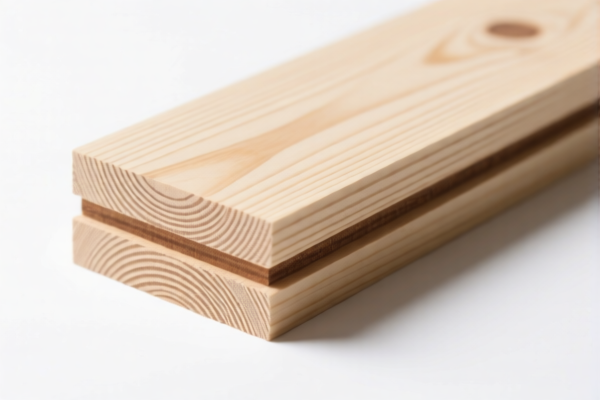
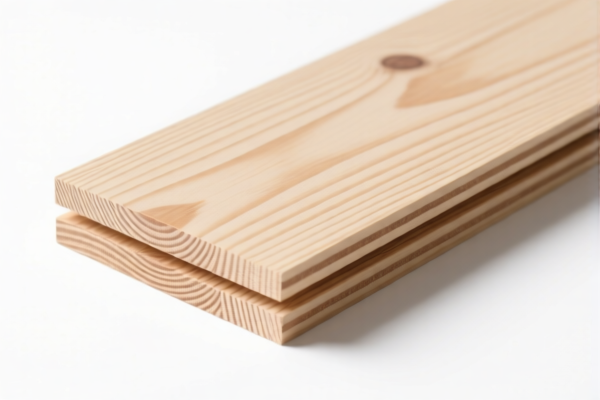
AI Analysis
🪵 Wood Based Panels (HS Code: 4410.19.00.60 & Related)
🌐 HS Code Reference & Customs Clearance Guide | 2026 Latest Tariff Analysis | Professional Clearance Strategy
📌 I. Product Definition & Classification: What are "Wood Based Panels"?
Wood-based panels are engineered wood products made from wood fibers, particles, flakes, or veneers, bonded together with adhesives. They are widely used in furniture manufacturing, interior decoration, construction, and packaging.
In international trade, these products are primarily categorized under Chapter 44 of the Harmonized System (HS). The specific classification depends on the manufacturing process, composition, and structure of the panel.
⚠️ Key Distinction Points:
- Particleboard (Particle Board): Made from wood particles glued together. Classified under 4410.11 or 4410.19.
- Plywood (Veneered Panels): Made by gluing layers of wood veneers. Classified under 4412.
- MDF/HDF: Medium/High-Density Fiberboard. Often falls under 4410 (if particle-based) or 4412 depending on specific construction, but generally 4410 for fiber-based panels in many jurisdictions.
📦 II. HS Code Classification Details (2026 Latest Tariff Authority)
Based on the provided data, here are the relevant HS Codes and their descriptions:
| HS Code | Product Description | Summary | Total Tax Rate |
|---|---|---|---|
| 4410.19.00.60 | Wood-based panels, specific classification | High consistency in material and form | 35.0% |
| 4410.11.00.60 | Wood-based boards, specific classification | Matches specific wooden base material requirements | 35.0% |
| 4410.11.00.10 | Particleboard and similar boards | Complete match in material and form characteristics | 35.0% |
| 4412.91.31.10 | Plywood, laminated wood products | Consistent material attributes, no conflicts | 43.0% |
| 4412.51.31.11 | Plywood category | Consistent material and form characteristics | 43.0% |
🔍 Key Reminder:
- Particleboards (4410 series) generally have a 35% total tax rate.
- Plywoods (4412 series) generally have a 43% total tax rate.
- The distinction between "Particleboard" and "Plywood" is critical for accurate tariff calculation.
💰 III. 2026 Latest Tariff Rate Breakdown (Including Surcharges)
✅ Applicable Country: United States (US)
✅ Country of Origin: China (CN)
✅ Effective Time: 2025 November 10 onwards (including subsequent imports)
🎯 1. 4410.19.00.60 / 4410.11.00.60 / 4410.11.00.10 —— Particleboards & Similar Wood Panels
| Item | Detail |
|---|---|
| Base Tariff | 0.0% (Ad Valorem) |
| Section 301 Surcharge | +25.0% |
| Section 122 Tariff | +10.0% |
| Total Tax Rate | 35.0% |
| Tax Calculation | CIF Value × 35% |
| De Minimis Exemption | ❌ Not Eligible (deny_de_minimis) |
| Legal Basis Path | Section 301 → Section 122 → USITC:4410.xxxx |
📌 Explanation:
- The 25% Section 301 tariff is imposed under the U.S. Trade Act of 1974, Section 301, targeting Chinese imports.
- The 10% Section 122 tariff is a national security tariff imposed under Section 122 of the Trade Act of 1962.
- Total: 35%. This is a high tariff rate for wooden panels.
🎯 2. 4412.91.31.10 / 4412.51.31.11 —— Plywood & Laminated Wood Products
| Item | Detail |
|---|---|
| Base Tariff | 8.0% (Ad Valorem) |
| Section 301 Surcharge | +25.0% |
| Section 122 Tariff | +10.0% |
| Total Tax Rate | 43.0% |
| Tax Calculation | CIF Value × 43% |
| De Minimis Exemption | ❌ Not Eligible (deny_de_minimis) |
| Legal Basis Path | IEEPA → Section 301 → Section 122 → USITC:4412.xxxx |
📌 Explanation:
- The 8% base tariff applies to plywood imports.
- Combined with the 25% Section 301 and 10% Section 122 surcharges, the total rate reaches 43%.
- Plywood faces a higher total tariff than particleboard due to the higher base rate.
🛠️ IV. Customs Clearance Practical Advice (Avoid Pitfalls)
✅ 1. Required Documentation Checklist (Mandatory)
| Document | Required | Notes |
|---|---|---|
| ✅ Product Specification Sheet | ✔️ | Must include dimensions, density, adhesive type, moisture content. |
| ✅ Material Composition Proof | ✔️ | Crucial to distinguish between Particleboard (4410) and Plywood (4412). |
| ✅ Product Photos (with Label) | ✔️ | Clear view of model number, brand, and material type. |
| ✅ Commercial Invoice | ✔️ | Must clearly state "Wood Based Panels" and specify type (e.g., Particleboard, Plywood). |
| ✅ Packing List | ✔️ | Detail packaging to avoid misclassification of accessories. |
| ✅ Certificate of Origin (CO) | ✔️ | If applicable for preferential treatment (though limited for China origin in this context). |
✅ 2. Declaration Tips (Key Mantra)
🔥 "Clarify Material, Declare Accurately, Avoid Splitting, Reduce Costs!"
| Scenario | Correct Declaration | Incorrect Practice |
|---|---|---|
| Particleboard | 4410.11.00.10 or 4410.19.00.60 |
Misdeclaring as Plywood → 43% tariff |
| Plywood | 4412.91.31.10 or 4412.51.31.11 |
Misdeclaring as Particleboard → 35% tariff |
| Mixed Container | Separate declarations for each HS Code | Mixed declaration → Risk of audit & penalties |
| With Accessories | Declare as single unit if functionally integrated | Splitting accessories → Higher total tax |
✅ 3. Special Cases Handling
| Scenario | Recommendation |
|---|---|
| OEM Custom Panels | Provide customer orders + design drawings to avoid "non-standard" classification. |
| Furniture Parts | If panels are pre-cut for specific furniture, they may still be classified as panels, not furniture (Chapter 94). |
| Export to Non-US Markets | Tariffs vary significantly. Check EU, Canada, or other destinations for lower rates. |
🌍 V. Global Market Comparison (2026 Latest)
| Country/Region | Recommended HS Code | Tariff (China Origin) | Certification Requirements | Notes |
|---|---|---|---|---|
| 🇺🇸 USA | 4410.19.00.60 / 4412.91.31.10 |
35% - 43% | No specific additional certs | High Tariff Market |
| 🇨🇳 China | 4410.19.00.60 / 4412.91.31.10 |
~5% - 8% | CCC (if applicable) | Lower Base Tariff |
| 🇪🇺 EU | 4410 / 4412 |
0% - 5% | CE + FSC/PEFC (Sustainability) | No Section 301/122 |
| 🇨🇦 Canada | 4410 / 4412 |
0% - 5% | FSC/PEFC | No Section 301/122 |
| 🇲🇽 Mexico | 4410 / 4412 |
0% - 5% | FSC/PEFC | No Section 301/122 |
📌 Conclusion:
- The US is the most challenging market for wood-based panels due to Section 301 and Section 122 tariffs.
- EU, Canada, and Mexico offer significantly lower tariff rates, making them more attractive for export.
- Consider supply chain diversification to countries like Vietnam, Malaysia, or Mexico to avoid high US tariffs.
📌 VI. Common Mistakes & Pitfalls (Lessons Learned)
❌ Mistake 1: Misclassifying Plywood as Particleboard
👉 Consequence: Underpaying by 8% → Back taxes + Penalties!
❌ Mistake 2: Failing to provide Material Composition Proof
👉 Consequence: Customs may reclassify to highest applicable rate → Delay + Higher Tax!
❌ Mistake 3: Assuming "Wood Panels" are exempt from Section 301
👉 Consequence: 35-43% Tax applied → Significant Cost Increase!
❌ Mistake 4: Using "Wood Board" as a generic term in Invoice
👉 Consequence: Customs may reject declaration → Holdup & Inspection!
✅ Correct Practice:
"Particleboard, 18mm, Melamine Faced, 4x8 Feet, Model ABC, Certified for Formaldehyde Emissions"
🎯 VII. Conclusion: Precise Classification, Cost Control, Efficient Clearance!
🎯 Remember the Mantra:
🔹 "Particleboard 35%, Plywood 43%, Section 301 & 122 Hit Hard!"
🔹 "HS Code Determines Destiny, Tax Rate Difference is Critical!"
📌 Pro Tip:
- If your wood-based panels are sourced from Vietnam, Mexico, or Malaysia, you may qualify for lower or zero US tariffs under certain trade agreements (e.g., USMCA for Mexico/Canada).
- Apply for an Advance Ruling from US Customs and Border Protection (CBP) to confirm HS Code classification and avoid unexpected costs.
📣 Immediate Action:
📞 Contact a professional customs broker + Provide product specs + Apply for HS Code Advance Ruling
🚀 Ensure smooth clearance, efficient export, and optimized profits!
✨ Professional Clearance Starts with Accurate Classification!
💼 Every cent of cost deserves precise calculation!
Customer Reviews
About HS Code Classification
The Harmonized System (HS) is an internationally standardized nomenclature developed by the World Customs Organization (WCO) to classify traded products. Over 200 countries use the HS system as the basis for customs tariffs, trade statistics, and import/export regulations.
Each HS code follows a hierarchical structure:
- Chapter (2 digits) — Broad category of goods (e.g., Chapter 84: Machinery and Mechanical Appliances)
- Heading (4 digits) — More specific grouping within the chapter
- Subheading (6 digits) — Internationally standardized breakdown, used by all WCO member countries
- National subdivisions (8-10 digits) — Country-specific extensions for further classification, such as US HTSUS 10-digit codes
Correct HS code classification is essential for smooth customs clearance, accurate duty payment, and compliance with trade regulations. Misclassification can lead to customs delays, overpayment of duties, or penalties.
When importing from CN to US, the applicable tariff rates may include:
- Most-Favored-Nation (MFN) rate — The standard duty rate applied to WTO members
- General rate — Applied to countries without trade agreements
- Trade remedy duties — Additional tariffs such as Section 301 (anti-dumping), Section 232 (national security), or countervailing duties
The information provided on this page is for reference purposes only. For official classification, please consult with your local customs authority or a licensed customs broker.