Wood based panels (HS 4411932000)
CN → US| HS Code | Tariff Rate | Origin | Destination | Doc |
|---|---|---|---|---|
| 4412913110 | 43.0% | CN | US | Official Doc |
| 4412513111 | 43.0% | CN | US | Official Doc |
| 4410110060 | 35.0% | CN | US | Official Doc |
| 4410110010 | 35.0% | CN | US | Official Doc |
| 4411136000 | 35.0% | CN | US | Official Doc |
Product Images
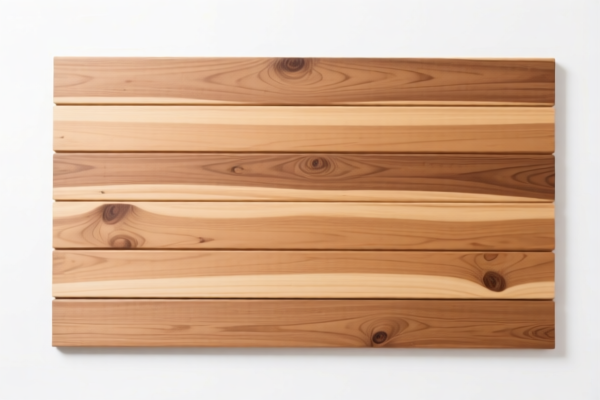
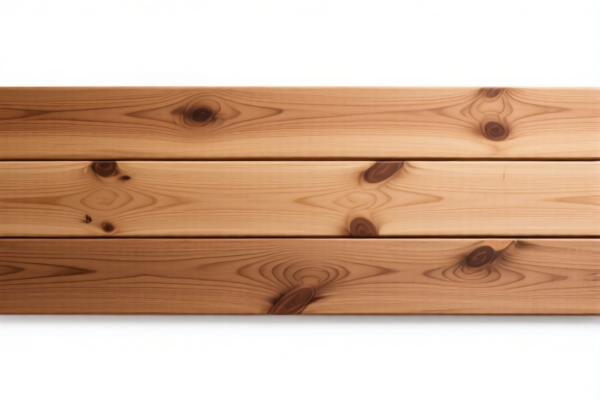
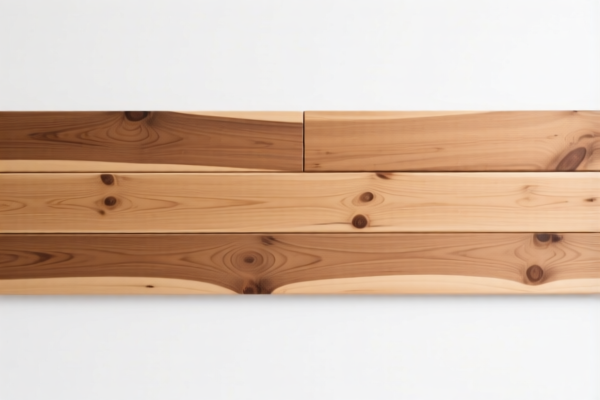
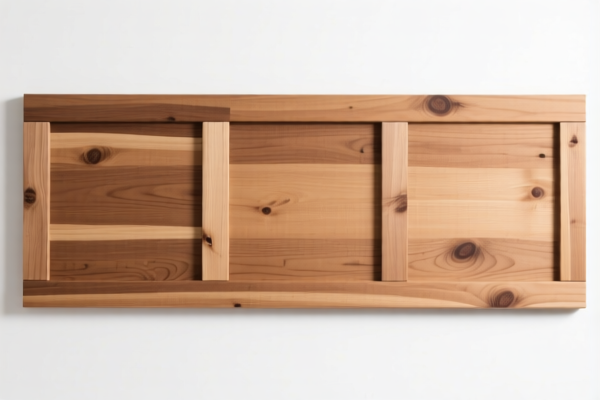
AI Analysis
🪵 Wood-Based Panels (Hardboard/MDF)
HS Code: 4411.93.20.00
🌐 HS Code Reference & Customs Clearance Guide | 2026 Latest Tariff Analysis | Professional Clearance Strategy
📌 I. Product Definition & Classification: What Exactly Is “Wood-Based Panel” in HS 4411.93.20.00?
In international trade, HS Code 4411.93.20.00 specifically refers to Wood-Based Panels, primarily covering Hardboard and Medium-Density Fiberboard (MDF) products. Unlike plywood (which consists of layered veneers) or particle board (large chips), these products are made from wood fibers that are separated, mixed with resin, and compressed under high temperature and pressure.
Key Distinction:
- Hardboard (Hardboard): Very dense, smooth surface, often used for backing, furniture bottoms, or door skins.
- MDF (Medium-Density Fiberboard): Smooth, uniform texture, easy to machine, widely used in cabinets, flooring, and decorative panels.
⚠️ Critical Classification Point:
- If the product is made from wood fibers and has a density ≥ 800 kg/m³ → Likely Hardboard (4411.93);
- If the product is made from wood fibers and has a density < 800 kg/m³ → Likely MDF (4411.93 or 4411.94);
- Do not confuse with Plywood (4412) or Particle Board (4410), which have different tariff structures!
📦 II. HS Code Classification Details (2026 Latest Tariff Authority Comparison)
| HS Code | Product Description | Application Scenario | Fiber Density Type |
|---|---|---|---|
4411.93.20.00 |
Wood-based panels, specifically Hardboard (high density, smooth surface) | Furniture backing, door skins, packaging liners, decorative substrates | High Density (≥800 kg/m³) |
4412.91.31.10 |
Wood-based panels, Plywood (layered veneer structure) | Construction, flooring, furniture frames, export packaging | Layered Veneer |
4410.11.00.60 |
Particle Board / Chipboard (large wood chips compressed) | Furniture panels, cabinetry, office desks | Chip/Grain Structure |
4410.11.00.10 |
Particle Board, specifically for flooring or special uses | Laminate flooring cores, heavy-duty furniture | Chip/Grain Structure |
4411.13.60.00 |
Fiberboard (general category, includes softboard and hardboard variants) | General wood fiber products, insulation, acoustic panels | Fiber Structure (varies) |
🔍 Key Reminder:
- 4411.93.20.00 is strictly for High-Density Fiberboard (Hardboard);
- 4412 codes are for Plywood (layered);
- 4410 codes are for Particle Board (chips);
- Misclassification can lead to significant tariff differences (e.g., 35% vs. 43%).
💰 III. 2026 Latest Tariff Rate Breakdown (Including Surtaxes, Policy Surcharges)
✅ Applicable Country: USA (US)
✅ Country of Origin: China (CN)
✅ Effective Date: From November 10, 2025 (and onwards)
🎯 1. 4411.93.20.00 —— Wood-Based Panels (Hardboard/MDF)
| Item | Content |
|---|---|
| Base Tariff Rate | 0.0% (ad valorem) |
| USITC Surtax | +25.0% (under USITC Footnote 9903.88.01) |
| IEEPA Surtax | +10.0% (Targeting Chinese/HK products, effective Nov 10, 2025) |
| Total Tariff Rate | 35.0% |
| Tax Calculation | CIF Value × 35% |
| De Minimis Exemption Eligible? | ❌ No (deny_de_minimis) |
| Legal Basis Path | IEEPA:9903.01.25 → IEEPA:9903.01.24 → USITC:4411.93.20.00 → FOOTNOTE:9903.88.01 |
📌 Explanation:
- The 25% USITC surtax is part of the Section 301 tariffs on Chinese goods;
- The 10% IEEPA surtax is a separate layer of tariffs under the International Emergency Economic Powers Act;
- Total 35% is high, so accurate classification is crucial to avoid overpayment or underpayment penalties.
🎯 2. Comparison with Similar HS Codes
| HS Code | Total Tariff | Base Rate | USITC 25% | IEEPA 10% | Product Type |
|---|---|---|---|---|---|
4411.93.20.00 |
35.0% | 0.0% | ✅ | ✅ | Hardboard/MDF (Fiber) |
4412.91.31.10 |
43.0% | 8.0% | ✅ | ✅ | Plywood (Layered) |
4410.11.00.60 |
35.0% | 0.0% | ✅ | ✅ | Particle Board |
4410.11.00.10 |
35.0% | 0.0% | ✅ | ✅ | Particle Board (Special) |
4411.13.60.00 |
35.0% | 0.0% | ✅ | ✅ | Fiberboard (General) |
📌 Note:
- Plywood (4412) has a higher total tariff (43%) due to the 8% base rate;
- Fiberboard/Plywood/Particle Board all share the 25% + 10% surcharges;
- Misclassification between 4411 (Fiber) and 4412 (Plywood) can result in a 8% difference in total tax.
🛠️ IV. Customs Clearance Practical Advice (Avoid Pitfalls)
✅ 1. Required Documentation Checklist
| Document | Required | Notes |
|---|---|---|
| ✅ Product Specification Sheet | ✔️ | Must specify density, thickness, resin type, and fiber source |
| ✅ Manufacturing Process Description | ✔️ | Confirm if it’s MDF, Hardboard, or Particle Board |
| ✅ Product Photos (Label & Structure) | ✔️ | Show cross-section to verify fiber vs. layer vs. chip structure |
| ✅ Third-Party Test Report | ✔️ | Formaldehyde emission (E0/E1), density, bending strength |
| ✅ Commercial Invoice | ✔️ | Clearly state “Wood-Based Panels, Hardboard/MDF” |
| ✅ Certificate of Origin (CO) | ✔️ | Essential for claiming preferential rates if applicable |
| ✅ Packing List | ✔️ | Detail dimensions, weight, and palletization |
✅ 2. Declaration Tips (Key Mantra)
🔥 “Fiber vs. Layer vs. Chip: Classify Correctly or Pay More!”
| Scenario | Correct Declaration | Wrong Action |
|---|---|---|
| MDF/Hardboard (Fiber) | 4411.93.20.00 |
Misdeclare as Plywood → 43% |
| Plywood (Layered) | 4412.91.31.10 |
Misdeclare as MDF → Underpayment Risk |
| Particle Board (Chips) | 4410.11.00.60 |
Misdeclare as MDF → Underpayment Risk |
| Mixed Package (Fiber + Plywood) | Declare Separately | Combined Declaration → Delay/Seizure |
✅ 3. Special Cases
| Case | Handling Advice |
|---|---|
| Custom Size/Thickness | Provide precise dimensions and density; avoid vague terms like “wood board” |
| Laminated Panels | If surface is laminated (melamine, PVC), still classify based on core material |
| Export to US for Construction | Ensure formaldehyde compliance (CARB Phase 2, TSCA Title VI) |
| Third-Party Processing | If raw wood is imported, processed, and re-exported, claim origin change if applicable |
🌍 V. Global Market Clearance Comparison (2026 Latest)
| Country/Region | Recommended HS Code | Tariff (China Origin) | Certification Required | Notes |
|---|---|---|---|---|
| 🇺🇸 USA | 4411.93.20.00 |
35% | CARB Phase 2, TSCA Title VI | High tariff, strict formaldehyde limits |
| 🇨🇳 China | 4411.93.20.00 |
5% | CCC (if applicable) | Low tariff, domestic market friendly |
| 🇪🇺 EU | 4411.93.20.00 |
0% (if FSC-certified) | CE, E1 Formaldehyde | No surtax, environmental focus |
| 🇦🇺 Australia | 4411.93.20.00 |
5% | FSC, Formaldehyde Standard | Low tariff, eco-friendly preference |
| 🇯🇵 Japan | 4411.93.20.00 |
0% | JAS Formaldehyde Standard | No surtax, high quality requirement |
📌 Conclusion:
- USA is the only major market with high surtaxes (35%);
- EU and Japan have lower barriers but stricter environmental certifications;
- China origin products face highest costs in the US market.
📌 VI. Common Errors & Pitfalls (Blood Lessons)
❌ Error 1: Misclassifying MDF as Plywood
👉 Consequence: Pay 43% instead of 35% → 8% extra cost per unit
❌ Error 2: Declaring “Wood Board” without specifying fiber type
👉 Consequence: Customs inspection → Delay, Seizure, Penalty
❌ Error 3: Ignoring Formaldehyde Certification
👉 Consequence: US Customs & Border Protection (CBP) holds shipment → Return or Destruction
❌ Error 4: Not declaring Origin accurately
👉 Consequence: Lose preferential tariff benefits → Higher duties
✅ Correct Practice:
“Medium-Density Fiberboard (MDF), 18mm Thick, E1 Formaldehyde Level, FSC-Certified, for Furniture Manufacturing, Model XYZ”
🎯 VII. Conclusion: Professional Declaration, Save Time, Reduce Costs!
🎯 Remember the Mantra:
🔹 “Fiber vs. Layer vs. Chip: Classify Correctly or Pay More!”
🔹 “HS Code Determines Tax, 8% Difference Matters, Declaration Accuracy Saves Thousands!”
📌 Pro Tip:
If your wood-based panels are sourced from Vietnam, Malaysia, or Thailand, you may qualify for IEEPA Exemption, reducing tariffs to 0%–5%;
Recommend applying for Advance Ruling (Pre-classification) before shipment to avoid clearance risks.
📣 Immediate Action:
📞 Contact a professional customs broker + Provide Product Photos + Apply for HS Code Advance Ruling
🚀 Ensure your wood-based panels pass customs smoothly, maximize profits, and expand global markets!
✨ Professional Clearance Starts with Accurate Classification!
💼 Every cent of cost deserves precise calculation!
Customer Reviews
About HS Code Classification
The Harmonized System (HS) is an internationally standardized nomenclature developed by the World Customs Organization (WCO) to classify traded products. Over 200 countries use the HS system as the basis for customs tariffs, trade statistics, and import/export regulations.
Each HS code follows a hierarchical structure:
- Chapter (2 digits) — Broad category of goods (e.g., Chapter 84: Machinery and Mechanical Appliances)
- Heading (4 digits) — More specific grouping within the chapter
- Subheading (6 digits) — Internationally standardized breakdown, used by all WCO member countries
- National subdivisions (8-10 digits) — Country-specific extensions for further classification, such as US HTSUS 10-digit codes
Correct HS code classification is essential for smooth customs clearance, accurate duty payment, and compliance with trade regulations. Misclassification can lead to customs delays, overpayment of duties, or penalties.
When importing from CN to US, the applicable tariff rates may include:
- Most-Favored-Nation (MFN) rate — The standard duty rate applied to WTO members
- General rate — Applied to countries without trade agreements
- Trade remedy duties — Additional tariffs such as Section 301 (anti-dumping), Section 232 (national security), or countervailing duties
The information provided on this page is for reference purposes only. For official classification, please consult with your local customs authority or a licensed customs broker.