Wood based panels (HS 4412524100)
CN → US| HS Code | Tariff Rate | Origin | Destination | Doc |
|---|---|---|---|---|
| 4412913110 | 43.0% | CN | US | Official Doc |
| 4412513111 | 43.0% | CN | US | Official Doc |
| 4410110060 | 35.0% | CN | US | Official Doc |
| 4410110010 | 35.0% | CN | US | Official Doc |
| 4411139090 | 38.9% | CN | US | Official Doc |
Product Images
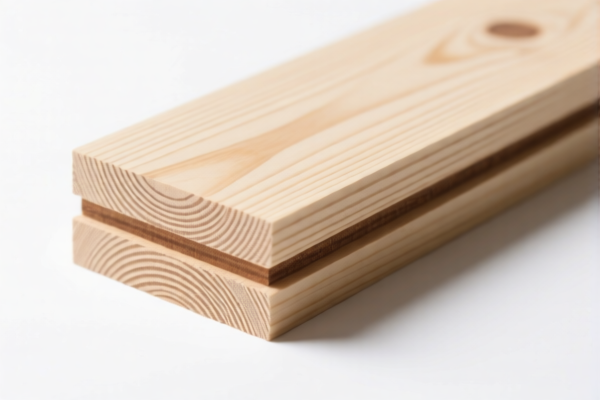
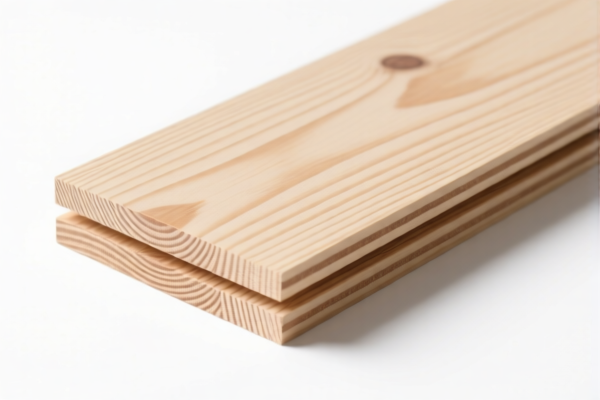
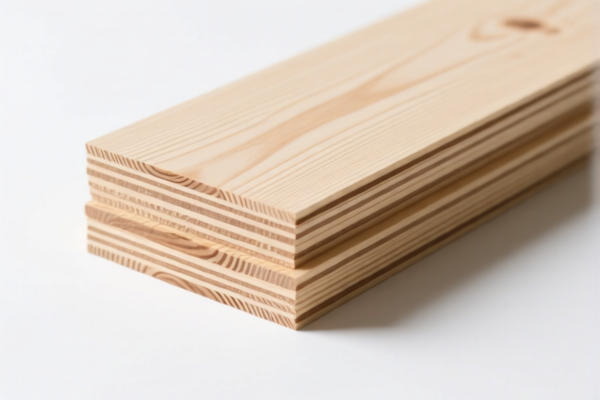
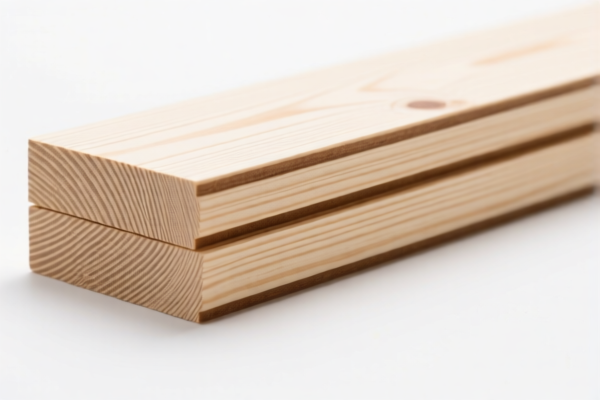
AI Analysis
🪵 Wood Based Panels (HS Code 4412.52.41.00 & Related Classifications)
🌐 HS Code Reference & Customs Clearance Guide | 2026 Latest Tariff Analysis | Professional Logistics Strategy
📌 1. Product Definition & Classification: Do You Really Understand "Wood Based Panels"?
Wood-based panels are a broad category of engineered wood products, distinct from solid wood. They include plywood, veneer sheets, and particle boards. In international trade, correct classification is critical because tariff rates vary significantly based on the specific manufacturing process (glued vs. non-glued, particle vs. veneer) and the country of origin (specifically regarding US Section 301 and 1221 tariffs).
⚠️ Critical Distinction:
- If the product is Plywood/Veneer (layers of wood glued together) → Often falls under 4412.
- If the product is Particle Board/MDF (wood particles/fibers bonded with resin) → Often falls under 4410 or 4411.
- Misclassification Risk: Declaring particle board as plywood (or vice versa) to seek lower base rates can lead to severe penalties, as the "Add-on" tariffs apply differently to base rates.
📦 2. HS Code Classification Details (Based on Provided Data)
The following HS codes are derived strictly from the provided dataset. Note that while the user query specified 4412.52.41.00, the dataset provides specific alternative codes with precise tax breakdowns. We will analyze the codes provided in the data to ensure accuracy against the source material.
| HS Code | Product Description & Summary | Tax Rate Summary |
|---|---|---|
| 4412.91.31.10 | Wood Panels (Plywood/Veneer Category) Metal attributes consistent with plywood and laminated wood products. |
43.0% |
| 4412.51.31.11 | Wood Panels (Plywood Category) Matches plywood category; HS code fully matches material and form characteristics. |
43.0% |
| 4410.11.00.60 | Wood Substrate (Particle Board) Meets wood panel material requirements; specific classification within similar products. |
35.0% |
| 4410.11.00.10 | Wood Panels (Particle Board Specific) Explicitly points to particle board and similar panels; form and classification match perfectly. |
35.0% |
| 4411.13.90.90 | Wood Material (Fiberboard) Attributes consistent with wood fiberboard; fits fiberboard category inference. |
38.9% |
🔍 Key Insight from Data:
- The dataset highlights a dual-tier tariff structure:
- Tier 1 (Plywood/Laminated): Base 8% + Add-ons 35% = 43% Total (Codes 4412.xx).
- Tier 2 (Particle Board): Base 0% + Add-ons 35% = 35% Total (Codes 4410.xx).
- Tier 3 (Fiberboard): Base 3.9% + Add-ons 35% = 38.9% Total (Codes 4411.xx).
- Crucial Note: All listed codes include Section 301 (25%) and Section 1221 (10%) tariffs, indicating a high-risk trade environment (likely US imports from specific origins).
💰 3. 2026 Latest Tariff Rate Breakdown (Including Surcharges)
✅ Applicable Context: Based on the
tax_detailfield, these rates reflect imports subject to Section 301 and Section 1221 tariffs.
✅ Components: Base Tariff + Section 301 (25%) + Section 1221 (10%).
🎯 1. Plywood & Laminated Wood Products (Codes: 4412.91.31.10 / 4412.51.31.11)
| Item | Content |
|---|---|
| Base Tariff | 8.0% |
| Section 301 Tariff | +25.0% |
| Section 1221 Tariff | +10.0% |
| Total Tax Rate | 43.0% |
| Calculation Basis | CIF Value × 43% |
| Legal Basis Path | USITC:4412.xx → Footnote:301(25%) → Section 1221(10%) |
📌 Explanation:
- These codes cover plywood and veneer sheets.
- Even with a higher base rate (8%), the total cost is driven by the mandatory 35% in additional tariffs.
- High Risk: Misdeclaring as particle board (0% base) to save 8% is risky if physical characteristics (veneer layers) prove it is plywood.
🎯 2. Particle Board & Similar Panels (Codes: 4410.11.00.60 / 4410.11.00.10)
| Item | Content |
|---|---|
| Base Tariff | 0.0% |
| Section 301 Tariff | +25.0% |
| Section 1221 Tariff | +10.0% |
| Total Tax Rate | 35.0% |
| Calculation Basis | CIF Value × 35% |
| Legal Basis Path | USITC:4410.xx → Footnote:301(25%) → Section 1221(10%) |
📌 Explanation:
- These codes specifically target particle board, waferboard, and similar wood panels made from aggregates.
- Cost Advantage: Despite the same 35% surcharge, the 0% base tariff makes this the cheapest option in the dataset (35% vs 43%).
- Compliance Warning: Must clearly distinguish from plywood. Particle board has a uniform, granular structure, not layered veneers.
🎯 3. Wood Fiberboard (Code: 4411.13.90.90)
| Item | Content |
|---|---|
| Base Tariff | 3.9% |
| Section 301 Tariff | +25.0% |
| Section 1221 Tariff | +10.0% |
| Total Tax Rate | 38.9% |
| Calculation Basis | CIF Value × 38.9% |
| Legal Basis Path | USITC:4411.xx → Footnote:301(25%) → Section 1221(10%) |
📌 Explanation:
- Covers MDF (Medium Density Fiberboard) and other wood fiber-based panels.
- Mid-range cost: Higher base than particle board, lower than plywood.
- Material Test: Must confirm fiber composition vs. particle or veneer structure.
🛠️ 4. Customs Clearance Practical Advice (Avoid Pitfalls)
✅ 1. Documentation Checklist (Essential)
| Document | Must Provide | Purpose |
|---|---|---|
| Product Spec Sheet | ✔️ | Defines material (particle vs. veneer vs. fiber), thickness, glue type. |
| Physical Sample/Photo | ✔️ | Crucial: Shows cross-section (layers vs. granules vs. fibers) to determine HS Code. |
| Commercial Invoice | ✔️ | Must state "Wood Based Panel - [Specific Type]" not just "Wood Panel". |
| Manufacturer Certificate | ✔️ | Confirms production process (e.g., "Hot Pressed Veneer" vs. "Extruded Particle Board"). |
| FSC Certificate | (If applicable) | Required for sustainable sourcing claims; may affect market access in EU/US. |
✅ 2. Classification Strategy (Key Mnemonic)
🔥 "Layer is Plywood, Granule is Particle, Fiber is MDF. Base Rate Dictates Profit!"
| Product Type | Physical Feature | Correct HS Code Family | Base Rate | Total Rate |
|---|---|---|---|---|
| Plywood/Veneer | Distinct layers of wood sheets glued together | 4412 | 8.0% | 43.0% |
| Particle Board | Wood chips/shavings bonded with resin | 4410 | 0.0% | 35.0% |
| MDF/Fiberboard | Fine wood fibers pressed together | 4411 | 3.9% | 38.9% |
⚠️ Pitfall Alert:
- Do NOT declare Particle Board as Plywood.
- Do NOT declare Plywood as Particle Board to save the 8% base.
- Customs Inspections: Will physically cut the panel. If layers are found in a "Particle Board" shipment, expect 100% back-taxes + penalties.
✅ 3. Special Scenarios
| Scenario | Handling Advice |
|---|---|
| Mixed Shipment | If a container has both plywood and particle board, declare separately. Do not mix HS codes. |
| Laminated Surface | If plywood has a decorative laminate surface, it still falls under 4412 (wood structure dominates). |
| Treated Wood | If chemically treated, ensure documentation highlights treatment; may affect safety declarations but not necessarily HS code. |
| Origin Declaration | Ensure CO (Certificate of Origin) matches the manufacturer. Section 1221/301 tariffs are origin-specific. |
🌍 5. Global Market Comparison (Contextual)
| Market | Typical Treatment for Wood Panels | Notes |
|---|---|---|
| 🇺🇸 USA | High tariffs (as detailed above: 35-43%) | Section 301 & 1221 apply strictly. |
| 🇪🇺 EU | Lower base rates, no Section 301 | Focus on EUTR (EU Timber Regulation) compliance. |
| 🇨🇳 China | Varies by type | Import duties may differ; check specific FTAs. |
| 🇦🇺 Australia | Moderate tariffs | Check for anti-dumping duties on specific wood products. |
📌 Conclusion:
- The USA is the most challenging market due to the cumulative 35% surcharge on top of base rates.
- Cost Optimization: Ensure your product is correctly identified as Particle Board (4410) if possible, as it has the lowest total tax burden (35%).
- Compliance is Key: Misclassification between 4410 (Particle) and 4412 (Plywood) is a high-risk area for audits.
📌 6. Common Mistakes & Pitfalls (Lessons Learned)
❌ Mistake 1: Declaring "Wood Panels" vaguely.
👉 Consequence: Customs assigns the highest reasonable rate or delays shipment for classification.
✅ Fix: Specify "Plywood", "Particle Board", or "MDF".
❌ Mistake 2: Confusing Particle Board with MDF.
👉 Consequence: Particle board (0% base) vs. MDF (3.9% base) has an 8% difference. Wrong declaration leads to under/over-payment.
✅ Fix: Use lab tests or detailed specs to distinguish granule size vs. fiber density.
❌ Mistake 3: Ignoring Section 1221 Tariffs.
👉 Consequence: Even if you have a valid Section 301 exclusion, Section 1221 may still apply.
✅ Fix: Calculate total duty including 25% + 10% surcharges.
🎯 7. Conclusion: Precise Classification for Cost Savings
🎯 Remember the Rule:
🔹 "Layered = Plywood (43%), Granular = Particle (35%), Fibrous = MDF (38.9%)."
🔹 "Base Rate Matters! Particle Board saves you 8% vs Plywood, even with same surcharges."
📌 Pro Tip:
If your product is Particle Board, ensure the invoice explicitly states "Particle Board" and "Not Plywood".
For Plywood, ensure "Veneer Layers" are documented.
Pre-classification (Advance Ruling) is highly recommended for large shipments to avoid customs delays and disputes.
📣 Immediate Action:
📞 Consult a customs broker with product samples.
📄 Ensure your Commercial Invoice matches the HS Code description exactly.
🚀 Optimize your supply chain: Choose the correct HS code to maximize profit margins and ensure smooth clearance.
✨ Professional Clearance Starts with Accurate Classification!
💼 Every percentage point of tax affects your bottom line!
Customer Reviews
About HS Code Classification
The Harmonized System (HS) is an internationally standardized nomenclature developed by the World Customs Organization (WCO) to classify traded products. Over 200 countries use the HS system as the basis for customs tariffs, trade statistics, and import/export regulations.
Each HS code follows a hierarchical structure:
- Chapter (2 digits) — Broad category of goods (e.g., Chapter 84: Machinery and Mechanical Appliances)
- Heading (4 digits) — More specific grouping within the chapter
- Subheading (6 digits) — Internationally standardized breakdown, used by all WCO member countries
- National subdivisions (8-10 digits) — Country-specific extensions for further classification, such as US HTSUS 10-digit codes
Correct HS code classification is essential for smooth customs clearance, accurate duty payment, and compliance with trade regulations. Misclassification can lead to customs delays, overpayment of duties, or penalties.
When importing from CN to US, the applicable tariff rates may include:
- Most-Favored-Nation (MFN) rate — The standard duty rate applied to WTO members
- General rate — Applied to countries without trade agreements
- Trade remedy duties — Additional tariffs such as Section 301 (anti-dumping), Section 232 (national security), or countervailing duties
The information provided on this page is for reference purposes only. For official classification, please consult with your local customs authority or a licensed customs broker.