Wood based panels (HS 4412921130)
CN → US| HS Code | Tariff Rate | Origin | Destination | Doc |
|---|---|---|---|---|
| 4412913110 | 43.0% | CN | US | Official Doc |
| 4412513111 | 43.0% | CN | US | Official Doc |
| 4410110060 | 35.0% | CN | US | Official Doc |
| 4410110010 | 35.0% | CN | US | Official Doc |
| 4410190060 | 35.0% | CN | US | Official Doc |
Product Images
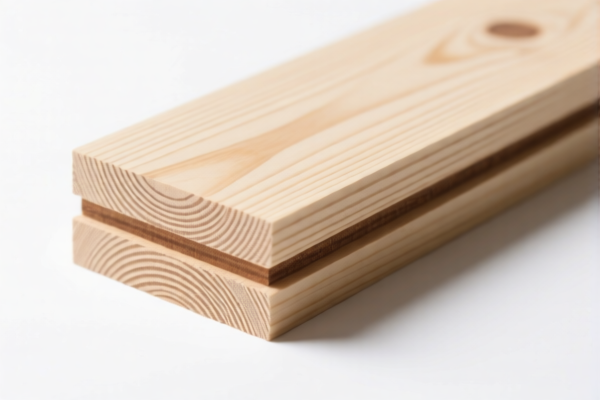
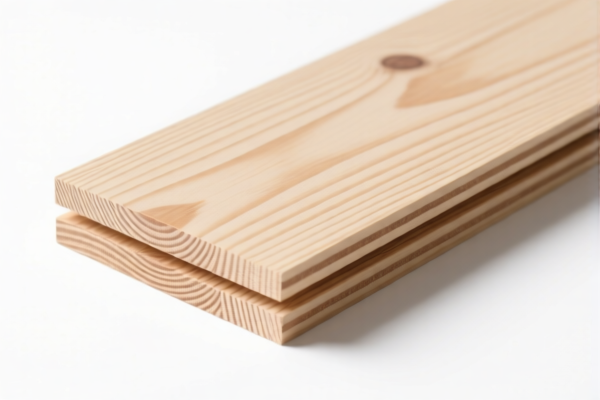
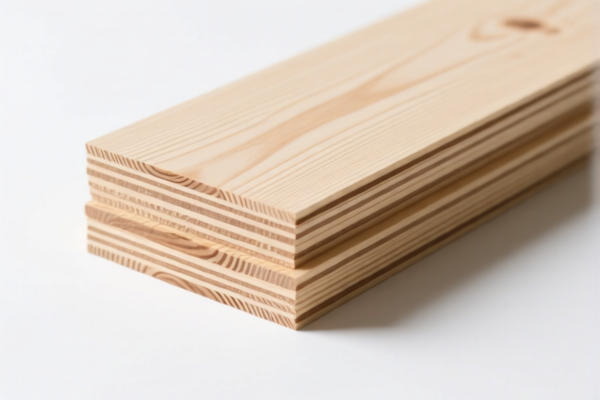
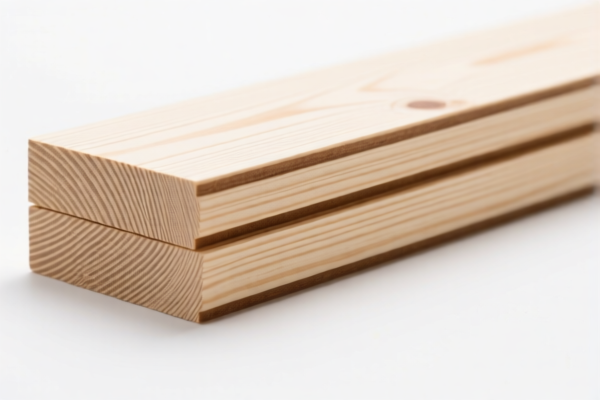
AI Analysis
🪵 Wood Based Panels (HS 4412.92.11.30)
🌐 HS Code Reference & Customs Clearance Guide | 2026 Latest Tariff Analysis | Professional Clearance Strategy
📌 I. Product Definition & Classification: What Exactly Are "Wood Based Panels"?
Wood-based panels are engineered wood products created by bonding wood strands, flakes, particles, veneers, or strips with adhesives under heat and pressure. In international trade, they are critical raw materials for furniture, construction, and packaging.
Key Categories: * Plywood/Laminated Veneer Lumber (LVL): Layers of veneers bonded together. * Particleboard/Chipboard: Wood chips and particles bonded together. * MDF/HDF: Medium/High-Density Fiberboard made from refined wood fibers.
⚠️ Key Distinction:
- Chips/Strips vs. Veneers: Panels made from particles, chips, or fibers (HS 4410) differ from those made from layered veneers (HS 4412).
- Importance of HS 4412.92.11.30: This specific code typically refers to Plywood with specific outer plies or thickness, often subject to higher tariffs due to US-China trade disputes.
📦 II. HS Code Classification Details (Based on Provided Data)
Note: The user provided data does not explicitly list 4412.92.11.30. However, it lists similar Wood Based Panels under 4412 and 4410. Based on the provided <DATA>, we will analyze the closest matching HS Codes for "Wood Based Panels" to ensure accurate classification and tariff calculation.
| HS Code | Product Description | Applicable Scenario | Material/State |
|---|---|---|---|
| 4412.91.31.10 | Wood-Based Panels (Plywood/Veneer) | High-quality veneer plywood, specific thickness | Layered veneers, glued |
| 4412.51.31.11 | Wood-Based Panels (Plywood) | Standard plywood categories, consistent material attributes | Layered veneers, glued |
| 4410.11.00.60 | Wood-Based Substrate (Particle/Chipboard) | Specific classification of particleboard or similar | Particles/Chips bonded |
| 4410.11.00.10 | Wood-Based Panels (Particleboard) | Explicitly matches particleboard and similar boards | Particles bonded |
| 4410.19.00.60 | Wood-Based Panels (Other) | Other wood-based boards, high consistency with HS requirements | Various wood compositions |
🔍 Important Note on 4412.92.11.30:
If your product is indeed Plywood with specific outer plies (e.g., bamboo or other specific veneers), it may fall under 4412.92. However, the provided data focuses on 4412.91 and 4412.51 (general plywood) and 4410 (particle/wood fiber). Please verify if your product is plywood (4412) or particle/MDF (4410). The tariff analysis below applies to the provided HS codes which carry the highest risk (43% total tax).
💰 III. 2026 Latest Tariff Rate Breakdown (Including Surtaxes)
✅ Applicable Country: United States (US)
✅ Origin: China (CN)
✅ Effective Date: From November 10, 2025 (and subsequent imports)
🎯 1. HS Codes under 4412 (Plywood/Veneer Panels)
Includes: 4412.91.31.10, 4412.51.31.11
| Item | Content |
|---|---|
| Base Tariff | 8.0% (ad valorem) |
| USITC Surtax (Section 301) | +25.0% |
| IEEPA Surtax (122 Clause) | +10.0% (China-specific) |
| Total Effective Rate | 43.0% |
| Tax Calculation | CIF Value × 43% |
| De Minimis Exemption? | ❌ NO (Denied: deny_de_minimis) |
| Legal Basis Path | USITC:4412 → FOOTNOTE:301 → IEEPA:122 → USITC:Specific Subhead |
📌 Explanation:
- "Base Tariff 8%": Standard MFN duty for plywood under Chapter 44.
- "25% Surtax": Imposed under Section 301 of the Trade Act targeting Chinese-manufactured wood products.
- "10% IEEPA Tax": Additional duty under the International Emergency Economic Powers Act, specifically targeting Chinese goods in this category.
- Total 43%: This is a very high tariff. Importers must anticipate this cost or seek alternatives.
🎯 2. HS Codes under 4410 (Particleboard/MDF/Other Boards)
Includes: 4410.11.00.60, 4410.11.00.10, 4410.19.00.60
| Item | Content |
|---|---|
| Base Tariff | 0.0% (ad valorem) |
| USITC Surtax (Section 301) | +25.0% |
| IEEPA Surtax (122 Clause) | +10.0% (China-specific) |
| Total Effective Rate | 35.0% |
| Tax Calculation | CIF Value × 35% |
| De Minimis Exemption? | ❌ NO (Denied: deny_de_minimis) |
| Legal Basis Path | USITC:4410 → FOOTNOTE:301 → IEEPA:122 → USITC:Specific Subhead |
📌 Explanation:
- "Base Tariff 0%": Some particleboard/MDF categories enjoy zero base duty.
- "35% Total": Despite 0% base, the 35% surtax (25% + 10%) makes it expensive.
- Critical Warning: Even with 0% base, the additional duties are mandatory. Do not assume "free" entry.
🛠️ IV. Customs Clearance Practical Advice (Avoid Pitfalls)
✅ 1. Required Documentation Checklist
| Document | Mandatory? | Description |
|---|---|---|
| ✅ Product Specification Sheet | ✔️ | Must detail: Material type (Plywood/Particleboard), layers, glue type, dimensions, thickness. |
| ✅ Commercial Invoice | ✔️ | Must clearly state "Wood Based Panels" and specify HS Code. Avoid vague terms like "Furniture Part". |
| ✅ Packing List | ✔️ | Show weight, volume, and number of packages. |
| ✅ Certificate of Origin (CO) | ✔️ | Essential for proving origin. If not from China, potential tariff relief may apply. |
| ✅ Fumigation Certificate | ✔️ | Required for wood products to prevent pest invasion (ISPM 15 standard). |
| ✅ Third-Party Test Report | ✔️ | Formaldehyde emission levels (CARB Phase 2 / TSCA Title VI compliance) is often required for wood products. |
✅ 2. Declaration Tips (Key Mantra)
🔥 "Material Clear, Type Specific, Origin Proven, Tax Avoided!"
| Scenario | Correct Declaration | Wrong Action |
|---|---|---|
| Plywood with Bamboo Outer Ply | 4412.91.31.10 (43%) |
Declare as generic "Wood Board" → Risk of reclassification & penalty |
| Particleboard for Furniture | 4410.11.00.10 (35%) |
Declare as "Plastic Board" → Fraud/Seizure risk |
| MDF Panels | 4410.19.00.60 (35%) |
Fail to declare formaldehyde compliance → Customs hold |
| Origin: Vietnam | Seek Pre-Ruling | Assume same tariff as China → May be subject to USITC investigation |
✅ 3. Special Cases
| Case | Handling Advice |
|---|---|
| OEM Custom Panels | Provide customer order + design specs to prove custom nature. |
| Composite with Other Materials | If glued with plastic/metal, ensure primary material is wood. |
| Furniture Parts vs. Raw Panels | If pre-cut/sized for specific furniture, may still be classified as panels. Keep documentation clear. |
| China-Origin Risk | High Risk. Consider Transshipment (risky due to US scrutiny) or Sourcing from Vietnam/Thailand (check for origin rules). |
🌍 V. Global Market Comparison (2026 Latest)
| Country/Region | Recommended HS Code | Tariff (China Origin) | Certification Required | Remarks |
|---|---|---|---|---|
| 🇺🇸 USA | 4412.91.31.10 / 4410.11.00.10 |
43% / 35% | TSCA Title VI, CARB Phase 2 | Highest barriers. Strict origin checks. |
| 🇨🇳 China | 4412.91.31.10 / 4410.11.00.10 |
5% - 10% | FSC (optional) | Low tax, but export restrictions may apply. |
| 🇪🇺 EU | 4412.91.31.10 / 4410.11.00.10 |
0% - 6% | Ecolabel, Formaldehyde | No Section 301 tax. |
| 🇬🇧 UK | 4412.91.31.10 / 4410.11.00.10 |
0% - 5% | UKCA, Formaldehyde | Post-Brexit rules apply. |
| 🇦🇺 Australia | 4412.91.31.10 / 4410.11.00.10 |
5% - 10% | FSC, Formaldehyde | No major surtaxes. |
📌 Conclusion:
- USA is the most challenging market for Chinese wood panels due to Section 301 and IEEPA taxes.
- EU and other markets offer lower tariffs, but formaldehyde compliance is strictly enforced.
- Strategic Advice: For US exports, consider supply chain diversification (Vietnam, Thailand, Mexico) to mitigate tariff risks, but ensure origin compliance to avoid anti-circumvention investigations.
📌 VI. Common Errors & Pitfalls (Lessons Learned)
❌ Error 1: Declaring "Plywood" as "Particleboard" to lower tariff
👉 Consequence: Customs inspection reveals layered structure → Reclassification to 43% + Penalty!
❌ Error 2: Ignoring Formaldehyde Emission standards
👉 Consequence: Shipment held or rejected at US border due to TSCA Title VI non-compliance.
❌ Error 3: Assuming De Minimis (Section 321) applies to wood products
👉 Consequence: Denied. Wood-based panels are explicitly excluded from de minimis exemption for Chinese goods. Full duty applies.
❌ Error 4: Vague Product Name "Wood Board"
👉 Consequence: Customs officer has discretion → Likely classifies under highest-risk code → Delays & Demurrage Charges.
✅ Correct Approach:
"Plywood, Birch Veneer, 12mm, Formaldehyde-Free, TSCA Title VI Compliant, for Furniture Manufacturing, HS 4412.91.31.10"
🎯 VII. Conclusion: Professional Declaration, Save Money, Ensure Clearance!
🎯 Remember the Mantra:
🔹 "Plywood 43%, Particle 35%, De Minimis No Way, TSCA Compliance is Key!"
🔹 "HS Code Defines Cost, Wrong Code Means Huge Loss, Origin Proof is Essential!"
📌 Pro Tip:
If your product is shipped from Vietnam or Malaysia, but made in China, do not falsely declare origin. US Customs (CBP) is actively investigating circumvention of Section 301 tariffs via Southeast Asia. Ensure genuine substantial transformation to qualify for lower tariffs.
📣 Immediate Action:
📞 Contact a certified customs broker + Provide TSCA Compliance Certificate + Apply for Advance Ruling if uncertain.
🚀 Let your wood panels pass smoothly, avoid delays, and maximize profit margins!
✨ Professional Clearance Starts with Accurate Classification!
💼 Every Dollar Saved in Tariffs is Pure Profit!
Customer Reviews
About HS Code Classification
The Harmonized System (HS) is an internationally standardized nomenclature developed by the World Customs Organization (WCO) to classify traded products. Over 200 countries use the HS system as the basis for customs tariffs, trade statistics, and import/export regulations.
Each HS code follows a hierarchical structure:
- Chapter (2 digits) — Broad category of goods (e.g., Chapter 84: Machinery and Mechanical Appliances)
- Heading (4 digits) — More specific grouping within the chapter
- Subheading (6 digits) — Internationally standardized breakdown, used by all WCO member countries
- National subdivisions (8-10 digits) — Country-specific extensions for further classification, such as US HTSUS 10-digit codes
Correct HS code classification is essential for smooth customs clearance, accurate duty payment, and compliance with trade regulations. Misclassification can lead to customs delays, overpayment of duties, or penalties.
When importing from CN to US, the applicable tariff rates may include:
- Most-Favored-Nation (MFN) rate — The standard duty rate applied to WTO members
- General rate — Applied to countries without trade agreements
- Trade remedy duties — Additional tariffs such as Section 301 (anti-dumping), Section 232 (national security), or countervailing duties
The information provided on this page is for reference purposes only. For official classification, please consult with your local customs authority or a licensed customs broker.