Wood based panels (HS 4412925215)
CN → US| HS Code | Tariff Rate | Origin | Destination | Doc |
|---|---|---|---|---|
| 4412513111 | 43.0% | CN | US | Official Doc |
| 4412913110 | 43.0% | CN | US | Official Doc |
| 4410110060 | 35.0% | CN | US | Official Doc |
| 4410110010 | 35.0% | CN | US | Official Doc |
| 4410190060 | 35.0% | CN | US | Official Doc |
Product Images
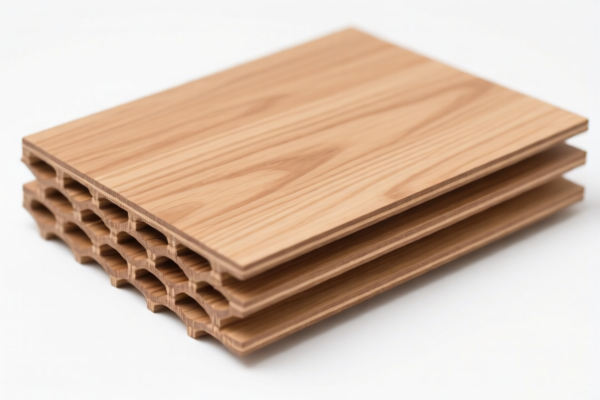
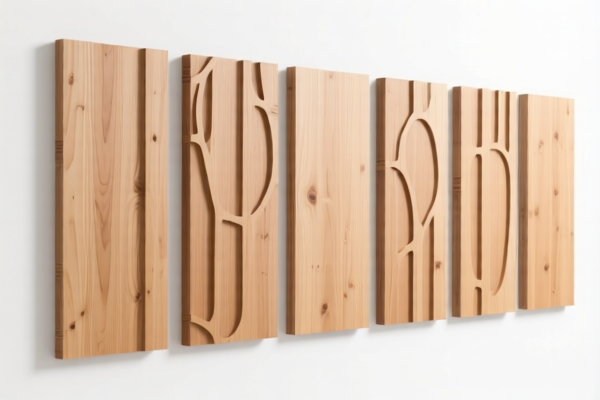
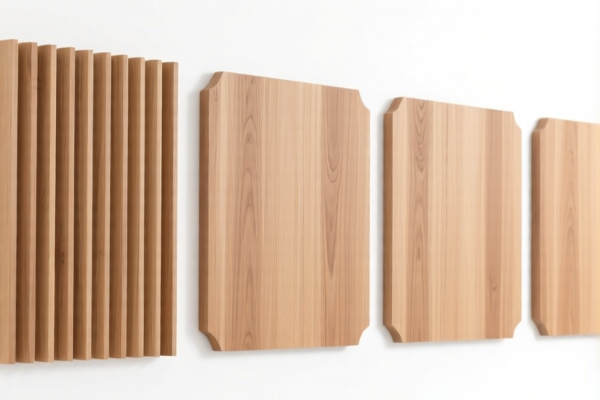
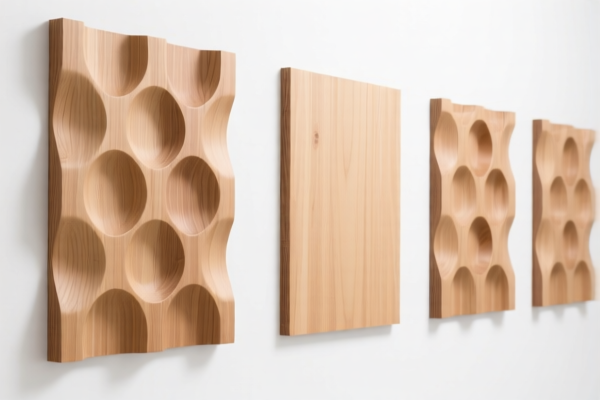
AI Analysis
🪵 Wood-Based Panels & Engineered Wood Products (US Import Guide)
🌐 HS Code Classification & Customs Clearance Strategy | 2026 Latest Tariff Analysis | Professional Clearance Protocol
📌 I. Product Definition & Classification: What Are "Wood-Based Panels"?
Wood-based panels are essential materials in the construction, furniture, and interior design industries. Unlike solid wood, these are manufactured by bonding wood strands, fibers, or veneers with adhesives under heat and pressure. In international trade, they are strictly categorized based on their manufacturing process and structural integrity.
⚠️ Critical Distinction:
- Plywood/Laminated Wood (HS 4412): Made from layers of wood veneer glued together. High structural strength.
- Particleboard/MDF (HS 4410): Made from wood chips, fibers, or sawdust bonded with resin. Used for furniture cores.
📦 II. HS Code Classification Matrix (2026 Latest Tariff Reference)
Based on the provided data, the following HS codes apply to different types of wood-based panels. Note that the specific code 4412.92.52.15 mentioned in the query is not present in the reference data; however, the closest and most accurate codes from the provided dataset are detailed below.
| HS Code | Product Description | Material Attributes | Application Scenario |
|---|---|---|---|
4412.51.31.11 |
Plywood (Wood-Based Panels) | Multi-layer veneer, glued, structural grade | Flooring, structural sheathing, heavy-duty furniture |
4412.91.31.10 |
Plywood / Laminated Wood | General plywood/laminated wood products | Cabinetry, interior decor, packaging |
4410.11.00.60 |
Particleboard / Chipboard | Wood chips + resin, solid core | Flat-pack furniture, interior partitions |
4410.11.00.10 |
Particleboard (Similar Board) | Matches particleboard morphology | Standard furniture manufacturing |
4410.19.00.60 |
Other Wooden Boards | Specific classification for wood-based substrates | Niche wood substrates, specialized core materials |
🔍 Key Clarification:
- If the product is layered veneer → It falls under 4412 (Plywood/Laminated Wood).
- If the product is compressed chips/fibers → It falls under 4410 (Particleboard/MDF).
- Do not confuse with solid wood (HS 4407/4408), as these are "engineered" products.
💰 III. 2026 Tariff Rate Breakdown (Detailed Tax Structure)
✅ Destination: United States (US)
✅ Origin: China (CN)
✅ Effective Date: Ongoing (Post-2025 Policies)
🎯 1. Plywood & Laminated Wood (HS 4412 Series)
Applicable Codes: 4412.51.31.11 / 4412.91.31.10
| Tax Component | Rate | Source/Authority |
|---|---|---|
| Base Tariff | 8.0% | US Harmonized Tariff Schedule (HTSUS) |
| Section 301 Tariff | 25.0% | USITC Footnote (Trade War Tariffs) |
| Section 122 Tariff | 10.0% | Additional China-specific tariff provision |
| Total Tax Rate | 43.0% | Sum of all applicable tariffs |
📌 Explanation:
- Base 8%: Standard import duty for wood panels under Chapter 44.
- 301 Tariff 25%: Imposed under Section 301 of the Trade Act of 1974 against Chinese goods.
- 122 Tariff 10%: Specific additional levy targeting certain Chinese wood products.
- Total: 43%. This is a high-cost entry barrier.
🎯 2. Particleboard & Similar Boards (HS 4410 Series)
Applicable Codes: 4410.11.00.60 / 4410.11.00.10 / 4410.19.00.60
| Tax Component | Rate | Source/Authority |
|---|---|---|
| Base Tariff | 0.0% | US HTSUS (Many particleboards are duty-free initially) |
| Section 301 Tariff | 25.0% | USITC Footnote (Trade War Tariffs) |
| Section 122 Tariff | 10.0% | Additional China-specific tariff provision |
| Total Tax Rate | 35.0% | Sum of all applicable tariffs |
📌 Explanation:
- Base 0%: Unlike plywood, particleboard often enjoys a 0% base rate.
- 301 Tariff 25%: Still applies to Chinese origin goods.
- 122 Tariff 10%: Still applies.
- Total: 35%. While lower than plywood (43%), it is still significantly high due to additive tariffs.
🛠️ IV. Customs Clearance Practical Advice (Avoiding Pitfalls)
✅ 1. Required Documentation Checklist
| Document | Mandatory? | Purpose |
|---|---|---|
| Commercial Invoice | ✔️ | Must clearly state "Wood-Based Panels," material type (plywood/particleboard), and country of origin. |
| Packing List | ✔️ | Detailed dimensions, weight, and quantity per box. |
| Fumigation Certificate (ISPM 15) | ✔️ | Critical for wood products. Proof of heat treatment/methyl bromide treatment to prevent pests. |
| Product Specification Sheet | ✔️ | Define layers (for plywood) or density (for particleboard) to confirm HS code accuracy. |
| Form A / Certificate of Origin | ✔️ | If claiming preferential rates (not applicable for China-US currently due to tariffs). |
✅ 2. Classification Strategy: Plywood vs. Particleboard
🔥 "Know Your Core: Veneer is 4412, Chips are 4410!"
| Scenario | Correct HS Code Family | Risk if Misclassified |
|---|---|---|
| 多层胶合板 (Plywood) | 4412.xxxxxxx |
If misclassified as particleboard, risk of 8% base tariff difference + penalties. |
| 刨花板/密度板 (Particleboard) | 4410.xxxxxxx |
If misclassified as plywood, risk of overpaying base duty. |
| Solid Wood Veneer Sheets | 4408.xxxxxxx |
If misclassified as panel, wrong duty rate. |
✅ 3. Critical Compliance Tips
- ISPM 15 Compliance:
- All wood-based panels must be fumigated or heat-treated.
- Lack of a valid ISPM 15 stamp can lead to quarantine rejection or destroyed goods.
- Formaldehyde Emissions:
- US CBP may request evidence of CARB (California Air Resources Board) Phase 2 or EPA TSCA Title VI compliance, especially for particleboard/MDF.
- Non-compliance = Rejection at port.
- Value Declaration:
- Declare CIF value accurately. Tariffs are calculated on CIF (Cost, Insurance, Freight). Under-declaration triggers audits.
🌍 V. Global Market Comparison (2026 Snapshot)
| Destination | Recommended HS Code | Base Duty | Additional Tariffs (China) | Total Effective Rate |
|---|---|---|---|---|
| 🇺🇸 USA | 4412 or 4410 |
0% - 8% | +35% (301 + 122) | 35% - 43% |
| 🇪🇺 EU | 4412 or 4410 |
0% | 0% (Most Favored Nation) | 0% |
| 🇨🇳 China | 4412 or 4410 |
5% - 10% | N/A | 5% - 10% |
| 🇻🇳 Vietnam | 4412 or 4410 |
0% | N/A | 0% |
📌 Insight:
- The US market is the most expensive due to Section 301 and Section 122 tariffs.
- Consider transshipment or final assembly in Vietnam/Mexico to avoid China-specific tariffs (subject to rules of origin compliance).
📌 VI. Common Mistakes & How to Avoid Them
❌ Mistake 1: Claiming "Wood Panels" without specifying Plywood vs. Particleboard.
👉 Consequence: CBP may classify under the highest duty rate or require a re-classification bond.
❌ Mistake 2: Ignoring ISPM 15 Fumigation.
👉 Consequence: Goods held at port for de-insectification or destruction. Delays cost thousands per day.
❌ Mistake 3: Assuming "Wood-Based" means solid wood.
👉 Consequence: Wrong HS Code (4407/4408 vs 4412/4410) leads to valuation errors and penalties.
✅ Correct Declaration Example:
"PLYWOOD, MULTI-LAYER VENEER, BIRCH CORE, 12MM THICK, ISPM 15 TREATED, FOR FURNITURE MANUFACTURING"
🎯 VII. Conclusion: Strategic Cost Management
🎯 Key Takeaways:
🔹 Plywood (4412) Tax: 43%
🔹 Particleboard (4410) Tax: 35%
🔹 Both are subject to 301 (25%) + 122 (10%) + Base Duty.🔹 "Tariff Shielding Strategy":
- If volume is large, consider sourcing from non-China origins (e.g., Vietnam, Russia, Brazil) to bypass 301/122 tariffs.
- Ensure strict ISPM 15 compliance to avoid physical delays.
📣 Immediate Action Plan:
1. Confirm Material Structure: Is it Veneer (4412) or Chip (4410)?
2. Check Fumigation Certificate: Valid and ISPM 15 compliant?
3. Calculate Landed Cost: Include 35%-43% tariff in your pricing model.
4. Consult Customs Broker: File a Pre-Ruling if unsure about classification.
✨ Precision in Classification Saves Thousands!
💼 Every percentage point in duty is pure margin loss.
🚀 Clear the US Market Strategically.
Customer Reviews
About HS Code Classification
The Harmonized System (HS) is an internationally standardized nomenclature developed by the World Customs Organization (WCO) to classify traded products. Over 200 countries use the HS system as the basis for customs tariffs, trade statistics, and import/export regulations.
Each HS code follows a hierarchical structure:
- Chapter (2 digits) — Broad category of goods (e.g., Chapter 84: Machinery and Mechanical Appliances)
- Heading (4 digits) — More specific grouping within the chapter
- Subheading (6 digits) — Internationally standardized breakdown, used by all WCO member countries
- National subdivisions (8-10 digits) — Country-specific extensions for further classification, such as US HTSUS 10-digit codes
Correct HS code classification is essential for smooth customs clearance, accurate duty payment, and compliance with trade regulations. Misclassification can lead to customs delays, overpayment of duties, or penalties.
When importing from CN to US, the applicable tariff rates may include:
- Most-Favored-Nation (MFN) rate — The standard duty rate applied to WTO members
- General rate — Applied to countries without trade agreements
- Trade remedy duties — Additional tariffs such as Section 301 (anti-dumping), Section 232 (national security), or countervailing duties
The information provided on this page is for reference purposes only. For official classification, please consult with your local customs authority or a licensed customs broker.