Wooden Frame Chair (excluding HS 9401)
CN → USProduct Images
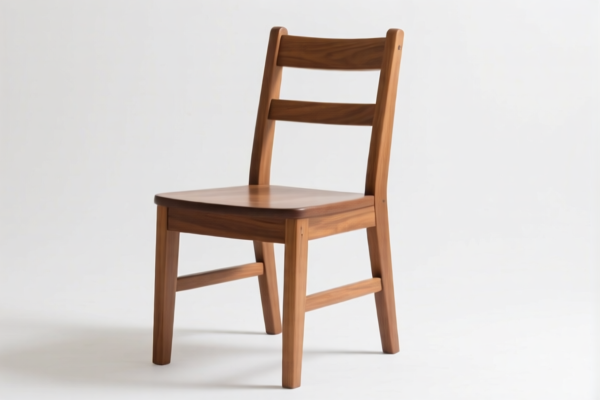
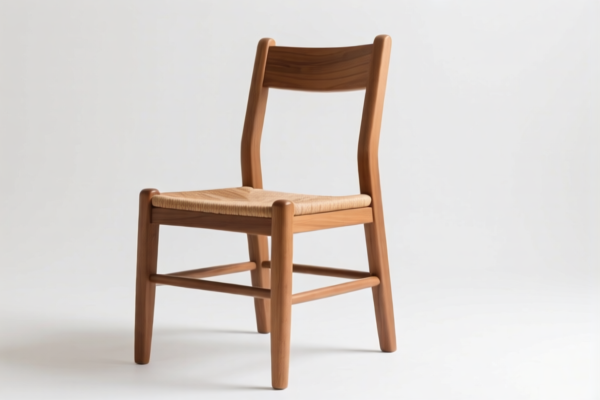
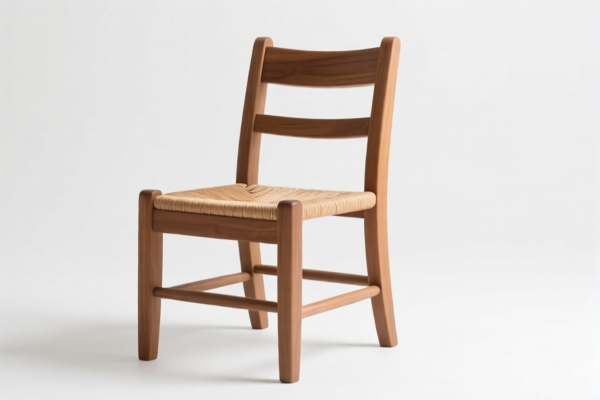
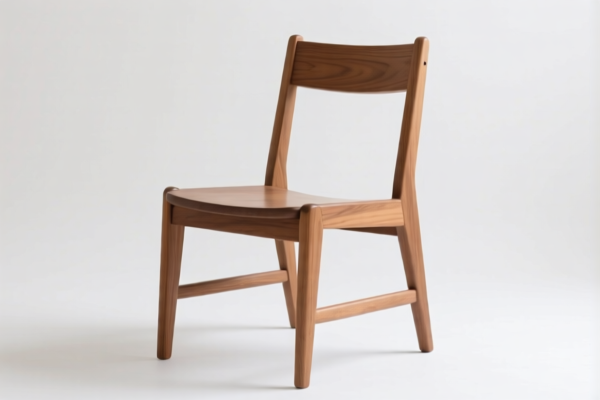
AI Analysis
🪑 Wooden Frame Chair (Excluding HS 9401)
🌐 HS Code Reference & Customs Clearance Guide | 2026 Latest Tariff Analysis | Professional Clearance Strategy
📌 I. Product Definition & Classification: Is It Really a "Chair"?
A "Wooden Frame Chair" sounds simple, but in international trade, it is a complex category. The prompt explicitly excludes HS 9401 (Seats). Why? Because if a chair is primarily defined as a "seat" with specific upholstery or mechanism, it falls under 9401. However, many wooden chairs are classified elsewhere based on material content, function, or structural characteristics.
If we exclude HS 9401, the most likely classification is HS 9403 (Other Furniture) or, in rare cases, HS 4413/4421 (Wood Articles) if it is considered a simple woodwork rather than furniture.
⚠️ Key Distinction:
- If the chair is upholstered or has a mechanism (swivel, recliner) → It might still be pulled into 9401 by customs despite the prompt.
- If the chair is solid wood, simple construction (no upholstery), or decorative → It likely falls under 9403.30 or 9403.40.
- If it is not considered furniture (e.g., a simple stool or wooden frame for display) → It might fall under 4421.10 or 4413.
📦 II. HS Code Classification Details (2026 Latest Tariff Authoritative Comparison)
Since HS 9401 is excluded, the primary alternative is HS 9403 (Other Furniture). Below are the most relevant codes for wooden chairs under this category.
| HS Code | Product Description | Applicable Scenario | Material/Structure |
|---|---|---|---|
9403.30.00.00 |
Wood furniture for offices | Office chairs, wooden desks/chairs without upholstery | 🪵 Solid Wood / Wood Veneer |
9403.40.00.00 |
Wood furniture for the kitchen | Kitchen chairs, dining chairs, wooden stools | 🪵 Solid Wood / Wood Veneer |
9403.50.00.00 |
Wood furniture for the bedroom | Bedside chairs, vanity stools, wooden frames | 🪵 Solid Wood / Wood Veneer |
9403.60.00.00 |
Other wood furniture | General-purpose wooden chairs, decorative chairs, garden chairs | 🪵 Solid Wood / Wood Veneer |
9403.70.00.00 |
Furniture of plastics | Not applicable (Wooden frame) | ❌ Plastics |
9403.90.00.00 |
Parts of furniture | Wooden legs, backs, arms of chairs (if sold separately) | 🪵 Wood Parts |
🔍 Important Reminder:
- HS 9403.60 is the most common catch-all for non-upholstered wooden chairs (e.g., dining chairs, wooden benches, simple stools).
- If the chair has upholstery but is not a "seat" in the technical sense (e.g., a wooden frame with a fabric cover that is not integral to a "seat" mechanism), it may still be disputed. However, customs often prefer 9403.30/40/50/60 for wooden frames.
- Do not force HS 9401 if the chair is purely wooden and structural. Use 9403.
💰 III. 2026 Latest Tariff Rate Details (Including Surcharges & Policy Add-ons)
✅ Applicable Country: United States (US)
✅ Origin: China (CN)
✅ Effective Time: 2025 November 10 onwards (including subsequent imports)
🎯 1. 9403.30.00.00 / 9403.40.00.00 / 9403.50.00.00 / 9403.60.00.00 — Wood Furniture
| Item | Content |
|---|---|
| Base Tariff Rate | 0% (ad valorem) |
| USITC Additional Tariff | +25% (From USITC Footnote 9903.88.01 for wood furniture) |
| IEEPA Additional Tariff | +10% (For China/HK products, effective Nov 10, 2025) |
| Total Tariff Rate | 35% |
| Tax Calculation | CIF Value × 35% |
| De Minimis Exemption Available? | ❌ No (deny_de_minimis) |
| Legal Basis Path | IEEPA:9903.01.25 → IEEPA:9903.01.24 → USITC:9403.xx → FOOTNOTE:9903.88.01 |
📌 Explanation:
- USITC 25%: Wood furniture is listed under Section 301 duties.
- IEEPA 10%: Additional tariff under International Emergency Economic Powers Act for Chinese goods.
- Total 35%: High duty rate. Ensure your invoice value is accurate, as customs will verify CIF.
🛠️ IV. Customs Clearance Practical Advice (Battle-Tested Pitfall Avoidance Guide)
✅ 1. Required Documentation List (No Exceptions)
| Document | Must Provide | Explanation |
|---|---|---|
| ✅ Product Specifications | ✔️ | Material (Solid Wood vs. Veneer), Dimensions, Weight |
| ✅ Photos (Including Markings) | ✔️ | Show joints, finish, and any brand labels |
| ✅ Commercial Invoice | ✔️ | Must state "Wooden Chair, Solid Wood, No Upholstery" |
| ✅ Packing List | ✔️ | List each component (seat, back, legs) if disassembled |
| ✅ Material Declaration | ✔️ | Confirm % of wood vs. other materials (metal screws, fabric) |
| ✅ Certificate of Origin (CO) | ✔️ | If non-Chinese origin, may qualify for reduced tariffs |
✅ 2. Declaration Tips (Key Mnemonics)
🔥 “Wooden Chair, No Upholstery, 9403 is Best!”
| Scenario | Correct Declaration | Wrong Practice |
|---|---|---|
| Solid Wood Dining Chair | 9403.40.00.00 |
Misdeclare as 9401.10 (Seats) → 35% vs 35% (but 9401 may trigger more scrutiny) |
| Wooden Stool (No Back) | 9403.60.00.00 |
Misdeclare as 4421 (Wood Articles) → Risk of reclassification |
| Wooden Chair with Fabric Seat | 9403.40.00.00 (if minor upholstery) |
Misdeclare as 9401 → May be accepted, but ensure it’s not a "mechanical seat" |
| Wooden Chair Parts (Legs, Backs) | 9403.90.00.00 |
Misdeclare as 9403 (Finished Furniture) → Higher duty on parts? No, but check |
✅ 3. Special Case Handling
| Scenario | Handling Advice |
|---|---|
| Wooden Chair with Metal Legs | If metal >50% by weight, consider HS 9403.60 or 9403.20 (Metal Furniture). If wood >50%, use 9403.60. |
| Wooden Chair with Plastic Components | If plastic is integral, still 9403.60 if wood is primary material. |
| OEM Custom Wooden Chairs | Provide client drawings to prove no "seat mechanism" (no reclining, no swivel). |
| Wooden Chairs for Outdoor Use | If treated with chemicals, ensure compliance with EPA regulations. |
🌍 V. Global Market Clearance Comparison (2026 Latest)
| Country/Region | Recommended HS Code | Tariff | Certification Requirements | Notes |
|---|---|---|---|---|
| 🇺🇸 USA | 9403.30/40/50/60 |
35% (China) | None specific | High duty, ensure wood is solid |
| 🇨🇳 China | 9403.30/40/50/60 |
5-10% | CCC (if applicable) | No additional tariffs |
| 🇪🇺 EU | 9403.30/40/50/60 |
0-6.5% | CE (if applicable) | No additional tariffs |
| 🇦🇺 Australia | 9403.30/40/50/60 |
5% | None | No additional tariffs |
| 🇯🇵 Japan | 9403.30/40/50/60 |
0-5% | None | No additional tariffs |
📌 Conclusion:
- USA is the most expensive market for wooden chairs (35% duty).
- EU, Japan, Australia have lower duties. Consider transshipment or origin substitution if exporting to the US.
📌 VI. Common Mistakes & Pitfall Guide (Lessons Learned)
❌ Mistake 1: Declaring a wooden chair with upholstery as 9401.10 (Mechanical Seats)
👉 Consequence: If customs disagrees, they may reclassify to 9403 or 9401.21. Ensure you have photos proving no mechanical seat.
❌ Mistake 2: Declaring a wooden chair as 4421.10 (Wooden Articles)
👉 Consequence: Customs may argue it is "furniture" and apply 9403. If 9403 has higher duties, you may face penalties.
❌ Mistake 3: Not declaring wood type (e.g., Oak, Pine, MDF)
👉 Consequence: May trigger additional inspections for invasive species (ISPM 15). Ensure wood is properly treated and marked.
❌ Mistake 4: Using "Chair" without specifying "Wooden"
👉 Consequence: Customs may assume it’s upholstered (9401) or metal (9403.20). Be specific: "Solid Wood Dining Chair, No Upholstery".
✅ Correct Practice:
"Wooden Dining Chair, Solid Oak, 18x18x30 inches, No Upholstery, Model XYZ, ISPM 15 Treated"
🎯 VII. Conclusion: Professional Declaration, Time-Saving, Cost-Effective!
🎯 Remember Mnemonic:
🔹 "Wooden Chair, No Seat Mechanism, 9403 is Key!"
🔹 "HS Code Defines Duty, 35% in US, 0-6% Elsewhere!"
🔹 "Declare Wood Type, Avoid ISPM Issues!"
📌 Tips:
If your wooden chair is originated from Vietnam, Mexico, Thailand, Malaysia, you may qualify for IEEPA Exemption, reducing tariff to 0-5%.
Recommend Advance Ruling if the chair has mixed materials (wood + metal + fabric) to avoid classification disputes.
📣 Immediate Action:
📞 Contact Professional Broker + Provide Photos + Apply for HS Code Advance Ruling
🚀 Let Your Wooden Chair Clear Customs Smoothly, Maximize Profit!
✨ Professional Clearance, Start with Accurate Classification!
💼 Every Dollar Saved is a Dollar Earned!
Customer Reviews
About HS Code Classification
The Harmonized System (HS) is an internationally standardized nomenclature developed by the World Customs Organization (WCO) to classify traded products. Over 200 countries use the HS system as the basis for customs tariffs, trade statistics, and import/export regulations.
Each HS code follows a hierarchical structure:
- Chapter (2 digits) — Broad category of goods (e.g., Chapter 84: Machinery and Mechanical Appliances)
- Heading (4 digits) — More specific grouping within the chapter
- Subheading (6 digits) — Internationally standardized breakdown, used by all WCO member countries
- National subdivisions (8-10 digits) — Country-specific extensions for further classification, such as US HTSUS 10-digit codes
Correct HS code classification is essential for smooth customs clearance, accurate duty payment, and compliance with trade regulations. Misclassification can lead to customs delays, overpayment of duties, or penalties.
When importing from CN to US, the applicable tariff rates may include:
- Most-Favored-Nation (MFN) rate — The standard duty rate applied to WTO members
- General rate — Applied to countries without trade agreements
- Trade remedy duties — Additional tariffs such as Section 301 (anti-dumping), Section 232 (national security), or countervailing duties
The information provided on this page is for reference purposes only. For official classification, please consult with your local customs authority or a licensed customs broker.