Wool Blended Yarn (For Textile Use)
CN → US| HS Code | Tariff Rate | Origin | Destination | Doc |
|---|---|---|---|---|
| 5107203000 | 41.0% | CN | US | Official Doc |
| 5106200000 | 41.0% | CN | US | Official Doc |
| 5106100090 | 41.0% | CN | US | Official Doc |
| 5105100000 | 0.0% | CN | US | Official Doc |
| 5107206000 | 41.0% | CN | US | Official Doc |
Product Images
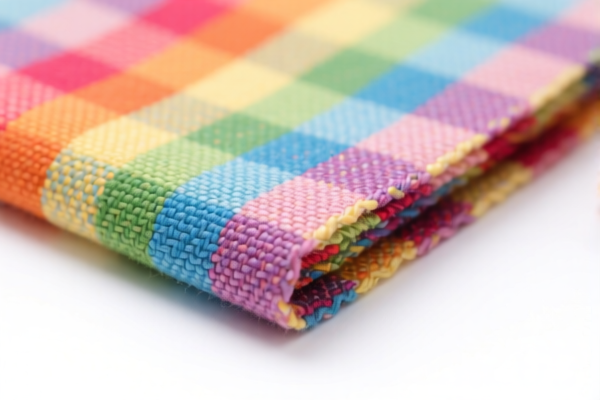
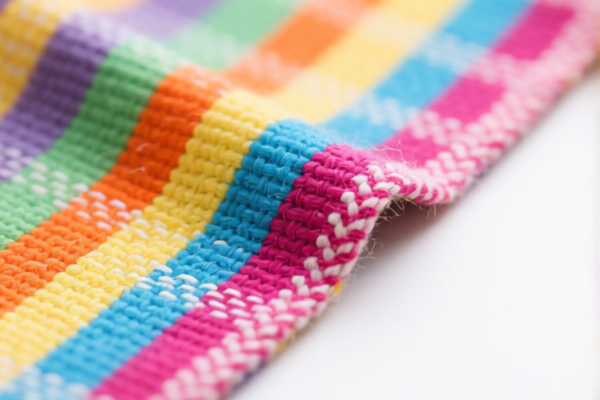
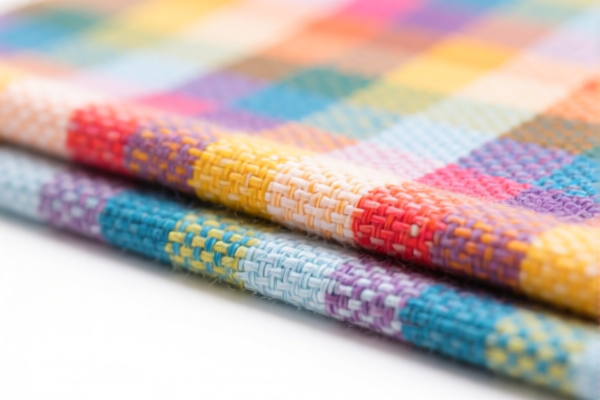
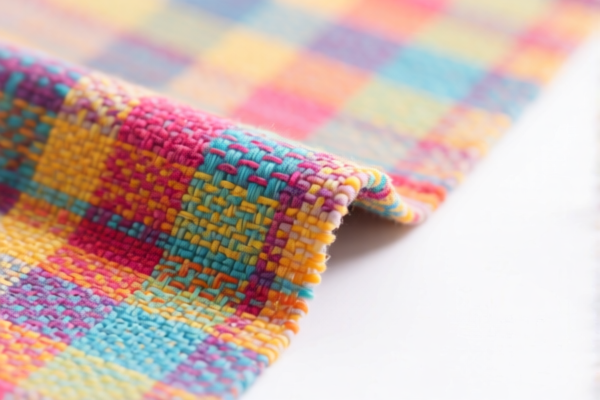
AI Analysis
🧶 Wool Blended Yarn (For Textile Use)
🌐 HS Code Reference & Clearance Guide | 2026 Latest Tariff Breakdown | Professional Customs Strategy
📌 I. Product Definition & Classification: Do You Really Understand "Wool Blended Yarn"?
Wool blended yarn, used primarily in textile manufacturing, refers to yarns where wool fibers are mixed with other natural or synthetic fibers. In international trade, classification depends heavily on processing methods (combed vs. carded), retail packaging, and fiber composition.
Key Distinction Points: * Industrial/Non-Retail: Large cones, barrels, or bulk packaging intended for manufacturing → Generally falls under Chapter 51, Heading 5106–5107. * Retail/Specialized: Small skeins for home knitting or specific industrial carded wool → Falls under Heading 5105 or specific sub-headings. * Combed vs. Carded: "Combed" implies a finer, smoother finish (Heading 5107); "Carded" implies a rougher, standard finish (Heading 5106/5105).
⚠️ Critical Classification Factor:
- If the yarn is not put up for retail sale and is wool-blended/combed → 5107.20
- If the yarn is not put up for retail sale and is wool-blended/cardded → 5106.20
- If the product is carded wool itself (not yet spun into standard yarn structure) or non-retail carded yarn → 5105.10 or 5106.10
📦 II. HS Code Classification Details (2026 Latest Tariff Authority)
Based on the provided data, here is the precise mapping for Wool Blended Yarn:
| HS Code | Product Description | Key Characteristics | Packaging/Usage Type |
|---|---|---|---|
5107.20.30.00 |
Wool Blended Yarn, Industrial Grade, Combed | Combed wool blended yarn, suitable for fine textiles | Industrial / Non-Retail |
5107.20.60.00 |
Wool Blended Yarn, Industrial Grade, Non-Retail | Combed wool blended yarn, general industrial use | Industrial / Non-Retail |
5106.20.00.00 |
Wool Blended Yarn, Industrial Grade, Non-Retail | Carded wool blended yarn, heavy duty/textile use | Industrial / Non-Retail |
5106.10.00.90 |
Wool Yarn, Not for Retail Sale | Pure or blended wool yarn, non-retail packaging | Industrial / Non-Retail |
5105.10.00.00 |
Carded Wool, Yarn Form | Carded wool fibers/yarn structure, specific form | Industrial / Bulk |
🔍 Important Note:
- All codes listed above are subject to US Import Tariffs (implied by the "Section 301" and "Section 122" references in the tax data). - Combed (5107) typically carries a slightly different duty profile than Carded (5106/5105), but in this specific dataset, the ad valorem base is consistent at 6%, though 5105.10 has a compound duty (specific + ad valorem).
💰 III. 2026 Latest Tariff Rate Breakdown (Including Additional Duties)
✅ Applicable Country: United States (US)
✅ Origin: China (CN) (Implied by Section 301 and Section 122 references)
✅ Effective Time: Current 2026 Tariff Regime
🎯 1. 5107.20.30.00 & 5107.20.60.00 & 5106.20.00.00 & 5106.10.00.90
Category: Wool Blended Yarn / Industrial Grade
| Item | Detail |
|---|---|
| Base MFN Rate | 6.0% |
| Section 301 Additional Duty | +25.0% |
| Section 122 Duty | +10.0% |
| Total Effective Rate | 41.0% |
| Tax Calculation | CIF Value × 41.0% |
| De Minimis Eligibility | ❌ NO (High-value industrial goods excluded) |
📌 Explanation:
- These four HS codes share the same tax structure in this dataset. - The 41% total rate is a combination of standard Most Favored Nation (MFN) rates and punitive tariffs imposed under Section 301 (Trade Promotion Authority) and Section 122 (Import Relief). - Warning: This is a high-cost import. Profit margins must account for nearly half the product value in duties.
🎯 2. 5105.10.00.00
Category: Carded Wool, Yarn Form
| Item | Detail |
|---|---|
| Base MFN Rate | 6.5¢/kg + 5.3% |
| Section 301 Additional Duty | +25.0% |
| Section 122 Duty | +10.0% |
| Total Effective Rate | 6.5¢/kg + 5.3% + 35.0% |
| Tax Calculation | (Weight in kg × $0.065) + (CIF Value × (5.3% + 25% + 10%)) |
| De Minimis Eligibility | ❌ NO |
📌 Explanation:
- This code uses a Compound Duty system (Specific + Ad Valorem). - Specific Duty: $0.065 per kilogram applies regardless of value. - Ad Valorem Duty: Total percentage is 40.3% (5.3% base + 25% Sec 301 + 10% Sec 122). - Why it differs: This classification often applies to rawer or less processed wool forms, hence the specific weight-based duty.
🛠️ IV. Customs Clearance Practical Advice (Battle-Tested Guide)
✅ 1. Essential Documentation Checklist
| Document | Mandatory? | Purpose |
|---|---|---|
| Commercial Invoice | ✅ Yes | Must clearly state "Wool Blended Yarn," HS Code, and Country of Origin. |
| Packing List | ✅ Yes | Must specify Gross/Net Weight (critical for 5105.10 compound duty). |
| Bill of Lading | ✅ Yes | Standard shipping document. |
| Fiber Content Declaration | ✅ Yes | Must specify percentage of wool vs. other fibers (e.g., 50% Wool, 50% Polyester). |
| Combed/Carding Proof | ✅ Yes | Technical spec sheet proving if yarn is "Combed" (5107) or "Carded" (5106/5105). |
| Certificate of Origin | ✅ Yes | To verify Chinese origin and apply accurate Section 301/122 duties. |
✅ 2. Declaration Tips (Key Mnemonics)
🔥 "Combed is 5107, Carded is 5106/5105, Retail is Forbidden, Weights Must Be True!"
| Scenario | Correct Declaration | Incorrect Action |
|---|---|---|
| Fine Textile Yarn | 5107.20.30.00 (Combed) |
Declaring as generic "Yarn" |
| Heavy Industrial Yarn | 5106.20.00.00 (Carded) |
Declaring as "Retail Yarn" |
| Bulk Wool Fibers | 5105.10.00.00 |
Declaring as "Finished Yarn" |
| Packaging | Must be Non-Retail (Cones/Barrels) | If retail packaging exists, HS may change → Avoid Retail Packaging for these HS Codes |
✅ 3. Special Case Handling
| Situation | Handling Advice |
|---|---|
| Mixed Fiber Content | If wool < 85%, it may shift to synthetic chapters. Ensure wool % is clearly declared. |
| Weight Discrepancy | For 5105.10, customs will verify weight. Discrepancies > 5% trigger audits and delays. |
| Section 122 Eligibility | Ensure goods are not excluded under any recent exemptions. Currently, no exemption shown in data. |
| Anti-Dumping/Countervailing | Check if specific wool products from China are subject to separate AD/CVD orders beyond Section 301. |
🌍 V. Global Market Clearance Comparison (2026)
| Market | Recommended HS Code | Approx. Tariff (China Origin) | Key Requirement |
|---|---|---|---|
| 🇺🇸 USA | 5107.20 / 5106.20 |
41% (Ad Valorem) | Strict origin proof, Section 301/122 |
| 🇪🇺 EU | 5107.20 / 5106.20 |
6.0% - 8.0% | REACH compliance, no Sec 301 |
| 🇨🇳 China | 5107.20 / 5106.20 |
6.0% - 8.0% | CCC (if applicable), standard import |
| 🇬🇧 UK | 5107.20 / 5106.20 |
6.0% - 8.0% | UKCA marking (if relevant goods) |
📌 Conclusion:
- The USA is the most expensive market for Chinese wool yarn due to Section 301 (25%) and Section 122 (10%) tariffs. - EU/UK markets are significantly cheaper (~6-8%), but require strict environmental and safety compliance (REACH).
📌 VI. Common Mistakes & Pitfalls (Blood & Tears Lessons)
❌ Mistake 1: Declaring "Combed" yarn as "Carded" to avoid higher scrutiny
👉 Consequence: Customs audit → Penalties + Back Duties
❌ Mistake 2: Ignoring the $0.065/kg specific duty for 5105.10
👉 Consequence: Underpayment of duties → Seizure of Goods
❌ Mistake 3: Packaging labeled as "For Retail Sale" while declaring industrial HS codes
👉 Consequence: Misclassification → Fine + Delay
❌ Mistake 4: Failing to declare Section 122 applicability
👉 Consequence: Under-declaration of duty → Lien on shipment
✅ Correct Approach:
"Industrial Wool Blended Yarn, Combed, 50% Wool/50% Acrylic, Non-Retail Packaging, HS 5107.20.30.00, Origin: China"
🎯 VII. Conclusion: Professional Declaration, Risk Mitigation, Cost Control
🎯 Remember the Mantra:
🔹 "Combed is 5107, Carded is 5106, Weights Matter, Retail is Bad!"
🔹 "41% Tax is Real, Plan Margin Ahead, Documentation Saves Time!"
📌 Pro Tip:
If your wool yarn is originally from Vietnam, India, or Bangladesh, you may avoid Section 301 and 122 duties.
Consider supply chain diversification or transshipment (legally compliant) to reduce tariff burden.
Always apply for an Advance Ruling from US Customs (CBP) if unsure about Combed vs. Carded status.
📣 Immediate Action:
📞 Contact a Licensed Customs Broker + Provide Fiber Analysis Report + Apply for Pre-Ruling
🚀 Ensure Smooth Clearance, Maximize Profit, Avoid Customs Traps!
✨ Professional Clearance Starts with Precise Classification!
💼 Every Percent of Duty Saved is Pure Profit!
Customer Reviews
About HS Code Classification
The Harmonized System (HS) is an internationally standardized nomenclature developed by the World Customs Organization (WCO) to classify traded products. Over 200 countries use the HS system as the basis for customs tariffs, trade statistics, and import/export regulations.
Each HS code follows a hierarchical structure:
- Chapter (2 digits) — Broad category of goods (e.g., Chapter 84: Machinery and Mechanical Appliances)
- Heading (4 digits) — More specific grouping within the chapter
- Subheading (6 digits) — Internationally standardized breakdown, used by all WCO member countries
- National subdivisions (8-10 digits) — Country-specific extensions for further classification, such as US HTSUS 10-digit codes
Correct HS code classification is essential for smooth customs clearance, accurate duty payment, and compliance with trade regulations. Misclassification can lead to customs delays, overpayment of duties, or penalties.
When importing from CN to US, the applicable tariff rates may include:
- Most-Favored-Nation (MFN) rate — The standard duty rate applied to WTO members
- General rate — Applied to countries without trade agreements
- Trade remedy duties — Additional tariffs such as Section 301 (anti-dumping), Section 232 (national security), or countervailing duties
The information provided on this page is for reference purposes only. For official classification, please consult with your local customs authority or a licensed customs broker.