battery chuck
CN → US| HS Code | Tariff Rate | Origin | Destination | Doc |
|---|---|---|---|---|
| 7326908688 | 87.9% | CN | US | Official Doc |
| 7326908630 | 87.9% | CN | US | Official Doc |
| 8466201010 | 39.6% | CN | US | Official Doc |
| 8466208035 | 38.7% | CN | US | Official Doc |
Product Images
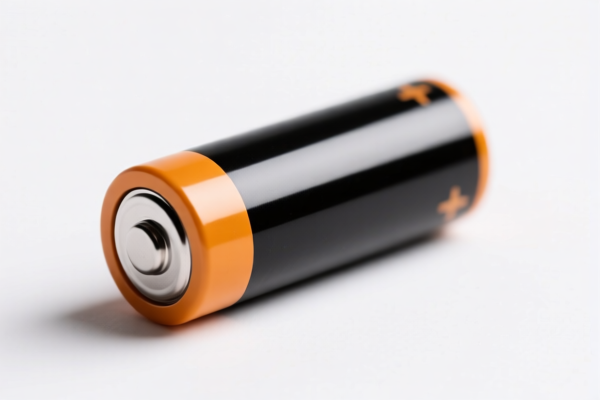
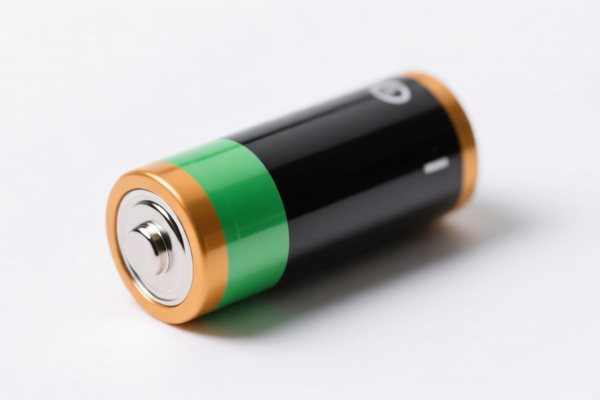
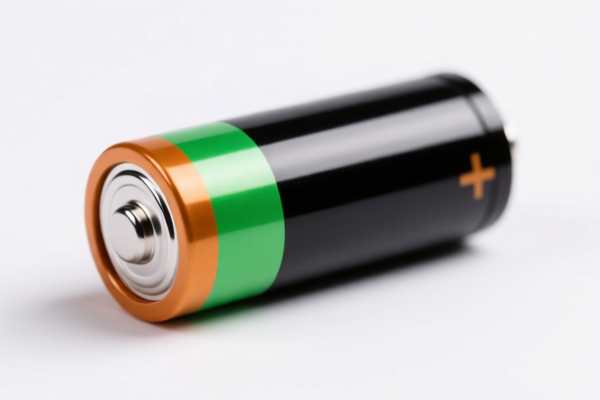
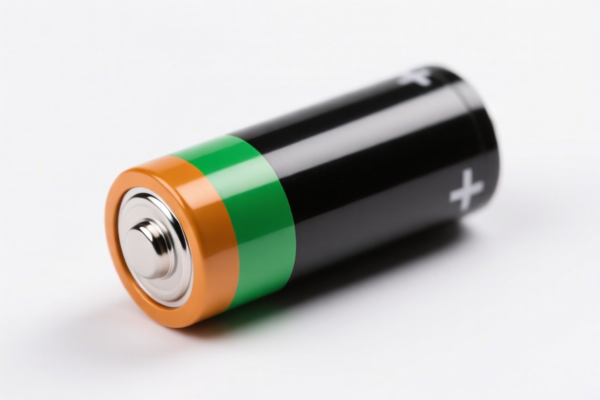
AI Analysis
🔋 Battery Chuck (Battery Housings / Carriers & Tool Holders)
🌐 HS Code Reference & Customs Clearance Guide | 2026 Latest Tariff Analysis | Professional Clearance Strategy 📌 Part 1: Product Definition & Classification: What exactly is a "Battery Chuck"?
In the context of industrial and power tools, a "Battery Chuck" typically refers to one of two things: 1. Battery Housings/Carriers: The plastic or metal shell that holds rechargeable battery cells, often with electrical contacts and safety modules. 2. Tool Holders/Supports: Metal supports, hangers, or holders used in machining centers (Headings 8456-8465) to hold tubes, pipes, or workpieces, sometimes colloquially referred to as "chucks" or "supports."
⚠️ Critical Distinction in Trade Data:
Based on the provided <DATA>, the term "Battery Chuck" maps to Iron/Steel Articles and Machine Tool Accessories. It does not fall under electrical battery categories (Chapter 85). Instead, it is classified as:
* Iron/Steel Articles (Chapter 73): If it is a structural support, hanger, or simple housing made of iron/steel.
* Machine Tool Parts (Chapter 84): If it is a specific work holder, jig, or fixture for machine tools.
📦 Part 2: HS Code Classification Details (2026 Latest Tariff Authority)
| HS Code | Product Description | Applicability | Material/Function |
|---|---|---|---|
7326.90.86.88 |
Other articles of iron or steel: Other: Other: Other: Other | Generic steel supports, brackets, non-specific holders | ✅ Iron/Steel |
7326.90.86.30 |
Other articles of iron or steel: Other: Other: Other: Hangers and similar supports for tubes and pipes | Pipe supports, tube hangers, structural steel mounts | ✅ Iron/Steel |
8466.20.10.10 |
Parts/accessories for machines 8456-8465; tool holders: Work holders: For machine tools used in cutting gears Jigs and fixtures | Precision jigs, gear-cutting fixtures, specialized work holders | ✅ Machine Accessory |
8466.20.80.35 |
Parts/accessories for machines 8456-8465; tool holders: Work holders: Other For metalworking machine tools: Other | General metalworking work holders, non-gear specific fixtures | ✅ Machine Accessory |
🔍 Key Insight: - If the "Battery Chuck" is a simple steel bracket or hanger, it goes to 7326. - If it is a precision fixture for CNC machines (8456-8465), it goes to 8466.20. - Do not classify as a Battery (8507/8509) unless it contains the actual electrochemical cells and active circuits. The data provided indicates these are structural/hardware items.
💰 Part 3: 2026 Latest Tariff Rate Breakdown (Including Surcharges & Policy Add-ons)
✅ Applicable Country: United States (US)
✅ Origin: China (CN)
✅ Effective Date: Current Rates Apply (Based on 2025/2026 Trade Policies)
🎯 1. 7326.90.86.88 & 7326.90.86.30 — Iron/Steel Articles (Hangers/Supports)
| Item | Content |
|---|---|
| Base Tariff | 2.9% (Ad Valorem) |
| Section 301 Surcharge | +25.0% (Standard US-China Tariff) |
| Special Metal Surcharge | +50.0% (Specific surcharge for Steel, Aluminum, Copper products) |
| Total Tariff Rate | 77.9% |
| Tax Calculation | CIF Value × 77.9% |
| De Minimis Exemption | ❌ Not Eligible (High tariff rate disqualifies from $800 de minimis) |
| Legal Basis Path | HTS:7326.90.86 → USITC:301 → Special Metal Surcharge:50% |
📌 Explanation: - The 77.9% rate is extremely high. It combines the base rate (2.9%), the standard Section 301 tariff (25%), and a specific 50% surcharge on steel products. - This applies to both
7326.90.86.88(General) and7326.90.86.30(Tube/Pipe Hangers).
🎯 2. 8466.20.10.10 & 8466.20.80.35 — Machine Tool Accessories (Work Holders)
| Item | Content |
|---|---|
| Base Tariff | 4.6% (for .10.10) / 3.7% (for .80.35) |
| Section 301 Surcharge | +25.0% |
| Special Metal Surcharge | ❌ Not Applicable (These are classified as machine parts, not raw steel/consumer metal goods) |
| Total Tariff Rate | 29.6% (for .10.10) / 28.7% (for .80.35) |
| Tax Calculation | CIF Value × ~29% |
| De Minimis Exemption | ❌ Not Eligible |
| Legal Basis Path | HTS:8466.20 → USITC:301 |
📌 Explanation: - These rates are significantly lower (approx. 29%) because they are classified as machine accessories rather than general steel articles. - Crucial: To benefit from the lower 29% rate, the item must be demonstrably a "work holder" or "jig" for machines 8456-8465. If it is just a simple steel bracket, customs may reclassify it to Chapter 73 (77.9%).
🛠️ Part 4: Customs Clearance Practical Advice (Real-World Pitfall Guide)
✅ 1. Preparation Checklist (Non-Negotiable)
| Document | Required | Notes |
|---|---|---|
| ✅ Product Specifications | ✔️ | Detailed description: Is it a pipe hanger? A gear-cutting jig? |
| ✅ Material Composition | ✔️ | Confirm if it is Iron/Steel. If plastic components dominate, re-evaluate HS Code. |
| ✅ Functional Diagram | ✔️ | Essential for 8466 classification to prove it is a "work holder" for specific machines. |
| ✅ Commercial Invoice | ✔️ | Must clearly state "Iron/Steel Support" OR "Machine Tool Work Holder." |
| ✅ Country of Origin | ✔️ | China origin triggers the 77.9% or 29% rates. |
✅ 2. Declaration Strategy (Key Mantras)
🔥 "Function Defines HS Code; Material Defines Surcharge!"
| Scenario | Correct Declaration | Risk if Wrong |
|---|---|---|
| Simple Steel Bracket/Hanger | 7326.90.86.30 or 7326.90.86.88 |
Misclassifying as machine part → Audit + Back Taxes |
| Precision CNC Jig/Fixture | 8466.20.10.10 or 8466.20.80.35 |
Under-declaring rate (claim 29% when it's 77.9%) → Severe Penalties |
| Plastic Battery Housing | Not in Data (Likely Chapter 39/85) | Using Iron/Steel codes → Rejection |
| Battery with Cells Inside | Not in Data (Chapter 85) | Using Tool Holder codes → Smuggling Risk |
✅ 3. Special Considerations
| Situation | Advice |
|---|---|
| Is it a "Chuck" for a Drill? | If it's a drill chuck (tool holder), it may also fall under 8466.20. Ensure it is compatible with Heads 8456-8465. |
| Mixed Materials | If the "Battery Chuck" is 90% plastic with a steel bracket, argue for a higher plastic code (if available) to avoid the 50% Steel Surcharge. However, if steel is the essential character, 7326 applies. |
| Avoiding the 50% Surcharge | The 50% surcharge is the killer here. It applies to "Steel, Aluminum, Copper products." If you can prove the item is a specialized machine accessory (8466), you avoid this 50% surcharge, saving ~50% in taxes. This is the #1 optimization strategy. |
🌍 Part 5: Global Market Comparison (2026)
| Country/Region | Recommended HS Code | Estimated Tariff (China Origin) | Key Requirement |
|---|---|---|---|
| 🇺🇸 USA | 8466.20.xxxx |
~29% (Best Option) | Prove machine compatibility |
| 🇺🇸 USA | 7326.90.86.xx |
77.9% (Worst Case) | Simple steel articles |
| 🇨🇳 China | 7326 / 8466 |
Low (5-10%) | Standard Import |
| 🇪🇺 EU | 7326 / 8466 |
~2-4% | CE/RoHS if electrical |
| 🇬🇧 UK | 7326 / 8466 |
~2-4% | UKCA Mark if needed |
📌 Conclusion: - USA is the most critical market due to the 77.9% effective rate on steel articles and 29.6% on machine parts. - Optimization Goal: Prove the item is a Machine Tool Accessory (8466) to avoid the 50% Special Metal Surcharge.
📌 Part 6: Common Mistakes & Pitfall Guide (Lessons Learned)
❌ Mistake 1: Calling it a "Battery" when it's a "Holder"
👉 Consequence: If it contains no cells, it’s not a battery. If it’s steel, it’s 7326 (77.9%).
❌ Mistake 2: Classifying a simple steel bracket as a "Machine Accessory"
👉 Consequence: Customs will downgrade it to 7326 (77.9%) and impose penalties for misclassification.
❌ Mistake 3: Ignoring the "Special Metal Surcharge"
👉 Consequence: Underestimating costs by 50%. The difference between 29% and 77.9% is 48.9% on CIF value.
❌ Mistake 4: Using "Battery Chuck" in the invoice description
👉 Consequence: Ambiguity. Use precise terms: "Steel Pipe Hanger" or "CNC Machine Work Holder."
✅ Correct Action:
"Work Holder for CNC Gear Cutting Machine, Model XYZ, Iron/Steel, Designed for Heading 8456"
🎯 Part 7: Conclusion: Strategic Classification is Profit Protection
🎯 Remember the Golden Rule:
🔹 "Machine Accessory = 29% | Steel Article = 77.9% | Difference = $48,900 per $100k"
🔹 "Prove Function, Not Just Material, to Avoid the 50% Steel Tax!"
📌 Pro Tip:
If your "Battery Chuck" is used in a CNC environment (even if it holds a battery-powered tool holder), document its compatibility with Heads 8456-8465. This allows you to use 8466.20, dropping the tariff from 77.9% to ~29%.
📣 Immediate Action:
📞 Consult a Customs Broker: Request a Binding Ruling if the item is borderline between
7326and8466.
🚀 Optimize Your Supply Chain: If possible, source non-steel components (e.g., plastic bases with steel contacts) to argue for a lower-chapter classification.
✨ Professional Clearance Starts with Accurate Classification!
💼 Save 48.9% Tax by Choosing the Right HS Code!
Customer Reviews
About HS Code Classification
The Harmonized System (HS) is an internationally standardized nomenclature developed by the World Customs Organization (WCO) to classify traded products. Over 200 countries use the HS system as the basis for customs tariffs, trade statistics, and import/export regulations.
Each HS code follows a hierarchical structure:
- Chapter (2 digits) — Broad category of goods (e.g., Chapter 84: Machinery and Mechanical Appliances)
- Heading (4 digits) — More specific grouping within the chapter
- Subheading (6 digits) — Internationally standardized breakdown, used by all WCO member countries
- National subdivisions (8-10 digits) — Country-specific extensions for further classification, such as US HTSUS 10-digit codes
Correct HS code classification is essential for smooth customs clearance, accurate duty payment, and compliance with trade regulations. Misclassification can lead to customs delays, overpayment of duties, or penalties.
When importing from CN to US, the applicable tariff rates may include:
- Most-Favored-Nation (MFN) rate — The standard duty rate applied to WTO members
- General rate — Applied to countries without trade agreements
- Trade remedy duties — Additional tariffs such as Section 301 (anti-dumping), Section 232 (national security), or countervailing duties
The information provided on this page is for reference purposes only. For official classification, please consult with your local customs authority or a licensed customs broker.