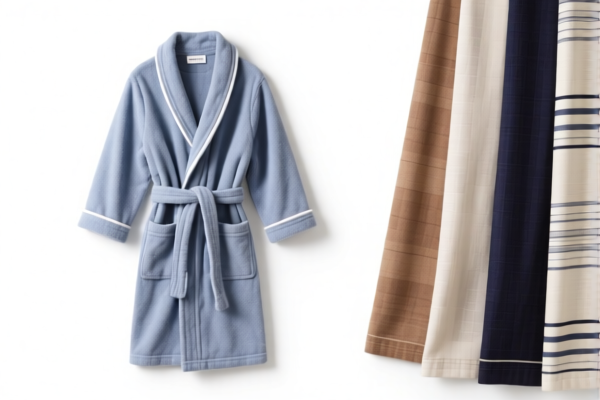
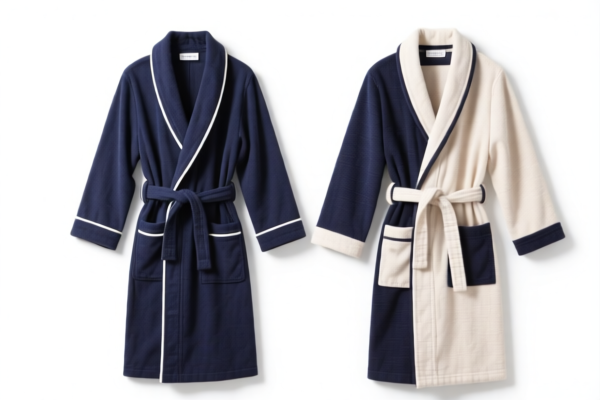
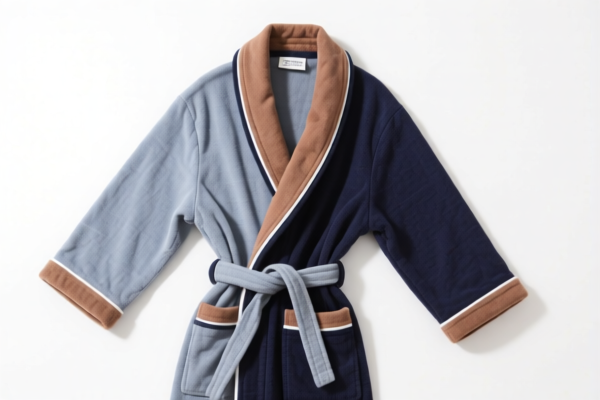
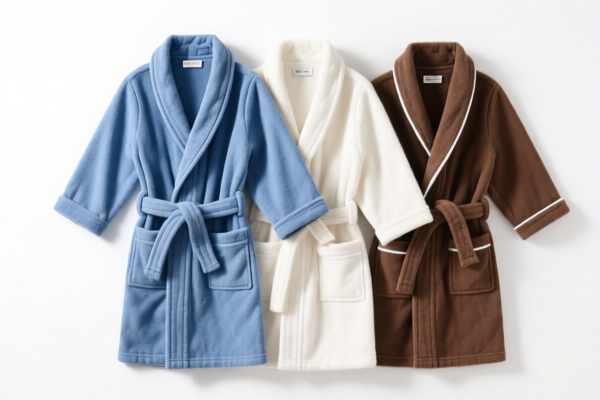
boys short dressing gowns other materials
CN → US| HS Code | Tariff Rate | Origin | Destination | Doc |
|---|---|---|---|---|
| 6201906960 | 21.7% | CN | US | Official Doc |
| 6111909000 | 23.1% | CN | US | Official Doc |
| 6111905070 | 24.9% | CN | US | Official Doc |
| 6201902960 | 20.3% | CN | US | Official Doc |
| 6110909090 | 23.5% | CN | US | Official Doc |
Product Images
AI Analysis
🧒👦 Boys' Short Dressing Gowns – Other Materials
🌐 HS Code Reference & Customs Clearance Guide | 2026 Updated Tariff Analysis | Expert Import Strategy
📌 One-Stop Clarity for High-Value Kids’ Apparel Importers
📦 1. Product Definition & Classification: What Exactly Is a “Boys’ Short Dressing Gown”?
A boys’ short dressing gown refers to a loose-fitting, robe-style garment worn by young male children (typically under 12 years old), often used after bathing or for lounging. It is not a full-length robe but a short-length variant, typically ending at the hips or mid-thigh.
In international trade, these garments are classified based on: - Material composition (e.g., other textile materials) - Construction method (knitted, woven, or non-woven) - Design features (e.g., open-front, belt, hood, or sleeveless)
⚠️ Critical Distinction:
- If the garment is knitted or crocheted, it falls under knitted clothing (HS 6111).
- If it is woven or made from other textile materials, it falls under woven garments (HS 6201).
- "Other materials" means non-cotton, non-wool, non-silk, non-rayon — such as polyester blends, nylon, viscose, or synthetic fibers.
📊 2. HS Code Classification Breakdown (2026 Updated Tariff Matrix)
| HS Code | Product Description | Material Type | Key Feature | Tax Rate |
|---|---|---|---|---|
6201.90.69.60 |
Boys’ short dressing gowns, other materials, woven | Other textile materials | Not knitted, open front, short length | 21.7% |
6111.90.90.00 |
Boys’ short dressing gowns, knitted or crocheted, other materials | Other textile materials | Stretchy fabric, elastic cuffs, soft texture | 23.1% |
6111.90.50.70 |
Boys’ short dressing gowns, knitted or crocheted, accessories or parts | Other textile materials | May include detachable hoods, belts, or trimmings | 24.9% |
6201.90.29.60 |
Boys’ short dressing gowns, other woven garments, similar to capes | Other textile materials | Cape-like design, no sleeves, open back | 20.3% |
6110.90.90.90 |
Boys’ short dressing gowns, knitted or crocheted, similar to robes | Other textile materials | Often includes hood, drawstring, soft lining | 23.5% |
🔍 Why the Differences?
- Knitted garments (6111) are taxed higher due to higher value-added processing and perceived premium quality.
- Accessories or parts (6111.90.50.70) attract the highest rate — 24.9% — because they are treated as value-added components.
- Cape-like designs (6201.90.29.60) are taxed lowest — 20.3% — due to lower material cost and simpler construction.
💰 3. 2026 Updated Tariff Breakdown (U.S. Customs – China Origin)
✅ Applicable Country: United States (US)
✅ Origin: China (CN)
✅ Effective Date: November 10, 2025 (and ongoing)
🎯 1. 6201.90.69.60 – Woven Boys’ Short Dressing Gowns (Other Materials)
| Component | Details |
|---|---|
| Base Duty | 4.2% (ad valorem) |
| Section 301 (USITC) Additional Tariff | +7.5% |
| Section 122 (IEEPA) Emergency Tariff | +10.0% |
| Total Effective Duty | 21.7% |
| Tax Calculation | CIF Value × 21.7% |
| De Minimis Threshold | ❌ Not applicable (denied under U.S. 2025 rule) |
| Legal Basis Path | IEEPA:9903.01.25 → USITC:6201.90.69.60 → FOOTNOTE:9903.88.01 |
📌 Explanation:
- This is a woven garment, not knitted, so it avoids the higher knitted rate.
- Still subject to all three layers: base duty + 301 + IEEPA.
- No duty-free status — even for small shipments.
🎯 2. 6111.90.90.00 – Knitted Boys’ Short Dressing Gowns (Other Materials)
| Component | Details |
|---|---|
| Base Duty | 5.6% |
| Section 301 (USITC) Additional Tariff | +7.5% |
| Section 122 (IEEPA) Emergency Tariff | +10.0% |
| Total Effective Duty | 23.1% |
| Tax Calculation | CIF × 23.1% |
| De Minimis | ❌ Not allowed |
| Legal Basis Path | IEEPA:9903.01.25 → USITC:6111.90.90.00 → FOOTNOTE:9903.88.01 |
📌 Why Higher?
- Knitted garments are more labor-intensive and often higher margin.
- Subject to same 301 + IEEPA but with higher base rate (5.6% vs 4.2%).
🎯 3. 6111.90.50.70 – Knitted Accessories or Parts (e.g., Hood, Belt, Trim)
| Component | Details |
|---|---|
| Base Duty | 14.9% |
| Section 301 (USITC) Additional Tariff | +0.0% |
| Section 122 (IEEPA) Emergency Tariff | +10.0% |
| Total Effective Duty | 24.9% |
| Tax Calculation | CIF × 24.9% |
| De Minimis | ❌ Not applicable |
| Legal Basis Path | IEEPA:9903.01.25 → USITC:6111.90.50.70 → FOOTNOTE:9903.88.01 |
📌 Critical Insight:
- This is not a full garment — it’s a component (e.g., detachable hood or drawstring belt).
- Highest tax rate because accessories are treated as value-added items.
- No 301 tariff — but 10% IEEPA still applies.
- Do NOT ship parts separately — risk of misclassification and penalties.
🎯 4. 6201.90.29.60 – Cape-Like Woven Garments (Other Materials)
| Component | Details |
|---|---|
| Base Duty | 2.8% |
| Section 301 (USITC) Additional Tariff | +7.5% |
| Section 122 (IEEPA) Emergency Tariff | +10.0% |
| Total Effective Duty | 20.3% |
| Tax Calculation | CIF × 20.3% |
| De Minimis | ❌ Not allowed |
| Legal Basis Path | IEEPA:9903.01.25 → USITC:6201.90.29.60 → FOOTNOTE:9903.88.01 |
📌 Why Lowest?
- Cape-like design is considered lower-value and less complex.
- Lowest base duty (2.8%) + same 301 + IEEPA → lowest total among all five codes.
🎯 5. 6110.90.90.90 – Knitted or Crocheted Similar Garments (Other Materials)
| Component | Details |
|---|---|
| Base Duty | 6.0% |
| Section 301 (USITC) Additional Tariff | +7.5% |
| Section 122 (IEEPA) Emergency Tariff | +10.0% |
| Total Effective Duty | 23.5% |
| Tax Calculation | CIF × 23.5% |
| De Minimis | ❌ Not allowed |
| Legal Basis Path | IEEPA:9903.01.25 → USITC:6110.90.90.90 → FOOTNOTE:9903.88.01 |
📌 Note:
- This code covers similar garments that are knitted or crocheted, even if not strictly called “dressing gowns”.
- Often used for hooded robes, lounge sets, or playwear.
- Higher than woven, but lower than accessory parts.
🛠️ 4. Customs Clearance Best Practices (Pro Tips for Success)
✅ 1. Essential Documentation Checklist
| Document | Required? | Why It Matters |
|---|---|---|
| ✅ Commercial Invoice | ✔️ | Must clearly state: “Boys’ Short Dressing Gown, Knitted/Woven, Other Materials, Model XYZ” |
| ✅ Product Photos (Front/Back/Side) | ✔️ | Show construction, material, sleeves, hood, belt |
| ✅ Material Composition Certificate | ✔️ | Prove “other materials” (e.g., polyester 80%, spandex 20%) |
| ✅ HS Code Pre-Ruling Request | ✔️ | Highly recommended — avoid disputes |
| ✅ Packing List | ✔️ | Show full garment vs. parts |
| ✅ Certificate of Origin (CO) | ✔️ | Required for tariff eligibility |
| ✅ Test Report (e.g., CPSIA, flammability) | ✔️ | Mandatory for children’s wear |
✅ 2.申报技巧(Key Rules to Remember)
🔥 "Full garment, not parts — knitted or woven, know the code!"
| Scenario | Correct HS Code | Common Mistake |
|---|---|---|
| Full robe, knitted, with hood | 6111.90.90.00 |
Misreported as 6201.90.69.60 |
| Detachable hood only | 6111.90.50.70 |
Treated as full garment → higher tax |
| Cape-style, no sleeves | 6201.90.29.60 |
Misclassified as knitted → higher rate |
| Hood + belt as separate items | Do NOT ship separately! | Each item taxed at 24.9% → total 49.8%! |
✅ 3. Special Cases & Risk Mitigation
| Situation | Recommended Action |
|---|---|
| OEM or Private Label | Provide design specs + fabric bill — avoid “generic” labels |
| Mixed Materials (e.g., cotton + polyester) | Classify by dominant material (≥50%) |
| Garment with printed logo | Still falls under same HS code — no change |
| Importing from Vietnam/Mexico | Can qualify for IEEPA exemption — 0% on Section 122 |
| Sample shipments | Still subject to 20.3%–24.9% — no exemption |
🌍 5. Global Market Comparison (2026 Tariff Snapshot)
| Country | Recommended HS Code | Base Duty | Additional Taxes | Notes |
|---|---|---|---|---|
| 🇺🇸 USA | 6201.90.69.60 (woven) |
4.2% | +7.5% +10% | Total: 21.7% |
| 🇨🇳 China | 6201.90.69.60 |
5% | None | No IEEPA/301 |
| 🇪🇺 EU | 6201.90.69.60 |
0% | CE + REACH | No extra tariffs |
| 🇦🇺 Australia | 6201.90.69.60 |
5% | None | No extra tariffs |
| 🇯🇵 Japan | 6201.90.69.60 |
0% | None | No extra tariffs |
📌 Insight:
- U.S. is the only market with 301 + IEEPA tariffs on these items.
- China, EU, Japan, Australia have no extra tariffs — ideal for export hubs.
📌 6. Common Mistakes & How to Avoid Them
❌ Mistake 1: Shipping a hood separately from the robe
👉 Result: 6111.90.50.70 at 24.9% each → 49.8% total!
❌ Mistake 2: Calling a knitted gown a “woven” garment
👉 Result: Incorrect HS code → duty underpayment → penalties + delays
❌ Mistake 3: Not declaring “other materials”
👉 Result: Misclassified as cotton/wool → lower base duty, but higher risk of audit
❌ Mistake 4: Using generic name like “kids’ robe”
👉 Result: Customs may assume higher value → higher scrutiny
✅ Correct Labeling Example:
“Boys’ Short Dressing Gown, Knitted, 100% Polyester, Hooded, Elastic Waist, Size 4T, Model BG-2025”
🎯 7. Final Verdict: Smart Importing Starts with the Right HS Code
🎯 Key Takeaways:
🔹 Woven = Lower tax (20.3–21.7%)
🔹 Knitted = Higher tax (23.1–23.5%)
🔹 Accessories = Highest tax (24.9%)
🔹 Cape-style = Best value
🔹 Never split garments into parts
🔹 Always request HS Code pre-ruling
📌 Pro Tip:
If your product is made in Vietnam, Mexico, or Thailand, you may qualify for IEEPA exemption — 0% on Section 122 → total tax drops to 12.1%–14.9%.
📣 Act Now!
📞 Contact a U.S. Customs Broker + Submit HS Code Pre-Ruling Request
🚀 Avoid penalties, delays, and overpaying by 25%+
✨ Your Success Starts with Precision.
💼 One wrong code = thousands in extra cost. One right code = smooth, fast, low-cost clearance.
✅ Professional Customs, Accurate Classification, Zero Surprises.
📦 Import with Confidence — Ship Smart, Save Big!
Customer Reviews
About HS Code Classification
The Harmonized System (HS) is an internationally standardized nomenclature developed by the World Customs Organization (WCO) to classify traded products. Over 200 countries use the HS system as the basis for customs tariffs, trade statistics, and import/export regulations.
Each HS code follows a hierarchical structure:
- Chapter (2 digits) — Broad category of goods (e.g., Chapter 84: Machinery and Mechanical Appliances)
- Heading (4 digits) — More specific grouping within the chapter
- Subheading (6 digits) — Internationally standardized breakdown, used by all WCO member countries
- National subdivisions (8-10 digits) — Country-specific extensions for further classification, such as US HTSUS 10-digit codes
Correct HS code classification is essential for smooth customs clearance, accurate duty payment, and compliance with trade regulations. Misclassification can lead to customs delays, overpayment of duties, or penalties.
When importing from CN to US, the applicable tariff rates may include:
- Most-Favored-Nation (MFN) rate — The standard duty rate applied to WTO members
- General rate — Applied to countries without trade agreements
- Trade remedy duties — Additional tariffs such as Section 301 (anti-dumping), Section 232 (national security), or countervailing duties
The information provided on this page is for reference purposes only. For official classification, please consult with your local customs authority or a licensed customs broker.