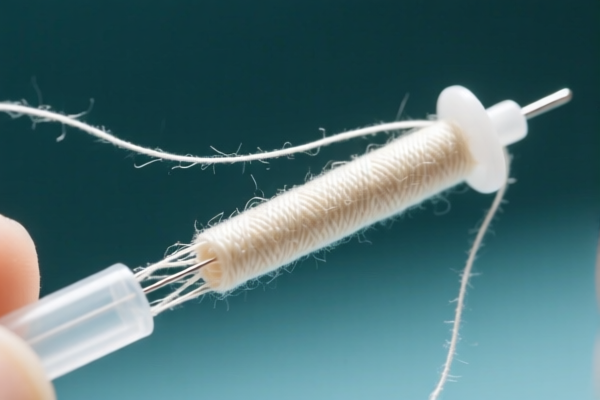
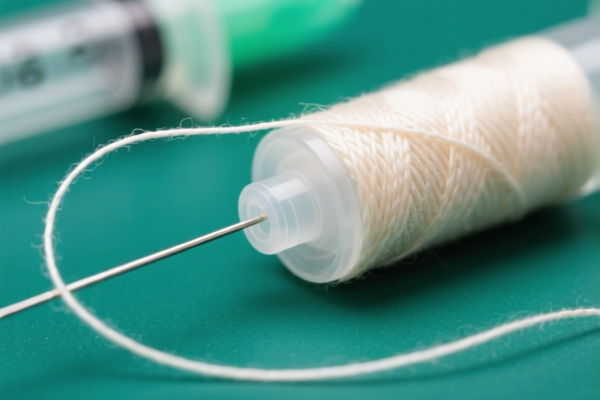
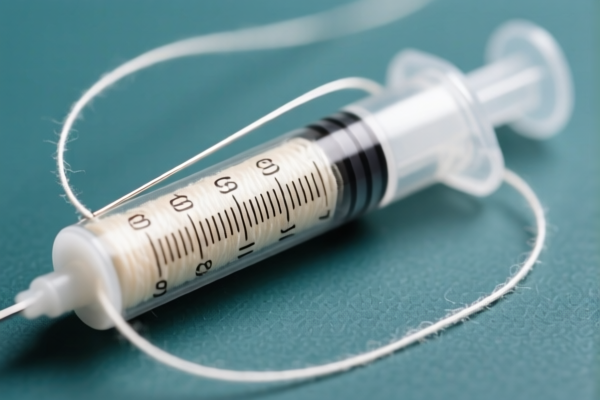
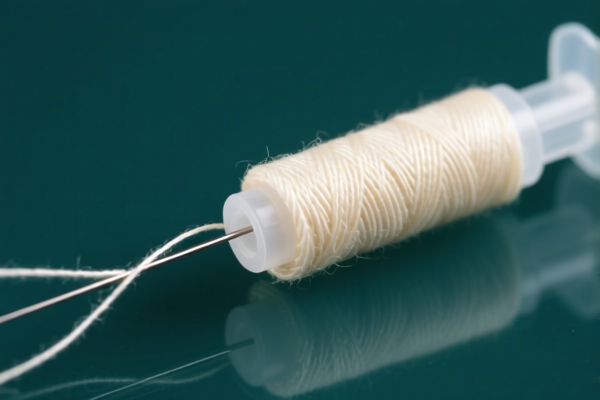
catgut yarn for sewing
CN → US| HS Code | Tariff Rate | Origin | Destination | Doc |
|---|---|---|---|---|
| 3005905090 | 10.0% | CN | US | Official Doc |
| 3005901000 | 10.0% | CN | US | Official Doc |
| 4206001930 | 13.9% | CN | US | Official Doc |
| 4206001910 | 13.9% | CN | US | Official Doc |
| 5609004000 | 38.9% | CN | US | Official Doc |
Product Images
AI Analysis
🧵 Catgut Yarn for Sewing (Natural Surgical & Decorative Sutures)
🌐 HS Code Reference & Customs Clearance Guide | 2026 Latest Tariff Analysis | Professional Clearance Strategy
📌 One Product, Two Destinies: Medical vs. Decorative!
Catgut yarn, derived from natural animal intestines (typically sheep or cattle), is a unique biological material. In international trade, its classification depends entirely on its intended use. It is split into two distinct categories:
Medical Catgut (Surgical Sutures): Sterile, packaged for surgical use, intended to be absorbed by the body.
Decorative/Industrial Catgut: Used for crafts, musical instrument strings, or general decoration, not for human implantation.
⚠️ Key Distinction Point:
- If intended for surgery/hospital use (sutures, ligatures) → Classified under Chapter 30 (Pharmaceuticals)
- If intended for crafts/decoration (embroidery, binding, non-medical) → Classified under Chapter 42 (Articles of Leather; ...) or Chapter 56 (Cords, Ropes, Cables...)
📦 II. HS Code Classification Matrix (2026 Latest Tariff Authoritative Comparison)
| HS Code | Product Description | Application Scenario | Material Nature |
|---|---|---|---|
3005.90.50.90 |
Natural Catgut Surgical Sutures | Medical surgical procedures, bio-absorbable | ✅ Medical/Pharmaceutical |
3005.90.10.00 |
Catgut Sutures with Gauze/Bandages | Surgical kits including swabs/bandages | ✅ Medical/Pharmaceutical |
4206.00.19.30 |
Catgut for Decorative Use | General crafts, binding, other miscellaneous items | ❌ Non-Medical/General |
4206.00.19.10 |
Catgut Thread for Decoration | Thread-like, gut material, decorative purpose | ❌ Non-Medical/Thread |
5609.00.40.00 |
Catgut Cords for Decoration | Animal fiber/cordage, decorative ropes/tapestries | ❌ Non-Medical/Cordage |
🔍 Key Reminder:
- All medical sutures (sterile, surgical) must be declared under Chapter 30. Misclassifying them as decorative goods can lead to severe penalties due to lack of medical device permits. - If the catgut is not sterile and intended for crafts, music, or decoration, it falls under Chapter 42 or Chapter 56.
💰 III. 2026 Latest Tariff Rate Details (Including Surcharges & Policy Add-ons)
✅ Applicable Country: United States (US)
✅ Origin: China (CN)
✅ Effective Date: From November 10, 2025 (including subsequent imports)
🎯 1. 3005.90.50.90 —— Natural Catgut Surgical Sutures (Medical Use)
| Item | Content |
|---|---|
| Base Tariff | 0% (ad valorem) |
| USITC Additional Tariff | 0% (No Section 301 additional duty for this specific medical subheading) |
| IEEPA Section 122 Tariff | +10% (Specific provision for this category) |
| Total Tax Rate | 10.0% |
| Tax Calculation | CIF Value × 10% |
| De Minimis Eligibility | ❌ Not Applicable (Medical goods are strictly controlled) |
| Legal Basis Path | IEEPA:Section 122 → USITC:3005.90.50.90 |
📌 Explanation:
- The 10% tariff is imposed under Section 122 of the Trade Act, which allows the President to adjust duties for national security purposes. - Base rate is 0%, so only the 10% surcharge applies. - Crucial: Ensure the product is clearly labeled as "Sterile Surgical Sutures" to justify Chapter 30 classification.
🎯 2. 3005.90.10.00 —— Catgut Sutures with Gauze/Bandages (Medical Use)
| Item | Content |
|---|---|
| Base Tariff | 0% |
| USITC Additional Tariff | 0% |
| IEEPA Section 122 Tariff | +10% |
| Total Tax Rate | 10.0% |
| Tax Calculation | CIF Value × 10% |
| De Minimis Eligibility | ❌ Not Applicable |
| Legal Basis Path | IEEPA:Section 122 → USITC:3005.90.10.00 |
📌 Note:
- Same tax structure as plain sutures. - If the product is sold as a kit (suture + gauze), it may fall under this code or3005.90.50.90depending on the primary character. Consult a customs broker for kit-based classifications.
🎯 3. 4206.00.19.30 —— Catgut for Decorative Use (General Article)
| Item | Content |
|---|---|
| Base Tariff | 3.9% |
| USITC Additional Tariff | 0% |
| IEEPA Section 122 Tariff | +10% |
| Total Tax Rate | 13.9% |
| Tax Calculation | CIF Value × 13.9% |
| De Minimis Eligibility | ⚠️ Check Eligibility (Subject to de minimis rules if value < $800) |
| Legal Basis Path | IEEPA:Section 122 → USITC:4206.00.19.30 |
📌 Explanation:
- This code is for non-medical catgut used in crafts, binding, or general "other articles." - The 3.9% base tariff applies because it is not a finished medical device. - Total 13.9% is significantly lower than the 38.9% for cordage (see below), so accurate description is key.
🎯 4. 4206.00.19.10 —— Catgut Thread for Decoration (Thread-like)
| Item | Content |
|---|---|
| Base Tariff | 3.9% |
| USITC Additional Tariff | 0% |
| IEEPA Section 122 Tariff | +10% |
| Total Tax Rate | 13.9% |
| Tax Calculation | CIF Value × 13.9% |
| De Minimis Eligibility | ⚠️ Check Eligibility |
| Legal Basis Path | IEEPA:Section 122 → USITC:4206.00.19.10 |
📌 Note:
- Similar to4206.00.19.30, but specifically for thread-like products. - If the catgut is processed into a yarn or thread for embroidery or decorative sewing, use this code.
🎯 5. 5609.00.40.00 —— Catgut Cords for Decoration (Cordage)
| Item | Content |
|---|---|
| Base Tariff | 3.9% |
| USITC Additional Tariff | +25% (Section 301) |
| IEEPA Section 122 Tariff | +10% |
| Total Tax Rate | 38.9% |
| Tax Calculation | CIF Value × 38.9% |
| De Minimis Eligibility | ❌ Not Eligible (Due to Section 301) |
| Legal Basis Path | IEEPA:Section 122 → IEEPA:9903.88.01 (Section 301) → USITC:5609.00.40.00 |
📌 Warning:
- This is the highest tax rate in the dataset. - Applies to cords, ropes, or cables made from animal fibers (including catgut) for decorative purposes. - The 25% Section 301 tariff is added on top of the 3.9% base and 10% Section 122 tariff. - Avoid this classification if possible by using Chapter 42 codes if the product is thread-like rather than cord-like.
🛠️ IV. Customs Clearance Practical Advice (Pitfall Avoidance Guide)
✅ 1. Essential Documentation Checklist
| Document | Must Provide | Explanation |
|---|---|---|
| ✅ Product Specification Sheet | ✔️ | Clearly state: "Natural Catgut," "Sterile/Non-Sterile," "Intended Use: Surgical/Craft" |
| ✅ Certificate of Free Sale | ✔️ | For medical catgut, prove it is legally sold in the country of origin |
| ✅ FDA Registration Number | ✔️ | If imported as medical device (Chapter 30), FDA approval is mandatory |
| ✅ Material Declaration | ✔️ | Confirm origin of animal intestine (sheep/cattle) and processing method |
| ✅ Commercial Invoice | ✔️ | Accurately describe as "Surgical Suture" OR "Decorative Catgut Thread" |
| ✅ Packing List | ✔️ | Detail packaging type (sterile blister packs vs. bulk spools) |
✅ 2. Declaration Tips (Key Mantras)
🔥 "Medical Needs FDA, Decorative Needs Chapter 42, Cordage is Expensive!"
| Scenario | Correct Declaration | Mistake to Avoid |
|---|---|---|
| Surgical Sutures | 3005.90.50.90 |
Declaring as "Decorative Thread" → FDA Violation |
| Craft Catgut Thread | 4206.00.19.10 |
Declaring as "Cord/Rope" → 38.9% Tax instead of 13.9% |
| Catgut Rope | 5609.00.40.00 |
Declaring as "Thread" → Misclassification Risk |
| Suture Kit | 3005.90.10.00 or 3005.90.50.90 |
Splitting items → Complex Clearance |
✅ 3. Special Cases
| Case | Handling Advice |
|---|---|
| Bio-absorbable Sutures | Must prove sterility and surgical intent. Provide FDA 510(k) clearance number. |
| Non-Sterile Catgut | Cannot be imported as medical. Must declare as decorative/craft (4206.00.19.30/10). |
| Musical Instrument Strings | If made from catgut, may still fall under Chapter 92 (Musical Instruments) or Chapter 42 depending on structure. Check specific heading for strings. |
| Bulk vs. Retail | Bulk catgut for further processing may have different duty implications. Provide end-use certificate. |
🌍 V. Global Market Clearance Comparison (2026 Latest)
| Country/Region | Recommended HS Code | Tariff (China Origin) | Certification Requirements | Remarks |
|---|---|---|---|---|
| 🇺🇸 USA | 3005.90.50.90 (Medical) |
10% | FDA + Section 122 Compliance | High scrutiny on medical goods |
| 🇺🇸 USA | 4206.00.19.10 (Craft) |
13.9% | None specific | Lower tax than cordage |
| 🇨🇳 China | 3005.90.50.90 |
0% | NMPA (China FDA) | Free trade within China |
| 🇪🇺 EU | 3005.90 |
0% (if compliant) | CE Mark + MDR/IVDR | Strict medical device regulations |
| 🇬🇧 UK | 3005.90 |
0% | MHRA Approval | Post-Brexit standards apply |
📌 Conclusion:
- USA applies Section 122 tariffs (10%) for medical catgut and Section 301 (25%) for decorative cordage. - Medical classification requires FDA approval, which is a high barrier to entry. - Decorative classification is cheaper and easier but must avoid medical claims.
📌 VI. Common Errors & Pitfall Guide (Lessons from Experience)
❌ Error 1: Importing non-sterile catgut as surgical sutures
👉 Consequence: FDA Detention, fines, or deportation.
👉 Solution: Clearly label as "For Craft Use Only" and classify under Chapter 42.
❌ Error 2: Declaring thread-like catgut as cord/rope
👉 Consequence: 38.9% tax instead of 13.9%.
👉 Solution: Use 4206.00.19.10 for thread/yarn, not 5609.00.40.00.
❌ Error 3: Missing sterility certification for medical catgut
👉 Consequence: Customs holds, inability to clear.
👉 Solution: Provide ISO 11607 and FDA 510(k) documentation.
❌ Error 4: Vague product description ("Catgut Yarn")
👉 Consequence: Customs officer discretion → May default to highest duty rate or request more docs.
👉 Solution: Be specific: "Sterile Surgical Suture, 0 Vicryl, Catgut" OR "Non-sterile Catgut Thread, Craft Use."
✅ Correct Declaration Example:
"Natural Catgut Surgical Sutures, Sterile, Size 3-0, for Internal Tissue Approximation, FDA Cleared, Class II Medical Device"
🎯 VII. Conclusion: Precise Classification Saves Money & Time!
🎯 Remember the Mantra:
🔹 "Medical = FDA + 10%, Craft = Chapter 42 + 13.9%, Cord = 38.9% (Avoid!)"
🔹 "Sterile means Surgical, Non-sterile means Craft, Misclassification means Trouble!"
📌 Pro Tip:
If your catgut is produced in Vietnam, Mexico, or India, you may be eligible for FTA benefits (e.g., USMCA, India-US trade agreements), potentially reducing or eliminating Section 122/301 tariffs.
Always apply for Advance Rulings if unsure about classification.
📣 Immediate Action:
📞 Consult a Customs Broker + Provide Product Samples + Apply for FDA/Pre-Ruling
🚀 Ensure your catgut, clears smoothly, saves costs, and reaches the market efficiently!
✨ Professional Clearance Starts with Accurate Classification!
💼 Every Dollar of Duty Matters!
Customer Reviews
About HS Code Classification
The Harmonized System (HS) is an internationally standardized nomenclature developed by the World Customs Organization (WCO) to classify traded products. Over 200 countries use the HS system as the basis for customs tariffs, trade statistics, and import/export regulations.
Each HS code follows a hierarchical structure:
- Chapter (2 digits) — Broad category of goods (e.g., Chapter 84: Machinery and Mechanical Appliances)
- Heading (4 digits) — More specific grouping within the chapter
- Subheading (6 digits) — Internationally standardized breakdown, used by all WCO member countries
- National subdivisions (8-10 digits) — Country-specific extensions for further classification, such as US HTSUS 10-digit codes
Correct HS code classification is essential for smooth customs clearance, accurate duty payment, and compliance with trade regulations. Misclassification can lead to customs delays, overpayment of duties, or penalties.
When importing from CN to US, the applicable tariff rates may include:
- Most-Favored-Nation (MFN) rate — The standard duty rate applied to WTO members
- General rate — Applied to countries without trade agreements
- Trade remedy duties — Additional tariffs such as Section 301 (anti-dumping), Section 232 (national security), or countervailing duties
The information provided on this page is for reference purposes only. For official classification, please consult with your local customs authority or a licensed customs broker.