cleaning bottle
CN → US| HS Code | Tariff Rate | Origin | Destination | Doc |
|---|---|---|---|---|
| 8543709860 | 37.6% | CN | US | Official Doc |
| 8509805095 | 14.2% | CN | US | Official Doc |
| 8421210000 | 35.0% | CN | US | Official Doc |
| 8421990140 | 35.0% | CN | US | Official Doc |
Product Images
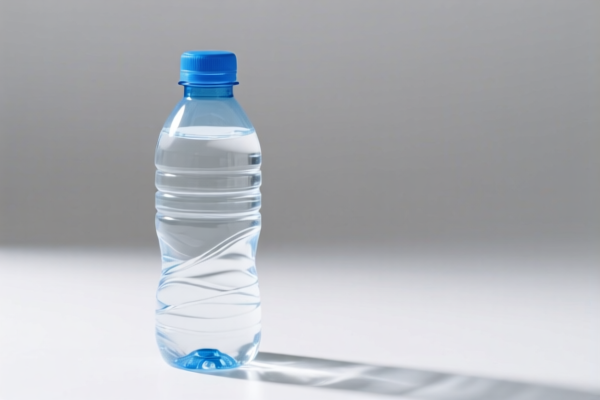
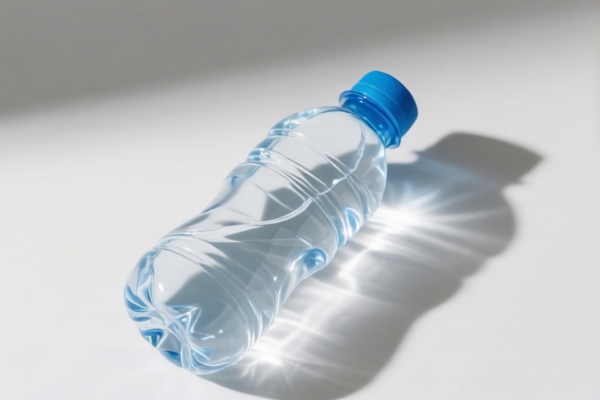
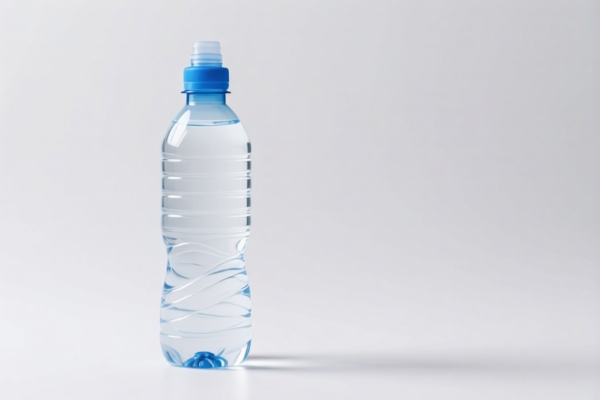
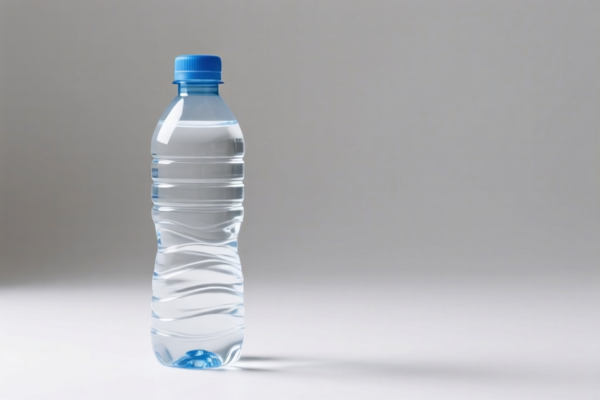
AI Analysis
💧 Cleaning Bottles (Water Purification/Filtering Devices)
🌐 HS Code Reference & Clearance Guide | 2026 Latest Tariff Analysis | Professional Clearance Strategy
📌 I. Product Definition & Classification: What Exactly is a "Cleaning Bottle"?
In the context of international trade and tariff classification, "Cleaning Bottles" (often referred to as water purifiers, filtration devices, or water treatment units) are categorized based on their function and technical nature. The classification varies significantly depending on whether the device is viewed as a mechanical filtration unit or an electrical appliance.
⚠️ Key Distinction Point:
- If the device relies on mechanical filtration (e.g., reverse osmosis, ultrafiltration, sediment filters) without independent electrical processing logic beyond pumping → It may fall under Chapter 84 (Machinery).
- If the device is an electrical household appliance with its own power source and control system for water treatment → It falls under Chapter 85 (Electrical Machinery).
- Critical Warning: US tariffs (Section 301 & IEEPA) apply heavily to these categories. Misclassification can lead to massive duty discrepancies (e.g., 14.2% vs. 37.6%).
📦 II. HS Code Classification Details (2026 Latest Tariff Authority Comparison)
Based on the provided data, there are four potential HS Codes for "Cleaning Bottles" (Water Purification Devices). Below is the detailed breakdown:
| HS Code | Product Description & Summary | Application Scenario | Functionality Focus |
|---|---|---|---|
8543.70.98.60 |
Electrical Apparatus: "Cleaning bottles belong to independent-function electrical appliances/devices, fitting the residual category for other machines and apparatus." | Portable water purifiers with complex electronic controls, UV sterilization, or smart monitoring. | Independent Electrical Function |
8509.80.50.95 |
Household Electric Appliances: "Cleaning bottles belong to water treatment equipment within household electric appliances, fitting the residual category for other appliances." | Standard household water filter pitchers, countertop electric water dispensers/purifiers. | Household Appliance |
8421.21.00.00 |
Machinery for Filtration: "Cleaning bottles are used for filtering or purifying water, matching mechanical apparatus for water filtration/purification." | Mechanical water filters (RO systems, UF systems) where the core function is the filtration process itself. | Water Filtration/Machinery |
8421.99.01.40 |
Parts/Final Product of Machinery: "Cleaning bottles fit water filtration/purification purposes, belonging to finished products within mechanical apparatus and their parts." | Complete mechanical filtration units that might be viewed as "parts" or "finished mechanical devices" rather than standalone appliances. | Mechanical Parts/Device |
🔍 Key Insight:
- Chapter 84 (8421...) focuses on the mechanical process of filtering water.
- Chapter 85 (8509...&8543...) focuses on the electrical nature of the device.
- Tariff Impact: The difference between8509.80.50.95(14.2% total) and8543.70.98.60/8421.21.00.00(35%-37.6% total) is over 20%. Correct classification is financially critical.
💰 III. 2026 Latest Tariff Rate Details (Including Additional Taxes & Policy Surcharges)
✅ Applicable Country: United States (US)
✅ Origin: China (CN)
✅ Effective Time: 2025 November 10 onwards (including subsequent imports)
🎯 1. 8543.70.98.60 —— Independent Electrical Apparatus (High Tariff)
| Item | Details |
|---|---|
| Base Tariff | 2.6% |
| Section 301 Additional Tariff | +25.0% |
| IEEPA Section 122 Tariff | +10.0% |
| Total Effective Rate | 37.6% |
| Calculation Method | CIF Value × 37.6% |
| De Minimis Exemption | ❌ Not Eligible |
| Legal Basis Path | IEEPA:9903.01.25 → USITC:8543.70.98.60 → FOOTNOTE:301.8543 |
📌 Explanation:
- This code classifies the bottle as a complex electrical device not specifically listed elsewhere.
- The 37.6% rate is extremely high due to the叠加 (stacking) of the 25% Section 301 duty and the 10% IEEPA tariff.
- Risk: High cost of entry; requires strong margin buffer.
🎯 2. 8509.80.50.95 —— Household Electric Appliance (Optimal Tariff)
| Item | Details |
|---|---|
| Base Tariff | 4.2% |
| Section 301 Additional Tariff | +0.0% |
| IEEPA Section 122 Tariff | +10.0% |
| Total Effective Rate | 14.2% |
| Calculation Method | CIF Value × 14.2% |
| De Minimis Exemption | ❌ Not Eligible |
| Legal Basis Path | IEEPA:9901.25 → USITC:8509.80.50.95 → FOOTNOTE:301.8509 |
📌 Explanation:
- This is the most favorable classification among the options, assuming the product qualifies as a "household electric appliance."
- Key Advantage: No Section 301 additional tariff (0%), only Base (4.2%) + IEEPA (10%).
- Strategy: If your product is a standard household water purifier/dispenser, argue for this classification to save ~23.4% in duties compared to8543...or8421....
🎯 3. 8421.21.00.00 —— Machinery for Water Filtration (High Tariff)
| Item | Details |
|---|---|
| Base Tariff | 0.0% |
| Section 301 Additional Tariff | +25.0% |
| IEEPA Section 122 Tariff | +10.0% |
| Total Effective Rate | 35.0% |
| Calculation Method | CIF Value × 35.0% |
| De Minimis Exemption | ❌ Not Eligible |
| Legal Basis Path | IEEPA:9903.01.25 → USITC:8421.21.00.00 → FOOTNOTE:301.8421 |
📌 Explanation:
- Although the base tariff is 0%, the 35% total rate makes it expensive.
- The 25% Section 301 tariff applies heavily to mechanical water treatment equipment.
- Comparison: Slightly better than8543...(37.6%) but worse than8509...(14.2%).
🎯 4. 8421.99.01.40 —— Parts/Finished Mechanical Device (High Tariff)
| Item | Details |
|---|---|
| Base Tariff | 0.0% |
| Section 301 Additional Tariff | +25.0% |
| IEEPA Section 122 Tariff | +10.0% |
| Total Effective Rate | 35.0% |
| Calculation Method | CIF Value × 35.0% |
| De Minimis Exemption | ❌ Not Eligible |
| Legal Basis Path | IEEPA:9903.01.25 → USITC:8421.99.01.40 → FOOTNOTE:301.8421 |
📌 Explanation:
- Similar to8421.21.00.00, this code captures the mechanical aspect but may be used if the device is considered a "part" of a larger system or a generic mechanical device.
- Risk: High duty burden (35%). Not recommended unless8509.80.50.95is legally inapplicable.
🛠️ IV. Clearance Practical Advice (Battle-Tested Pitfall Guide)
✅ 1. Preparation Checklist (Mandatory Documents)
| Document | Must Provide | Description |
|---|---|---|
| ✅ Product Specifications | ✔️ | Include voltage, wattage, filter type, flow rate, capacity. |
| ✅ Circuit Diagram / Schematic | ✔️ | Critical to prove whether it has independent electrical control (supports 8509 or 8543). |
| ✅ Product Photos (with Label) | ✔️ | Clear view of nameplate, model, input/output specs. |
| ✅ Third-Party Test Reports | ✔️ | NSF/ANSI standards, FCC (for electrical), RoHS, UL. |
| ✅ Commercial Invoice | ✔️ | Accurately describe as "Household Water Purifier" or "Electric Water Treatment Appliance." |
| ✅ Origin Certificate (CO) | ✔️ | If not from China, may qualify for exemptions. |
| ✅ Packing List | ✔️ | Clarify relationship between main unit and accessories (filters, tubes). |
✅ 2. Declaration Strategy (Key Mantras)
🔥 "Electrical Nature Rules, Household Use Wins, Mechanical Base is High!"
| Scenario | Correct Declaration | Incorrect Approach |
|---|---|---|
| Standard Household Water Purifier/Dispenser | 8509.80.50.95 (14.2%) |
Misdeclare as "Mechanical Filter" → 35% |
| Smart Purifier with UV/Electronic Controls | 8543.70.98.60 (37.6%) |
Misdeclare as "Appliance" → Risk of 14.2% but potential penalty |
| Purely Mechanical Filter (No Electricity) | 8421.21.00.00 (35.0%) |
N/A (Base rate 0%, but +35% total) |
| Filter Cartridges Only | 8421.29.00.00 (Check specific code) |
Declare as "Complete Bottle" → Wrong |
📌 Crucial Tip:
- If your product is electric and used in households, aggressively pursue8509.80.50.95. The 23%+ savings are significant.
- Ensure your marketing materials and manuals emphasize "Household Use" and "Electric Appliance" to support this classification.
✅ 3. Special Case Handling
| Situation | Handling Advice |
|---|---|
| OEM Custom Purifiers | Provide client design specs. If it's a standard household model, stick to 8509. |
| Portable USB/Rechargeable Purifiers | Still likely 8509 if for household/consumer use. Avoid 8421 unless purely mechanical. |
| Industrial Water Treatment Units | Must use 8421.21.00.00. Household codes will be rejected. |
| Parts (Filters, Tubes) | Declare separately. Do not mix with main unit if it complicates classification. |
🌍 V. Global Market Clearance Comparison (2026 Latest)
| Country/Region | Recommended HS Code | Tariff Rate | Certification | Notes |
|---|---|---|---|---|
| 🇺🇸 USA | 8509.80.50.95 |
14.2% | FCC + NSF | Best Option: Avoid 8421 (35%) and 8543 (37.6%) if possible. |
| 🇨🇳 China | 8509.80.50.95 |
~5-8% | CCC + RoHS | Lower tariffs, focus on domestic compliance. |
| 🇪🇺 EU | 8421.21.00.00 or 8509... |
0-4% | CE + WEEE | EU often prefers mechanical codes for filters, but tariffs are low. |
| 🇦🇺 Australia | 8509.80.50.95 |
5% | RCM | Low tariff, focus on electrical safety. |
| 🇯🇵 Japan | 8421.21.00.00 |
0-5% | PSE/JIS | Varies by function; mechanical filters often enjoy 0% base rate. |
📌 Conclusion:
- USA is the most critical market for tariff optimization.
- Target8509.80.50.95for electric household units to minimize the 10% IEEPA burden and avoid the 25% Section 301.
- Avoid8421and8543unless your product is industrial or lacks household appliance characteristics.
📌 VI. Common Errors & Pitfall Guide (Blood-Swept Lessons)
❌ Error 1: Declaring an electric household purifier as a mechanical filter (8421).
👉 Consequence: Pay 35% instead of 14.2%. Overpayment of ~20.8%.
❌ Error 2: Declaring a complex smart purifier as a simple appliance (8509) when it has specialized industrial functions.
👉 Consequence: Customs audit, classification dispute, potential fines and back taxes.
❌ Error 3: Splitting shipment (Main unit + filters) to avoid high duties.
👉 Consequence: Customs may reassess the main unit at 35%+ and fine you for undervaluation.
❌ Error 4: Incorrect Product Name ("Cleaning Bottle" vs. "Water Purifier").
👉 Consequence: Vague descriptions lead to customs hesitation, delays, or default to worst-case classification.
✅ Correct Practice:
"Household Electric Water Purifier, Countertop, 120V, with Reverse Osmosis Filter, Model XYZ, NSF/ANSI 58 Certified, FCC Approved"
🎯 VII. Conclusion: Professional Declaration, Save Money, Smooth Clearance!
🎯 Remember the Mantra:
🔹 "Electric Household = 14.2% (Gold Standard)"
🔹 "Mechanical/Smart = 35%+ (Silver Lead)"
🔹 "Name It Right, Save Big Time!"
📌 Pro Tip:
- If your product is originating from Vietnam, Mexico, Thailand, or Malaysia, you may qualify for IEEPA Exemptions or lower Section 301 rates.
- Apply for Advance Ruling (Ruling Request) with US Customs (CBP) before shipping if your product is on the borderline between 8509 and 8421.
📣 Immediate Action Required:
📞 Contact a Professional Customs Broker
📸 Provide Clear Product Images & Circuit Diagrams
📄 Apply for HS Code Advance Ruling
🚀 Ensure Smooth Clearance, Maximize Profit, and Avoid Customs Nightmares!
✨ Professional Clearance Starts with Precise Classification!
💼 Every Dollar Saved in Duties is Pure Profit!
Customer Reviews
About HS Code Classification
The Harmonized System (HS) is an internationally standardized nomenclature developed by the World Customs Organization (WCO) to classify traded products. Over 200 countries use the HS system as the basis for customs tariffs, trade statistics, and import/export regulations.
Each HS code follows a hierarchical structure:
- Chapter (2 digits) — Broad category of goods (e.g., Chapter 84: Machinery and Mechanical Appliances)
- Heading (4 digits) — More specific grouping within the chapter
- Subheading (6 digits) — Internationally standardized breakdown, used by all WCO member countries
- National subdivisions (8-10 digits) — Country-specific extensions for further classification, such as US HTSUS 10-digit codes
Correct HS code classification is essential for smooth customs clearance, accurate duty payment, and compliance with trade regulations. Misclassification can lead to customs delays, overpayment of duties, or penalties.
When importing from CN to US, the applicable tariff rates may include:
- Most-Favored-Nation (MFN) rate — The standard duty rate applied to WTO members
- General rate — Applied to countries without trade agreements
- Trade remedy duties — Additional tariffs such as Section 301 (anti-dumping), Section 232 (national security), or countervailing duties
The information provided on this page is for reference purposes only. For official classification, please consult with your local customs authority or a licensed customs broker.