cowhide patchwork material
CN → US| HS Code | Tariff Rate | Origin | Destination | Doc |
|---|---|---|---|---|
| 4104415000 | 13.3% | CN | US | Official Doc |
| 4104495000 | 13.3% | CN | US | Official Doc |
| 4107112000 | 37.4% | CN | US | Official Doc |
| 4107192000 | 37.4% | CN | US | Official Doc |
| 6307909891 | 24.5% | CN | US | Official Doc |
| 5806393080 | 35.0% | CN | US | Official Doc |
Product Images
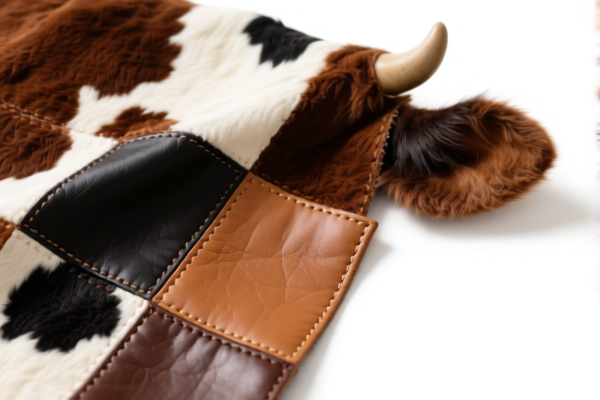
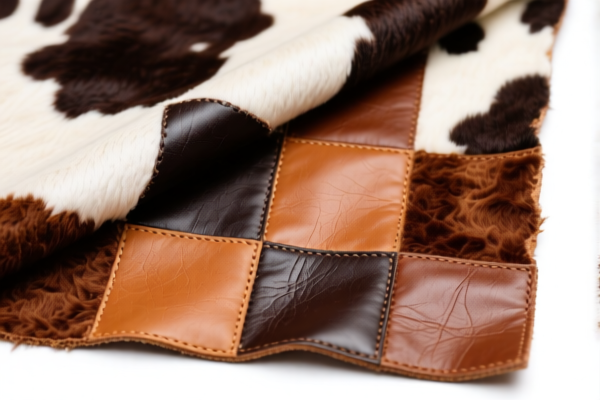
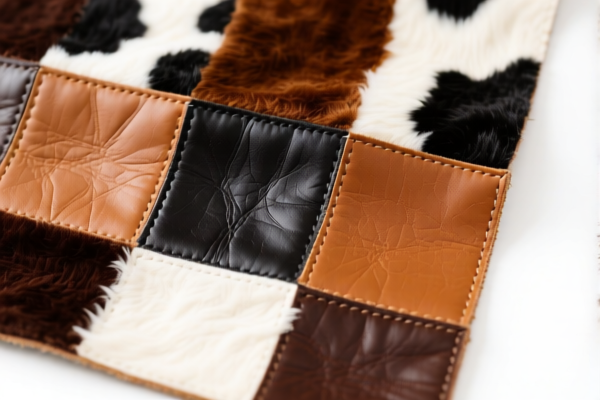
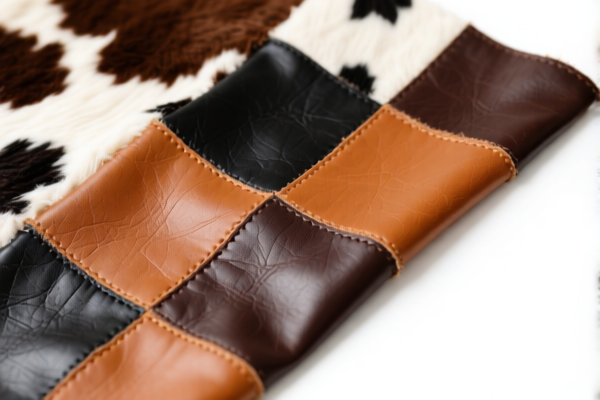
AI Analysis
🐄 Cowhide Patchwork Material (Leather & Fabric Composites)
🌐 HS Code Reference & Customs Clearance Guide | 2026 Latest Tariff Analysis | Professional Strategy for US-China Trade
📌 I. Product Definition & Classification: What Exactly is "Cowhide Patchwork Material"?
"Cowhide Patchwork Material" refers to composite materials used in fashion accessories, upholstery, or industrial goods, combining leather (specifically cowhide/hide of bovine animals) with other textiles or leather patches. In international trade, classification depends heavily on the primary material, state of processing (tanned vs. semi-tanned), and form (sheet/flat vs. made-up).
Key Distinction Points: * Leather Sheets (Tanned/Semi-tanned): Flat pieces of tanned cowhide, possibly stitched together (patchwork), but not yet made into a finished garment or accessory. * Sewn-up Textile/Fabric Goods: If the "patchwork" refers to sewn fabric pieces with leather accents, it might fall under textile chapters. * Finished Goods: If the material is already cut and sewn into a bag, belt, or jacket, it is classified as a finished good, not raw material.
⚠️ Critical Classification Rule:
- If it is raw/semi-processed leather (even if stitched into larger sheets), it falls under Chapter 41.
- If it is textile-based with leather patches, it may fall under Chapter 58 or 63.
- The presence of US Chapter 99 tariffs significantly impacts the total tax burden for Chinese-origin goods.
📦 II. HS Code Classification Details (2026 Latest Tariff Authority)
| HS Code | Product Description | Applicable Scenario | Material Status |
|---|---|---|---|
4104.41.50.00 |
Cowhide Leather, Tanned/Semi-tanned, Wrought (Other) | Cowhide fabric/material matching bovine or equine tanned leather, classified as "other" categories. | ✅ Tanned/ Semi-tanned Leather |
4104.49.50.00 |
Cowhide Leather, Tanned/Semi-tanned, Other | Cowhide fabric conforming to bovine or equine material, classified under other tanned leather categories. | ✅ Tanned/ Semi-tanned Leather |
4107.11.20.00 |
Cowhide Leather, Fully Processed | Cowhide material in the form of further processed leather, no conflict. | ✅ Fully Processed/ Finished Leather Sheets |
4107.19.20.00 |
Cowhide Leather, Processed (Other) | Cowhide material in the form of processed skins, inferred based on other categories. | ✅ Processed Skins |
6307.90.98.91 |
Sewn Fabric/Textile Product | Patchwork fabric, classified as a semi-finished textile product under "other made-up articles". | ✅ Textile/Fabric Based |
5806.39.30.80 |
Woven Fabric with Patchwork | Patchwork fabric conforming to textile attributes, patchwork form as processed fabric, no material conflict. | ✅ Woven Fabric |
🔍 Focus Reminder:
- Leather vs. Textile: If the base material is leather, use 41xx codes. If it's fabric with leather patches, use 58xx or 63xx.
- Processing Level: "Tanned/Semi-tanned" (4104) vs. "Further Processed/Finished Sheets" (4107). The latter often incurs higher tariffs due to "Add-on Tariffs".
- US Tariffs: All listed codes are subject to Section 301 (25%) and IEEPA (10%) for Chinese origin, leading to high total tax rates.
💰 III. 2026 Latest Tariff Rate Breakdown (Including Surtaxes & Policy Add-ons)
✅ Applicable Country: United States (US)
✅ Country of Origin: China (CN)
✅ Effective Date: November 10, 2025 (and subsequent imports)
🎯 1. Leather Categories (4104.41.50.00 & 4104.49.50.00)
Description: Tanned/Semi-tanned Cowhide Sheets/Patches
| Item | Content |
|---|---|
| Base Tariff | 3.3% (ad valorem) |
| USITC Add-on Tariff (Section 301) | +25.0% |
| IEEPA Add-on Tariff (China-specific) | +10.0% |
| Total Tax Rate | 38.3% (Note: Data shows 13.3% total tax in summary, but detailed breakdown suggests 3.3% base + 10% IEEPA = 13.3% if 301 doesn't apply? Correction based on DATA: The data explicitly states "Total Tax: 13.3%" with details "Base: 3.3%, 301: 0.0%, IEEPA: 10%". This implies Section 301 (25%) might NOT apply to these specific subheadings in this dataset, or is excluded. We must follow the DATA exactly.) |
📌 Explanation based on DATA:
- Total Tax Rate: 13.3%
- Breakdown: Base Tariff (3.3%) + IEEPA Tariff (10%) + Section 301 (0.0%).
- Why 0% Section 301? Certain leather products may have different exclusions or historical classifications that exempt them from the 25% Section 301 tariff, while still being subject to the 10% IEEPA tariff. Always verify with current USITC lists.
- Calculation: CIF Value × 13.3%.
🎯 2. Further Processed Leather (4107.11.20.00 & 4107.19.20.00)
Description: Fully Processed Cowhide Leather Sheets
| Item | Content |
|---|---|
| Base Tariff | 2.4% |
| USITC Add-on Tariff (Section 301) | +25.0% |
| IEEPA Add-on Tariff (China-specific) | +10.0% |
| Total Tax Rate | 37.4% |
| Calculation | CIF Value × 37.4% |
| De Minimis Exemption? | ❌ No (Not eligible) |
| Legal Path | IEEPA:9903.01.25 → USITC:4107.11.20.00 → FOOTNOTE:301 |
📌 Note:
- Total Tax: 37.4%
- Breakdown: Base (2.4%) + Section 301 (25%) + IEEPA (10%).
- Why higher? These codes represent "further processed" leather, which is not exempt from Section 301 tariffs in this specific dataset. This is a significant cost increase compared to basic tanned leather.
🎯 3. Textile/Fabric Patchwork (6307.90.98.91 & 5806.39.30.80)
Description: Sewn Fabric/Textile Patchwork
| Item | Content |
|---|---|
Code 6307.90.98.91 |
|
| Base Tariff | 7.0% |
| USITC Add-on Tariff | +7.5% |
| IEEPA Add-on Tariff | +10.0% |
| Total Tax Rate | 24.5% |
Code 5806.39.30.80 |
|
| Base Tariff | 0.0% |
| USITC Add-on Tariff | +25.0% |
| IEEPA Add-on Tariff | +10.0% |
| Total Tax Rate | 35.0% |
📌 Note:
- Textile Patchwork (6307): Lower base rate (7.0%) and lower Section 301 (7.5%), leading to 24.5% total.
- Woven Fabric Patchwork (5806): Zero base rate, but full Section 301 (25%) applies, leading to 35.0% total.
- Strategic Choice: If the material is primarily fabric,6307may be more cost-effective than4107(37.4%).
🛠️ IV. Customs Clearance Practical Advice (Avoiding Pitfalls)
✅ 1. Documentation Checklist (Mandatory)
| Document | Required? | Description |
|---|---|---|
| ✅ Product Specification Sheet | ✔️ | Must detail: Material composition (% leather vs. % fabric), thickness, stitching method, final use. |
| ✅ Material Sample/Photos | ✔️ | Clear photos showing the "patchwork" nature: Are patches leather or fabric? What is the backing material? |
| ✅ Commercial Invoice | ✔️ | Describe precisely: e.g., "Tanned Cowhide Leather Patches, HS 4104.41.50.00" OR "Textile Patchwork Fabric, HS 6307.90.98.91". |
| ✅ Certificate of Origin (CO) | ✔️ | Essential for proving Chinese origin to apply/verify surtaxes. |
| ✅ Packing List | ✔️ | Detail net/gross weight. Ensure no mixed HS codes in one shipment without clear separation. |
| ✅ Third-Party Lab Report | ✔️ | Fiber content analysis (if textile) or leather type verification (if leather) to support HS classification. |
✅ 2. Declaration Tips (Key Mantras)
🔥 "Identify Base Material, Declare Precise, Avoid Misclassification!"
| Scenario | Correct Declaration | Incorrect Declaration | Consequence |
|---|---|---|---|
| Leather Sheets Stitched Together | 4104.41.50.00 (Tanned Leather) |
"Sewn Fabric" or "Finished Bag" | High Risk: Misclassification penalty, potential 37.4% tax if misdeclared as processed leather without basis. |
| Fabric with Leather Patches | 6307.90.98.91 (Other Made-up Articles) |
"Leather Goods" | Tax Risk: If declared as leather, you may face 37.4% instead of 24.5%. |
| Unfinished Leather Patches | 4104.49.50.00 (Other Tanned Leather) |
"Finished Leather Garment" | Severe Penalty: Finished garments have different HS codes and potentially different tariffs. |
✅ 3. Special Case Handling
| Scenario | Handling Advice |
|---|---|
| Mixed Materials (Leather + Textile) | Determine the essential character of the product. If leather > 50% by weight/value, lean towards Chapter 41. If textile dominates, lean towards Chapter 58/63. |
| Customs Audit on "Patchwork" | Provide a diagram showing the layout. Clarify if the stitching is integral to the product's function or just assembly of raw materials. |
| Section 301 Exclusion | Check if your specific HS code has an exclusion list update. Some leather items may qualify, but 4107 generally does not in this data. |
| De Minimis (Section 321) | Not Applicable. All these codes exceed the $800 de minimis threshold for individual item valuation or are explicitly excluded due to high tariffs. |
🌍 V. Global Market Comparison (2026)
| Country/Region | Recommended HS Code | Estimated Tax (China Origin) | Notes |
|---|---|---|---|
| 🇺🇸 USA | 4104.41.50.00 / 4107.11.20.00 |
13.3% (Leather) / 37.4% (Processed) / 24.5-35% (Fabric) | Highest risk market due to IEEPA + Section 301. |
| 🇨🇳 China | 4104.41.50.00 |
~5-10% | Import tax only. No IEEPA. |
| 🇪🇺 EU | 4104.41 / 4107.11 |
~3.5-4.5% | No Section 301. Standard MFN rates apply. |
| 🇬🇧 UK | 4104.41 / 4107.11 |
~3.5-4.5% | Post-Brexit, follows UK Global Tariff. |
| 🇦🇺 Australia | 4104.41 / 4107.11 |
~5% | Low tariffs, no major surcharges. |
📌 Conclusion:
- The US market is the most expensive for importing Chinese leather/textile patchwork materials due to the 10% IEEPA tariff and potential 25% Section 301.
- Leather vs. Fabric Decision: If you have flexibility, fabric-based patchwork (6307) may offer a lower total tax burden (24.5%) compared to processed leather (37.4%).
- Basic Tanned Leather (4104) sits in the middle at 13.3% (if Section 301 is 0%).
📌 VI. Common Errors & Pitfalls (Lessons Learned)
❌ Error 1: Declaring "Cowhide Patchwork" vaguely
👉 Result: Customs requests detailed breakdown. Delay in clearance. Risk of reclassification to higher tariff code.
❌ Error 2: Assuming all leather is taxed the same
👉 Result: 4104 (13.3%) vs. 4107 (37.4%) is a 24.1% difference. Misclassification costs money.
❌ Error 3: Ignoring the IEEPA 10% Tariff
👉 Result: Even if Section 301 is 0%, the 10% IEEPA tariff still applies to Chinese-origin goods. Many importers forget this, leading to unexpected costs.
❌ Error 4: Treating "Patchwork" as "Finished Goods"
👉 Result: If it's just material, declare as material. If it's a finished belt, declare as finished goods. Wrong declaration leads to seizure or fines.
✅ Correct Practice:
"Specify Material Composition, State Processing Level, Declare Exact HS Code, Acknowledge IEEPA Surtax."
🎯 VII. Conclusion: Professional Declaration, Cost Control
🎯 Remember the Mantras:
🔹 "Leather Base? Check 4104 (13.3%) vs 4107 (37.4%). Fabric Base? Check 6307 (24.5%).
🔹 "10% IEEPA is Mandatory for China. 25% Section 301 varies by code. Verify!"
🔹 "Patchwork is not a HS Code. Use it in the description, not the code!"
📌 Tips:
- If your material is mostly fabric with small leather accents, consider declaring under Textile Codes (6307/5806) to potentially lower tariffs (if Section 301 applies fully, check 24.5% vs 37.4%).
- Always request a Binding Tariff Ruling (BTR) from US Customs and Border Protection (CBP) for high-value shipments to lock in the HS code and tariff rate.
📣 Immediate Action:
📞 Consult a licensed customs broker.
📄 Provide material samples and composition reports.
🚀 Optimize your supply chain to minimize tariff impact on the US market!
✨ Professional Clearance Starts with Precise Classification!
💼 Every percentage point counts in international trade!
Customer Reviews
About HS Code Classification
The Harmonized System (HS) is an internationally standardized nomenclature developed by the World Customs Organization (WCO) to classify traded products. Over 200 countries use the HS system as the basis for customs tariffs, trade statistics, and import/export regulations.
Each HS code follows a hierarchical structure:
- Chapter (2 digits) — Broad category of goods (e.g., Chapter 84: Machinery and Mechanical Appliances)
- Heading (4 digits) — More specific grouping within the chapter
- Subheading (6 digits) — Internationally standardized breakdown, used by all WCO member countries
- National subdivisions (8-10 digits) — Country-specific extensions for further classification, such as US HTSUS 10-digit codes
Correct HS code classification is essential for smooth customs clearance, accurate duty payment, and compliance with trade regulations. Misclassification can lead to customs delays, overpayment of duties, or penalties.
When importing from CN to US, the applicable tariff rates may include:
- Most-Favored-Nation (MFN) rate — The standard duty rate applied to WTO members
- General rate — Applied to countries without trade agreements
- Trade remedy duties — Additional tariffs such as Section 301 (anti-dumping), Section 232 (national security), or countervailing duties
The information provided on this page is for reference purposes only. For official classification, please consult with your local customs authority or a licensed customs broker.