digital weighing scale
CN → US| HS Code | Tariff Rate | Origin | Destination | Doc |
|---|---|---|---|---|
| 8423810010 | 35.0% | CN | US | Official Doc |
| 8423810040 | 35.0% | CN | US | Official Doc |
| 9016002000 | 38.9% | CN | US | Official Doc |
| 9031808085 | 35.0% | CN | US | Official Doc |
| 9031499000 | 35.0% | CN | US | Official Doc |
Product Images
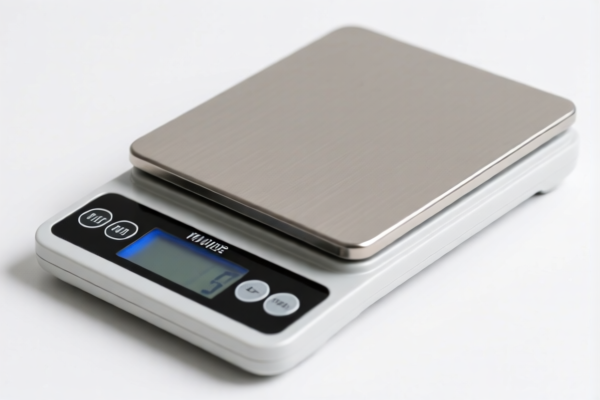
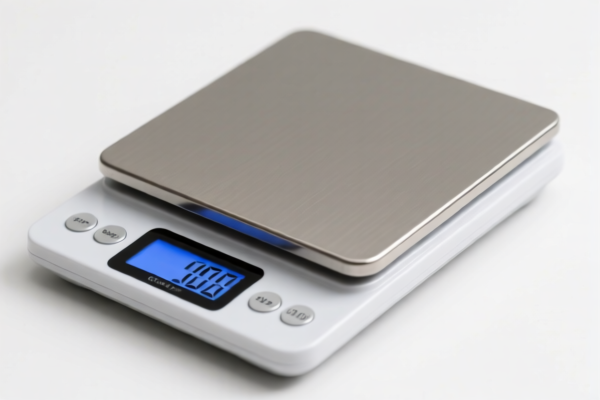
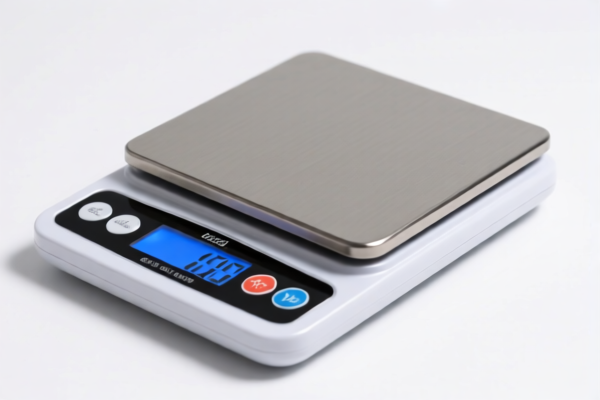
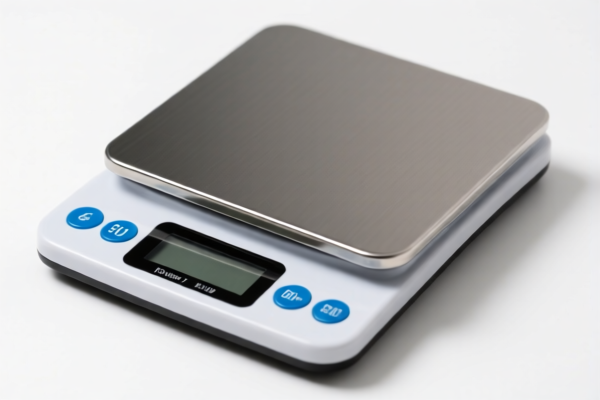
AI Analysis
⚖️ Digital Weighing Scale (Electronic Scales)
🌐 HS Code Reference & Clearance Guide | 2026 Latest Tariff Analysis | Professional Customs Strategy
📌 Part 1: Product Definition & Classification: Do You Really Understand "Digital Scales"?
Digital weighing scales are ubiquitous devices used for measuring weight in households, kitchens, industry, and laboratories. In international trade, they are broadly categorized into mechanical/electromechanical weighing machines and precision scientific instruments. The key distinction lies in the purpose and precision:
- General Purpose Scales (Household/Industrial): Used for basic weight measurement (e.g., body weight, postal parcels, bulk goods). These typically fall under Chapter 84.
- Precision/Laboratory Scales: Used for high-precision analysis, calibration, or scientific testing. These fall under Chapter 90 (Instruments and Apparatus).
⚠️ Key Distinction Point:
- If the device is for general weighing (body, kitchen, postal) →归类 to 8423 or 9031 (depending on function);
- If the device is a precision analytical balance (lab use, high sensitivity) →归类 to 9016 or 9031 (as measuring instruments).
📦 Part 2: HS Code Classification Details (2026 Latest Tariff Authority Comparison)
| HS Code | Product Description | Application Scenario | Tax Rate (China Origin to US) |
|---|---|---|---|
8423.81.00.10 |
Electronic weighing equipment; household or kitchen scales | Body scales, kitchen scales, postal scales | 35.0% |
8423.81.00.40 |
Other weighing machinery; "catch-all" for other electronic scales | Industrial digital scales not specified elsewhere | 35.0% |
9016.00.20.00 |
Electronic precision balances; laboratory balances | Lab analytical balances, high-sensitivity scientific scales | 38.9% |
9031.80.80.85 |
Measuring or checking instruments; other precision scales | Precision scales for industrial quality control/inspection | 35.0% |
9031.49.90.00 |
Optical/precision measuring instruments; other measuring devices | High-precision measurement devices based on precision function | 35.0% |
🔍 Critical Reminder:
-8423Codes: Apply to general-purpose electronic scales. The summary confirms "consistent purpose, no material/shape conflict."
-9016Code: Applies specifically to electronic precision balances (lab-grade). It has a higher base tariff (3.9%) compared to the others (0% base), leading to a higher total rate.
-9031Codes: Apply to scales used as measuring/inspecting instruments in industrial or scientific contexts.
💰 Part 3: 2026 Latest Tariff Rate Breakdown (Including Surtaxes & Policy Add-ons)
✅ Applicable Country: United States (US)
✅ Origin: China (CN)
✅ Effective Time: Ongoing (including imports after 2025-11-10)
🎯 1. 8423.81.00.10 & 8423.81.00.40 —— General Electronic Scales
| Item | Content |
|---|---|
| Base Tariff | 0% (ad valorem) |
| USITC Surtax (Section 301) | +25% |
| IEEPA Surtax | +10% (122 Clause Tariff for China/HK products) |
| Total Tariff | 35.0% |
| Tax Calculation | CIF Value × 35% |
| De Minimis Exemption | ❌ Not Eligible (deny_de_minimis) |
| Legal Basis Path | USITC:8423.81.00.10 → IEEPA:9903.01.25 → FOOTNOTE:9903.88.01 |
📌 Explanation:
- The 25% USITC surtax is applied under Section 301 of the Trade Act for Chinese-origin goods in this category.
- The 10% IEEPA surtax (often referred to as the "122 Clause" or additional punitive tariff) is applied specifically to Chinese products.
- Total 35%: This is a significant cost burden. Misclassification as a non-surcharge item (if any existed) could lead to severe penalties.
🎯 2. 9016.00.20.00 —— Electronic Precision Balances (Lab Grade)
| Item | Content |
|---|---|
| Base Tariff | 3.9% |
| USITC Surtax (Section 301) | +25% |
| IEEPA Surtax | +10% |
| Total Tariff | 38.9% |
| Tax Calculation | CIF Value × 38.9% |
| De Minimis Exemption | ❌ Not Eligible (deny_de_minimis) |
| Legal Basis Path | USITC:9016.00.20.00 → IEEPA:9903.01.25 → FOOTNOTE:9903.88.01 |
📌 Note:
- This category has a higher base rate (3.9%) because it is classified as a scientific instrument.
- The surtaxes (25% + 10%) are identical to the general scales.
- Total 38.9%: This is the highest tariff rate among the options. It is crucial to correctly identify if the device is a "precision balance" or a "general scale" to avoid overpaying or underpaying (which leads to audits).
🎯 3. 9031.80.80.85 & 9031.49.90.00 —— Measuring/Inspection Precision Scales
| Item | Content |
|---|---|
| Base Tariff | 0% |
| USITC Surtax (Section 301) | +25% |
| IEEPA Surtax | +10% |
| Total Tariff | 35.0% |
| Tax Calculation | CIF Value × 35% |
| De Minimis Exemption | ❌ Not Eligible (deny_de_minimis) |
| Legal Basis Path | USITC:9031.80.80.85 → IEEPA:9903.01.25 → FOOTNOTE:9903.88.01 |
📌 Note:
- These codes are for scales used as measuring or checking instruments in industrial settings.
- The summary states: "Consistent functional attributes with other measuring instruments."
- Total 35%: Same as general electronic scales.
🛠️ Part 4: Customs Clearance Practical Advice (Real-World Pitfall Avoidance Guide)
✅ 1. Required Documentation Checklist (None Missing)
| Document | Mandatory | Description |
|---|---|---|
| ✅ Product Specifications | ✔️ | Must include precision, capacity, power supply, dimensions. |
| ✅ Circuit Diagrams/Structure | ✔️ | Critical to determine if it's a "general scale" (8423) or "precision instrument" (9016/9031). |
| ✅ Product Photos (with Nameplate) | ✔️ | Clear view of model number, brand, input/output parameters. |
| ✅ Third-Party Test Reports | ✔️ | FCC, CE, RoHS, UL (if applicable for electrical safety). |
| ✅ Commercial Invoice | ✔️ | Must clearly state "Digital Weighing Scale" or "Precision Balance." |
| ✅ Certificate of Origin (CO) | ✔️ | For China-origin goods, mandatory for surtax calculation. |
| ✅ Packing List | ✔️ | Show relationship between main unit and accessories to avoid split declaration. |
✅ 2. Declaration Tips (Key Mnemonics)
🔥 "Integrity Matters: Precision vs. General, Code Choice Defines Cost!"
| Scenario | Correct Declaration | Wrong Practice | Consequence |
|---|---|---|---|
| Body/Kitchen Scale | 8423.81.00.10 |
Misdeclare as "Instrument" → 38.9% | Overpay by 3.9% base, but mainly risk of audit for inconsistency. |
| Lab Precision Balance | 9016.00.20.00 |
Misdeclare as "General Scale" → 35% | Underpayment of 3.9% base tariff → Heavy penalties, back taxes, and potential seizure. |
| Industrial Inspection Scale | 9031.80.80.85 |
Misdeclare as 8423 |
May be accepted (both 35%), but functional description must match. If it's for inspection, 9031 is more accurate. |
| Accessory (Load Cell) | Separate Declaration | Lump with main unit | Load cells may have different codes. Splitting correctly avoids misclassification of the main unit. |
✅ 3. Special Circumstances Handling
| Situation | Handling Advice |
|---|---|
| OEM Custom Scales | Provide client orders + design drawings. Avoid "generic" descriptions if the scale has unique precision features. |
| Scales with Touchscreen | Still classified by primary function (weighing). Do not misclassify as a "Computer Terminal" (8471). |
| Scales for Medical Use | If it's a body scale, it's 8423. If it's a precise medical balance for drug compounding, it might be 9016. Provide medical device registration if applicable. |
| Scales for Military/Aerospace | May require special export controls or dual-use checks. Declare accurately and provide end-user certificates. |
🌍 Part 5: Global Market Comparison (2026 Latest)
| Country/Region | Recommended HS Code | Tariff (China Origin) | Certification | Notes |
|---|---|---|---|---|
| 🇺🇸 USA | 8423.81.00.10 / 9016.00.20.00 |
35% - 38.9% | FCC + RoHS | High Surtax! 301 & IEEPA apply. |
| 🇨🇳 China | 8423.81.00.10 |
5% | CCC + RoHS | No additional surtaxes. |
| 🇪🇺 EU | 8423.81.00 |
0% (if CE) | CE + RoHS | No anti-dumping. |
| 🇬🇧 UK | 8423.81.00 |
0% (if UKCA) | UKCA + RoHS | Post-Brexit rules apply. |
| 🇨🇦 Canada | 8423.81.00 |
0% (Most Favored Nation) | ISED + CE | CUSMA benefits if eligible. |
📌 Conclusion:
- The USA is the only major market with severe additional tariffs on Chinese-origin digital scales.
- China-origin digital scales have a high clearance cost in the US (35%+). It is recommended to evaluate supply chain adjustments (e.g., transshipment risks, final assembly in third countries) or absorb costs carefully.
📌 Part 6: Common Errors & Pitfall Avoidance (Blood & Tears Lessons)
❌ Error 1: Declaring a Lab Precision Balance as a General Household Scale (8423) to save 3.9% base tariff.
👉 Consequence: USCBP audit → Back taxes + 25% penalty on the underpaid amount. The functional difference (precision/inspecting vs. general) is strictly enforced.
❌ Error 2: Declaring Accessories (like load cells or calibration weights) separately with incorrect HS Codes.
👉 Consequence: If the main scale is correctly declared, but accessories are wrong, it may trigger a partial inspection or delay. Ensure accessories match the main unit's classification logic.
❌ Error 3: Using vague descriptions like "Scale" or "Weighing Machine" without specifying Precision or Application.
👉 Consequence: Customs may assign a default code with higher duties or hold the shipment for technical review.
❌ Error 4: Ignoring the IEEPA 10% Surcharge.
👉 Consequence: Many importers only account for the 25% Section 301 tariff. Missing the 10% IEEPA surcharge leads to underpayment and immediate red flags.
✅ Correct Practice:
"Digital Body Scale, 180kg Capacity, LCD Display, AC/DC Powered, Model XYZ, FCC Certified"
OR
"Analytical Laboratory Balance, 0.0001g Precision, Glass Draft Shield, AC Powered, Model ABC, CE Certified"
🎯 Part 7: Conclusion: Professional Declaration Saves Money and Time!
🎯 Remember the Mantra:
🔹 "General Scales: 35%; Lab Scales: 38.9%; Both Carry 301 + IEEPA Surtaxes."
🔹 "Precision Matters: Misclassifying Lab Scales as General Scales is Tax Evasion, Not Savings!"
📌 Pro Tip:
If your digital scales are originating from Vietnam, Mexico, Thailand, or Malaysia, you may apply for IEEPA/301 Exemptions or lower tariffs. However, transshipment from China to these countries without substantial transformation is high-risk and subject to strict scrutiny.
📞 Immediate Action:
- Contact a professional customs broker.
- Provide detailed product specifications (especially precision and application).
- Apply for an Advance Ruling (Binding Ruling) from USCBP to secure the correct HS Code and tariff rate before shipment.
🚀 Ensure smooth customs clearance, efficient global trade, and protected profit margins!
✨ Professional Customs Clearance Starts with Accurate Classification!
💼 Every cent of your cost deserves precise calculation!
Customer Reviews
About HS Code Classification
The Harmonized System (HS) is an internationally standardized nomenclature developed by the World Customs Organization (WCO) to classify traded products. Over 200 countries use the HS system as the basis for customs tariffs, trade statistics, and import/export regulations.
Each HS code follows a hierarchical structure:
- Chapter (2 digits) — Broad category of goods (e.g., Chapter 84: Machinery and Mechanical Appliances)
- Heading (4 digits) — More specific grouping within the chapter
- Subheading (6 digits) — Internationally standardized breakdown, used by all WCO member countries
- National subdivisions (8-10 digits) — Country-specific extensions for further classification, such as US HTSUS 10-digit codes
Correct HS code classification is essential for smooth customs clearance, accurate duty payment, and compliance with trade regulations. Misclassification can lead to customs delays, overpayment of duties, or penalties.
When importing from CN to US, the applicable tariff rates may include:
- Most-Favored-Nation (MFN) rate — The standard duty rate applied to WTO members
- General rate — Applied to countries without trade agreements
- Trade remedy duties — Additional tariffs such as Section 301 (anti-dumping), Section 232 (national security), or countervailing duties
The information provided on this page is for reference purposes only. For official classification, please consult with your local customs authority or a licensed customs broker.