ethylene plastic blow molding sheet
CN → US| HS Code | Tariff Rate | Origin | Destination | Doc |
|---|---|---|---|---|
| 3915100000 | 35.0% | CN | US | Official Doc |
| 3915900090 | 35.0% | CN | US | Official Doc |
| 3901101000 | 41.5% | CN | US | Official Doc |
| 3901105010 | 41.5% | CN | US | Official Doc |
| 3907290000 | 41.5% | CN | US | Official Doc |
Product Images
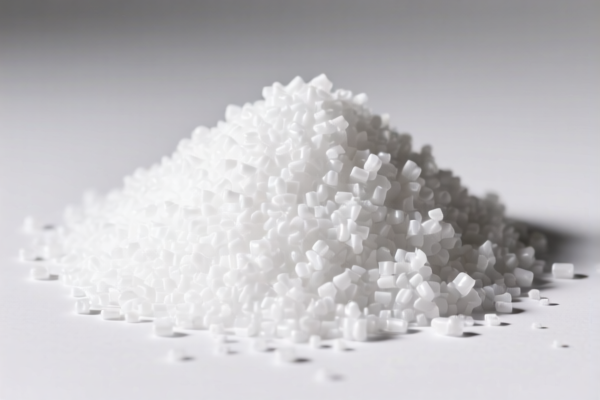


AI Analysis
🏭 Ethylene Plastic Blow Molding Sheet / Scrap (乙烯塑料吹塑废料/片材)
🌐 HS Code Reference & Customs Clearance Guide | 2026 Latest Tariff Analysis | Professional Clearance Strategy
📌 I. Product Definition & Classification: What Exactly Is "Ethylene Plastic Blow Molding Sheet"?
In international trade, "Ethylene Plastic Blow Molding Sheet" can refer to two distinct states depending on its lifecycle:
1. Raw Material/Resin (Primary Form): Ethylene polymer resin used for blow molding. This is the input material.
2. Scrap/Offcuts (Waste State): Excess plastic, trimmings, or defective parts resulting from the blow molding process. This is the output waste.
⚠️ Critical Distinction:
- If it is solid resin/granules ready for manufacturing → Classified under Chapter 3901 (Ethylene Polymers).
- If it is scrap, chips, or waste pieces from production → Classified under Chapter 3915 (Waste and Scrap of Plastics).
📦 II. HS Code Classification Matrix (2026 Latest Tariff Authority对照)
| HS Code | Product Description | Material State | Classification Logic |
|---|---|---|---|
3915.10.00.00 |
Ethylene Plastic Blow Molding Scrap | Waste/Chips/Offcuts | Waste Category: Ethylene polymer waste, specifically from blow molding processes. Fits "Plastic Waste/Scrap" classification. |
3915.90.00.90 |
Ethylene Plastic Blow Molding Parts Scrap | Waste/Pieces | Waste Category: Ethylene plastic waste in piece/form, not specifically "chips," fitting general "Waste, Scrap & Offcuts" classification. |
3901.10.10.00 |
Ethylene Polymer Injection/Blow Molding Material | Primary Form (Resin) | Raw Material: Ethylene polymer in primary shape (granules/powder), generic classification for ethylene resins. |
3901.10.50.10 |
LLDPE Injection/Blow Molding Material | Primary Form (Resin) | Raw Material: Specifically Linear Low-Density Polyethylene (LLDPE), a common ethylene polymer for blow molding. |
3907.29.00.00 |
Ethylene Polymer Resin (Other) | Primary Form (Resin) | Raw Material: Other ethylene polymers not specified in 3901.10, often used as a catch-all for specific ethylene-based resins. |
🔍 Key Reminder:
- Scrap vs. Raw: The physical form determines the chapter. Waste/Trim → 3915. Resin/Granules → 3901/3907.
- Do Not Mix: Declaring waste as raw material (or vice versa) is a major compliance risk.
- Blow Molding Specifics: If the scrap is specifically from blow molding,3915.10.00.00is the most precise fit for chips. For larger pieces/trim,3915.90.00.90may apply.
💰 III. 2026 Latest Tariff Rate Breakdown (Including Surcharges & Policy Add-ons)
✅ Applicable Country: United States (US)
✅ Country of Origin: China (CN)
✅ Effective Date: From November 10, 2025 (for all subsequent imports)
🎯 1. 3915.10.00.00 —— Ethylene Plastic Blow Molding Scrap (Chips/Waste)
| Item | Content |
|---|---|
| Base Duty Rate | 0.0% (ad valorem) |
| Section 301 Surtax | +25.0% (From USITC Footnote 9903.88.01) |
| IEEPA Surcharge | +10.0% (Targeting China/HK products, effective from 2025-11-10) |
| Total Tax Rate | 35.0% |
| Tax Calculation | CIF Value × 35% |
| De Minimis Exemption | ❌ Not Applicable (deny_de_minimis) |
| Legal Basis Path | IEEPA:9903.01.25 → IEEPA:9903.01.24 → USITC:3915.10.00.00 → FOOTNOTE:9903.88.01 |
📌 Explanation:
- "Base 0%": Waste plastics have low base duties.
- "301 Surtax 25%": Standard penalty for Chinese plastic goods under Section 301.
- "IEEPA 10%": Additional tariff for Chinese-origin plastic waste/scrap.
- Total 35%: This is a high effective rate for waste, impacting recycling margins significantly.
🎯 2. 3915.90.00.90 —— Other Ethylene Plastic Scrap (Pieces/Offcuts)
| Item | Content |
|---|---|
| Base Duty Rate | 0.0% |
| Section 301 Surtax | +25.0% |
| IEEPA Surcharge | +10.0% |
| Total Tax Rate | 35.0% |
| Tax Calculation | CIF × 35% |
| De Minimis Exemption | ❌ Not Applicable |
| Legal Basis Path | IEEPA:9901.25 → IEEPA:9903.01.24 → USITC:3915.90.00.90 → FOOTNOTE:9903.88.01 |
📌 Note:
- Same tax structure as3915.10.00.00.
- Applies to larger scrap pieces, trimmings, or non-chip waste from ethylene plastic blow molding.
🎯 3. 3901.10.10.00 —— Ethylene Polymer Resin (Generic Primary Form)
| Item | Content |
|---|---|
| Base Duty Rate | 6.5% |
| Section 301 Surtax | +25.0% |
| IEEPA Surcharge | +10.0% |
| Total Tax Rate | 41.5% |
| Tax Calculation | CIF × 41.5% |
| De Minimis Exemption | ❌ Not Applicable |
| Legal Basis Path | IEEPA:9903.01.25 → IEEPA:9903.01.24 → USITC:3901.10.10.00 |
📌 Explanation:
- "Base 6.5%": Higher base duty for raw polymers compared to waste.
- Total 41.5%: Even higher than scrap due to the base rate. This applies if you are importing new resin for blow molding, not scrap.
🎯 4. 3901.10.50.10 —— Linear Low-Density Polyethylene (LLDPE) Resin
| Item | Content |
|---|---|
| Base Duty Rate | 6.5% |
| Section 301 Surtax | +25.0% |
| IEEPA Surcharge | +10.0% |
| Total Tax Rate | 41.5% |
| Tax Calculation | CIF × 41.5% |
| De Minimis Exemption | ❌ Not Applicable |
| Legal Basis Path | IEEPA:9903.01.25 → IEEPA:9903.01.24 → USITC:3901.10.50.10 |
📌 Note:
- Specific to LLDPE, the most common polymer for blow molding films and sheets.
- Same total rate as generic ethylene resin (3901.10.10.00).
🎯 5. 3907.29.00.00 —— Other Ethylene Polymers (Primary Form)
| Item | Content |
|---|---|
| Base Duty Rate | 6.5% |
| Section 301 Surtax | +25.0% |
| IEEPA Surcharge | +10.0% |
| Total Tax Rate | 41.5% |
| Tax Calculation | CIF × 41.5% |
| De Minimis Exemption | ❌ Not Applicable |
| Legal Basis Path | IEEPA:9903.01.25 → IEEPA:9903.01.24 → USITC:3907.29.00.00 |
📌 Note:
- Used for ethylene-based resins not covered under 3901.10.
- Also applies to "Other Polyethers" if misclassified, but correct classification for ethylene is 3901/3907.
🛠️ IV. Customs Clearance Practical Advice (Battle-Tested Pitfall Avoidance Guide)
✅ 1. Document Checklist (Mandatory)
| Document | Required | Notes |
|---|---|---|
| ✅ Product Specification Sheet | ✔️ | Must specify: Material (Ethylene/PE), Form (Resin vs. Scrap), Density, Melt Index. |
| ✅ MSDS / SDS | ✔️ | Critical for plastic resins to verify chemical composition. |
| ✅ Photos of Goods | ✔️ | Must clearly show: Granules (if raw) OR Chips/Pieces (if scrap). Avoid ambiguous images. |
| ✅ Commercial Invoice | ✔️ | Must accurately describe: "Ethylene Polymer Resin, Primary Form" OR "Ethylene Plastic Scrap, Blow Molding Offcuts". |
| ✅ Packing List | ✔️ | Detail weight of net vs. gross. Ensure scrap packaging is clean to avoid contamination claims. |
| ✅ Certificate of Origin (CO) | ✔️ | Essential for determining US origin vs. China origin tariffs. |
✅ 2. Declaration Tactics (Key Mantras)
🔥 "Resin is Raw, Scrap is Waste. Name it Right, Tax Rate is Straight!"
| Scenario | Correct Declaration | Incorrect Practice |
|---|---|---|
| Importing Resin for Production | 3901.10.10.00 or 3901.10.50.10 (Ethylene Polymer Resin) |
Calling it "Scrap" to save tax → Severe Penalty |
| Importing Plastic Trim/Chips | 3915.10.00.00 (Ethylene Plastic Scrap) |
Calling it "Resin" → Misclassification |
| Large Plastic Sheets/Trim | 3915.90.00.90 (Other Plastic Waste) |
Calling it "Raw Material" → High Tax Risk |
| Mixed Packaging | Separate HS Codes for Resin and Scrap | Mixing them in one line item → Customs Delay |
✅ 3. Special Case Handling
| Situation | Handling Advice |
|---|---|
| Contaminated Scrap | If scrap contains labels, glue, or other plastics, it may be classified as "Mixed Waste" with higher scrutiny. Clean it before export. |
| LLDPE Specificity | If you know it is LLDPE, use 3901.10.50.10. Using generic 3901.10.10.00 is acceptable but less precise. |
| Regrind/Recycled Pellets | If scrap is re-extruded into pellets, it is still "Scrap/Recyclable Material." Ensure description says "Ethylene Plastic Regrind/Scrap." |
| Bale vs. Loose | Scrap in bales is easier to classify under 3915. Loose chips are also 3915.10. |
🌍 V. Global Market Customs Comparison (2026 Latest)
| Country/Region | Recommended HS Code | Tariff (China Origin) | Certification | Notes |
|---|---|---|---|---|
| 🇺🇸 USA | 3915.10.00.00 / 3901.10.10.00 |
35% (Scrap) / 41.5% (Resin) | None specific | High tariffs due to 301 + IEEPA. |
| 🇨🇳 China | 3915.10.00.00 / 3901.10.10.00 |
0% (Scrap) / 6.5% (Resin) | None | Favorable for importing scrap. |
| 🇪🇺 EU | 3915.10.00 / 3901.10.10 |
Various | REACH | EU has strict plastic waste regulations. |
| 🇦🇺 Australia | 3915.10.00 / 3901.10.10 |
4% - 5% | None | Lower tariffs than US. |
| 🇯🇵 Japan | 3915.10.00 / 3901.10.10 |
3% - 6% | None | Moderate tariffs. |
📌 Conclusion:
- USA imposes the highest total tariffs (35%-41.5%) due to Section 301 and IEEPA.
- China and EU have stricter environmental controls on plastic waste imports.
- Resin (Raw) always costs more in duties than Scrap (Waste) in the US due to the base rate.
📌 VI. Common Errors & Pitfall Guide (Lessons Learned)
❌ Error 1: Declaring "Plastic Sheets" as "Resin" when it is actually Scrap
👉 Consequence: If classified as Resin, tax jumps from 35% to 41.5% + potential fraud penalties. If classified as Scrap but looks like Resin, Customs will hold it.
❌ Error 2: Using generic "Plastic Scrap" without specifying "Ethylene"
👉 Consequence: Customs may classify under a different plastic type with different tax rates (e.g., PVC vs. PE). Always specify material.
❌ Error 3: Failing to disclose "Blow Molding Offcuts"
👉 Consequence: If the scrap is from a prohibited process or mixed with hazardous materials, it could be rejected.
❌ Error 4: Ignoring IEEPA 10% Surcharge
👉 Consequence: Underpayment of 10% on CIF value. Back taxes + Interest + Penalties.
✅ Correct Practice:
"Ethylene Polymer Scrap, Blow Molding Offcuts, PE Material, Primary Form Waste, Model XYZ, Clean, No Contaminants"
🎯 VII. Conclusion: Professional Declaration, Save Time & Money
🎯 Remember Mantra:
🔹 "Scrap is 35%, Resin is 41.5%. Name it Ethylene, Declare it Clearly!"
🔹 "HS Code determines destiny. 1% difference in base, 25% difference in surcharge."
📌 Pro Tip:
If your ethylene plastic scrap/resin is originating from Vietnam, Mexico, or Thailand, you may be eligible for IEEPA Exemptions, reducing tariffs to 0%~5%.
✅ Recommendation:
📞 Contact a Professional Customs Broker + Provide Product Photos + Apply for HS Code Advance Ruling
🚀 Ensure smooth clearance, efficient export, and maximized profit!
✨ Professional Clearance Starts with Precise Classification!
💼 Every cent of your cost deserves precise calculation!
Customer Reviews
About HS Code Classification
The Harmonized System (HS) is an internationally standardized nomenclature developed by the World Customs Organization (WCO) to classify traded products. Over 200 countries use the HS system as the basis for customs tariffs, trade statistics, and import/export regulations.
Each HS code follows a hierarchical structure:
- Chapter (2 digits) — Broad category of goods (e.g., Chapter 84: Machinery and Mechanical Appliances)
- Heading (4 digits) — More specific grouping within the chapter
- Subheading (6 digits) — Internationally standardized breakdown, used by all WCO member countries
- National subdivisions (8-10 digits) — Country-specific extensions for further classification, such as US HTSUS 10-digit codes
Correct HS code classification is essential for smooth customs clearance, accurate duty payment, and compliance with trade regulations. Misclassification can lead to customs delays, overpayment of duties, or penalties.
When importing from CN to US, the applicable tariff rates may include:
- Most-Favored-Nation (MFN) rate — The standard duty rate applied to WTO members
- General rate — Applied to countries without trade agreements
- Trade remedy duties — Additional tariffs such as Section 301 (anti-dumping), Section 232 (national security), or countervailing duties
The information provided on this page is for reference purposes only. For official classification, please consult with your local customs authority or a licensed customs broker.