food processing machine
CN → US| HS Code | Tariff Rate | Origin | Destination | Doc |
|---|---|---|---|---|
| 8438800000 | 35.0% | CN | US | Official Doc |
| 8438100090 | 17.5% | CN | US | Official Doc |
| 8509400040 | 14.2% | CN | US | Official Doc |
| 8509400015 | 14.2% | CN | US | Official Doc |
| 8210000000 | 38.7% | CN | US | Official Doc |
Product Images
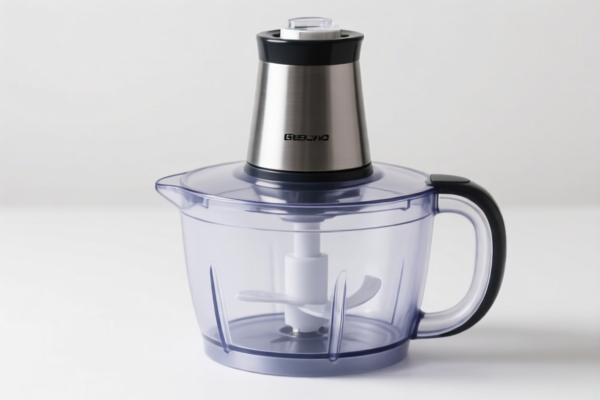
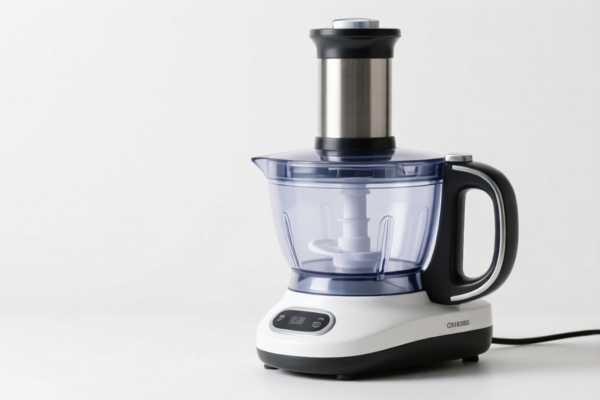
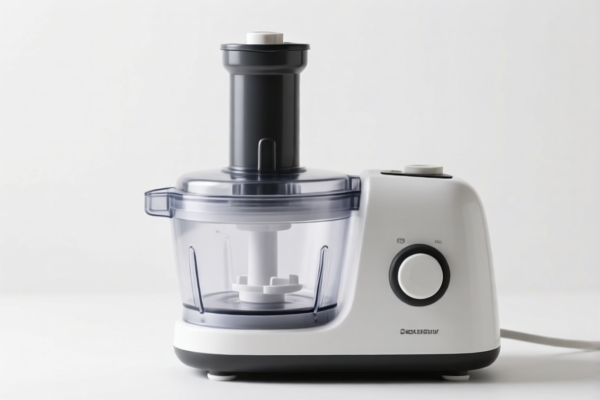
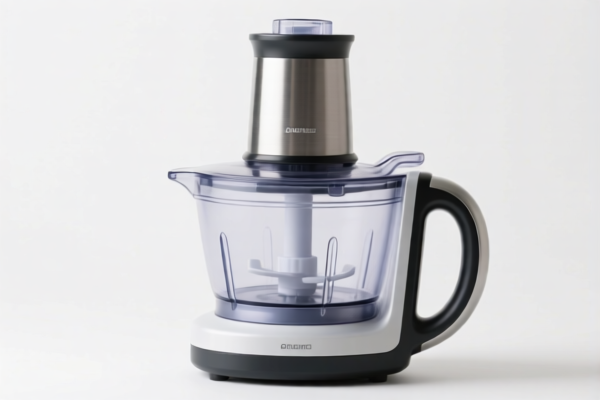
AI Analysis
🍽️ Food Processing Machine: HS Code Classification & US Customs Clearance Guide 2026
🌐 HS Code Reference & Customs Strategy | 2026 Latest Tariff Analysis | Professional Clearance Protocol
📌 I. Product Definition: What is a "Food Processing Machine"?
In international trade, "Food Processing Machine" is a broad category encompassing equipment used for the industrial preparation, manufacturing, or processing of food and beverages. The correct HS Code classification depends heavily on: 1. Scale: Industrial vs. Household/Small-scale. 2. Function: Mixing, grinding, heating, or general preparation. 3. Mechanism: Manual, electric, or automated.
⚠️ Key Distinction:
- Industrial Machinery: Large-scale, automated, or dedicated line equipment → Generally falls under Chapter 84.
- Household/Small Appliances: Hand-held, countertop, or simple electric devices → Generally falls under Chapter 85 or 82.
📦 II. HS Code Classification Details (2026 Latest Tariff Authority Comparison)
Based on the provided data, here are the applicable HS Codes for Food Processing Machines, ranked by potential tax efficiency.
| HS Code | Product Description | Application Scenario | Match Level |
|---|---|---|---|
| 8509.40.00.40 | Food Grinders and Mixers; Food Squeezers | Food Processors specifically designed for blending/mixing. Perfect match for standard food processors. | ✅ High Match |
| 8509.40.00.15 | Other Household Electric Appliances: Processors & Blenders | Household or semi-professional mixers/blenders. Highly matched for small-scale processing. | ✅ High Match |
| 8438.80.00.00 | Machinery for the Industrial Preparation of Food/Drinks | Industrial Use. Large-scale, dedicated food manufacturing lines. | ⚠️ General Match |
| 8438.10.00.90 | Machinery for Industrial Food/Drink Prep (Other) | Industrial Use. Used as a "catch-all" for industrial machines not listed elsewhere. | ⚠️ Fallback Match |
| 8210.00.00.00 | Hand Cranks or Hand Operated Machinery | Small, manual, or hand-operated food prep tools. | ⚠️ Partial Match |
🔍 Critical Note:
- 8509.40.00 is typically for electric household/small-scale appliances.
- 8438 series is for industrial/commercial machinery.
- 8210 is for manual/hand-operated devices.
- Misclassification (e.g., declaring an industrial machine as a household one) can lead to severe penalties.
💰 III. 2026 US Tariff Rate Detailed Breakdown (Including Surcharges & Policy Add-ons)
✅ Applicable Country: United States (US)
✅ Origin: China (CN)
✅ Effective Date: Post-2025 (Including subsequent imports)
🎯 1. 8509.40.00.40 & 8509.40.00.15 —— Food Processors / Blenders (Household/Small Scale)
| Item | Content |
|---|---|
| Base Tariff Rate | 4.2% (Ad Valorem) |
| Section 301 Surcharge | 0.0% (Exempted for this specific sub-heading) |
| IEEPA / Section 122 Surcharge | +10.0% (Targeting Chinese Origin) |
| Total Tariff Rate | 14.2% |
| Tax Calculation | CIF Value × 14.2% |
| De Minimis Exemption? | ❌ No (Denied for Section 122/IEEPA goods) |
| Legal Path | USITC:8509.40.00 → IEEPA:9903.01.24 (10% surcharge) |
📌 Explanation:
- This is the most tax-efficient classification for food processors if they fit the "household/electric appliance" definition.
- The 0% Section 301 rate is a significant advantage compared to industrial machinery.
- Only the 10% IEEPA surcharge applies.
🎯 2. 8438.10.00.90 —— Industrial Food Machinery (Catch-all)
| Item | Content |
|---|---|
| Base Tariff Rate | 0.0% |
| Section 301 Surcharge | +7.5% (Partial exemption or reduced rate for specific industrial items) |
| IEEPA / Section 122 Surcharge | +10.0% (Targeting Chinese Origin) |
| Total Tariff Rate | 17.5% |
| Tax Calculation | CIF Value × 17.5% |
| De Minimis Exemption? | ❌ No |
| Legal Path | USITC:8438.10.00 → USITC:9903.88.01 (7.5% surcharge) + IEEPA:9903.01.24 |
📌 Note:
- Although the base rate is 0%, the 7.5% Section 301 surcharge applies, making it more expensive than8509.40.
- This is the "fallback" category for industrial machines that don’t fit the specific 8438.80 heading.
🎯 3. 8438.80.00.00 —— Industrial Food Machinery (General)
| Item | Content |
|---|---|
| Base Tariff Rate | 0.0% |
| Section 301 Surcharge | +25.0% (Full Section 301 rate) |
| IEEPA / Section 122 Surcharge | +10.0% (Targeting Chinese Origin) |
| Total Tariff Rate | 35.0% |
| Tax Calculation | CIF Value × 35.0% |
| De Minimis Exemption? | ❌ No |
| Legal Path | USITC:8438.80.00 → USITC:9903.88.01 (25% surcharge) + IEEPA:9903.01.24 |
📌 Warning:
- This is a high-tax category.
- Full 25% Section 301 surcharge applies.
- Only use this if the machine is clearly industrial and cannot be classified under 8438.10.
🎯 4. 8210.00.00.00 —— Hand-Cranked Food Machinery
| Item | Content |
|---|---|
| Base Tariff Rate | 3.7% |
| Section 301 Surcharge | +25.0% (Full Section 301 rate) |
| IEEPA / Section 122 Surcharge | +10.0% (Targeting Chinese Origin) |
| Total Tariff Rate | 38.7% |
| Tax Calculation | CIF Value × 38.7% |
| De Minimis Exemption? | ❌ No |
| Legal Path | USITC:8210.00.00 → USITC:9903.88.01 (25% surcharge) + IEEPA:9903.01.24 |
📌 Caution:
- Highest tariff rate in the dataset.
- Applies only to manual/hand-operated devices. Electric food processors should NOT be classified here.
🛠️ IV. Customs Clearance Practical Advice (Pitfall Avoidance Guide)
✅ 1. Documentation Checklist (Mandatory)
| Document | Required | Description |
|---|---|---|
| ✅ Product Specification Sheet | ✔️ | Must detail power, capacity, voltage, and application (household vs. industrial). |
| ✅ Circuit Diagram / Structure Chart | ✔️ | Critical for distinguishing between 8509 (electric appliance) and 8438 (industrial machine). |
| ✅ Product Photos (with Nameplate) | ✔️ | Show model number, brand, and input/output parameters. |
| ✅ Third-Party Test Report | ✔️ | FCC (if electric), UL, or other safety certifications. |
| ✅ Commercial Invoice | ✔️ | Clearly state "Food Processor" or "Industrial Food Machinery", not just "Machine". |
| ✅ Packing List | ✔️ | List all accessories to avoid "missing parts" claims. |
✅ 2. Declaration Tips (Key Mnemonic)
🔥 “Household Electric? Go 8509! Industrial Line? Check 8438! Manual? 8210!”
| Scenario | Correct HS Code | Wrong Approach | Consequence |
|---|---|---|---|
| Countertop Electric Food Processor | 8509.40.00.40 |
Declare as Industrial Machinery (8438) |
Pay 35% instead of 14.2%! |
| Industrial Mixer (Large Scale) | 8438.80.00.00 or 8438.10.00.90 |
Declare as Household (8509) |
Audit Risk + Penalties |
| Manual Vegetable Chopper | 8210.00.00.00 |
Declare as Electric (8509) |
Classification Error |
| Blender + Stand + Cable | Declare as One Unit | Split into parts | Complex Declaration + Delay |
✅ 3. Special Cases Handling
| Scenario | Handling Advice |
|---|---|
| OEM Custom Food Processor | Provide customer order + design drawings. Proving it’s a "household appliance" can save 20%+ in taxes. |
| Commercial Kitchen Equipment | If used in a restaurant but is a "small appliance" (e.g., personal blender), it may still qualify for 8509. If it’s a "commercial mixer", it’s 8438. |
| Hybrid Machines | If a machine has both industrial and household features, declare based on primary function and design intent. |
| Parts vs. Whole | Do not separate the motor from the base. Declare as a complete unit. |
🌍 V. Global Market Comparison (2026 Latest)
| Country/Region | Recommended HS Code | Tariff (CN Origin) | Certification | Notes |
|---|---|---|---|---|
| 🇺🇸 USA | 8509.40.00.40 |
14.2% | FCC + UL | Cheapest option if eligible. |
| 🇺🇸 USA | 8438.80.00.00 |
35.0% | N/A | High tax. Avoid if possible. |
| 🇨🇳 China | 8509.40.00.40 |
4.2% | CCC | Low import duty in China. |
| 🇪🇺 EU | 8509.40.00.40 |
1.5% - 4.2% | CE + RoHS | No Section 301/IEEPA surcharges. |
| 🇬🇧 UK | 8509.40.00.40 |
4.0% | UKCA | Post-Brexit rules apply. |
📌 Conclusion:
- USA is the highest-tax market due to Section 301 and IEEPA surcharges.
- Classifying as8509.40(Household/Electric) saves ~20% in taxes compared to8438(Industrial).
- Ensure product design and marketing materials support "household" classification if possible.
📌 VI. Common Mistakes & Pitfall Guide (Lessons Learned)
❌ Mistake 1: Declaring an industrial mixer as a household food processor.
👉 Consequence: Customs audit, penalty, and forced re-classification. High risk.
❌ Mistake 2: Declaring an electric food processor as hand-cranked (8210).
👉 Consequence: Tariff jumps to 38.7%. Incorrect description leads to delays.
❌ Mistake 3: Ignoring the IEEPA 10% Surcharge.
👉 Consequence: Underpayment of duty. IEEPA surcharges apply to all Chinese-origin goods in these categories, regardless of Section 301 status.
❌ Mistake 4: Splitting Motor + Base + Bowl into separate line items.
👉 Consequence: Customs may reject "parts" declaration for a complete machine, leading to higher combined tariffs.
✅ Correct Action:
"Electric Food Processor, 1000W, 2L Capacity, Model XYZ, FCC Certified, For Household Use Only"
🎯 VII. Conclusion: Professional Declaration, Cost Optimization!
🎯 Remember the Mnemonic:
🔹 "Household 8509: 14.2%! Industrial 8438: 17.5% - 35%! Manual 8210: 38.7%!"
🔹 "IEEPA 10% applies to ALL! Check Section 301 carefully!"
🔹 "Classify correctly to save thousands!"
📌 Pro Tip:
- If your product is exported from Vietnam, Mexico, or Thailand, you may qualify for IEEPA Exemptions or lower Section 301 rates.
- Apply for an Advance Ruling from US Customs (CBP) if your product is borderline between household and industrial.
📣 Immediate Action:
📞 Contact a licensed customs broker.
📸 Provide clear product images and specs.
🚀 Ensure your HS Code is pre-approved to avoid costly delays!
✨ Professional Clearance Starts with Accurate Classification!
💼 Every Percent Matters in Global Trade!
Customer Reviews
About HS Code Classification
The Harmonized System (HS) is an internationally standardized nomenclature developed by the World Customs Organization (WCO) to classify traded products. Over 200 countries use the HS system as the basis for customs tariffs, trade statistics, and import/export regulations.
Each HS code follows a hierarchical structure:
- Chapter (2 digits) — Broad category of goods (e.g., Chapter 84: Machinery and Mechanical Appliances)
- Heading (4 digits) — More specific grouping within the chapter
- Subheading (6 digits) — Internationally standardized breakdown, used by all WCO member countries
- National subdivisions (8-10 digits) — Country-specific extensions for further classification, such as US HTSUS 10-digit codes
Correct HS code classification is essential for smooth customs clearance, accurate duty payment, and compliance with trade regulations. Misclassification can lead to customs delays, overpayment of duties, or penalties.
When importing from CN to US, the applicable tariff rates may include:
- Most-Favored-Nation (MFN) rate — The standard duty rate applied to WTO members
- General rate — Applied to countries without trade agreements
- Trade remedy duties — Additional tariffs such as Section 301 (anti-dumping), Section 232 (national security), or countervailing duties
The information provided on this page is for reference purposes only. For official classification, please consult with your local customs authority or a licensed customs broker.