glass suction cup vacuum lifter
CN → US| HS Code | Tariff Rate | Origin | Destination | Doc |
|---|---|---|---|---|
| 8425110000 | 35.0% | CN | US | Official Doc |
| 8425190000 | 35.0% | CN | US | Official Doc |
Product Images
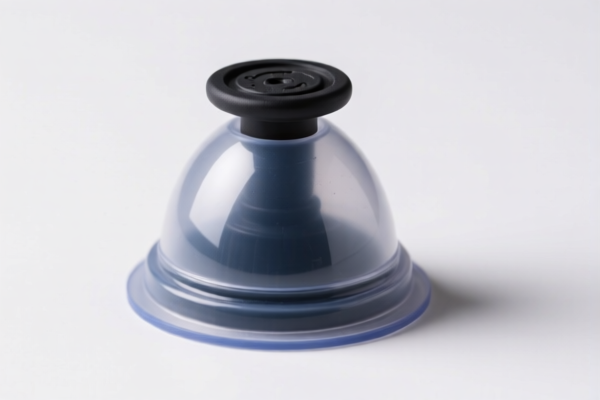
AI Analysis
🧱 Glass Suction Cup Vacuum Lifter
🌐 HS Code Reference & Clearance Guide | 2026 Latest Tariff Analysis | Professional-Level Clearance Strategy
📌 I. Product Definition and Classification: Do You Really Understand "Glass Suction Cup Vacuum Lifter"?
A Glass Suction Cup Vacuum Lifter is a mechanical device used for lifting, moving, and installing large sheets of glass, mirrors, stone, or other smooth, non-porous materials. It operates by creating a vacuum seal between the suction cups and the material surface, often assisted by a powered vacuum pump (electric or pneumatic).
In international trade, these devices fall under the broader category of "Pulley tackle and hoists; winches; capstans; jacks." Specifically, they are classified based on their power source.
⚠️ Key Distinction Point:
- If the lifter is powered by an electric motor (e.g., integrated electric vacuum pump) → Classify under 8425.11.00.00
- If the lifter is NOT powered by an electric motor (e.g., manual hand pump, pneumatic, or gravity-assisted) → Classify under 8425.19.00.00
📦 II. HS Code Classification Details (2026 Latest Tariff Authority Comparison)
| HS Code | Product Description | Applicable Scenario | Power Source |
|---|---|---|---|
8425.11.00.00 |
Pulley tackle and hoists other than skip hoists or hoists of a kind used for raising vehicles: Powered by electric motor | Electric vacuum glass lifters, electric suction cup handlers, industrial automated glass handling robots | ✅ Electric Motor |
8425.19.00.00 |
Pulley tackle and hoists other than skip hoists or hoists of a kind used for raising vehicles: Other | Manual vacuum lifters, pneumatic vacuum lifters, non-electric suction cups, gravity-based glass clamps | ❌ Non-Electric |
🔍 Important Reminder:
- Electric Glass Lifters: Must be classified under 8425.11.00.00. Even if it’s a handheld device with a battery or corded electric pump, it counts as "powered by electric motor." - Manual/Pneumatic Lifters: Must be classified under 8425.19.00.00. Do not misclassify them as electric if no motor is involved. - Not Skips/Winches: These are not "skip hoists" (for construction shafts) nor "hoists for raising vehicles" (car lifts). They are general-purpose lifting appliances.
💰 III. 2026 Latest Tariff Rate Details (Including Additional Taxes and Policy Add-ons)
✅ Applicable Country: United States (US)
✅ Country of Origin: China (CN)
✅ Effective Date: From November 10, 2025 (and subsequent imports)
🎯 1. 8425.11.00.00 —— Glass Vacuum Lifter (Electric Powered)
| Item | Content |
|---|---|
| Base Tariff | 0.0% |
| Additional Tariff (Section 301) | +25.0% |
| Total Tariff | 25.0% |
| Tax Calculation | CIF Value × 25.0% |
| De Minimis Exemption | ❌ Not Eligible (for high-value industrial equipment) |
| Legal Basis | HTSUS 8425.11.00.00 |
📌 Explanation:
- The base tariff for pulley tackle and hoists is generally 0% under HTSUS 8425. - However, Section 301 tariffs add an extra 25% for goods originating from China. - Total effective duty: 25%. This is a significant cost factor for electric glass handling equipment.
🎯 2. 8425.19.00.00 —— Glass Vacuum Lifter (Non-Electric: Manual/Pneumatic)
| Item | Content |
|---|---|
| Base Tariff | 0.0% |
| Additional Tariff (Section 301) | +25.0% |
| Total Tariff | 25.0% |
| Tax Calculation | CIF Value × 25.0% |
| De Minimis Exemption | ❌ Not Eligible |
| Legal Basis | HTSUS 8425.19.00.00 |
📌 Note:
- Even if the lifter is manual or pneumatic, it is still subject to the same 25% additional tariff if imported from China. - There is no tariff advantage by switching to manual/pneumatic versions if the origin remains China. - Total effective duty: 25%.
🛠️ IV. Clearance Practical Suggestions (Battle-Tested Pitfall Avoidance Guide)
✅ 1. Required Documentation Checklist (Mandatory)
| Document | Must Provide | Description |
|---|---|---|
| ✅ Product Specification Sheet | ✔️ | Include max load capacity, suction cup size/diameter, power source type (electric/pneumatic/manual), voltage, frequency |
| ✅ Product Photos (with Nameplate) | ✔️ | Clear image of the unit, especially the motor/pump area and model label |
| ✅ Electrical Diagram (if electric) | ✔️ | To confirm the presence of an electric motor |
| ✅ Commercial Invoice | ✔️ | Must state: "Glass Vacuum Lifter, Electric Powered" or "Manual Glass Suction Cup Handler" |
| ✅ Packing List | ✔️ | Detail contents: main unit, suction cups, hoses, charger/battery, accessories |
| ✅ Certificate of Origin (CO) | ✔️ | If not from China, can claim preferential rates under FTAs |
✅ 2. Declaration Tips (Key Mantra)
🔥 "Specify Power Source, Clarify Origin, Avoid General Terms!"
| Scenario | Correct Declaration | Wrong Practice |
|---|---|---|
| Electric glass lifter | 8425.11.00.00 - "Electric Vacuum Glass Lifter" |
Misdeclare as "Tools" → Risk of audit |
| Manual vacuum lifter | 8425.19.00.00 - "Manual Glass Suction Cup Handler" |
Misdeclare as "Electric" → Over-tax or discrepancy |
| Parts only (e.g., suction cups) | May fall under 8425.90.00.00 (Parts) |
Declare as complete unit → Wrong duty |
| Pneumatic lifter | 8425.19.00.00 |
Declare as "Electric" → Incorrect |
✅ 3. Special Cases Handling
| Scenario | Handling Advice |
|---|---|
| Kit Includes Spare Suction Cups | Declare as part of the main unit; do not split unless separately invoiced |
| Battery-Powered Lifter | Classify as Electric (8425.11.00.00) |
| Pneumatic Lifter (Air-Driven) | Classify as Other (8425.19.00.00) |
| Origin from Vietnam/Mexico | May qualify for Section 301 Exclusion or lower rates; provide proof of origin |
| Used/Refurbished Lifter | Ensure compliance with US customs regulations for used goods; declare condition clearly |
🌍 V. Global Market Clearance Comparison (2026 Latest)
| Country/Region | Recommended HS Code | Tariff (China Origin) | Certification Requirements | Notes |
|---|---|---|---|---|
| 🇺🇸 United States | 8425.11.00.00 or 8425.19.00.00 |
25% | NRTL/UL (if electric) | High duty due to Section 301 |
| 🇨🇳 China | 8425.11.00.00 or 8425.19.00.00 |
0%~5% | CCC (if electric) | Low domestic tariff |
| 🇪🇺 European Union | 8425.39.00 or 8425.49.00 |
0%~2.7% | CE + Machinery Directive | Lower tariffs than US |
| 🇬🇧 United Kingdom | 8425.39.00 or 8425.49.00 |
0%~2.7% | UKCA + Machinery Directive | Post-Brexit rules apply |
| 🇦🇺 Australia | 8425.39.00 or 8425.49.00 |
5% | RCM (if electric) | Moderate duty |
| 🇯🇵 Japan | 8425.39.00 or 8425.49.00 |
0%~5% | PSE (if electric) | Low duty |
📌 Conclusion:
- The US imposes the highest tariffs on Chinese-origin glass lifters due to Section 301. - EU, UK, Japan, and Australia have significantly lower or zero tariffs for these goods. - Certification Requirements: Electric models need UL/ETL (US), CE (EU), or PSE (Japan).
📌 VI. Common Mistakes & Pitfall Avoidance (Lessons Learned)
❌ Mistake 1: Misdeclaring Electric lifters as Manual to avoid tariffs
👉 Consequence: Customs audit, penalties, and possible seizure if discrepancy found.
❌ Mistake 2: Using vague terms like "Lifting Tool" or "Glass Handle"
👉 Consequence: Customs may reclassify under a higher-tariff category or delay clearance for classification review.
❌ Mistake 3: Ignoring Origin Marking
👉 Consequence: If "Made in China" is not clearly marked on the product and packaging, customs may impose additional penalties or deny entry.
❌ Mistake 4: Not declaring Voltage/Frequency for electric models
👉 Consequence: May fail safety certification checks, leading to return or destruction.
✅ Correct Practice:
"Electric Glass Vacuum Lifter, Model XYZ, 110V/60Hz, 500kg Capacity, Suction Cup Diameter 200mm, Made in China, UL Certified"
🎯 VII. Conclusion: Precise Classification Saves Money!
🎯 Remember the Mantra:
🔹 "Electric goes to 8425.11, Manual to 8425.19, Both face 25% if from China!"
🔹 "Specify Power Source, Declare Origin Clearly, Avoid Re-Customs!"
📌 Pro Tip:
If your glass lifters are originating from Vietnam, Mexico, or Thailand, you may be eligible for Section 301 Exclusions or lower tariffs under USMCA.
Recommendation:
📞 Contact a professional customs broker
📄 Provide product photos and technical specs
🚀 Apply for Advance Ruling to avoid clearance delays and unexpected duties.
📣 Take Action Now:
📞 Engage a licensed customs broker
📋 Prepare detailed product documentation
🌍 Consider supply chain diversification to mitigate high US tariffs
✨ Professional Clearance Starts with Accurate Classification!
💼 Every dollar of duty saved is a profit earned!
Customer Reviews
About HS Code Classification
The Harmonized System (HS) is an internationally standardized nomenclature developed by the World Customs Organization (WCO) to classify traded products. Over 200 countries use the HS system as the basis for customs tariffs, trade statistics, and import/export regulations.
Each HS code follows a hierarchical structure:
- Chapter (2 digits) — Broad category of goods (e.g., Chapter 84: Machinery and Mechanical Appliances)
- Heading (4 digits) — More specific grouping within the chapter
- Subheading (6 digits) — Internationally standardized breakdown, used by all WCO member countries
- National subdivisions (8-10 digits) — Country-specific extensions for further classification, such as US HTSUS 10-digit codes
Correct HS code classification is essential for smooth customs clearance, accurate duty payment, and compliance with trade regulations. Misclassification can lead to customs delays, overpayment of duties, or penalties.
When importing from CN to US, the applicable tariff rates may include:
- Most-Favored-Nation (MFN) rate — The standard duty rate applied to WTO members
- General rate — Applied to countries without trade agreements
- Trade remedy duties — Additional tariffs such as Section 301 (anti-dumping), Section 232 (national security), or countervailing duties
The information provided on this page is for reference purposes only. For official classification, please consult with your local customs authority or a licensed customs broker.