lash lift pad
CN → US| HS Code | Tariff Rate | Origin | Destination | Doc |
|---|---|---|---|---|
| 3926903500 | 24.0% | CN | US | Official Doc |
| 9603294090 | 0.0% | CN | US | Official Doc |
| 6704190000 | 17.5% | CN | US | Official Doc |
| 6704900000 | 17.5% | CN | US | Official Doc |
| 3926904800 | 13.4% | CN | US | Official Doc |
Product Images
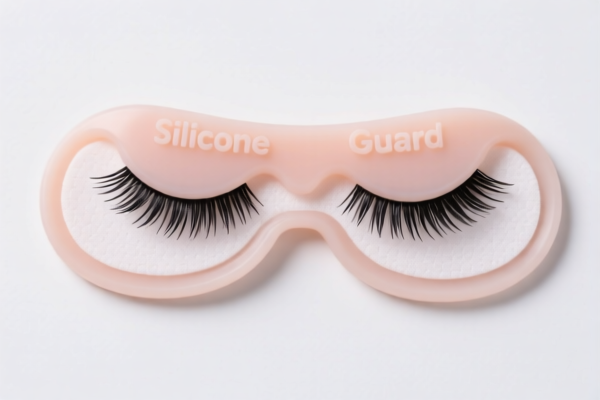
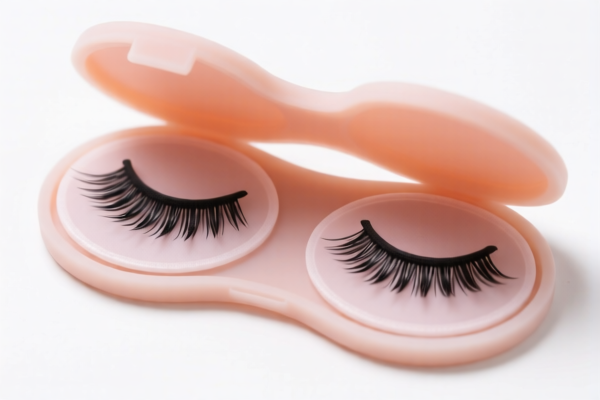
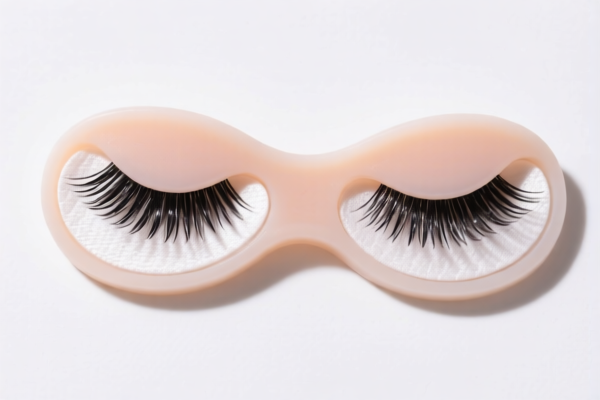
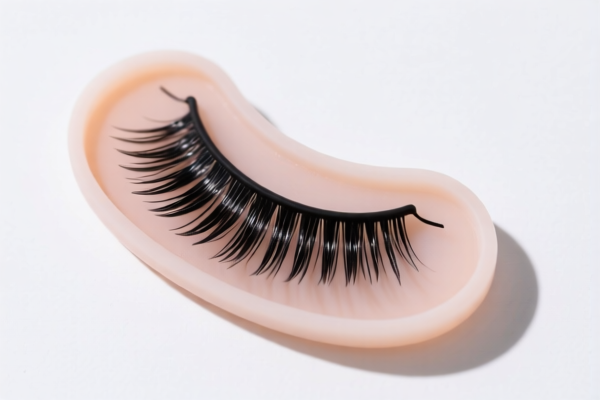
AI Analysis
👁️ Lash Lift Pads (Eyelash Extension Tools)
🌐 HS Code Reference & Customs Clearance Guide | 2026 Latest Tariff Analysis | Professional Level Entry Strategy
📌 I. Product Definition & Classification: What Exactly is a "Lash Lift Pad"?
A Lash Lift Pad is a small, curved, silicone or plastic tool used in professional eyelash extension services. It serves as a mold or base upon which natural eyelashes are lifted and curled. In international trade, these items are often miscategorized because they fall into a "gray area" between cosmetics, medical devices, and general plastic goods.
Based on the provided data, there are five potential HS Codes for this product, each carrying vastly different tax implications.
⚠️ Key Classification Distinction:
- Plastic/Silicone Tools: If viewed as a generic plastic implement → Chapter 39
- Cosmetic/Toiletry Implements: If viewed as a tool for application (like a brush) → Chapter 96
- Textile/Artificial Hair Products: If viewed as a "false lash" variant or textile-based → Chapter 67
📦 II. HS Code Classification Details (2026 Latest Tariff Authority Comparison)
| HS Code | Product Description | Application Scenario | Material Logic |
|---|---|---|---|
3926.90.35.00 |
Other articles of plastic, not elsewhere specified | Generic silicone/plastic lash lift pads | ✅ Silicone/Plastic (No conflict) |
9603.29.40.90 |
Other brushes, including brush parts; prepared knots & tufts for brush making | Cosmetic applicator tools, pads used in toiletry | ✅ Toiletry/Cosmetic tool logic |
6704.19.00.00 |
Wigs, false hair etc. of synthetic fibers; articles of human hair or of synthetic or other textile materials (other) | Pads inferred as synthetic textile materials | ✅ Synthetic textile inference |
6704.90.00.00 |
Wigs, false hair etc. of synthetic fibers; articles of human hair or of synthetic or other textile materials (other) | Lash-related products, non-human hair materials | ✅ Non-human hair logic |
3926.90.48.00 |
Other articles of plastic, not elsewhere specified | Silicone/plastic pads, generic "other" plastic category | ✅ Silicone/Plastic (Non-specific) |
🔍 Critical Reminder:
- Misclassification Risk: Declaring as6704(Textiles/Wigs) when the item is clearly Silicone/Plastic may lead to customs rejection or penalties, as the material does not match. - Tax Variance: The tax rate ranges from 0.2¢/unit + 17% to 24%, depending on the chapter chosen. - Material Conflict: Ensure your commercial invoice explicitly states the material (e.g., "Medical Grade Silicone") to support Chapter 39 or 96 classifications.
💰 III. 2026 Latest Tariff Rate Breakdown (Including Surtaxes & Policy Add-ons)
✅ Applicable Country: United States (US)
✅ Origin: China (CN)
✅ Effective Time: November 10, 2025 onwards (including subsequent imports)
🎯 1. 3926.90.35.00 —— Other Plastic Articles (High Risk/High Tax)
| Item | Content |
|---|---|
| Base Tariff | 6.5% |
| Section 301 Surtax | 7.5% |
| Section 301 Tariff (122 Clause) | +10% |
| Total Rate | 24.0% |
| Tax Calculation | CIF Value × 24% |
| De Minimis Eligibility | ❌ No (High value threshold risk) |
| Legal Basis Path | Base: 6.5% → Surtax: 7.5% → 122 Clause: 10% |
📌 Explanation:
- This classification treats the pad as a general plastic article. - It attracts the highest base tariff among plastic options. - Total 24% is significant for low-value cosmetic tools, impacting profit margins.
🎯 2. 9603.29.40.90 —— Toiletry/Cosmetic Brushes & Implements (Low Unit Duty, High Ad Valorem)
| Item | Content |
|---|---|
| Base Tariff | 0.2¢ per unit + 7% |
| Section 301 Surtax | 0.0% |
| Section 301 Tariff (122 Clause) | +10% |
| Total Rate | 0.2¢ + 17% (7% + 10%) |
| Tax Calculation | (0.2¢ × Quantity) + (CIF × 17%) |
| De Minimis Eligibility | ⚠️ Check: Low unit value may help in de minimis calculations, but ad valorem part remains. |
| Legal Basis Path | Base: 0.2¢ + 7% → Surtax: 0.0% → 122 Clause: 10% |
📌 Note:
- This is the most favorable classification IF the goods are accepted as "toiletry implements." - The Section 301 Surtax is 0%, saving 7.5% compared to Chapter 39. - However, the 7% base + 10% 122 Clause still applies to the value. - Risk: Customs may argue it is NOT a "brush" or "implement," leading to reclassification.
🎯 3. 6704.19.00.00 & 6704.90.00.00 —— Synthetic Fibers/Textiles (Medium Tax)
| Item | Content |
|---|---|
| Base Tariff | 0.0% |
| Section 301 Surtax | 7.5% |
| Section 301 Tariff (122 Clause) | +10% |
| Total Rate | 17.5% |
| Tax Calculation | CIF Value × 17.5% |
| De Minimis Eligibility | ❌ No |
| Legal Basis Path | Base: 0.0% → Surtax: 7.5% → 122 Clause: 10% |
📌 Explanation:
- These codes assume the product is made of synthetic textiles or is a variant of "false lash" products. - Base duty is 0%, but the surtax (7.5%) and 122 Clause (10%) apply. - Total 17.5% is better than Chapter 39 but worse than Chapter 96 (if accepted). - Material Conflict Warning: If the product is silicone/plastic, this classification is factually incorrect and risky.
🎯 4. 3926.90.48.00 —— Other Plastic Articles (Lowest Plastic Tax)
| Item | Content |
|---|---|
| Base Tariff | 3.4% |
| Section 301 Surtax | 0.0% |
| Section 301 Tariff (122 Clause) | +10% |
| Total Rate | 13.4% |
| Tax Calculation | CIF Value × 13.4% |
| De Minimis Eligibility | ❌ No |
| Legal Basis Path | Base: 3.4% → Surtax: 0.0% → 122 Clause: 10% |
📌 Note:
- This is the lowest tariff option for plastic products. - No Section 301 Surtax (0%) is a major advantage over3926.90.35.00. - Total 13.4% is the most cost-effective plastic-based classification. - Recommendation: If your pads are Silicone/Plastic, this is likely the best accurate classification.
🛠️ IV. Customs Clearance Practical Advice (Pitfall Avoidance Guide)
✅ 1. Required Documentation (Essential)
| Document | Required | Explanation |
|---|---|---|
| ✅ Product Specification Sheet | ✔️ | Must specify material: "100% Medical Grade Silicone" or "ABS Plastic" |
| ✅ Product Photos | ✔️ | Clear images showing the pad’s shape, curvature, and lack of bristles (to avoid Chapter 96 confusion) |
| ✅ Commercial Invoice | ✔️ | Describe as "Silicone Lash Lift Pad" or "Plastic Eyelash Curling Mold" |
| ✅ HS Code Pre-Ruling | ✔️ | Highly recommended to secure 3926.90.48.00 or 9603.29.40.90 |
| ✅ Material Certificates | ✔️ | FDA/CE compliance docs to prove safety for cosmetic use |
✅ 2. Declaration Strategy (Key Mantra)
🔥 “Material First, Function Second, Avoid ‘Brush’ if Not Bristled!”
| Scenario | Correct Declaration | Wrong Approach |
|---|---|---|
| Silicone/Plastic Pad | 3926.90.48.00 (13.4%) |
Declare as "Cosmetic Brush" → Risk of rejection |
| Textile Fiber Pad | 6704.19.00.00 (17.5%) |
Declare as "Plastic" → Material mismatch |
| Generic Plastic Tool | 3926.90.35.00 (24%) |
Overpaying tax unnecessarily |
| Complete Kit (Pad + Stick) | Declare as "Set" or Split | Mixed declaration → Confusion |
📌 Critical Tip:
- Do NOT declare silicone pads as "brushes" (9603) unless you can prove they are classified as "toiletry implements" by local customs precedent. Most silicone pads are considered plastic articles (Chapter 39). - Best Practice: Use3926.90.48.00for silicone/plastic pads. It is accurate (Plastic) and cost-effective (13.4% vs 24%).
✅ 3. Special Handling Cases
| Case | Handling Advice |
|---|---|
| OEM Custom Shapes | Provide design files to prove uniqueness, supporting "Other" classification |
| Packaged Sets (Pad + Glue) | Declare separately if possible; glue may have different HS Code |
| Multi-Color Variants | No impact on HS Code, but ensure packaging matches invoice description |
| New Material (e.g., Foam) | If foam-based, may fall under Chapter 39 or Chapter 40 (Rubber); consult expert |
🌍 V. Global Market Clearance Comparison (2026 Latest)
| Country/Region | Recommended HS Code | Tariff Rate | Certification Required | Notes |
|---|---|---|---|---|
| 🇺🇸 USA | 3926.90.48.00 |
13.4% | FDA/CE | Avoid 9603 unless proven as tool |
| 🇨🇳 China | 3926.90.90.90 |
5-7% | CCC (if applicable) | Low tariff, no surtax |
| 🇪🇺 EU | 3926.90.97 |
4% | REACH/CE | No surtax, low base duty |
| 🇬🇧 UK | 3926.90.90 |
4% | UKCA | Post-Brexit alignment with EU |
| 🇦🇺 Australia | 3926.90.90 |
5% | ACCC | No surtax |
📌 Conclusion:
- USA has the highest complexity due to Section 301 and 122 Clause taxes. -3926.90.48.00(13.4%) is the optimal balance of accuracy and cost for US imports. - Avoid9603unless you have a strong legal precedent, as it is likely to be challenged for non-bristled items.
📌 VI. Common Mistakes & Pitfall Guide (Lessons Learned)
❌ Mistake 1: Declaring Silicone Pads as "Cosmetic Brushes" (9603.29.40.90)
👉 Consequence: Customs may reject or reclassify to 3926.90.35.00 (24%) → Tax Increase!
❌ Mistake 2: Using 6704 Codes for Plastic Pads
👉 Consequence: Material mismatch → Seizure or Penalty!
❌ Mistake 3: Ignoring Section 301 Surtax
👉 Consequence: Assuming 10% total tax, but actually 13.4% or 24% → Profit Loss!
❌ Mistake 4: Inconsistent Material Description
👉 Consequence: Invoice says "Plastic," Description says "Silicone" → Customs Hold!
✅ Correct Approach:
"Silicone Lash Lift Pad, Medical Grade, Curved Shape, for Professional Eyelash Extension, Made of Silicone, Model XYZ, FDA Compliant"
🎯 VII. Conclusion: Professional Classification Saves Money!
🎯 Remember the Mantra:
🔹 "Silicone/Plastic → Chapter 39"
🔹 "3926.90.48.00→ 13.4% (Best for US)"
🔹 "Avoid9603unless it’s a Brush"
🔹 "6704is for Textiles/Hair, Not Plastic"
📌 Pro Tip:
If your lashes are manufactured in Vietnam or Thailand, you may avoid Section 301 Surtax, reducing total tax to 7.5%~10%.
Recommendation: Apply for an Advance Ruling from US Customs to secure 3926.90.48.00 and avoid disputes.
📣 Immediate Action:
📞 Consult a Customs Broker + Provide Material Specs + Apply for Pre-Ruling
🚀 Ensure your Lash Lift Pads, Smooth Clearance, High Profit, Fast Turnaround!
✨ Professional Clearance Starts with Accurate Classification!
💼 Every Cent Saved is Pure Profit!
Customer Reviews
About HS Code Classification
The Harmonized System (HS) is an internationally standardized nomenclature developed by the World Customs Organization (WCO) to classify traded products. Over 200 countries use the HS system as the basis for customs tariffs, trade statistics, and import/export regulations.
Each HS code follows a hierarchical structure:
- Chapter (2 digits) — Broad category of goods (e.g., Chapter 84: Machinery and Mechanical Appliances)
- Heading (4 digits) — More specific grouping within the chapter
- Subheading (6 digits) — Internationally standardized breakdown, used by all WCO member countries
- National subdivisions (8-10 digits) — Country-specific extensions for further classification, such as US HTSUS 10-digit codes
Correct HS code classification is essential for smooth customs clearance, accurate duty payment, and compliance with trade regulations. Misclassification can lead to customs delays, overpayment of duties, or penalties.
When importing from CN to US, the applicable tariff rates may include:
- Most-Favored-Nation (MFN) rate — The standard duty rate applied to WTO members
- General rate — Applied to countries without trade agreements
- Trade remedy duties — Additional tariffs such as Section 301 (anti-dumping), Section 232 (national security), or countervailing duties
The information provided on this page is for reference purposes only. For official classification, please consult with your local customs authority or a licensed customs broker.