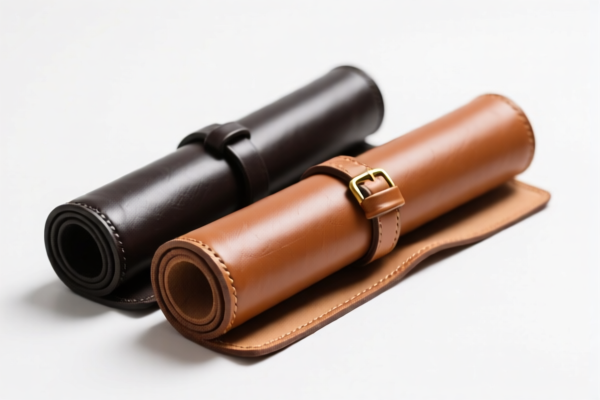
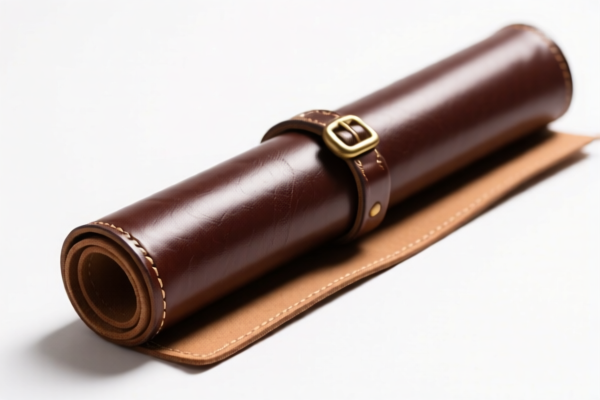
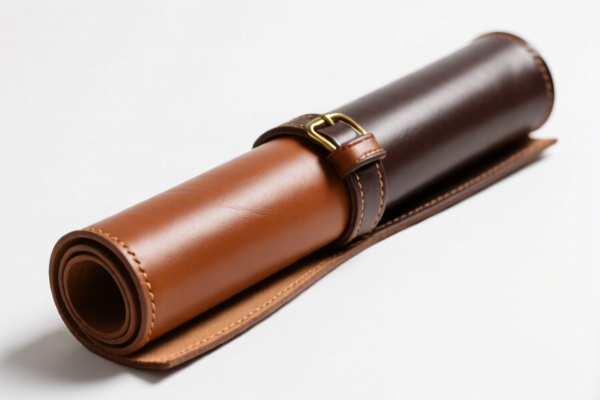
leather roll
CN → USProduct Images

AI Analysis
🖥️ Leather Rolls (Raw, Processed, or Semi-Processed)
🌐 HS Code Reference & Customs Clearance Guide | 2026 Latest Tariff Analysis | Professional Level通关 Strategy
📌 Part 1: Product Definition & Classification: Do You Really Understand “Leather”?
Leather rolls are fundamental raw materials or semi-finished goods used in footwear, apparel, furniture, automotive interiors, and luxury goods. In international trade, “leather” is not a single category but a spectrum depending on the processing stage. The critical distinction lies in whether the hide has been tanned and how it is finished.
Key Distinctions: * Raw Hides/Skins (Not Tanned): Often classified under Chapter 41, but if preserved (salted, dried) without tanning, they may fall under specific headings. * Chrome-Tanned Leather: The most common form for modern manufacturing. The tanning method (Chrome vs. Vegetable) significantly impacts the HS Code. * Finished vs. Semi-Processed: Is it just tanned (semi-finished) or dyed, printed, and coated (finished)? * Sheepskin vs. Cowhide vs. Other: Animal origin matters. Sheepskin has its own specific subheadings.
⚠️ Critical Differentiator:
- If the leather is chrome-tanned and finished (dyed, pigmented) → Usually 4107.21 or 4107.29.
- If the leather is vegetable-tanned → Usually 4104.41 or 4104.49.
- If it is sheepskin/lambskin (finished) → 4106.22.
- If it is raw/unprocessed (salted/dried) → 4101.10 or 4102.10.
📦 Part 2: HS Code Classification Details (2026 Latest Tariff Authority Comparison)
| HS Code | Product Description | Applicable Scenario | Tanning Method | Finish Level |
|---|---|---|---|---|
4107.21.10.00 |
Sheepskin/lambskin, chrome-tanned, split, finished | Luxury footwear, gloves, high-end apparel | Chrome | ✅ Finished |
4107.21.90.00 |
Sheepskin/lambskin, chrome-tanned, other (full grain) | Full-grain sheep leather for jackets | Chrome | ✅ Finished |
4107.29.10.00 |
Bovine leather (cowhide), chrome-tanned, split, finished | Lower-grade footwear, bags, accessories | Chrome | ✅ Finished |
4107.29.90.00 |
Bovine leather (cowhide), chrome-tanned, other (full grain) | High-quality handbags, shoes, furniture | Chrome | ✅ Finished |
4104.41.10.00 |
Boileather (vegetable-tanned), full grain, packed < 7 sq m | Artisanal goods, belts, tooling leather | Vegetable | ✅ Finished |
4104.49.10.00 |
Other vegetable-tanned bovine leather | Industrial uses, saddlery, lower-grade items | Vegetable | ✅ Finished |
4106.22.10.00 |
Sheepskin/lambskin, vegetable-tanned, split | Niche artisanal markets | Vegetable | ✅ Finished |
4106.29.10.00 |
Sheepskin/lambskin, vegetable-tanned, other | Specialty goods | Vegetable | ✅ Finished |
4101.10.00.00 |
Raw hides, bovine, fresh or salted, unprocessed | Initial supply chain, slaughterhouse exports | N/A | ❌ Unprocessed |
4101.20.00.00 |
Raw hides, bovine, split, fresh or salted | Semi-raw material for tanners | N/A | ❌ Unprocessed |
🔍 Key Reminder:
- “Rolls” imply bulk packaging, which is standard for B2B trade. Ensure the description matches the physical form (e.g., “Chrome-Tanned Cowhide Rolls”).
- Split Leather (the lower layer of the hide) is generally taxed differently or has lower value than Full Grain.
- Sheepskin is a separate category from Bovine (Cow) and Goat/Goatskin. Do not mix them up.
💰 Part 3: 2026 Latest Tariff Rate Breakdown (Including Surtaxes)
✅ Applicable Country: United States (US)
✅ Origin: China (CN)
✅ Effective Date: Post-2025.11.10 (Current Regime)
🎯 1. 4107.29.90.00 – Chrome-Tanned Bovine Leather (Full Grain, Finished)
| Item | Content |
|---|---|
| Base Rate (MFN) | 4.8% (ad valorem) |
| Section 301 Surtax | +7.5% (List 4B, adjusted for recent phases) |
| IEEPA Surtax | +10% (Targeting China-origin goods) |
| Total Tariff Rate | 22.3% |
| Tax Calculation | CIF Value × 22.3% |
| De Minimis Eligibility | ❌ No (Not eligible for $800 exemption due to textile/apparel raw material classification often scrutinized) |
| Legal Path | USITC:4107.29.90.00 → Section 301: Footnote 9903.88.01 → IEEPA:9903.01.24 |
📌 Explanation:
- China is the world’s largest leather producer. The US has maintained high tariffs on Chinese leather to protect domestic tanning industries and manage trade deficits.
- Total burden of ~22.3% is significant for low-margin leather goods.
🎯 2. 4107.21.90.00 – Chrome-Tanned Sheepskin (Finished)
| Item | Content |
|---|---|
| Base Rate (MFN) | 9.6% |
| Section 301 Surtax | +7.5% |
| IEEPA Surtax | +10% |
| Total Tariff Rate | 27.1% |
| Tax Calculation | CIF Value × 27.1% |
| De Minimis Eligibility | ❌ No |
| Legal Path | USITC:4107.21.90.00 → Section 301 → IEEPA:9903.01.24 |
📌 Note:
- Sheepskin tariffs are higher due to its status as a higher-value, fashion-oriented raw material.
- Even small rolls of luxury sheepskin are subject to these rates.
🎯 3. 4104.49.10.00 – Vegetable-Tanned Bovine Leather
| Item | Content |
|---|---|
| Base Rate (MFN) | 3.2% |
| Section 301 Surtax | +7.5% |
| IEEPA Surtax | +10% |
| Total Tariff Rate | 20.7% |
| Tax Calculation | CIF Value × 20.7% |
| De Minimis Eligibility | ❌ No |
📌 Note:
- Vegetable-tanned leather is often used in artisanal or eco-friendly markets. While the base rate is lower, the surtaxes make it expensive.
🛠️ Part 4: Customs Clearance Practical Advice (Real-World Pitfall Guide)
✅ 1. Required Documentation Checklist (Non-Negotiable)
| Document | Mandatory? | Details |
|---|---|---|
| ✅ Commercial Invoice | ✔️ | Must state: Material (Leather), Animal Origin (Bovine/Sheep), Tanning Method (Chrome/Veg), Finish (Split/Full Grain). |
| ✅ Packing List | ✔️ | Specify number of hides/rolls, gross/net weight, dimensions. |
| ✅ Tanning Certificate | ✔️ | Proof of tanning method (Chrome vs. Vegetable) is critical for HS Code accuracy. |
| ✅ Certificate of Origin (CO) | ✔️ | Essential for determining surtax eligibility. |
| ✅ Fiber Content Statement | ✔️ | 100% Leather (or blend if applicable). |
| ✅ Test Reports | ✔️ | Chromate content test (Cr6+ compliance for US/EU), AZO dye-free certification. |
✅ 2. Declaration Tips (Key Mnemonic)
🔥 “Origin, Tanning, and Finish: Get it wrong, pay it high!”
| Scenario | Correct Declaration | Wrong Practice |
|---|---|---|
| Chrome-Tanned Cowhide | 4107.29.90.00 |
Declare as “Raw Hides” → Audit Risk |
| Sheepskin (Luxury) | 4107.21.90.00 |
Declare as “Bovine Leather” → Misclassification Penalty |
| Split Leather | 4107.29.10.00 |
Declare as “Full Grain” → Overpayment (or underpayment if audit fails) |
| Raw Salted Hides | 4101.10.00.00 |
Declare as “Tanned Leather” → Rejection |
✅ 3. Special Situation Handling
| Situation | Handling Advice |
|---|---|
| Leather Blends (e.g., Leather + Textile) | If leather is the essential character, still Chapter 41. Provide detailed layer structure. |
| Chrome Content Limits | US/EU have strict limits on Hexavalent Chromium (Cr6+). Failure to test can lead to rejection even if HS Code is correct. |
| Animal Health Certificates | For raw hides, some US states require additional veterinary health certificates. Check state-specific rules. |
| Environmental Compliance | Ensure no banned substances (AZO dyes, PFAS) are present. EPA and CPSC regulations apply. |
🌍 Part 5: Global Market Clearance Comparison (2026 Latest)
| Country/Region | Recommended HS Code | Tariff (China Origin) | Certification Requirements | Remarks |
|---|---|---|---|---|
| 🇺🇸 USA | 4107.29.90.00 |
~22.3% | EPA (Chrome), CPSC (Chemicals) | High surtaxes; strict chemical testing |
| 🇨🇳 China | 4107.29.90.00 |
3.5% | None (for import) | Low base rate; major exporter |
| 🇪🇺 EU | 4107.29.90.00 |
6.5% (if MFN) | REACH (Chemicals), Ecolabel | Strict REACH compliance for chemicals |
| 🇬🇧 UK | 4107.29.90.00 |
6.5% | UK REACH | Post-Brexit rules mirror EU closely |
| 🇯🇵 Japan | 4107.29.90.00 |
7.0% | JIS Standards | High-quality standards; inspect for defects |
📌 Conclusion:
- USA has the highest total tariff burden due to surtaxes.
- EU focuses heavily on chemical compliance (REACH) rather than just tariffs.
- China remains the cheapest source but faces high export barriers to the US.
📌 Part 6: Common Errors & Pitfall Guide (Blood & Tears Lessons)
❌ Error 1: Declaring “Chrome-Tanned” leather as “Vegetable-Tanned”
👉 Consequence: HS Code misclassification → Potential fraud allegations + back taxes.
❌ Error 2: Ignoring “Split” vs. “Full Grain” distinction
👉 Consequence: Overpaying duties (if declared as Full Grain) or underpaying (if declared as Split and audited) → Penalties.
❌ Error 3: Failing to provide Chrome Content Test Reports
👉 Consequence: Customs holds shipment for lab testing → Delay + Storage Fees + Potential Rejection.
❌ Error 4: Mixing Raw Hides and Tanned Leather in One Shipment
👉 Consequence: Complex clearance → Higher scrutiny → Possible Seizure if documentation is inconsistent.
✅ Correct Approach:
“Chrome-Tanned Bovine Full-Grain Leather Rolls, Dyed Black, 2.0mm Thickness, Cr6+ Compliant, Origin China, For Footwear Manufacturing”
🎯 Part 7: Conclusion: Professional Declaration, Time & Cost Saving!
🎯 Remember the Mantra:
🔹 “Origin, Tanning, Finish: The Holy Trinity of Leather.”
🔹 “Chrome 4107, Veg 4104, Sheep 4106. Mix them up, lose your supply.”
🔹 “Chrome Test is Mandatory. Skip it, and your shipment stops.”
📌 Pro Tip:
If your leather is originating from Vietnam, India, or Brazil, you may avoid US Section 301 and IEEPA surtaxes.
Suggested Action:
📞 Consult a Customs Broker for Advance Ruling (Ruling Letter).
🚀 Secure your supply chain by verifying tanning certificates and chemical compliance before shipping.
📣 Immediate Action:
✅ Verify Animal Origin & Tanning Method on Invoice.
✅ Obtain Cr6+ Test Report from Supplier.
✅ Calculate Total Landed Cost including ~22.3% US Tariff.
🚀 Ensure smooth customs clearance and protect your margin!
✨ Professional Customs Clearance Starts with Accurate Classification!
💼 Your Leather Investment Deserves Precise Handling!
Customer Reviews
About HS Code Classification
The Harmonized System (HS) is an internationally standardized nomenclature developed by the World Customs Organization (WCO) to classify traded products. Over 200 countries use the HS system as the basis for customs tariffs, trade statistics, and import/export regulations.
Each HS code follows a hierarchical structure:
- Chapter (2 digits) — Broad category of goods (e.g., Chapter 84: Machinery and Mechanical Appliances)
- Heading (4 digits) — More specific grouping within the chapter
- Subheading (6 digits) — Internationally standardized breakdown, used by all WCO member countries
- National subdivisions (8-10 digits) — Country-specific extensions for further classification, such as US HTSUS 10-digit codes
Correct HS code classification is essential for smooth customs clearance, accurate duty payment, and compliance with trade regulations. Misclassification can lead to customs delays, overpayment of duties, or penalties.
When importing from CN to US, the applicable tariff rates may include:
- Most-Favored-Nation (MFN) rate — The standard duty rate applied to WTO members
- General rate — Applied to countries without trade agreements
- Trade remedy duties — Additional tariffs such as Section 301 (anti-dumping), Section 232 (national security), or countervailing duties
The information provided on this page is for reference purposes only. For official classification, please consult with your local customs authority or a licensed customs broker.