microporous catalyst support
CN → US| HS Code | Tariff Rate | Origin | Destination | Doc |
|---|---|---|---|---|
| 3815905000 | 40.0% | CN | US | Official Doc |
| 3926909989 | 22.8% | CN | US | Official Doc |
| 6914908000 | 40.6% | CN | US | Official Doc |
| 3815190000 | 35.0% | CN | US | Official Doc |
| 3926909910 | 22.8% | CN | US | Official Doc |
Product Images
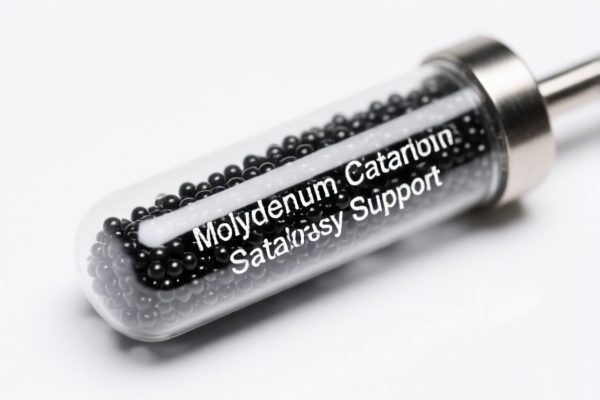
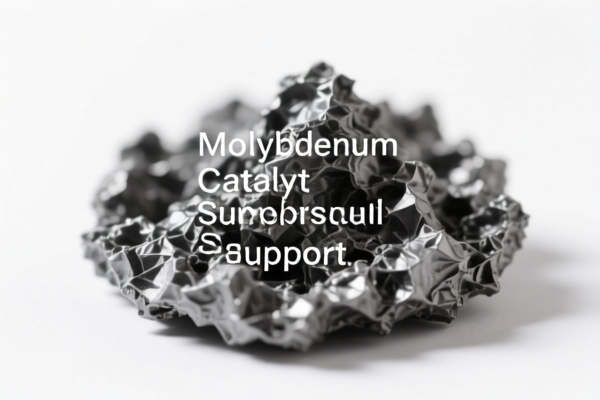
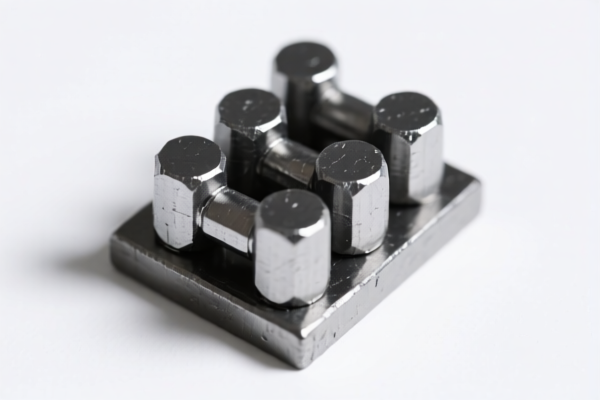
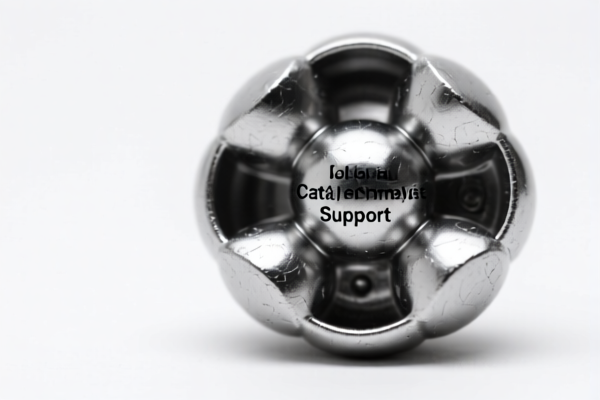
AI Analysis
🧪 Microporous Catalyst Support (Catalyst Carrier)
🌐 HS Code Reference & Customs Clearance Guide | 2026 Latest Tariff Analysis | Professional Clearance Strategy
📌 I. Product Definition & Classification: Do You Really Understand "Microporous Catalyst Support"?
A Microporous Catalyst Support (often referred to as a Carrier) is a critical material in chemical engineering and petrochemical industries. It serves as the structural foundation for active catalytic components. Its primary functions include: 1. High Surface Area: Providing vast surface area for dispersion of active metals (Pt, Pd, etc.). 2. Mechanical Strength: Withstanding high pressure and temperature in reaction beds. 3. Porosity Control: "Microporous" (typically <2nm pore size) allows for specific molecular sieving effects.
In international trade, classification depends heavily on the material composition (Alumina/Silica vs. Plastic/Composite) and the functional definition (Is it considered a "Catalyst Preparation" or a "Manufactured Article"?).
⚠️ Key Distinction Point:
- If classified under 3815: It is viewed functionally as a component of a catalyst preparation ("Support").
- If classified under 3926: It is viewed as a manufactured plastic/synthetic article.
- If classified under 6914: It is viewed as a ceramic/technical clay product.
📦 II. HS Code Classification Details (2026 Latest Tariff Authority Comparison)
| HS Code | Product Description | Applicability | Material Conflict? |
|---|---|---|---|
3815.90.50.00 |
Other prepared catalysts; Catalyst Supports | Matches "Catalyst" in name; Generic "Other" category. Supports are backing materials, no material conflict with catalyst form. | ❌ No Conflict |
3926.90.99.89 |
Other plastic articles; Microporous Support | Inferred as porous plastic/inorganic composite. No specific material conflict for "other" plastic articles. | ❌ No Conflict |
6914.90.80.00 |
Other ceramic articles; Microporous Support | Typically Alumina/Silica (Ceramic). Non-specific shape fits "Other" ceramic category. | ❌ No Conflict |
3815.19.00.00 |
Other prepared catalysts; Supports | "Support" = "Carrier" in chemical context. Fits "Other supported catalysts" definition perfectly. | ❌ No Conflict |
3926.90.99.10 |
Other plastic articles; Lab/Industrial Carrier | Inferred Plastic/Synthetic Polymer. Fits "Other plastic articles" catch-all for lab/industrial ware. | ❌ No Conflict |
🔍 Key Reminder:
- 3815 Codes: Best if the product is specifically marketed as a "Catalyst Component" or "Support for Catalysts."
- 3926/6914 Codes: Better if the product is sold as a generic "Porous Ceramic/Plastic Block" without explicit catalyst branding, though customs may still challenge this if function is obvious.
💰 III. 2026 Latest Tariff Rate Breakdown (Including Surcharges & Policy Add-ons)
✅ Applicable Country: United States (US)
✅ Origin: China (CN)
✅ Effective Time: From November 10, 2025 (Includes subsequent imports)
🎯 1. 3815.90.50.00 —— Other Catalyst Supports (Generic)
| Item | Content |
|---|---|
| Base Tariff | 5.0% |
| Section 301 Surcharge | +25.0% |
| Section 122 Tariff | +10.0% |
| Total Tax Rate | 40.0% |
| Tax Calculation | CIF Value × 40% |
| De Minimis Eligible | ❌ No (High duty rate disqualifies) |
| Legal Basis Path | USITC:3815.90.50.00 → FOOTNOTE:301 → FOOTNOTE:122 |
📌 Explanation:
- Base 5%: Standard Most Favored Nation (MFN) rate for other prepared catalysts/supports.
- 301 Surcharge 25%: Applies to Chinese origin goods under Section 301 of the Trade Act.
- Section 122 10%: Additional surcharge applied to Chinese imports under Section 122 of the Trade Expansion Act (often used for national security/economic reasons).
- Total 40%: This is a high-cost classification. Must be factored into landed cost calculations immediately.
🎯 2. 3926.90.99.89 —— Other Plastic Articles (Inferred Plastic Support)
| Item | Content |
|---|---|
| Base Tariff | 5.3% |
| Section 301 Surcharge | +7.5% |
| Section 122 Tariff | +10.0% |
| Total Tax Rate | 22.8% |
| Tax Calculation | CIF Value × 22.8% |
| De Minimis Eligible | ❌ No |
| Legal Basis Path | USITC:3926.90.99.89 → FOOTNOTE:301 → FOOTNOTE:122 |
📌 Note:
- This rate is significantly lower than 3815 codes because the "Base Tariff" and "301 Surcharge" are lower for certain plastic articles.
- Risk: Customs may reclassify this as3815if the product's primary function is clearly as a catalyst support, leading to a 17.2% penalty difference. Only use if material is predominantly plastic/polymer and not strictly defined as a chemical support.
🎯 3. 6914.90.80.00 —— Other Ceramic Articles (Alumina/Silica Support)
| Item | Content |
|---|---|
| Base Tariff | 5.6% |
| Section 301 Surcharge | +25.0% |
| Section 122 Tariff | +10.0% |
| Total Tax Rate | 40.6% |
| Tax Calculation | CIF Value × 40.6% |
| De Minimis Eligible | ❌ No |
| Legal Basis Path | USITC:6914.90.80.00 → FOOTNOTE:301 → FOOTNOTE:122 |
📌 Explanation:
- Typical for Alumina (Al₂O₃) or Silica Gel supports.
- Highest base rate among the options (5.6%) + highest 301 rate (25%).
- Use only if the product is undeniably a ceramic technical article and not sold as a "catalyst component."
🎯 4. 3815.19.00.00 —— Other Catalysts (Supports Defined as Catalyst)
| Item | Content |
|---|---|
| Base Tariff | 0.0% |
| Section 301 Surcharge | +25.0% |
| Section 122 Tariff | +10.0% |
| Total Tax Rate | 35.0% |
| Tax Calculation | CIF Value × 35.0% |
| De Minimis Eligible | ❌ No |
| Legal Basis Path | USITC:3815.19.00.00 → FOOTNOTE:301 → FOOTNOTE:122 |
📌 Critical Insight:
- Lowest Total Rate (35%)!
- This code has a 0% base tariff because it falls under "Other Prepared Catalysts" which sometimes enjoys lower base rates, but still incurs full 301 (25%) and 122 (10%) surcharges.
- Strategy: If customs accepts "Support" as a type of "Prepared Catalyst," this is the optimal cost-saving classification.
🎯 5. 3926.90.99.10 —— Other Plastic Articles (Specific Plastic Support)
| Item | Content |
|---|---|
| Base Tariff | 5.3% |
| Section 301 Surcharge | +7.5% |
| Section 122 Tariff | +10.0% |
| Total Tax Rate | 22.8% |
| Tax Calculation | CIF Value × 22.8% |
| De Minimis Eligible | ❌ No |
| Legal Basis Path | USITC:3926.90.99.10 → FOOTNOTE:301 → FOOTNOTE:122 |
📌 Note:
- Same tax burden as3926.90.99.89(22.8%).
- Sub-code.10might be more specific to "Lab/Industrial Wares."
- Risk: Same as above. Customs may argue it is a catalyst support (3815) rather than a general plastic article.
🛠️ IV. Customs Clearance Practical Advice (Field Avoidance Guide)
✅ 1. Preparation Checklist (All Must Be Provided)
| Document | Mandatory? | Description |
|---|---|---|
| ✅ Product Specification Sheet | ✔️ | Must detail Pore Size (microporous <2nm), Surface Area, Material (Alumina, Silica, Plastic). |
| ✅ Material Safety Data Sheet (MSDS) | ✔️ | Crucial for proving chemical inertness and non-hazardous nature. |
| ✅ Product Photos (Clear Label) | ✔️ | Show shape, branding, and any "Catalyst Support" labeling. |
| ✅ Commercial Invoice | ✔️ | Description: "Microporous Catalyst Support, Material: [X], Porosity: [Y], For Chemical Processing." |
| ✅ Origin Certificate | ✔️ | Essential for verifying CN origin to apply correct surcharges. |
| ✅ Packing List | ✔️ | Ensure weight/volume matches declaration. |
✅ 2. Declaration Tips (Key Mantra)
🔥 "Define Function, Specify Material, Avoid Ambiguity!"
| Scenario | Correct Declaration | Incorrect Action |
|---|---|---|
| Ceramic (Alumina) Support | 6914.90.80.00 OR 3815.19.00.00 |
Declaring as "Plastic" → Rejection |
| Polymer/Plastic Support | 3926.90.99.89 OR 3926.90.99.10 |
Declaring as "Ceramic" → Rejection |
| Sold as Catalyst Component | 3815.19.00.00 |
Declaring as "General Porous Block" → Higher Risk |
| Mixed Material Support | 3815.90.50.00 (Generic) |
Vague description "Support" → Delay |
📌 Strategic Choice:
- If the product is Ceramic and you want the lowest risk, use6914.90.80.00(40.6%).
- If the product is Ceramic and you want the lowest tax, try3815.19.00.00(35.0%) with strong justification.
- If the product is Plastic, use3926.90.99.89(22.8%) as it is likely the most accurate and cost-effective.
✅ 3. Special Circumstances Handling
| Situation | Handling Advice |
|---|---|
| Customs Challenges 3815 | Provide technical data sheets proving it is a "prepared catalyst support" not just a "raw material." |
| Plastic Support Accused of Being 3815 | Argue that it is a "manufactured plastic article" used in labs, not chemically bound to active catalysts yet. |
| New Form Factor (e.g., Honeycomb Monolith) | Ensure HS code matches shape if specific sub-codes exist; otherwise, use "Other." |
| Sample Shipment | Still declare correctly. Small value does not exempt from high surcharges. |
🌍 V. Global Market Comparison (2026 Latest)
| Country/Region | Recommended HS Code | Tariff Rate | Certification | Notes |
|---|---|---|---|---|
| 🇺🇸 USA | 3815.19.00.00 |
35.0% | N/A | Highest compliance risk due to 301+122. |
| 🇨🇳 China | 3815.19.00.00 |
~5-7% | CCC (if applicable) | Low tariff, easy export. |
| 🇪🇺 EU | 3815.19.00.00 |
0-4% | REACH | No Section 301/122. Very competitive. |
| 🇬🇧 UK | 3815.19.00.00 |
0-4% | UK REACH | Post-Brexit rates may vary slightly. |
| 🇯🇵 Japan | 3815.19.00.00 |
5-6% | JIS | No major surcharges. |
📌 Conclusion:
- USA is the most expensive market due to the combination of Base Tariff + 301 (25%) + 122 (10%).
- Diversification Strategy: Consider shipping catalyst supports to the EU or Asia first, then re-exporting (if rules of origin allow) to avoid US surcharges, though this adds logistics cost.
📌 VI. Common Mistakes & Pitfall Guide (Lessons Learned)
❌ Mistake 1: Declaring "Catalyst Support" as "Industrial Filter"
👉 Consequence: Misclassification. If found to be a support, back-taxes + penalties apply.
❌ Mistake 2: Ignoring Section 122 (10%)
👉 Consequence: Under-declaration of duties. CBP will audit and demand payment + interest.
❌ Mistake 3: Using 3926 for Ceramic Supports
👉 Consequence: CBP will reclassify to 6914 or 3815, resulting in higher duties (40%+ vs 22.8%).
❌ Mistake 4: Vague Description "Porous Material"
👉 Consequence: Customs detention for further examination. Always specify "Alumina" or "Plastic."
✅ Correct Practice:
"Microporous Alumina Catalyst Support, Pore Size <2nm, Surface Area 200m²/g, Used in Petrochemical Refining, Model XYZ."
🎯 VII. Conclusion: Precision in Classification Saves Money!
🎯 Remember the Mantra:
🔹 "Ceramic? 40.6%. Plastic? 22.8%. Catalyst Support? 35.0% (Best)."
🔹 "301 is 25%, 122 is 10%. Don't let 35% become 45%!"
📌 Pro Tip:
If you are exporting to the US, consult a customs broker before shipping high-value batches. Apply for a Pre-Ruling (Advance Ruling) from CBP if the classification is borderline between 3815 and 6914/3926. This locks in the 35.0% rate if eligible, saving you 5-5.6% per shipment.
📣 Immediate Action:
📞 Contact a licensed US Customs Broker
📄 Provide Product Spec Sheets (Material + Porosity)
🚀 Optimize Your Landed Cost Today!
✨ Professional Clearance Starts with Accurate Classification!
💼 Every Percent Saved is Pure Profit!
Customer Reviews
About HS Code Classification
The Harmonized System (HS) is an internationally standardized nomenclature developed by the World Customs Organization (WCO) to classify traded products. Over 200 countries use the HS system as the basis for customs tariffs, trade statistics, and import/export regulations.
Each HS code follows a hierarchical structure:
- Chapter (2 digits) — Broad category of goods (e.g., Chapter 84: Machinery and Mechanical Appliances)
- Heading (4 digits) — More specific grouping within the chapter
- Subheading (6 digits) — Internationally standardized breakdown, used by all WCO member countries
- National subdivisions (8-10 digits) — Country-specific extensions for further classification, such as US HTSUS 10-digit codes
Correct HS code classification is essential for smooth customs clearance, accurate duty payment, and compliance with trade regulations. Misclassification can lead to customs delays, overpayment of duties, or penalties.
When importing from CN to US, the applicable tariff rates may include:
- Most-Favored-Nation (MFN) rate — The standard duty rate applied to WTO members
- General rate — Applied to countries without trade agreements
- Trade remedy duties — Additional tariffs such as Section 301 (anti-dumping), Section 232 (national security), or countervailing duties
The information provided on this page is for reference purposes only. For official classification, please consult with your local customs authority or a licensed customs broker.