nylon blended fabric high count and high density
CN → USProduct Images
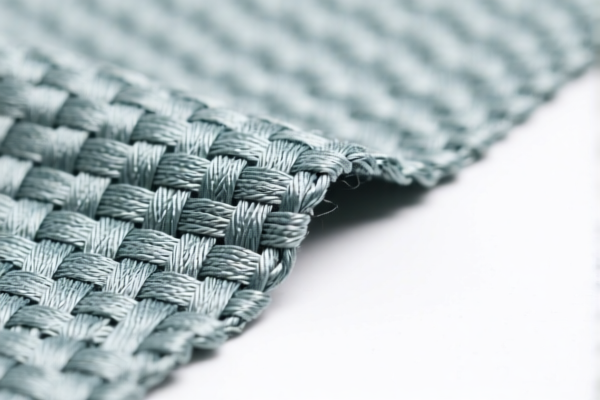
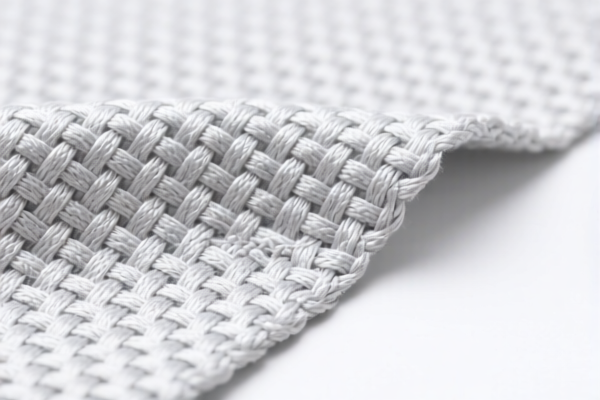
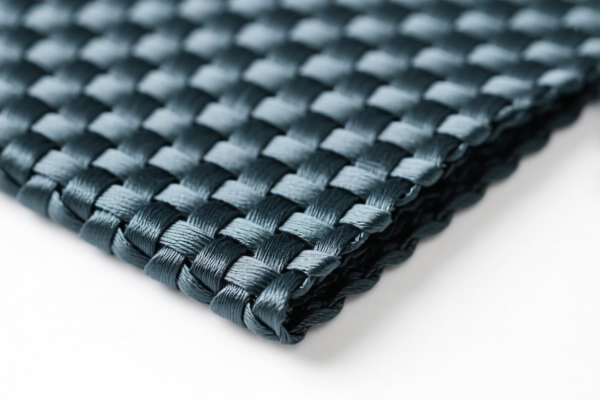
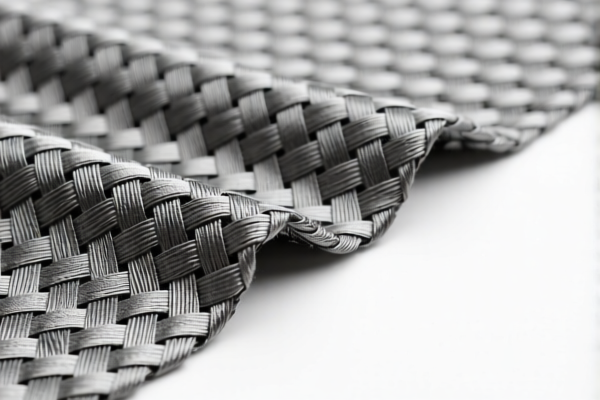
AI Analysis
🧵 Nylon Blended Fabric: High Count & High Density Specifications
🌐 HS Code Reference & Customs Clearance Guide | 2026 Latest Tariff Regulations | Professional Compliance Strategy
📌 I. Product Definition: What Exactly is "High Count, High Density Nylon Blend"?
Nylon blended fabric (typically Nylon/Spandex or Nylon/Polyester blends) characterized by high thread count (count) and high weaving density (density) offers superior durability, smoothness, and a premium feel. It is widely used in high-end sportswear, lingerie, swimwear, and technical outerwear.
Key Technical Indicators: - High Count (Fineness): Refers to the thickness of the yarn. Higher counts (e.g., 70D, 80D, 100D, or even finer like 20D-40D for silk-like feel) mean thinner, finer yarns. - High Density (Threads per Inch/Centimeter): Refers to the number of warp and weft threads per unit area. Higher density results in a tighter, less transparent, and more durable fabric.
⚠️ Critical Distinction:
- Knitted vs. Woven: Most high-count nylon blends are knitted (e.g., jersey, tricot, plain knit). Woven nylon is usually heavy-duty (e.g., parachutes). This guide focuses on Knitted Fabric for apparel. - Blended Composition: "Blend" usually implies Nylon + Spandex (Elastane) for stretch, or Nylon + Polyester for cost/durability balance.
📦 II. HS Code Classification Matrix (2026 Latest Tariff Authority)
| HS Code | Product Description | Application Scenario | Composition | Knitted/Woven |
|---|---|---|---|---|
6006.31.00 |
Knitted or crocheted fabrics, of nylon or other polyamides, containing >= 5% elastomeric rubber or spandex | High-end sportswear, swimwear, lingerie, leggings | Nylon + Spandex (Elastane) | ✅ Knitted |
6006.22.00 |
Knitted or crocheted fabrics, of synthetic fibers (polyester), mixed mainly with nylon | Sportswear, casual wear, lining | Nylon + Polyester | ✅ Knitted |
6006.34.00 |
Knitted or crocheted fabrics, of nylon or polyamides, dyed | General apparel, uniforms | 100% Nylon or Nylon-blend | ✅ Knitted |
5407.61.00 |
Woven fabrics, of synthetic fibers, containing >= 85% nylon | Technical textiles, outdoor gear, bags | 100% Nylon or Nylon-dominant | ❌ Woven |
6005.40.00 |
Other knitted fabrics, of synthetic fibers, bleached/printed | Linings, interlinings | Synthetic blend | ✅ Knitted |
🔍 Key Reminder:
- Spandex Content > 5%? → Likely6006.31.00(if nylon is main fiber).
- Pure Nylon Knitted? → Likely6006.34.00or6006.22.00depending on dyeing/printing status.
- Woven vs. Knitted? Must declare correctly. Knitted = 60xx, Woven = 54xx.
💰 III. 2026 Latest Tariff Rate Breakdown (Including Surcharge Policies)
✅ Applicable Country: USA (US)
✅ Origin: China (CN)
✅ Effective Date: November 10, 2025 (including subsequent imports)
🎯 1. 6006.31.00 —— Knitted Nylon/Spandex Fabric (High Count/High Density)
| Item | Content |
|---|---|
| Base Tariff | 0% (ad valorem) |
| USITC Surcharge | +25% (USITC Footnote 9903.88.01) |
| IEEPA Surcharge | +10% (China/HK product, effective Nov 10, 2025) |
| Total Rate | 45% |
| Tax Calculation | CIF Value × 45% |
| De Minimis Exemption Eligible? | ❌ No (deny_de_minimis) |
| Legal Basis Path | IEEPA:9903.01.25 → IEEPA:9903.01.24 → USITC:6006.31.00 → FOOTNOTE:9903.88.01 |
📌 Explanation:
- "USITC 25%" is from Section 301 duties under U.S. Trade Act;
- "IEEPA 10%" is the Additional Tariff under IEEPA for Chinese goods;
- Total 45% is considered high tariff, must be factored into cost!
🎯 2. 6006.22.00 —— Knitted Synthetic Fiber Fabric (Nylon/Polyester Blend)
| Item | Content |
|---|---|
| Base Tariff | 0% |
| USITC Surcharge | +25% |
| IEEPA Surcharge | +10% |
| Total Rate | 45% |
| Tax Calculation | CIF × 45% |
| De Minimis Exemption Eligible? | ❌ No |
| Legal Basis Path | IEEPA:9901.25 → IEEPA:9903.01.24 → USITC:6006.22.00 → FOOTNOTE:9903.88.01 |
📌 Note:
- Same as above, "Blended" synthetics face same high tariffs;
- Even if Polyester is main fiber, if blended with Nylon, still subject to synthetic fiber rules.
🛠️ IV. Customs Clearance Practical Guide (Pitfall Avoidance)
✅ 1. Required Documentation Checklist
| Document | Must Provide | Explanation |
|---|---|---|
| ✅ Product Specification Sheet | ✔️ | Including: Fiber content %, Count (D), Density (threads/inch/cm), Width, Weight (gsm) |
| ✅ Fabric Structure Diagram | ✔️ | To confirm Knitted vs. Woven |
| ✅ Product Photos (with Label) | ✔️ | Clear showing composition label, weight, care instructions |
| ✅ Third-Party Test Report | ✔️ | OEKO-TEX, REACH, CPSIA, etc. |
| ✅ Commercial Invoice | ✔️ | Must state "Knitted Fabric, Nylon/Spandex, High Count/High Density" |
| ✅ Certificate of Origin (CO) | ✔️ | If non-China origin, can claim preferential rates |
| ✅ Packing List | ✔️ | Show roll/roll packaging, avoid mixed declarations |
✅ 2. Declaration Tips (Key Mnemonics)
🔥 "Knitted 60, Woven 54, Spandex >5% is 31, Nylon pure is 34!"
| Scenario | Correct Declaration | Wrong Practice |
|---|---|---|
| Nylon + Spandex Knitted | 6006.31.00 |
Misdeclare as "Woven" → 30%+25% |
| Pure Nylon Knitted | 6006.34.00 |
Misdeclare as "Spandex blend" → 45% vs 20% |
| Nylon/Polyester Blend | 6006.22.00 |
Misdeclare as "Cotton" → 10% but wrong classification |
| Woven Nylon | 5407.61.00 |
Misdeclare as "Knitted" → 45% vs 20% |
✅ 3. Special Case Handling
| Scenario | Handling Advice |
|---|---|
| OEM Custom Fabric | Provide client order + design tech pack to avoid "non-standard" flag |
| High-Density, High-Count (Ultra-fine) | Still 6006.31.00, no special exemption |
| Recycled Nylon (Econyl) | Same HS Code, but can provide Recycled Content Certificate for brand compliance (not tariff) |
| Fabrics for Medical Use | If sterile/surgical, may require FDA docs, but HS remains same |
🌍 V. Global Market Customs Comparison (2026 Latest)
| Country/Region | Recommended HS Code | Tariff | Certification | Notes |
|---|---|---|---|---|
| 🇺🇸 USA | 6006.31.00 |
45% (China) | OEKO-TEX + REACH | High tariff due to Section 301 |
| 🇨🇳 China | 6006.31.00 |
5% | GB Standards | No surcharge |
| 🇪🇺 EU | 6006.31.00 |
0% (if CE-compliant) | REACH + OEKO-TEX | No surcharge |
| 🇦🇺 Australia | 6006.31.00 |
5% | RCM | No surcharge |
| 🇯🇵 Japan | 6006.31.00 |
0% | PSE | No surcharge |
📌 Conclusion:
- USA is the only market with high surcharges on synthetic knitted fabrics;
- China-origin nylon fabric has very high clearance costs in US, consider supply chain adjustment.
📌 VI. Common Errors & Pitfall Guide (Lessons Learned)
❌ Error 1: Declaring "Fabric" without specifying Knitted/Woven
👉 Consequence: Customs cannot classify → Delay or Return
❌ Error 2: Misdeclaring Nylon/Spandex as "Cotton Blend"
👉 Consequence: Tariff from 45% to 5% → Penalty + Back Tax!
❌ Error 3: Not providing fiber composition % on Invoice
👉 Consequence: Customs reclassifies → 10% penalty + delay
❌ Error 4: Using "Nylon Fabric" as generic name
👉 Consequence: If actual is Polyester, classification error → Audit Risk
✅ Correct Practice:
"Knitted Fabric, 80D Nylon/20% Spandex, High Count (50 threads/cm), High Density (200 threads/inch), Dyed, Model XYZ, OEKO-TEX Certified"
🎯 VII. Conclusion: Professional Declaration, Save Time & Cost!
🎯 Remember Mnemonic:
🔹 "Knitted 60, Woven 54, Spandex >5% is 31, Pure Nylon is 34!"
🔹 "HS Code determines life, 25% tariff difference, 1-step error, thousands lost!"
📌 Pro Tip:
If your fabric originates from Vietnam, Mexico, Thailand, Malaysia, you can apply for IEEPA Exemption, tariff only 0%~5%;
Recommend Advance Ruling to avoid clearance risks.
📣 Immediate Action:
📞 Contact Professional Broker + Provide Fabric Specs + Apply for HS Code Advance Ruling
🚀 Let your fabric clear smoothly, export efficiently, profit double!
✨ Professional Customs Clearance Starts with Accurate Classification!
💼 Every Cent of Your Cost Deserves Precise Calculation!
Customer Reviews
About HS Code Classification
The Harmonized System (HS) is an internationally standardized nomenclature developed by the World Customs Organization (WCO) to classify traded products. Over 200 countries use the HS system as the basis for customs tariffs, trade statistics, and import/export regulations.
Each HS code follows a hierarchical structure:
- Chapter (2 digits) — Broad category of goods (e.g., Chapter 84: Machinery and Mechanical Appliances)
- Heading (4 digits) — More specific grouping within the chapter
- Subheading (6 digits) — Internationally standardized breakdown, used by all WCO member countries
- National subdivisions (8-10 digits) — Country-specific extensions for further classification, such as US HTSUS 10-digit codes
Correct HS code classification is essential for smooth customs clearance, accurate duty payment, and compliance with trade regulations. Misclassification can lead to customs delays, overpayment of duties, or penalties.
When importing from CN to US, the applicable tariff rates may include:
- Most-Favored-Nation (MFN) rate — The standard duty rate applied to WTO members
- General rate — Applied to countries without trade agreements
- Trade remedy duties — Additional tariffs such as Section 301 (anti-dumping), Section 232 (national security), or countervailing duties
The information provided on this page is for reference purposes only. For official classification, please consult with your local customs authority or a licensed customs broker.