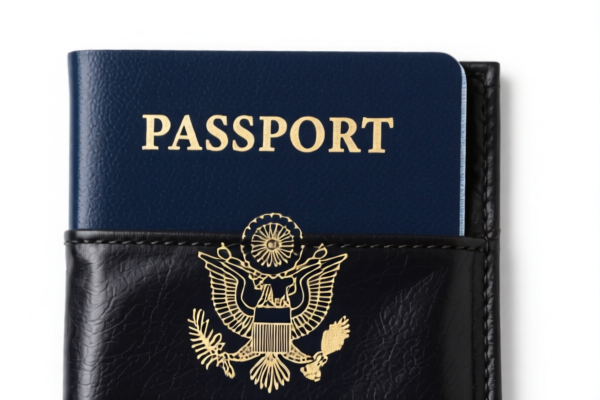
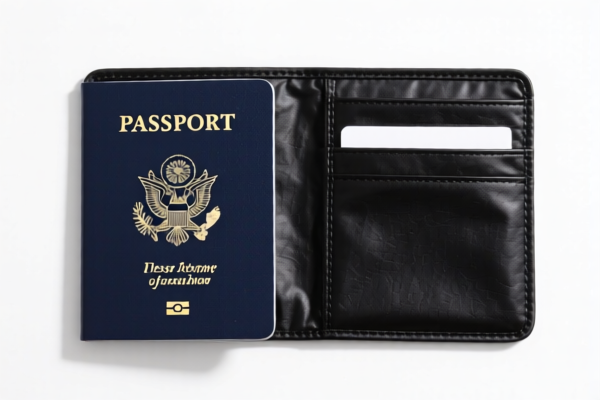
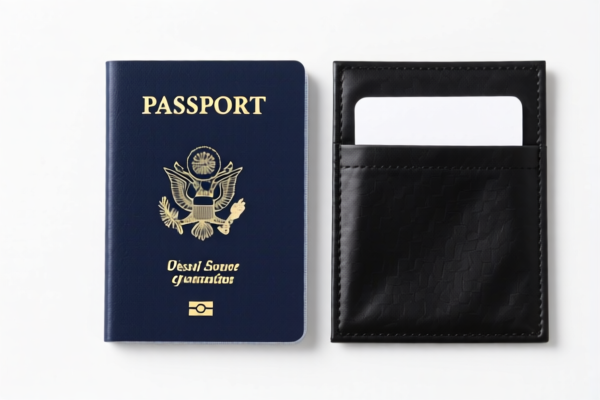
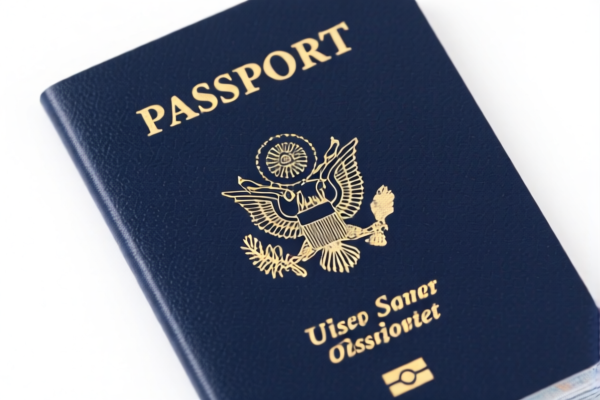
passport pocket
CN → USProduct Images
AI Analysis
🛂 Passport Pocket (Travel Document Organizers)
🌐 HS Code Reference & Customs Clearance Guide | 2026 Latest Tariff Full Analysis | Professional Clearance Strategy
📌 1. Product Definition & Classification: What is a "Passport Pocket"?
A Passport Pocket (often marketed as a Passport Holder, Travel Wallet, or Document Organizer) is a small accessory designed to securely hold travel documents such as passports, boarding passes, visas, currency, and credit cards.
In international trade, these items are strictly classified based on their material composition and intended use. They are generally not considered functional electronic devices or complex machinery. The classification primarily falls under Chapter 42 (Articles of Leather) or Chapter 39 (Plastics), depending on the primary material.
⚠️ Key Distinction: - If the product is made of leather, faux leather, or fabric and designed to hold documents → Chapter 42 (Most Common). - If the product is made primarily of plastic (e.g., PVC, clear vinyl) and lacks the structural integrity of a "bag" → Chapter 39. - If it is a simple paper envelope → Chapter 48.
📦 2. HS Code Classification Details (2026 Latest Tariff Authority)
| HS Code | Product Description | Applicable Scenario | Primary Material |
|---|---|---|---|
| 4202.32.00.00 | Wallets, purses, key-purses, etc., with outer surface of sheeting of plastic, or of plastic sheeting, coated with material for covering the surface | Plastic/Clear Passport Holders | Plastic/PVC |
| 4202.31.00.00 | Wallets, purses, key-purses, etc., with outer surface of leather or composition leather | Leather/Faux Leather Passport Holders | Leather/Synthetic Leather |
| 4202.39.00.00 | Other wallets, purses, key-purses | Fabric/Textile Passport Holders | Textile/Canvas/Nylon |
| 3926.90.97.00 | Other articles of plastic (e.g., simple plastic sleeves, non-formed plastic covers) | Simple Plastic Document Sleeves | Plastic |
| 4820.10.00.00 | Registers, account books, notebooks, order books, receipt books, letter pads, memo pads, and similar articles of paper or paperboard | Paper Passport Envelopes | Paper |
🔍 Critical Reminder: - Chapter 42 is the most common for high-quality, structured passport holders. - Do not confuse with 8306 (Ordinary metal frames) or 7113 (Jewelry/Accessories with precious stones). Unless it contains significant precious metal/gems, it does not go here. - Packaging Note: If sold as a set (e.g., Passport Holder + Luggage Tag + Boarding Pocket), the item that gives the set its essential character (usually the Passport Holder) determines the HS Code.
💰 3. 2026 Latest Tariff Rate Analysis (Including Surcharges & Policy Add-ons)
✅ Applicable Country: United States (US) ✅ Country of Origin: China (CN) ✅ Effective Date: From November 10, 2025 (Including subsequent imports)
🎯 1. 4202.31.00.00 / 4202.32.00.00 / 4202.39.00.00 — Leather & Plastic Wallets/Holders
| Item | Content |
|---|---|
| Base MFN Rate | 0% – 5% (ad valorem, depending on specific subheading and material) |
| USITC Surcharge (Section 301) | +25% |
| IEEPA Surcharge | +10% (For products originating in China/HK, effective Nov 10, 2025) |
| Total Tariff Rate | 35% – 40% |
| Tax Calculation | CIF Value × 35-40% |
| De Minimis Eligibility | ❌ Not Eligible (deny_de_minimis) |
| Legal Basis Path | IEEPA:9903.01.25 → USITC:4202.31.00.00 → FOOTNOTE:9903.88.01 |
📌 Explanation: - "USITC Surcharge 25%": Comes from the "Additional Duties" under Section 301 of the US Trade Act. - "IEEPA 10%": The new Emergency Economic Powers Act surcharge on Chinese goods. - Combined Total: 35% to 40%, which is a significant cost factor for low-margin travel accessories. - Note: Even though the item is small, the tariff is calculated on the total CIF value, not per unit weight.
🎯 2. 3926.90.97.00 — Other Plastic Articles
| Item | Content |
|---|---|
| Base MFN Rate | 5.7% |
| USITC Surcharge | +25% |
| IEEPA Surcharge | +10% |
| Total Tariff Rate | ~40.7% |
| De Minimis Eligibility | ❌ Not Eligible |
📌 Note: - Simple PVC plastic sleeves may sometimes be argued as "office supplies," but customs typically classify structured holders under Chapter 42 or 39. - Avoid misclassifying as "Paper Products" (4820) if the item has plastic coatings or leather trim.
🛠️ 4. Customs Clearance Practical Advice (Real-World Pitfall Guide)
✅ 1. Required Documentation Checklist (None Missing)
| Document | Mandatory | Description |
|---|---|---|
| ✅ Product Specification Sheet | ✔️ | Material composition (e.g., 100% Faux Leather, PVC, Nylon), dimensions, number of pockets. |
| ✅ Product Photos | ✔️ | Clear images showing the front, back, and interior slots. Must show material texture. |
| ✅ Commercial Invoice | ✔️ | Must state: "Passport Holder, Leather/Faux Leather, for personal travel use." Avoid vague terms like "Bag." |
| ✅ Bill of Lading/Air Waybill | ✔️ | Consignee/Consignor details must match invoice. |
| ✅ Certificate of Origin (CO) | ✔️ | If originating from Vietnam/Mexico/etc., apply for preference to avoid IEEPA/301 tariffs. |
✅ 2. Declaration Tips (Key Mantra)
🔥 “Material First, Function Second, Name Specific, Tariff Clear!”
| Scenario | Correct Declaration | Wrong Practice |
|---|---|---|
| Faux Leather Holder | 4202.31.00.00 - "Passport Holder, Faux Leather" |
Misdeclare as "Textile Bag" → 4202.39 (May trigger anti-dumping checks if wrong) |
| Clear PVC Holder | 4202.32.00.00 or 3926.90.97.00 |
Misdeclare as "Paper Envelope" → 4820 → High Risk of Audit |
| Set with Luggage Tag | Declare as 4202.31.00.00 (Passport Holder is essential character) |
Split declaration → Complicated Customs Review |
| Electronic Smart Wallet | If it has chips/batteries → 8517.62 or 8543.70 |
Declare as simple leather wallet → Misclassification Penalty |
✅ 3. Special Cases Handling
| Scenario | Handling Advice |
|---|---|
| OEM Custom Branding | Provide brand authorization letter to avoid IP infringement claims. |
| Embedded RFID Blocker | Still classified as 4202. No special declaration needed unless it has active electronics. |
| Sold as Gift Sets | If packaged with perfume, makeup, etc., the set may be classified based on the primary item. Ensure value is correctly split. |
| Origin: Non-China | If made in Vietnam, Thailand, or Mexico, provide valid CO to avoid the 10% IEEPA + 25% Section 301 surcharges. Tariff may drop to 0-5%. |
🌍 5. Global Market Comparison (2026 Latest)
| Country/Region | Recommended HS Code | Tariff (China Origin) | Certification Requirements | Notes |
|---|---|---|---|---|
| 🇺🇸 USA | 4202.31.00.00 / 4202.32.00.00 |
35-40% (with surcharges) | None specific | High tariff due to China origin |
| 🇨🇳 China | 4202.31.00.00 |
5-10% | None | Domestic consumption tax may apply |
| 🇪🇺 EU | 4202.32.00 |
0-4.5% | None | Low tariff, high compliance for chemicals |
| 🇬🇧 UK | 4202.32.00 |
0-4.5% | None | Post-Brexit rules apply |
| 🇦🇺 Australia | 4202.32.00 |
5% | None | GSP benefits for some countries |
📌 Conclusion: - USA is the most expensive market for Chinese-made passport pockets due to Section 301 + IEEPA. - Diversification Strategy: Consider sourcing from Vietnam or Thailand to mitigate tariff risks.
📌 6. Common Errors & Pitfall Guide (Blood & Tears Lessons)
❌ Error 1: Declaring a Leather Passport Holder as a "Plastic Article" (3926)
👉 Consequence: Misclassification. Customs may reject the declaration or assess higher duties + penalties.
👉 Correct: Use 4202.31.00.00.
❌ Error 2: Declaring a Structured Faux Leather Holder as a "Paper Envelope" (4820)
👉 Consequence: High risk of audit. Paper envelopes have no durability. Customs will inspect material.
👉 Correct: Use 4202.39.00.00 or 4202.31.00.00.
❌ Error 3: Ignoring the IEEPA Surcharge for Chinese Goods 👉 Consequence: Undervaluing the landed cost. The 10% IEEPA + 25% Section 301 is mandatory for CN origin. 👉 Correct: Factor in 35-40% total duty in your pricing model.
✅ Correct Declaration Example:
"Passport Holder, Outer Surface: Faux Leather, Interior: Polyester, 7 Slots, For Personal Travel Use, HS Code 4202.31.00.00, Country of Origin: China"
🎯 7. Conclusion: Precision Classification, Cost Control!
🎯 Remember the Mantra:
🔹 "Material Defines Code, Origin Defines Tariff." 🔹 "Leather/Plastic = 4202, China Origin = ~40% Duty." 🔹 "Non-China Origin = Save 35% Tariff!"
📌 Pro Tip: If you are sourcing from China, consider transshipment or origin shifting to Southeast Asia to utilize RCEP or ASEAN-US trade benefits (if applicable). Always request a Pre-Ruling from US CBP if importing large volumes.
📣 Immediate Action:
📞 Contact a licensed customs broker for HS Code Pre-Ruling. 📦 Verify Material Composition in your supplier’s contract. 🌍 Evaluate Supply Chain Diversification to reduce tariff exposure.
✨ Professional Clearance Starts with Accurate Classification! 💼 Your Bottom Line Depends on the Details!
Customer Reviews
About HS Code Classification
The Harmonized System (HS) is an internationally standardized nomenclature developed by the World Customs Organization (WCO) to classify traded products. Over 200 countries use the HS system as the basis for customs tariffs, trade statistics, and import/export regulations.
Each HS code follows a hierarchical structure:
- Chapter (2 digits) — Broad category of goods (e.g., Chapter 84: Machinery and Mechanical Appliances)
- Heading (4 digits) — More specific grouping within the chapter
- Subheading (6 digits) — Internationally standardized breakdown, used by all WCO member countries
- National subdivisions (8-10 digits) — Country-specific extensions for further classification, such as US HTSUS 10-digit codes
Correct HS code classification is essential for smooth customs clearance, accurate duty payment, and compliance with trade regulations. Misclassification can lead to customs delays, overpayment of duties, or penalties.
When importing from CN to US, the applicable tariff rates may include:
- Most-Favored-Nation (MFN) rate — The standard duty rate applied to WTO members
- General rate — Applied to countries without trade agreements
- Trade remedy duties — Additional tariffs such as Section 301 (anti-dumping), Section 232 (national security), or countervailing duties
The information provided on this page is for reference purposes only. For official classification, please consult with your local customs authority or a licensed customs broker.