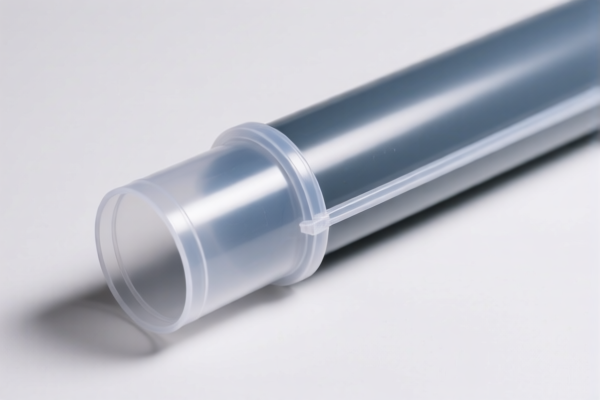
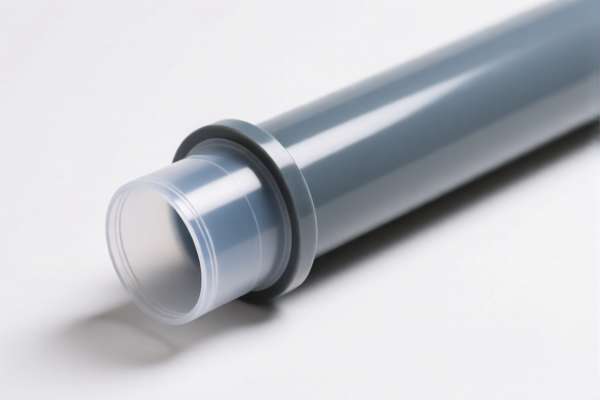
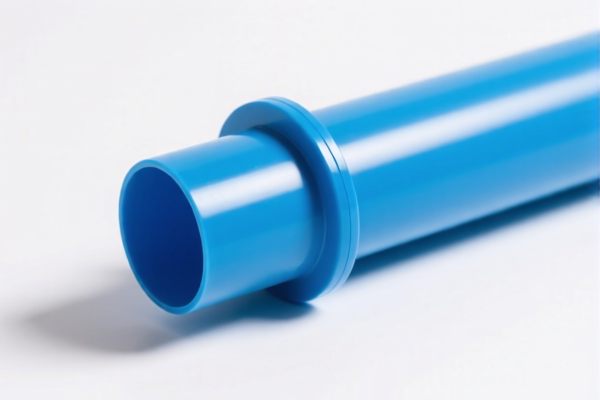
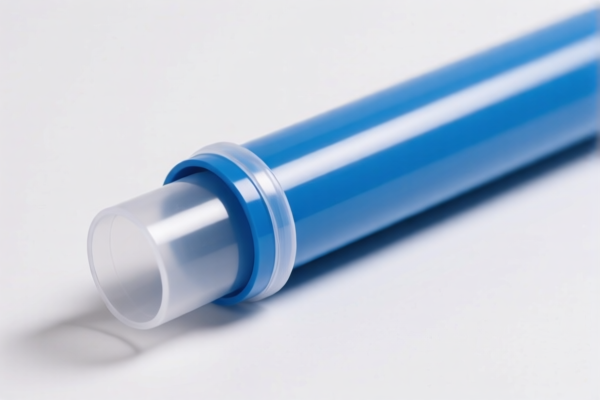
plastic conveying pipe
CN → US| HS Code | Tariff Rate | Origin | Destination | Doc |
|---|---|---|---|---|
| 3917290090 | 38.1% | CN | US | Official Doc |
| 3926909987 | 22.8% | CN | US | Official Doc |
| 3917210000 | 38.1% | CN | US | Official Doc |
| 3926909989 | 22.8% | CN | US | Official Doc |
| 3917320020 | 38.1% | CN | US | Official Doc |
Product Images
AI Analysis
🏗️ Plastic Conveying Pipe (Industrial/Utility Tubing)
🌐 HS Code Reference & Customs Clearance Guide | 2026 Latest Tariff Analysis | Professional Clearance Strategy
📌 I. Product Definition & Classification: What Exactly is a "Plastic Conveying Pipe"?
In international trade, "Plastic Conveying Pipe" generally refers to rigid or semi-rigid tubes used for transporting liquids, gases, or granular solids. The critical factor for classification is the material composition (e.g., Polyethylene, PVC, etc.) and the specific shape/form.
Based on the provided data, the products fall under two main chapters: 1. Chapter 3917: Pipes, tubes, and hoses, rigid or flexible, of plastics (with or without fittings). 2. Chapter 3926: Other articles of plastics (fallback/general category if specific pipe definitions aren't met).
⚠️ Key Distinction Point:
- If the product is specifically defined as a pipe/tube/hose (especially rigid) and matches specific plastic materials like Polyethylene (PE), it likely falls under 3917.
- If the "pipe" is irregular, non-standard, or does not fit the strict definition of Chapter 3917, it may fall under 3926 (Other plastic articles).
- Crucial Note: All listed HS Codes attract significant additional tariffs due to US-China trade policies.
📦 II. HS Code Classification Details (2026 Latest Tariff Authority Comparison)
| HS Code | Summary Description | Reason for Classification | Tax Rate (Total) |
|---|---|---|---|
3917.29.00.90 |
Plastic pipes, not elsewhere specified (NES), of plastics (unspecified length). | Matches Material (Plastic) & Form (Pipe). Used when length is not specified. | 38.1% |
3926.90.99.87 |
Other plastic articles (Fallback/Catch-all category). | Matches Material (Plastic) & Form (Pipe), classified based on "Other" principles. | 22.8% |
3917.21.00.00 |
Plastic pipes, rigid, of polyethylene. | Matches Material (Plastic) & Form (Pipe). Specific classification for PE pipes. | 38.1% |
3926.90.99.89 |
Other plastic articles (Generic fallback). | Matches Material (Plastic). Inferred as plastic product based on name, no conflict. | 22.8% |
3917.32.00.20 |
Plastic pipes, flexible, of polyethylene. | Matches Material (Polyethylene) & Form (Pipe). Fits definition of PE tubing. | 38.1% |
🔍 Critical Observation:
- Products classified under 3917 (Pipes) carry a higher total tax rate (38.1%) compared to those under 3926 (Other articles, 22.8%).
- However, 3926 is often a "fallback" category. Misclassification from 3917 to 3926 to save tax can lead to audits if the product clearly fits the definition of a pipe under 3917.
💰 III. 2026 Latest Tariff Rate Breakdown (Including Additional Taxes)
✅ Applicable Country: United States (US)
✅ Origin: China (CN)
✅ Effective Time: 2025/2026 Current Trade Policies
🎯 1. High-Tariff Category: 3917 Series (Pipes/Hoses/Tubing)
Applicable HS Codes:
- 3917.29.00.90
- 3917.21.00.00
- 3917.32.00.20
| Component | Rate | Legal Basis / Description |
|---|---|---|
| Base Tariff | 3.1% | Standard Most Favored Nation (MFN) duty for plastic pipes. |
| Section 301 (Additional) | 25.0% | Additional duty under US Trade Act Section 301 against China. |
| Section 122 (Additional) | 10.0% | Additional duty under Section 122 (often applied to specific strategic goods or reciprocal measures). |
| TOTAL TAX RATE | 38.1% | 3.1% + 25.0% + 10.0% |
📌 Explanation:
- The 25% is the core penalty tariff for most Chinese goods under Section 301.
- The 10% is an additional levy (Section 122).
- Total Burden: 38.1% on the CIF value. This is a very high cost for low-margin plastic components.
🎯 2. Lower-Tariff Category: 3926 Series (Other Plastic Articles)
Applicable HS Codes:
- 3926.90.99.87
- 3926.90.99.89
| Component | Rate | Legal Basis / Description |
|---|---|---|
| Base Tariff | 5.3% | Standard MFN duty for other plastic articles. |
| Section 301 (Additional) | 7.5% | Reduced additional duty for certain categories under Section 301. |
| Section 122 (Additional) | 10.0% | Additional duty under Section 122. |
| TOTAL TAX RATE | 22.8% | 5.3% + 7.5% + 10.0% |
📌 Explanation:
- While the rate is lower (22.8%), this classification relies on the product being deemed "Other plastic articles" rather than a strict "pipe."
- Risk: If Customs determines the item is a functional pipe, they may reclassify it to 3917, triggering the 38.1% rate + back taxes + penalties.
🛠️ IV. Customs Clearance Practical Advice (Battle-Tested Pitfall Guide)
✅ 1. Documentation Checklist (Non-Negotiable)
| Document | Required | Purpose |
|---|---|---|
| Product Specification Sheet | ✔️ | Must specify material (e.g., PE, PVC), diameter, wall thickness, and length (if applicable). |
| Technical Drawing | ✔️ | To prove the product fits the definition of "Pipe/Tube/Hose" (Chapter 3917) vs. "Other Article" (Chapter 3926). |
| Material Test Report | ✔️ | Confirms plastic composition (critical for distinguishing between 3917 subheadings). |
| Commercial Invoice | ✔️ | Clearly state "Plastic Conveying Pipe" and HS Code. Avoid vague terms like "Plastic Part." |
| Packing List | ✔️ | Detail net/gross weight. Note: Pipes are often bundled; ensure weight matches. |
✅ 2. Declaration Strategy (Key Mnemonic)
🔥 “Define the Form, Prove the Material, Choose the Code Wisely!”
| Scenario | Recommended HS Code | Risk Level |
|---|---|---|
| Standard Rigid Pipe (PE/PVC) | 3917.21.00.00 or 3917.29.00.90 |
Medium (High Tax) |
| Flexible Tubing (PE) | 3917.32.00.20 |
Medium (High Tax) |
| Non-Standard/Complex Plastic Shape | 3926.90.99.87 / .89 |
High (Audit Risk) |
⚠️ Warning:
- Do NOT arbitrarily choose 3926 to save tax if the product is clearly a pipe. Customs has advanced imaging and classification algorithms.
- If you use 3926, ensure the product is not a simple cylindrical tube for fluid transport, but rather a complex molded plastic part.
✅ 3. Special Circumstances
| Situation | Handling Advice |
|---|---|
| With Fittings | If pipes are sold with connectors, they may still be classified as pipes (3917) if the fittings are minor. If significant, consult a specialist. |
| Coils vs. Straight Pipes | Flexible pipes in coils (3917.32) have a specific code. Rigid pipes are 3917.2x. Correct distinction is vital. |
| Food Grade Pipes | Still classified under 3917. Add "Food Grade" to description for compliance, but tax remains 38.1%. |
🌍 V. Global Market Clearance Comparison (2026)
| Country/Region | Recommended HS Code | Total Tariff (Approx.) | Notes |
|---|---|---|---|
| 🇺🇸 USA | 3917.21.00.00 |
38.1% | Highest burden due to Section 301 + 122. |
| 🇺🇸 USA | 3926.90.99.87 |
22.8% | Lower, but high misclassification risk. |
| 🇨🇳 China | 3917.29.00.00 |
~5-7% | No Section 301. Lower entry cost for imports. |
| 🇪🇺 EU | 3917.29.90 |
~3-5% | No major additional duties unless specific sanctions apply. |
| 🇲🇽 Mexico | 3917.29.00 |
~5% | Potential USMCA benefits if originating in NA. |
📌 Conclusion:
- The US market is the most challenging for plastic pipes due to the 38.1% combined tax rate.
- Strategic Tip: If possible, structure the product (e.g., as a complex plastic assembly) to fit under 3926 (22.8%), but only if technically accurate.
- Alternative: Source from non-China countries (Vietnam, Mexico) to avoid Section 301/122 tariffs entirely.
📌 VI. Common Errors & Pitfalls (Lessons Learned)
❌ Error 1: Using vague name "Plastic Tube" without material specification.
👉 Consequence: Customs may assign the highest default duty or request a re-classification, causing delays.
❌ Error 2: Misclassifying Rigid Pipes as Flexible Tubing (or vice versa).
👉 Consequence: Wrong HS code → Audit + Back Taxes. 3917.21 (Rigid) and 3917.32 (Flexible) have different base duties.
❌ Error 3: Ignoring Section 122 Tariff.
👉 Consequence: Underpaying by 10%. Customs will assess the difference + interest + penalties.
❌ Error 4: Assuming "Plastic Parts" = 3926.
👉 Consequence: If the item is a pipe, it must go to 3917. Misclassification is considered negligence.
✅ Correct Practice:
“Rigid Plastic Pipe, Polyethylene (PE), 2-inch Diameter, 10ft Length, for Water Conveyance. Model: XYZ, Meets ASTM D3035.”
🎯 VII. Conclusion: Professional Classification for Cost Efficiency
🎯 Remember the Mantra:
🔹 “Pipes go to 3917 (38.1%), Parts go to 3926 (22.8%). Don’t cheat, or you’ll pay more!”
🔹 “Material Matters: PE Pipes are specific. Don’t generalize!”
📌 Pro Tip:
If your plastic pipes are intended for the US market, conduct an HS Code Pre-Ruling (APA) with US Customs and Border Protection (CBP) before shipping. This provides legal certainty on whether your product qualifies for 3917 (38.1%) or 3926 (22.8%).
📣 Immediate Action:
📞 Contact a certified customs broker.
📤 Submit product specs + drawings.
🚀 Avoid the 38.1% trap if legally possible, but never risk fraud.
✨ Precision in Classification is Precision in Profit!
💼 Every percentage point matters in cross-border trade!
Customer Reviews
About HS Code Classification
The Harmonized System (HS) is an internationally standardized nomenclature developed by the World Customs Organization (WCO) to classify traded products. Over 200 countries use the HS system as the basis for customs tariffs, trade statistics, and import/export regulations.
Each HS code follows a hierarchical structure:
- Chapter (2 digits) — Broad category of goods (e.g., Chapter 84: Machinery and Mechanical Appliances)
- Heading (4 digits) — More specific grouping within the chapter
- Subheading (6 digits) — Internationally standardized breakdown, used by all WCO member countries
- National subdivisions (8-10 digits) — Country-specific extensions for further classification, such as US HTSUS 10-digit codes
Correct HS code classification is essential for smooth customs clearance, accurate duty payment, and compliance with trade regulations. Misclassification can lead to customs delays, overpayment of duties, or penalties.
When importing from CN to US, the applicable tariff rates may include:
- Most-Favored-Nation (MFN) rate — The standard duty rate applied to WTO members
- General rate — Applied to countries without trade agreements
- Trade remedy duties — Additional tariffs such as Section 301 (anti-dumping), Section 232 (national security), or countervailing duties
The information provided on this page is for reference purposes only. For official classification, please consult with your local customs authority or a licensed customs broker.