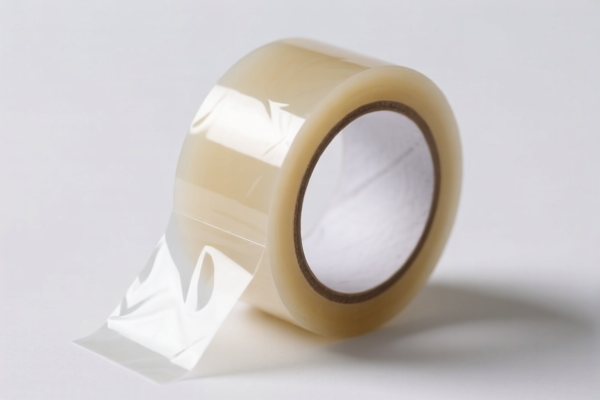
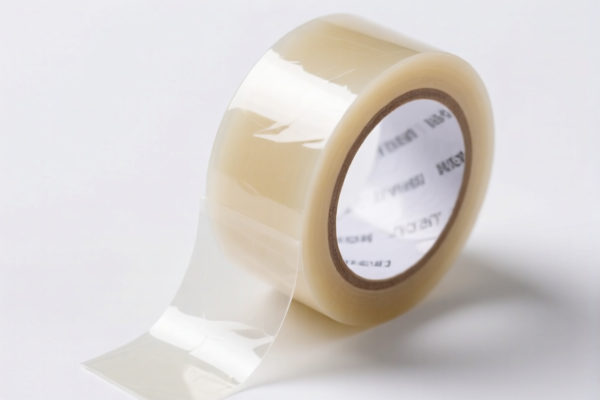
plastic self adhesive tape for construction
CN → US| HS Code | Tariff Rate | Origin | Destination | Doc |
|---|---|---|---|---|
| 3919102055 | 40.8% | CN | US | Official Doc |
| 3919905060 | 40.8% | CN | US | Official Doc |
| 4811412100 | 35.0% | CN | US | Official Doc |
| 4811411000 | 35.0% | CN | US | Official Doc |
| 3919102055 | 40.8% | CN | US | Official Doc |
Product Images


AI Analysis
🏗️ Plastic Self-Adhesive Tape for Construction
🌐 HS Code Reference & Customs Clearance Guide | 2026 Latest Tariff Analysis | Professional Entry Strategy
📌 I. Product Definition & Classification: Do You Really Know "Construction Adhesive Tape"?
Plastic self-adhesive tapes are indispensable materials in the construction industry, used for sealing, bonding, reinforcing, and protecting surfaces. In international trade, these products are primarily classified based on their base material (Plastic vs. Paper) and form (Strip/Roll, Self-Adhesive).
Key Classification Logic:
Plastic-Based (Polymer): If the backing is made of PVC, PE, PP, or other plastics, it falls under Chapter 39.
Paper-Based: If the backing is paper or cellulose fiber, it falls under Chapter 48.
⚠️ Critical Distinction Point:
- Material Matters: Misclassifying a plastic tape as paper (or vice versa) leads to significant duty differences due to the "Section 301" and "Section 122" tariffs.
- Self-Adhesive Nature: The term "Self-Adhesive" is crucial. If it requires a separate adhesive applicator, it might be classified differently, but standard rolls fall under the specific HS codes listed below.
📦 II. HS Code Classification Details (2026 Latest Tariff Authority Cross-Reference)
Based on the provided data, here are the specific HS Codes and their rationales for "Plastic Self-Adhesive Tape for Construction":
| HS Code | Product Description | Summary/Logic | Total Tax Rate (China Origin) |
|---|---|---|---|
3919.10.20.55 |
Plastic Self-Adhesive Colored Tape | Matches form (strip/roll), material (plastic), and self-adhesive attribute. Often used for colored marking or sealing in construction. | 40.8% |
3919.90.50.60 |
Plastic Self-Adhesive Tape (General) | Matches material (plastic) and form logic for non-specific colored tapes. Broad category for plastic self-adhesive strips. | 40.8% |
4811.41.21.00 |
Paper-Based Self-Adhesive Colored Tape | Base material is paper/cellulose. Used if the construction tape has a paper backing (e.g., masking tape, certain sealing tapes). | 35.0% |
4811.41.10.00 |
Self-Adhesive Paper Tape | Self-adhesive tape where the primary component is paper. Fits the "self-adhesive" attribute and tape form. | 35.0% |
🔍 Key Reminder:
- Plastic Tapes (3919...) carry a higher total tax burden (40.8%) compared to Paper Tapes (4811...) (35.0%).
- The difference stems from the Base Tariff: Plastic has a 5.8% base tariff, while Paper has a 0.0% base tariff.
- Section 122 & 301 Tariffs apply to both categories, significantly increasing the cost.
💰 III. 2026 Latest Tariff Rate Breakdown (Including Additional Taxes & Policy Surcharges)
✅ Applicable Country: United States (US)
✅ Origin: China (CN)
✅ Effective Time: Current rates apply as per Section 301 and Section 122 enforcement.
🎯 1. Plastic Self-Adhesive Tapes (3919.10.20.55 / 3919.90.50.60)
| Item | Content |
|---|---|
| Base Tariff | 5.8% (Ad Valorem) |
| Section 301 Additional Tariff | +25.0% (Trade Act of 1974, Section 301) |
| Section 122 Tariff | +10.0% (Emergency tariffs on specific imports) |
| Total Tax Rate | 40.8% |
| Tax Calculation | CIF Value × 40.8% |
| De Minimis Exemption | ❌ Not Eligible (Section 301 and 122 tariffs generally exclude de minimis relief) |
| Legal Basis Path | HTSUS:3919 → USITC Footnote 301:9903.88.01 → Section 122 Authority |
📌 Explanation:
- The 25% is the standard Section 301 tariff for most Chinese plastic products.
- The 10% is an additional surcharge under Section 122, applied to emergency imports.
- Total 40.8% is a high-cost barrier. Importers must budget accordingly.
🎯 2. Paper-Based Self-Adhesive Tapes (4811.41.21.00 / 4811.41.10.00)
| Item | Content |
|---|---|
| Base Tariff | 0.0% (Ad Valorem) |
| Section 301 Additional Tariff | +25.0% (Trade Act of 1974, Section 301) |
| Section 122 Tariff | +10.0% (Emergency tariffs on specific imports) |
| Total Tax Rate | 35.0% |
| Tax Calculation | CIF Value × 35.0% |
| De Minimis Exemption | ❌ Not Eligible |
| Legal Basis Path | HTSUS:4811 → USITC Footnote 301:9903.88.01 → Section 122 Authority |
📌 Note:
- Even with a 0% base tariff, the 35% total rate is still substantial.
- Savings: Choosing a paper-based tape can save 5.8% per unit value compared to plastic, assuming technical feasibility.
🛠️ IV. Customs Clearance Practical Advice (Battle-Tested Pitfall Avoidance)
✅ 1. Required Documentation Checklist (Mandatory)
| Document | Mandatory? | Notes |
|---|---|---|
| ✅ Product Specification Sheet | ✔️ | Must clearly state: Material (Plastic/Paper), Dimensions, Adhesive Type, Color. |
| ✅ Product Photos | ✔️ | Show the roll, the adhesive side, and any labeling indicating "Self-Adhesive". |
| ✅ Commercial Invoice | ✔️ | Must explicitly describe the product: e.g., "Plastic Self-Adhesive Tape, for Construction Sealing". Avoid vague terms like "Tape". |
| ✅ Origin Certificate | ✔️ | If not from China, may qualify for lower/no Section 301 tariffs. |
| ✅ HS Code Pre-Ruling | ✔️ | Highly recommended to avoid misclassification penalties. |
✅ 2. Declaration Tips (Critical Keywords)
🔥 "Material First, Form Second, Purpose Third!"
| Scenario | Correct Declaration | Incorrect Practice |
|---|---|---|
| Plastic Tape (Construction) | 3919.10.20.55 or 3919.90.50.60 + "Plastic Self-Adhesive Tape" |
Misclassifying as "Construction Material" without material detail → Audit Risk |
| Paper Tape (Construction) | 4811.41.21.00 or 4811.41.10.00 + "Paper Self-Adhesive Tape" |
Using plastic HS code for paper tape → Overpayment of duty |
| Mixed Package (Plastic + Paper) | Split Declaration | Combining into one line item → Confusion, potential misclassification |
✅ 3. Special Cases Handling
| Scenario | Recommendation |
|---|---|
| OEM/White Label Tapes | Ensure the invoice reflects the actual product characteristics, not just the brand. |
| Tapes with Special Coatings | If coated with rubber, acrylic, or silicone, ensure the base material is still clearly identified. |
| Construction-Specific Use | While "for construction" is the use case, HS codes are based on material and form, not end-use. Do not try to use a "Construction Goods" HS code. |
🌍 V. Global Market Comparison (2026 Latest)
| Country/Region | Recommended HS Code | Tariff (China Origin) | Certification Requirements | Notes |
|---|---|---|---|---|
| 🇺🇸 USA | 3919... (Plastic) |
40.8% | None specific for tape | High tariff due to Sec 301 & 122 |
| 🇺🇸 USA | 4811... (Paper) |
35.0% | None specific for tape | Slightly lower tariff |
| 🇨🇳 China | 3919... |
5.8% | CCC (if applicable) | Base tariff only |
| 🇪🇺 EU | 3919... |
~6.5% | REACH Compliance | No Section 301 equivalent |
| 🇨🇦 Canada | 3919... |
~0-6% | CAN-PLA (if applicable) | CUSMA benefits possible |
📌 Conclusion:
- The US market is the most challenging due to the 40.8% / 35.0% total tariff burden.
- Paper-based tapes offer a 5.8% cost advantage over plastic tapes in the US.
- EU/Canada are more tariff-friendly, but regulatory compliance (REACH, etc.) is critical.
📌 VI. Common Errors & Pitfall Guide (Lessons from Experience)
❌ Error 1: Classifying all tapes under a generic "Adhesive Tape" code without specifying material.
👉 Consequence: Customs may apply the highest possible rate or demand a manual examination → Delays.
❌ Error 2: Ignoring the Section 122 Tariff.
👉 Consequence: Unexpected 10% charge on top of the 25% Section 301 → Profit Margin Erosion.
❌ Error 3: Using "Construction Tape" as the sole product description.
👉 Consequence: Customs may question the material type → Request for additional documentation.
✅ Correct Practice:
"Plastic Self-Adhesive Tape, PVC Backing, Colored, for Construction Joint Sealing, Model XYZ, Roll 50m x 10mm"
🎯 VII. Conclusion: Professional Declaration, Cost Optimization
🎯 Remember This Mantra:
🔹 "Plastic is 40.8%, Paper is 35.0%. Base tariff drives the difference."
🔹 "Material is Key, Use is Secondary. Declare Clearly, Pay Less!"
📌 Pro Tip:
If your tapes can technically be made with a paper backing without compromising performance, switch to
4811HS Codes to save 5.8% per unit value.
Always apply for Pre-Rulings for large shipments to secure your HS Code classification in advance.
📣 Immediate Action:
📞 Consult a licensed customs broker.
📸 Provide high-resolution photos of the tape backing and adhesive side.
📄 Prepare detailed product specifications.
✨ Professional Customs Clearance Starts with Accurate Classification!
💼 Every Percentage Point Saved is Pure Profit!
Customer Reviews
About HS Code Classification
The Harmonized System (HS) is an internationally standardized nomenclature developed by the World Customs Organization (WCO) to classify traded products. Over 200 countries use the HS system as the basis for customs tariffs, trade statistics, and import/export regulations.
Each HS code follows a hierarchical structure:
- Chapter (2 digits) — Broad category of goods (e.g., Chapter 84: Machinery and Mechanical Appliances)
- Heading (4 digits) — More specific grouping within the chapter
- Subheading (6 digits) — Internationally standardized breakdown, used by all WCO member countries
- National subdivisions (8-10 digits) — Country-specific extensions for further classification, such as US HTSUS 10-digit codes
Correct HS code classification is essential for smooth customs clearance, accurate duty payment, and compliance with trade regulations. Misclassification can lead to customs delays, overpayment of duties, or penalties.
When importing from CN to US, the applicable tariff rates may include:
- Most-Favored-Nation (MFN) rate — The standard duty rate applied to WTO members
- General rate — Applied to countries without trade agreements
- Trade remedy duties — Additional tariffs such as Section 301 (anti-dumping), Section 232 (national security), or countervailing duties
The information provided on this page is for reference purposes only. For official classification, please consult with your local customs authority or a licensed customs broker.