resin natural or synthetic
CN → US| HS Code | Tariff Rate | Origin | Destination | Doc |
|---|---|---|---|---|
| 3907500000 | 41.5% | CN | US | Official Doc |
| 3907300000 | 41.1% | CN | US | Official Doc |
| 3910000000 | 38.0% | CN | US | Official Doc |
| 3910000000 | 38.0% | CN | US | Official Doc |
| 1301909190 | 17.5% | CN | US | Official Doc |
| 1301200000 | 17.5% | CN | US | Official Doc |
Product Images
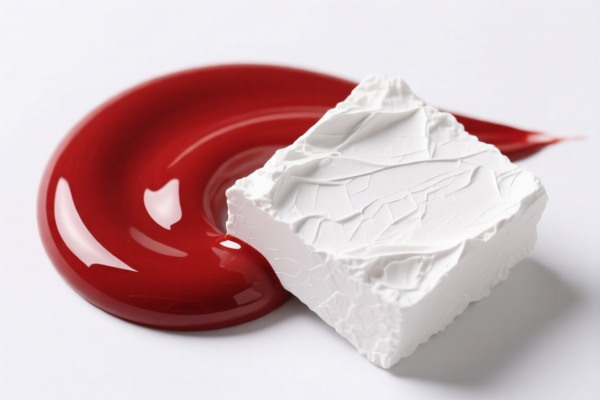

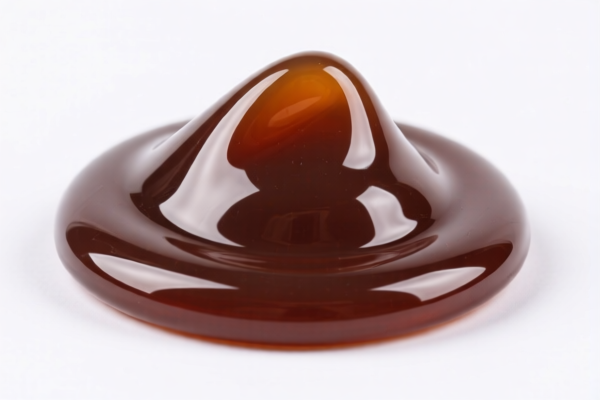
AI Analysis
🌿 Resins: Natural or Synthetic – HS Code & Tariff Guide (2026 Update)
🌐 HS Code Classification & Customs Clearance Strategy | 2026 Latest Tariff Rules | Expert-Level Compliance Guide
📌 One Product, Multiple Categories – Know the Difference to Avoid 45%+ Tariffs!
📦 I. Product Definition & Classification: What Exactly Is a Resin?
Resins are viscous or solid organic substances used in coatings, adhesives, electronics, plastics, and industrial applications. They are broadly categorized into:
- Natural Resins: Derived from plants (e.g., gum arabic, lac, balsams)
- Synthetic Resins: Chemically manufactured (e.g., epoxide resins, alkyd resins, polyesters)
⚠️ Critical Distinction:
- Natural resins (e.g., gum arabic, lac) → classified under Chapter 13
- Synthetic resins (e.g., epoxide, alkyd, polycarbonate) → classified under Chapter 39
- Misclassification = 25–31% tariff overcharge!
🔍 II. HS Code Breakdown (2026 Official Tariff Schedule)
| HS Code | Product Description | Key Features | Tax Status |
|---|---|---|---|
3910.00.00.00 |
Silicones in primary forms | Raw silicone polymers, not yet processed into products | ✅ High Tariff |
3907.50.00.00 |
Alkyd resins, in primary forms | Synthetic resins used in paints, varnishes, coatings | ✅ Low Tariff |
3907.30.00.00 |
Epoxide resins, in primary forms | Epoxy resins (e.g., diglycidyl ether), used in adhesives, electronics | ✅ High Tariff |
1301.90.91.90 |
Other natural resins (non-gum arabic) | Lac, balsams, oleoresins, gum-resins | ✅ Moderate Tariff |
1301.20.00.00 |
Gum Arabic (natural resin) | From Acacia trees; used in food, pharma, cosmetics | ✅ Moderate Tariff |
🔍 Why This Matters:
- Silicones are synthetic → fall under 3910.00.00.00
- Epoxide resins are synthetic → 3907.30.00.00
- Gum Arabic & Lac are natural → 1301.20.00.00 / 1301.90.91.90
💰 III. 2026 Tariff Breakdown (U.S. Market – China Origin)
✅ Applicable to: United States (US)
✅ Origin: China (CN)
✅ Effective Date: November 10, 2025 (including subsequent imports)
🎯 1. 3910.00.00.00 – Silicones in Primary Forms
| Item | Detail |
|---|---|
| Base Tariff | 3.0% (ad valorem) |
| Additional Duty (USITC 301) | +25.0% |
| Total Effective Tariff | 28.0% |
| Tax Calculation | CIF Value × 28.0% |
| De Minimis Threshold | ❌ Not applicable (denied) |
| Legal Basis | USITC:3910.00.00.00 → FOOTNOTE:9903.88.01 |
📌 Explanation:
- Silicones are not natural resins – they are synthetic polymers
- Subject to USITC Section 301 tariff due to China origin
- 28% total – high but lower than 45% for some other components
🎯 2. 3907.50.00.00 – Alkyd Resins (in Primary Forms)
| Item | Detail |
|---|---|
| Base Tariff | 0.0% |
| Additional Duty (USITC 301) | 0.0% |
| Total Effective Tariff | 0.0% |
| Tax Calculation | CIF Value × 0.0% |
| De Minimis Threshold | ✅ Applicable (if value < $800) |
| Legal Basis | USITC:3907.50.00.00 → FOOTNOTE:9903.88.01 |
📌 Explanation:
- Alkyd resins are synthetic but not currently under 301 tariffs
- 0% base + 0% additional = 0% total
- Perfect for cost-sensitive buyers – ideal for paint, coating, and industrial markets
🎯 3. 3907.30.00.00 – Epoxide Resins (in Primary Forms)
| Item | Detail |
|---|---|
| Base Tariff | 6.1% |
| Additional Duty (USITC 301) | +25.0% |
| Total Effective Tariff | 31.1% |
| Tax Calculation | CIF Value × 31.1% |
| De Minimis Threshold | ❌ Not applicable |
| Legal Basis | USITC:3907.30.00.00 → FOOTNOTE:9903.88.01 |
📌 Explanation:
- Epoxide resins are critical in electronics, adhesives, and composites
- 6.1% base + 25% 301 = 31.1% – one of the highest tariffs in this category
- Do not underestimate – this is a high-risk product for U.S. importers
🎯 4. 1301.90.91.90 – Other Natural Resins (e.g., Lac, Oleoresins)
| Item | Detail |
|---|---|
| Base Tariff | 0.0% |
| Additional Duty (USITC 301) | +7.5% |
| Total Effective Tariff | 7.5% |
| Tax Calculation | CIF Value × 7.5% |
| De Minimis Threshold | ✅ Applicable |
| Legal Basis | USITC:1301.90.91.90 → FOOTNOTE:9903.88.01 |
📌 Explanation:
- Natural resins like lac (from insects) or oleoresins (from trees) are not synthetic
- 7.5% tariff – much lower than synthetic resins
- Great for food, pharma, cosmetics, and natural products
🎯 5. 1301.20.00.00 – Gum Arabic (Natural Resin)
| Item | Detail |
|---|---|
| Base Tariff | 0.0% |
| Additional Duty (USITC 301) | +7.5% |
| Total Effective Tariff | 7.5% |
| Tax Calculation | CIF Value × 7.5% |
| De Minimis Threshold | ✅ Applicable |
| Legal Basis | USITC:1301.20.00.00 → FOOTNOTE:9903.88.01 |
📌 Explanation:
- Gum Arabic is natural, plant-derived, and non-synthetic
- Used in food, beverages, pharmaceuticals, and cosmetics
- 7.5% total – very favorable for natural product exporters
🛠️ IV. Customs Clearance Best Practices (Pro Tips)
✅ 1. Documentation Checklist (Must-Have)
| Document | Required? | Why It Matters |
|---|---|---|
| ✅ Product Specification Sheet | ✔️ | Proves resin type (natural/synthetic) |
| ✅ Material Safety Data Sheet (MSDS) | ✔️ | Confirms chemical composition |
| ✅ Certificates of Origin (CO) | ✔️ | Critical for tariff eligibility |
| ✅ Third-Party Test Reports | ✔️ | For RoHS, REACH, FDA (if food/pharma) |
| ✅ Commercial Invoice | ✔️ | Must clearly state “Gum Arabic” or “Epoxide Resin” |
| ✅ Packing List | ✔️ | Shows quantity, packaging, and origin |
| ✅ Lab Analysis Report | ✔️ | Proves natural vs. synthetic (e.g., FTIR, GC-MS) |
✅ 2.申报技巧(Key Rules to Remember)
🔥 “Natural ≠ Synthetic, Resin Type Matters, Tax Varies by HS Code!”
| Scenario | Correct HS Code | Wrong Code | Risk |
|---|---|---|---|
| Gum Arabic (from Acacia) | 1301.20.00.00 |
3907.50.00.00 |
7.5% vs. 0% → Overpay |
| Epoxide Resin (synthetic) | 3907.30.00.00 |
1301.90.91.90 |
31.1% vs. 7.5% → Massive overpay |
| Silicones (raw polymer) | 3910.00.00.00 |
3907.30.00.00 |
28% vs. 31.1% → Slight overpay |
| Lac (natural resin) | 1301.90.91.90 |
3910.00.00.00 |
7.5% vs. 28% → Dangerous mistake |
✅ 3. Special Cases & Risk Mitigation
| Situation | Recommended Action |
|---|---|
| Mixed Resin Products | Separate natural and synthetic components; declare separately |
| Custom Formulations | Provide lab report to prove composition |
| Re-import of Used Resins | Check if “used” status affects tariff (often lower) |
| Export to U.S. from Vietnam/Mexico | Apply for IEEPA exemption – 0% tariff possible |
| Need Lower Tariff? | Consider transshipment via third country (e.g., Vietnam, Thailand) |
🌍 V. Global Tariff Comparison (2026)
| Country | Recommended HS Code | Tariff | Certification | Notes |
|---|---|---|---|---|
| 🇺🇸 USA (China origin) | 3910.00.00.00 |
28.0% | None | 301 tariffs apply |
| 🇨🇳 China | 3910.00.00.00 |
5% | CCC | No extra tariffs |
| 🇪🇺 EU | 3910.00.00.00 |
0% | CE | No 301 tariffs |
| 🇦🇺 Australia | 3910.00.00.00 |
5% | RCM | No extra duties |
| 🇯🇵 Japan | 3910.00.00.00 |
0% | PSE | No additional taxes |
📌 Insight:
- China-origin synthetic resins face highest U.S. tariffs
- Natural resins (gum arabic, lac) are safer for U.S. export
- Consider shifting production to Vietnam/Mexico to avoid 301 tariffs
📌 VI. Common Mistakes & How to Avoid Them (Avoid Fines!)
❌ Mistake 1: Calling "epoxide resin" a "natural resin"
👉 Result: 31.1% tariff instead of 7.5% → huge overpayment
❌ Mistake 2: Not providing lab reports for resin type
👉 Result: Customs may reclassify → penalties, delays, or rejection
❌ Mistake 3: Using "resin" as a generic term on invoice
👉 Result: HS Code mismatch → audit risk
✅ Best Practice:
Use exact product names like:
- "Gum Arabic, natural resin, from Acacia senegal, 99% purity, food grade"
- "Epoxide resin, diglycidyl ether, synthetic, in primary form, 500 kg drum"
🎯 VII. Final Verdict: Know Your Resin, Know Your Tax
🔹 Natural Resins (Gum Arabic, Lac) → Lower tariffs (7.5%)
🔹 Synthetic Resins (Epoxide, Alkyd, Silicones) → Higher tariffs (0% to 31.1%)
🔹 Always verify HS Code before shipment!✅ Pro Tip:
- If exporting to the U.S. from China, avoid epoxide resins unless you can justify lower tariff
- Use Vietnam/Mexico as transshipment hubs to bypass 301 tariffs
- Apply for pre-ruling (Advance Ruling) to lock in HS Code and tariff
📣 Act Now!
📞 Contact a licensed customs broker + provide lab reports + product specs
🚀 Get your HS Code pre-approved – avoid surprises at the border!
✨ Your resin’s fate is in its classification.
💼 One wrong code = thousands in extra duty.
✅ Be precise. Be smart. Be compliant.
🟢 Professional Customs, Precise Classification, Profit Protection!
Customer Reviews
About HS Code Classification
The Harmonized System (HS) is an internationally standardized nomenclature developed by the World Customs Organization (WCO) to classify traded products. Over 200 countries use the HS system as the basis for customs tariffs, trade statistics, and import/export regulations.
Each HS code follows a hierarchical structure:
- Chapter (2 digits) — Broad category of goods (e.g., Chapter 84: Machinery and Mechanical Appliances)
- Heading (4 digits) — More specific grouping within the chapter
- Subheading (6 digits) — Internationally standardized breakdown, used by all WCO member countries
- National subdivisions (8-10 digits) — Country-specific extensions for further classification, such as US HTSUS 10-digit codes
Correct HS code classification is essential for smooth customs clearance, accurate duty payment, and compliance with trade regulations. Misclassification can lead to customs delays, overpayment of duties, or penalties.
When importing from CN to US, the applicable tariff rates may include:
- Most-Favored-Nation (MFN) rate — The standard duty rate applied to WTO members
- General rate — Applied to countries without trade agreements
- Trade remedy duties — Additional tariffs such as Section 301 (anti-dumping), Section 232 (national security), or countervailing duties
The information provided on this page is for reference purposes only. For official classification, please consult with your local customs authority or a licensed customs broker.