rosin phenol
CN → US| HS Code | Tariff Rate | Origin | Destination | Doc |
|---|---|---|---|---|
| 291990 | 0.0% | CN | US | Official Doc |
| 380190 | 0.0% | CN | US | Official Doc |
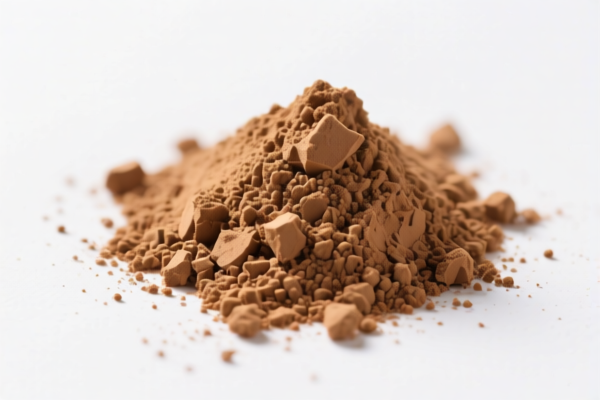
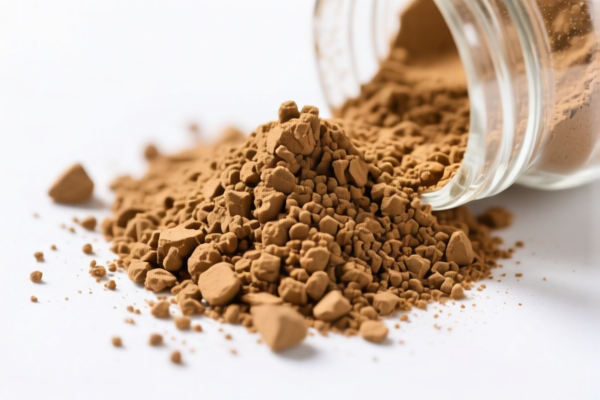
Product Images


AI Analysis
🧪 Rosin Phenol Resins: The Chemical Powerhouse
🌐 HS Code Classification & Customs Clearance Guide | 2026 Tax Regime | Industrial Applications Decoded
📌 I. Product Definition: What Exactly is "Rosin Phenol"?
Rosin Phenol (often referred to as Rosin-Phenol Resins or Phenolic Rosins) is a complex class of synthetic organic compounds produced by the polymerization of rosin (a natural resin derived from pine trees) with phenol and formaldehyde.
It is NOT a simple mixture. It is a chemically modified resin where the natural fatty acids and abietic acid structures of rosin are reacted with phenolic resins to create a material with: * Enhanced Adhesion: To metals and plastics. * Improved Solubility: In organic solvents (compared to pure phenolic resins). * Color Stability: Better than natural rosin.
In international trade, it is primarily classified under two headings depending on its chemical nature and end-use:
1. As a Specific Organic Compound: 2919.90 (Other organic compounds containing oxygen).
2. As a Chemical Preparation: 3801.90 (Other chemical products and preparations).
⚠️ Critical Distinction:
- If the product is a pure, defined chemical entity (e.g., a specific polymer with a defined structure) → HS 2919.90
- If the product is a mixture, solution, or formulation (e.g., dissolved in solvent, blended with fillers) → HS 3801.90
📦 II. HS Code Classification Details (2026 Authoritative Reference)
| HS Code | Product Description | Applicability | Chemical Nature |
|---|---|---|---|
2919.90 |
Other organic compounds containing oxygen, not elsewhere specified or included Including phenolic resins derived from rosin and phenol, used in adhesives, coatings, and resins. |
Pure rosin-phenol polymers; defined chemical structures. | ✅ Pure Compound |
3801.90 |
Other chemical products and preparations not elsewhere specified or included Including rosin phenol resins used in industrial applications such as inks, varnishes, and rubber compounding. |
Mixtures, solutions, dispersions, or blends for direct industrial use. | ❌ Mixture/Preparation |
🔍 Key Clarification:
- HS 2919.90 is used for the raw chemical resin itself.
- HS 3801.90 is used when the resin is formulated (e.g., dissolved in alcohol for varnishes, or mixed with other additives for rubber).
- Do not misclassify: A pure rosin-phenol resin sold as a solid bead or powder should not be declared under 3801.90 if it meets the criteria for 2919.90. Conversely, a pre-mixed adhesive cannot be declared under 2919.90.
💰 III. 2026 Tax Rate Details (Detailed Breakdown)
✅ Country of Destination: To be determined by importer
✅ Origin: To be determined by manufacturer
✅ Status: ⚠️ TAX INFORMATION UNAVAILABLE
| HS Code | Tax Status | Explanation |
|---|---|---|
2919.90 |
❌ Failed to retrieve tax informationtotal_tax: Error |
The system failed to retrieve the specific tariff rate for this subheading. This may be due to: 1. Country-specific variations (MFN vs. Preferential). 2. Dynamic trade policy changes (e.g., Section 301, Anti-dumping duties). 3. Incomplete product description for precise rate matching. |
3801.90 |
❌ Failed to retrieve tax informationtotal_tax: Error |
Same as above. "Chemical preparations" often have variable rates based on exact formulation and origin. |
📌 Interpretation:
- "Failed to retrieve tax information" does NOT mean "0% tax." It means no automatic rate could be calculated.
- Risk: Assuming 0% tax is dangerous. Many countries impose high tariffs on chemical preparations (3801.90) and specialized resins (2919.90) to protect domestic industries.
- Action Required: You MUST consult a licensed customs broker or check the official tariff database of the destination country. Do not rely on AI-generated tax estimates for this category.
🛠️ IV. Customs Clearance Practical Advice (Pitfall Avoidance Guide)
✅ 1. Required Documentation Checklist
| Document | Required? | Notes |
|---|---|---|
| ✅ Product Specification Sheet | ✔️ | Must clearly state: - Chemical composition (e.g., "% Rosin-derived," "% Phenolic") - Molecular weight range - Form (powder, liquid, solid) |
| ✅ Safety Data Sheet (SDS) | ✔️ | Must comply with GHS standards. Highlight hazardous components. |
| ✅ Certificate of Analysis (COA) | ✔️ | Proves purity and chemical identity. Critical for HS 2919.90. |
| ✅ Bill of Lading / Invoice | ✔️ | Description must match HS code: - For 2919.90: "Rosin Phenol Resin (Pure)" - For 3801.90: "Rosin Phenol Adhesive Preparation" |
| ✅ Intended Use Declaration | ✔️ | Explain if used in adhesives, varnishes, rubber, etc. Helps customs verify HS 3801.90 if applicable. |
✅ 2. Classification Strategy (Key Mnemonic)
🔥 “Pure Compound = 2919, Mixture = 3801, Never Guess!”
| Scenario | Correct HS Code | Risk if Wrong |
|---|---|---|
| Solid resin beads, pure chemical structure | 2919.90 |
Misclassifying as 3801.90 may trigger higher tariffs or scrutiny. |
| Liquid resin dissolved in solvent, ready-to-use adhesive | 3801.90 |
Misclassifying as 2919.90 is a factual error; goods are not "pure compounds." |
| Resin blended with fillers (e.g., silica, dyes) | 3801.90 |
Cannot be classified under Chapter 29 (Chemical Products) as a pure compound. |
| Rosin alone (unmodified) | 1301.90 |
Do NOT confuse with Rosin Phenol. Different HS code entirely. |
✅ 3. Special Handling Tips
| Situation | Recommendation |
|---|---|
| OEM Custom Formulations | Provide detailed formula breakdown. Customs may require lab tests to prove it’s a "preparation" (3801.90) vs. "compound" (2919.90). |
| Reactive Chemicals | Ensure proper hazard labeling. Rosin-phenol resins may be classified as hazardous depending on residual monomers (phenol/formaldehyde). |
| High-Value Shipments | Consider applying for an Advance Ruling before shipment. This locks in the HS code and avoids disputes at customs. |
| Anti-Dumping Duties | Check if your country of origin is subject to anti-dumping duties on "Phenolic Resins" or "Chemical Preparations." This is common in US/EU trade with certain Asian countries. |
🌍 V. Global Market Comparison (2026)
| Country/Region | Likely HS Code | Estimated Risk Level | Notes |
|---|---|---|---|
| 🇺🇸 USA | 2919.90 or 3801.90 |
⚠️ High | Section 301 tariffs may apply. Check for anti-dumping. |
| 🇪🇺 EU | 2919.90 or 3801.90 |
⚠️ Medium | Requires REACH compliance documentation. |
| 🇨🇳 China | 2919.90 or 3801.90 |
Low | Standard MFN rates apply, but verify local chemical regulations. |
| 🇮🇳 India | 2919.90 or 3801.90 |
⚠️ High | Additional customs duties and IGST apply. |
| 🇦🇺 Australia | 2919.90 or 3801.90 |
Low | Standard tariffs, but check for biosecurity if derived from natural rosin. |
📌 Conclusion:
- USA and India are the most complex markets for chemical imports due to layered duties.
- EU requires strict environmental compliance (REACH).
- Always verify if your specific rosin-phenol product falls under any "chemical weapons precursors" or "controlled substances" lists (e.g., if high in formaldehyde residuals).
📌 VI. Common Mistakes & Pitfalls (Lessons Learned)
❌ Mistake 1: Declaring "Rosin Phenol" under 1302.19 (Natural Rosin)
👉 Consequence: Classification error. Rosin phenol is a synthetic derivative, not natural rosin. May lead to fines.
❌ Mistake 2: Assuming 3801.90 is always "miscellaneous" and low-tariff
👉 Consequence: Many countries impose high tariffs on chemical preparations to protect local chemical industries. The "failed to retrieve" error hides this risk.
❌ Mistake 3: Ignoring the physical state
👉 Consequence: A liquid product declared as a solid resin will be flagged. Ensure invoice matches physical form.
❌ Mistake 4: No SDS or COA
👉 Consequence: Customs may hold the shipment for lab testing, causing delays and storage fees.
✅ Correct Practice:
“Rosin-Phenol Resin, Solid, 95% Purity, for Adhesive Manufacturing, MSDS Attached, REACH Compliant (if EU)”
🎯 VII. Conclusion: Precision in Chemical Classification
🎯 Key Takeaway:
🔹 “Pure Compound = 2919, Mixture = 3801, Tax Unknown = Verify!”
🔹 “Do not assume 0% tax. Chemicals are high-risk categories.”
📌 Pro Tip:
If you are importing large volumes, apply for a Binding Tariff Information (BTI) or Advance Ruling in your destination country. This provides legal certainty on the HS code and applicable duties.
📣 Immediate Action:
📞 Contact your customs broker with the Chemical Abstracts Service (CAS) Number of your product.
📄 Provide the SDS and Certificate of Analysis.
🚀 Avoid clearance delays by classifying correctly from day one!
✨ Chemical Precision, Seamless Clearance!
💼 Your Chemical Supply Chain Starts with Accurate HS Codes!
Customer Reviews
About HS Code Classification
The Harmonized System (HS) is an internationally standardized nomenclature developed by the World Customs Organization (WCO) to classify traded products. Over 200 countries use the HS system as the basis for customs tariffs, trade statistics, and import/export regulations.
Each HS code follows a hierarchical structure:
- Chapter (2 digits) — Broad category of goods (e.g., Chapter 84: Machinery and Mechanical Appliances)
- Heading (4 digits) — More specific grouping within the chapter
- Subheading (6 digits) — Internationally standardized breakdown, used by all WCO member countries
- National subdivisions (8-10 digits) — Country-specific extensions for further classification, such as US HTSUS 10-digit codes
Correct HS code classification is essential for smooth customs clearance, accurate duty payment, and compliance with trade regulations. Misclassification can lead to customs delays, overpayment of duties, or penalties.
When importing from CN to US, the applicable tariff rates may include:
- Most-Favored-Nation (MFN) rate — The standard duty rate applied to WTO members
- General rate — Applied to countries without trade agreements
- Trade remedy duties — Additional tariffs such as Section 301 (anti-dumping), Section 232 (national security), or countervailing duties
The information provided on this page is for reference purposes only. For official classification, please consult with your local customs authority or a licensed customs broker.