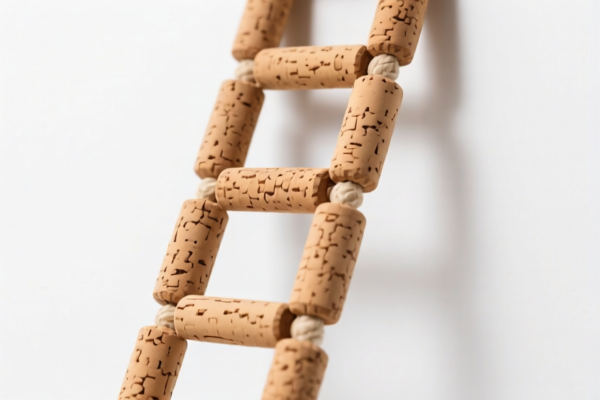
rough cork
CN → US| HS Code | Tariff Rate | Origin | Destination | Doc |
|---|---|---|---|---|
| 4501100000 | 35.0% | CN | US | Official Doc |
| 4501902000 | 35.0% | CN | US | Official Doc |
Product Images



AI Analysis
🌳 Rough Cork (Natural Cork, Raw or Simply Prepared)
🌐 HS Code Reference & Clearance Guide | 2026 Latest Tariff Analysis | Professional Entry Strategy
📌 Part I: Product Definition & Classification: Do You Really Know "Rough Cork"?
Cork, the bark of the Quercus suber ( cork oak), is a sustainable, renewable, and highly elastic natural material. In international trade, it is primarily divided based on its processing state:
Natural Cork, Raw or Simply Prepared: The outer bark stripped from the tree, roughly shaped, or simply cut/squared, without being crushed, granulated, or ground into powder. This is the "Rough Cork" most importers deal with before secondary processing. Waste Cork / Crushed & Ground Cork: The by-products, scraps, or cork that has been mechanically processed into granules, powder, or dust for use in insulation, flooring, or composite materials.
⚠️ Key Distinction:
- If the cork is in block/log form, simply cut to size or rough-squared, but not crushed/granulated → Classified under 4501.10.00.00.
- If the cork is scraps, waste, or finely ground/crushed → Classified under 4501.90.20.00.
📦 Part II: HS Code Classification Details (2026 Latest Tariff Authority Comparison)
| HS Code | Product Description | Applicable Scenario | Processing State |
|---|---|---|---|
4501.10.00.00 |
Natural cork, raw or simply prepared | Cork blocks, logs, or rough-squared blocks ready for further manufacturing (e.g., wine stoppers, tiles) | ✅ Raw/Simplely Prepared (Not Crushed) |
4501.90.20.00 |
Other: Waste cork | Cork scraps, by-products from cutting, crushed cork, or cork used for insulation/granules | ✅ Waste/Crushed/Granulated |
🔍 Important Reminder:
- Processing Level is Key: If the cork has been ground into powder or crushed into small granules, it cannot be classified as "raw" even if it came from natural cork. It must fall under waste/crushed (4501.90.20.00).
- Waste Definition: Any cork not meeting the "simply prepared" standard for direct use in high-end products is typically considered waste.
- Do Not Split Declaration: A shipment containing both raw blocks and waste cork should be declared separately or aggregated correctly based on value/weight, but ideally, separate HS codes should be used for accuracy.
💰 Part III: 2026 Latest Tariff Rate Details (Including Additional Taxes)
✅ Applicable Country: United States (US)
✅ Origin: China (CN)
✅ Effective Date: 2025 November 10 onwards (for subsequent imports)
🎯 1. 4501.10.00.00 —— Natural Cork, Raw or Simply Prepared
| Item | Content |
|---|---|
| Base Duty Rate | 0.0% (Ad Valorem) |
| Additional Duty (Section 301) | +25.0% |
| Total Tax Rate | 25.0% |
| Tax Calculation | CIF Value × 25% |
| De Minimis Exemption Eligible? | ❌ No (Section 301 duties do not benefit from de minimis exemptions) |
| Legal Basis Path | HTSUS:4501.10.00.00 → Section 301 Footnote |
📌 Explanation:
- Although the base duty for raw cork is 0%, the 25% Section 301 additional tariff applies to Chinese-origin cork products.
- This is a significant cost driver. Importers must account for this 25% burden in their landed cost calculations.
🎯 2. 4501.90.20.00 —— Other: Waste Cork
| Item | Content |
|---|---|
| Base Duty Rate | 0.0% (Ad Valorem) |
| Additional Duty (Section 301) | +25.0% |
| Total Tax Rate | 25.0% |
| Tax Calculation | CIF Value × 25% |
| De Minimis Exemption Eligible? | ❌ No (Section 301 duties do not benefit from de minimis exemptions) |
| Legal Basis Path | HTSUS:4501.90.20.00 → Section 301 Footnote |
📌 Note:
- Identical tax treatment to raw cork.
- Whether you are importing high-quality raw blocks or low-value waste cork, the 25% additional tariff applies uniformly for Chinese origin.
- No preferential treatment for waste materials under current trade rules.
🛠️ Part IV: Customs Clearance Practical Advice (Battle-Tested Pitfall Guide)
✅ 1. Documentation Checklist (Mandatory)
| Document | Required | Explanation |
|---|---|---|
| ✅ Product Specification Sheet | ✔️ | Must detail: origin, species (Quercus suber), processing method (raw/crushed), and intended use. |
| ✅ Commercial Invoice | ✔️ | Must clearly state HS Code, unit price, and CIF value. Avoid vague terms like "natural material." |
| ✅ Packing List | ✔️ | Detail weight and volume. Separate raw blocks from waste if possible for accurate classification. |
| ✅ Certificate of Origin (CO) | ✔️ | Proof of Chinese origin triggers the 25% tariff. If from Portugal/Morocco, different rules may apply (check FTAs). |
| ✅ Phytosanitary Certificate | ✔️ | Crucial for cork. Many countries require it to prove freedom from pests and fungi, especially for raw natural products. |
| ✅ Bill of Lading / Air Waybill | ✔️ | Standard shipping documents. |
✅ 2. Declaration Tips (Key Mantras)
🔥 "Be Specific, Don't Vague, Raw vs Waste Matters!"
| Scenario | Correct Declaration | Incorrect Practice |
|---|---|---|
| Raw Cork Blocks | 4501.10.00.00 - "Natural Cork, Raw, Quercus suber, Unsliced" |
Vague term "Cork" → Risk of reclassification & penalty |
| Cork Scraps/Waste | 4501.90.20.00 - "Waste Cork, Granulated" |
Declaring as "Raw" → Audit trigger |
| Mixed Shipment | Split into two line items: one for 4501.10.00.00 and one for 4501.90.20.00 |
Blending into one generic line → High risk of error |
| Origin Declaration | Explicitly state "Made in China" | Hidden origin → Severe penalties and duty evasion charges |
✅ 3. Special Case Handling
| Scenario | Handling Advice |
|---|---|
| Cork from Non-China Origin (e.g., Portugal, Spain) | Check for Free Trade Agreements (FTAs). EU-origin cork may have 0% tariff. Do not assume 25% if not Chinese. |
| Processed Cork (e.g., Stoppers) | If the cork has been punched into stoppers, it may fall under 4503.90 or 4415, which have different rates. Do not declare processed stoppers as "raw cork." |
| Phytosanitary Issues | Raw cork is susceptible to pests. Ensure fumigation certificate or heat treatment proof is included to avoid quarantine delays. |
| De Minimis Claims (Section 321) | Cannot be used for Section 301 duties. Even if the value is under $800, the 25% tax still applies if declared as a commercial shipment. For personal packages, rules may vary, but commercial imports must pay. |
🌍 Part V: Global Market Clearance Comparison (2026 Latest)
| Country/Region | Recommended HS Code | Duty Rate (China Origin) | Certification Requirements | Notes |
|---|---|---|---|---|
| 🇺🇸 USA | 4501.10.00.00 or 4501.90.20.00 |
25% (Additional) + 0% Base = 25% Total | Phytosanitary Certificate | High cost due to Section 301. |
| 🇨🇳 China | 4501.10.00.00 |
~2.5% - 5% | N/A (Import) | Lower duty, but domestic production is high. |
| 🇪🇺 EU | 4501.10.00 |
0% (Most EU countries) | Phytosanitary Certificate | Zero duty for many origins. Check EU tariff schedules. |
| 🇬🇧 UK | 4501.10.00 |
0% - 2.5% | Phytosanitary Certificate | Post-Brexit rules may vary slightly. |
| 🇨🇦 Canada | 4501.10.00 |
0% (MFN) | Phytosanitary Certificate | Generally lower tariffs than US. |
📌 Conclusion:
- USA is the most expensive market for Chinese cork due to the 25% additional tariff.
- EU and Canada are more favorable, often with 0% base duty.
- Origin is Critical: Sourcing cork from Portugal, Spain, or Morocco can significantly reduce or eliminate tariffs for the US and EU markets.
📌 Part VI: Common Mistakes & Pitfall Guide (Lessons Learned)
❌ Mistake 1: Declaring "Processed Cork Products" (e.g., stoppers) as "Raw Cork"
👉 Consequence: Wrong HS Code → Audit, fines, and back taxes.
👉 Correction: Use correct HS for manufactured goods (e.g., 4503.90).
❌ Mistake 2: Ignoring Phytosanitary Requirements
👉 Consequence: Quarantine detention, destruction of goods, or return shipping.
👉 Correction: Always include a Phytosanitary Certificate for raw natural products.
❌ Mistake 3: Blending Raw and Waste Cork in One Declaration
👉 Consequence: Customs may classify the entire shipment under the more scrutinized or complex code, leading to delays.
👉 Correction: Separate declarations for raw blocks and waste/crushed cork.
✅ Correct Practice:
"Natural Cork, Raw, Quercus suber, Rough Squared Blocks, Origin: Portugal/China, Phytosanitary Certificate Attached"
🎯 Part VII: Conclusion: Professional Classification, Cost Savings, Smooth Clearance!
🎯 Remember the Mantras:
🔹 "Raw is 4501.10, Waste is 4501.90.20"
🔹 "China Origin = 25% Extra Tax in the US"
🔹 "Phytosanitary is a Must for Natural Cork"
🔹 "Check Origin! Portugal Cork = 0% in US/EU"
📌 Tips:
If your cork is sourced from Portugal, Spain, or Morocco, verify if it qualifies for preferential tariff rates (often 0%) in the US and EU. This can save you 25% on every shipment.
Recommend pre-clearance consultation with a licensed customs broker to confirm HS Code classification, especially for mixed shipments.
📣 Act Now:
📞 Contact a professional customs broker + Provide Product Photos + Verify Origin
🚀 Let your cork clear smoothly, reduce costs, and maximize profit!
✨ Professional Clearance Starts with Accurate Classification!
💼 Every Dollar Saved on Duty is Pure Profit!
Customer Reviews
About HS Code Classification
The Harmonized System (HS) is an internationally standardized nomenclature developed by the World Customs Organization (WCO) to classify traded products. Over 200 countries use the HS system as the basis for customs tariffs, trade statistics, and import/export regulations.
Each HS code follows a hierarchical structure:
- Chapter (2 digits) — Broad category of goods (e.g., Chapter 84: Machinery and Mechanical Appliances)
- Heading (4 digits) — More specific grouping within the chapter
- Subheading (6 digits) — Internationally standardized breakdown, used by all WCO member countries
- National subdivisions (8-10 digits) — Country-specific extensions for further classification, such as US HTSUS 10-digit codes
Correct HS code classification is essential for smooth customs clearance, accurate duty payment, and compliance with trade regulations. Misclassification can lead to customs delays, overpayment of duties, or penalties.
When importing from CN to US, the applicable tariff rates may include:
- Most-Favored-Nation (MFN) rate — The standard duty rate applied to WTO members
- General rate — Applied to countries without trade agreements
- Trade remedy duties — Additional tariffs such as Section 301 (anti-dumping), Section 232 (national security), or countervailing duties
The information provided on this page is for reference purposes only. For official classification, please consult with your local customs authority or a licensed customs broker.