rubber pad
CN → US| HS Code | Tariff Rate | Origin | Destination | Doc |
|---|---|---|---|---|
| 4016100000 | 35.0% | CN | US | Official Doc |
| 4008111000 | 35.0% | CN | US | Official Doc |
| 4016910000 | 37.7% | CN | US | Official Doc |
| 4008210000 | 35.0% | CN | US | Official Doc |
| 4016996050 | 37.5% | CN | US | Official Doc |
Product Images
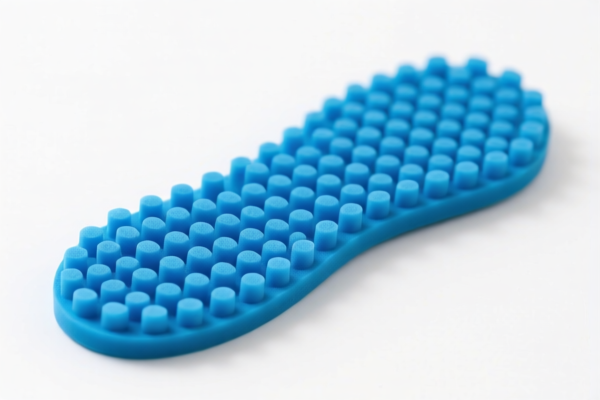
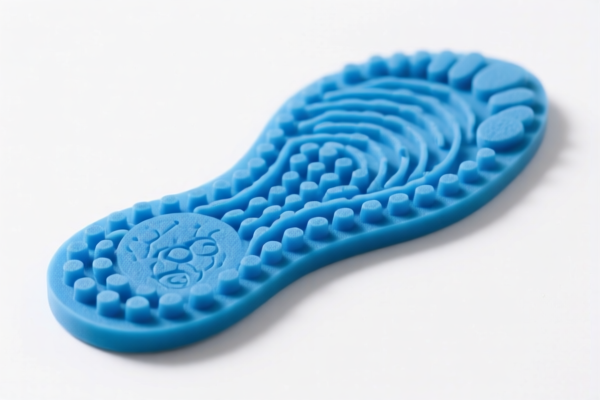
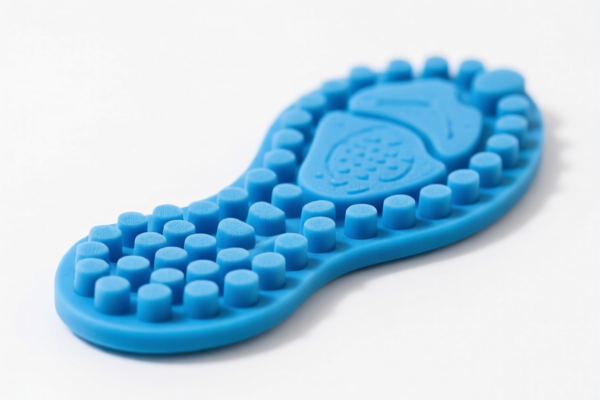
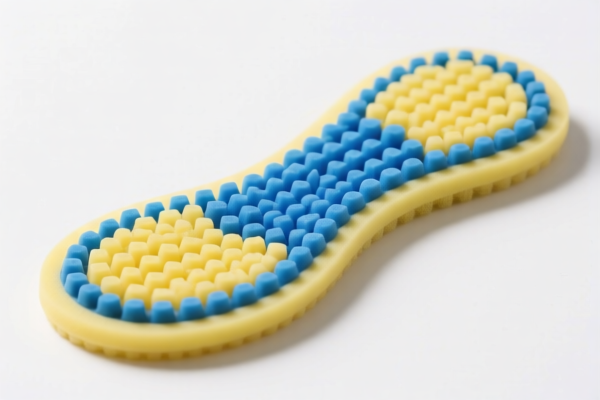
AI Analysis
🛡️ Rubber Pads: The Ultimate HS Code & Duty Classification Guide (2026 Edition)
🌐 HS Code Reference & Customs Clearance Strategy | 2026 Latest Tariff Analysis | Professional Clearance Tactics
📌 I. Product Definition & Classification: Do You Really Understand "Rubber Pads"?
Rubber Pads are ubiquitous anti-slip, shock-absorbing, and protective components used in industrial, commercial, and residential settings. However, in international trade, they are not a single category. Their classification depends strictly on three factors:
1. Physical Form: Foam vs. Non-foam, Plate/Sheet vs. Finished Article.
2. Material State: Vulcanized vs. Non-vulcanized.
3. Specific Use: Flooring, Protective Matting, or General Industrial Use.
⚠️ Key Distinction Point:
- If it is a finished anti-slip mat designed specifically for flooring → Likely 4016.10 or 4016.91.
- If it is a raw sheet/plate of rubber for further processing → Likely 4008.
- If it is a generic protective pad not primarily for flooring → Likely 4016.99.
📦 II. HS Code Classification Details (2026 Latest Tariff Authority Mapping)
Based on the provided data, here are the exact HS Codes for Rubber Pads, their descriptions, and tax implications.
| HS Code | Product Description | Application Scenario | Tax Rate (Total) |
|---|---|---|---|
4016.10.00.00 |
Rubber Mats, Material: Vulcanized Rubber, Form: Mats | Standard anti-slip floor mats, gym mats, industrial flooring | 35.0% |
4008.11.10.00 |
Rubber Mats or Protective Pads, Material: Rubber, Form: Plates, Sheets, Strips | Raw rubber sheets/pads for further manufacturing or bulk use | 35.0% |
4016.91.00.00 |
Rubber Mats, Material: Rubber, Use: Carpets and Mats | Generic rubber mats categorized under "carpets and mats" | 37.7% |
4008.21.00.00 |
Rubber Mats, Material: Rubber, Form: Non-foam Rubber Plates, Sheets, Strips | Non-foam industrial rubber sheets/pads | 35.0% |
4016.99.60.50 |
Rubber Protective Pads, Material: Vulcanized Rubber, Form: Pad-shaped Articles | General-purpose protective pads (not specifically for flooring) | 37.5% |
🔍 Critical Reminder:
-4016.10.00.00is often the most accurate for finished flooring mats.
-4008series applies to semi-finished goods (sheets/plates) rather than finished "mats" in the traditional sense.
-4016.99.60.50is for general protective pads (e.g., machine feet, vibration dampeners) that are not primarily "flooring."
- Do not mix forms: A "sheet" of rubber is different from a "cut mat."
💰 III. 2026 Latest Tariff Rate Breakdown (Including Surtaxes & Policy Add-ons)
✅ Applicable Country: United States (US)
✅ Origin: China (CN)
✅ Effective Date: Post-2025 policies (including Section 301 & 122)
🎯 1. 4016.10.00.00 — Rubber Mats (Vulcanized)
| Item | Content |
|---|---|
| Base Duty Rate | 0.0% |
| Section 301 Surtax | +25.0% |
| Section 122 Tariff | +10.0% |
| Total Effective Rate | 35.0% |
| Tax Calculation | CIF Value × 35% |
| De Minimis Eligibility | ❌ No (Subject to full duties) |
| Legal Basis Path | USITC:4016.10.00.00 → Footnote 9903.88.01 (Sec 301) → IEEPA:9903.01.25 (Sec 122) |
📌 Explanation:
- Base Rate 0%: Rubber mats often have low base duties under HTSUS.
- 35% Total: The combination of 25% (Trade Act) + 10% (National Emergency) makes this a high-cost item.
- Vital for Importers: Even with 0% base duty, the 35% effective rate is significant. Plan for high landed costs.
🎯 2. 4008.11.10.00 — Rubber Plates/Sheets (Protective Pads)
| Item | Content |
|---|---|
| Base Duty Rate | 0.0% |
| Section 301 Surtax | +25.0% |
| Section 122 Tariff | +10.0% |
| Total Effective Rate | 35.0% |
| Tax Calculation | CIF Value × 35% |
| De Minimis Eligibility | ❌ No |
| Legal Basis Path | USITC:4008.11.10.00 → Footnote 9903.88.01 → IEEPA:9903.01.25 |
📌 Note:
- Identical tax burden to4016.10.
- Ensure the product is clearly described as "Plates, Sheets, or Strips" if using this code. Misclassification as a "finished mat" under4016may trigger scrutiny if the form doesn’t match.
🎯 3. 4016.91.00.00 — Rubber Mats (Carpets and Mats Use)
| Item | Content |
|---|---|
| Base Duty Rate | 2.7% |
| Section 301 Surtax | +25.0% |
| Section 122 Tariff | +10.0% |
| Total Effective Rate | 37.7% |
| Tax Calculation | CIF Value × 37.7% |
| De Minimis Eligibility | ❌ No |
| Legal Basis Path | USITC:4016.91.00.00 → Footnote 9903.88.01 → IEEPA:9903.01.25 |
📌 Warning:
- This is the highest tax rate among the listed options.
- Only use if the product strictly falls under "Carpets and Mats" in the legal notes. Avoid if4016.10or4016.99is more accurate to avoid overpaying.
🎯 4. 4008.21.00.00 — Non-Foam Rubber Plates/Sheets
| Item | Content |
|---|---|
| Base Duty Rate | 0.0% |
| Section 301 Surtax | +25.0% |
| Section 122 Tariff | +10.0% |
| Total Effective Rate | 35.0% |
| Tax Calculation | CIF Value × 35% |
| De Minimis Eligibility | ❌ No |
| Legal Basis Path | USITC:4008.21.00.00 → Footnote 9903.88.01 → IEEPA:9903.01.25 |
📌 Note:
- For non-foam rubber sheets. If the pad is foamed, this code is incorrect.
- Same 35% total duty as other 0% base code items.
🎯 5. 4016.99.60.50 — Rubber Protective Pads (Vulcanized)
| Item | Content |
|---|---|
| Base Duty Rate | 2.5% |
| Section 301 Surtax | +25.0% |
| Section 122 Tariff | +10.0% |
| Total Effective Rate | 37.5% |
| Tax Calculation | CIF Value × 37.5% |
| De Minimis Eligibility | ❌ No |
| Legal Basis Path | USITC:4016.99.60.50 → Footnote 9903.88.01 → IEEPA:9903.01.25 |
📌 Explanation:
- This is a "basket" code for other rubber articles.
- Use if the pad is not for flooring (4016.10) and not a sheet (4008).
- Higher base duty (2.5%) leads to a higher total rate (37.5%) compared to4016.10.
🛠️ IV. Customs Clearance Practical Advice (Battle-Tested Pitfall Avoidance)
✅ 1. Required Documentation Checklist (Non-negotiable)
| Document | Mandatory? | Description |
|---|---|---|
| ✅ Product Specification Sheet | ✔️ | Must include: Material (Vulcanized/Non-vulcanized, Foam/Non-foam), Dimensions, Hardness (Shore A), Intended Use. |
| ✅ Product Photos | ✔️ | Clear images of the pad, showing texture, shape, and any packaging labels. |
| ✅ Commercial Invoice | ✔️ | Must accurately describe the product. Avoid vague terms like "Rubber Stuff." Use "Vulcanized Rubber Anti-Slip Mat." |
| ✅ Packing List | ✔️ | Detail weight, quantity, and packaging type. |
| ✅ Material Safety Data Sheet (MSDS) | ✔️ | If chemicals are involved in vulcanization or adhesive backing. |
| ✅ Country of Origin Certificate | ✔️ | Crucial for proving CN origin and applying correct surtaxes. |
✅ 2. Declaration Tips (Key Mantra)
🔥 "Form Dictates Code, Use Dictates Tax, Be Precise to Save Cash!"
| Scenario | Correct Declaration Strategy | Wrong Practice |
|---|---|---|
| Finished Floor Mat | Use 4016.10.00.00. Describe as "Rubber Floor Mat." |
Misdeclare as "Sheet" → Risk of penalty. |
| Raw Rubber Sheet | Use 4008.11.10.00 or 4008.21.00.00. Describe as "Rubber Plate/Sheet." |
Misdeclare as "Mat" → Mismatch with form. |
| Machine Footing Pad | Use 4016.99.60.50. Describe as "Vulcanized Rubber Protective Pad." |
Use 4016.10 → Incorrect use (not flooring). |
| Foam Rubber Pad | Check if 4008.11 (if sheet) or 4016.99 applies. |
Do not use 4008.21 (Non-foam) for foam products. |
✅ 3. Special Case Handling
| Scenario | Handling Advice |
|---|---|
| Composite Materials | If the pad has fabric backing, it may still be classified as rubber if rubber is the essential character. Provide material breakdown. |
| Custom Shapes | Even if cut into specific shapes, if it’s a "mat," 4016.10 may still apply. If it’s a "part" for a machine, 4016.99 is safer. |
| Import for Sample | If value is low, consider Section 321 (De Minimis) exemptions if eligible, but note that Surtaxes (301/122) often still apply to Chinese goods. Check current CBP rulings. |
| Re-importation | If returning goods, ensure proper documentation to avoid double taxation. |
🌍 V. Global Market Comparison (2026 Update)
| Country/Region | Recommended HS Code | Duty Rate (China Origin) | Key Requirements | Notes |
|---|---|---|---|---|
| 🇺🇸 USA | 4016.10.00.00 |
35.0% (25% Sec 301 + 10% Sec 122) | FDA/Prop 65 (if food contact), CPSIA | Highest duty burden. |
| 🇨🇳 China | 4016.10.00.00 |
~10-15% | CCC (if applicable) | Lower base duty. |
| 🇪🇺 EU | 4016.10.00 |
~4-6% | REACH, RoHS | No Section 301 equivalent. |
| 🇬🇧 UK | 4016.10 |
~4-6% | UKCA, REACH | Post-Brexit tariffs. |
| 🇨🇦 Canada | 4016.10 |
~5-10% | CSA, Prop 65 (if US-bound) | Free trade under USMCA if originating. |
📌 Conclusion:
- USA is the most expensive market for rubber pads due to Section 122 and 301 tariffs.
- Consider supply chain diversification (Vietnam, Mexico) if margins are tight, though rules of origin must be strictly met.
📌 VI. Common Mistakes & Pitfall Guide (Lessons Learned)
❌ Mistake 1: Calling all rubber pads "Mats" and using 4016.10
👉 Consequence: If the product is a raw sheet, customs may reject the declaration or reclassify, causing delays.
✅ Fix: Match the physical form (Sheet vs. Mat) to the code.
❌ Mistake 2: Ignoring the 10% Section 122 Tariff
👉 Consequence: Underestimating landed cost by 10%. Profit margins vanish.
✅ Fix: Always add 10% to your 301 tariff calculation for Chinese goods.
❌ Mistake 3: Misclassifying Foam vs. Non-Foam
👉 Consequence: 4008.21 (Non-foam) is wrong for foam pads. Risk of penalty.
✅ Fix: Clearly state "Foam" or "Non-Foam" in specs.
❌ Mistake 4: Using 4016.99.60.50 for a Floor Mat
👉 Consequence: Overpaying tax (37.5% vs. 35%).
✅ Fix: If it’s for flooring, use 4016.10.00.00.
🎯 VII. Conclusion: Precision Saves Money!
🎯 Key Takeaway:
🔹 "Form First, Use Second, Tax Third."
🔹 35% is the standard for most rubber pads from China, but 37.7% or 37.5% can sneak up if you pick the wrong subheading.
🔹 Always account for Section 122 (10%) on top of Section 301 (25%).
📌 Pro Tip:
- Apply for a US CBP Advance Ruling if you have large, consistent shipments. It locks in the HS Code and duty rate, providing certainty.
- For low-value shipments, check if De Minimis ($800) exemptions still apply despite surtaxes (policy changes frequently).
📣 Immediate Action:
📞 Contact your customs broker with detailed product photos and specifications.
🚀 Optimize your HS Code selection to avoid overpaying 2-3% in duties.
💡 Your bottom line depends on accuracy!
✨ Professional Clearance Starts with Precise Classification!
💼 Every dollar saved in duties is pure profit!
Customer Reviews
About HS Code Classification
The Harmonized System (HS) is an internationally standardized nomenclature developed by the World Customs Organization (WCO) to classify traded products. Over 200 countries use the HS system as the basis for customs tariffs, trade statistics, and import/export regulations.
Each HS code follows a hierarchical structure:
- Chapter (2 digits) — Broad category of goods (e.g., Chapter 84: Machinery and Mechanical Appliances)
- Heading (4 digits) — More specific grouping within the chapter
- Subheading (6 digits) — Internationally standardized breakdown, used by all WCO member countries
- National subdivisions (8-10 digits) — Country-specific extensions for further classification, such as US HTSUS 10-digit codes
Correct HS code classification is essential for smooth customs clearance, accurate duty payment, and compliance with trade regulations. Misclassification can lead to customs delays, overpayment of duties, or penalties.
When importing from CN to US, the applicable tariff rates may include:
- Most-Favored-Nation (MFN) rate — The standard duty rate applied to WTO members
- General rate — Applied to countries without trade agreements
- Trade remedy duties — Additional tariffs such as Section 301 (anti-dumping), Section 232 (national security), or countervailing duties
The information provided on this page is for reference purposes only. For official classification, please consult with your local customs authority or a licensed customs broker.