rubber tire retreading glue
CN → US| HS Code | Tariff Rate | Origin | Destination | Doc |
|---|---|---|---|---|
| 4005200000 | 35.0% | CN | US | Official Doc |
| 4006100000 | 20.4% | CN | US | Official Doc |
| 4012909000 | 37.7% | CN | US | Official Doc |
| 4012904500 | 39.2% | CN | US | Official Doc |
| 4005910000 | 35.0% | CN | US | Official Doc |
Product Images
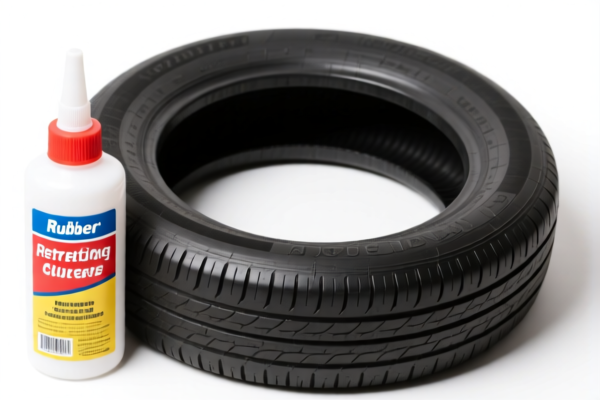
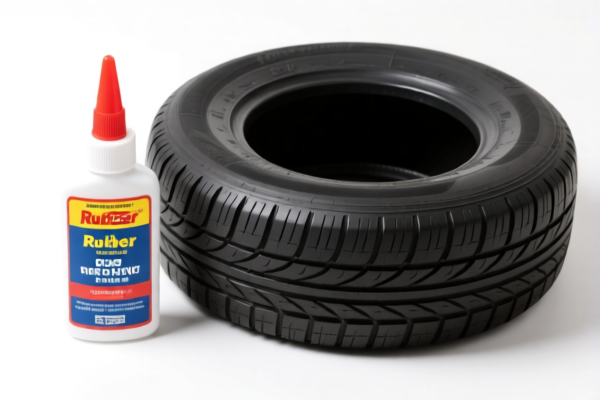

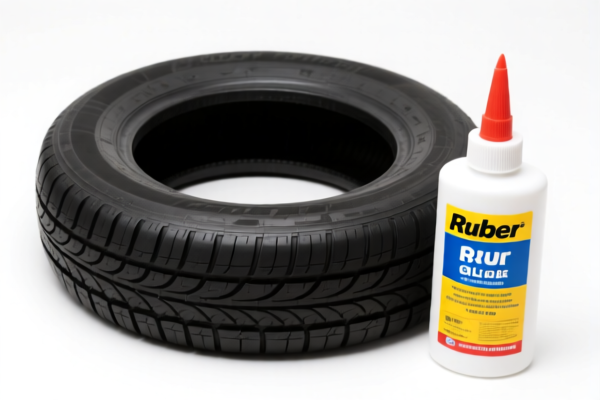
AI Analysis
🚛 Rubber Tire Retreading Glue (Rebuilding Cements)
🌐 HS Code Reference & Customs Clearance Guide | 2026 Latest Tariff Analysis | Professional Clearance Strategy for Tire Retreading Materials
📌 I. Product Definition & Classification: What is "Retreading Glue"?
Rubber tire retreading glue, technically known as "Rebuilding Cements" or "Tire Building Compounds," is a specialized adhesive material used in the tire retreading process. It acts as the critical bonding agent between the tire casing (vulcanized rubber) and the new tread rubber.
In international trade, this product is not a simple "adhesive" (Chapter 35) nor a generic "mixed rubber" (Chapter 40). It is classified based on its chemical state (raw/rubber-based) and its specific industrial application (tire retreading).
⚠️ Key Classification Distinction:
- If it is a liquid/solvent-based cement used specifically for bonding rubber to rubber in retreading →归入 4005 or 4006.
- If it is a pre-formed strip/tread ready for application →归入 4012.
- Note: Do NOT classify under generic glues (e.g., 3506); customs will reject this due to the rubber nature of the product.
📦 II. HS Code Classification Details (2026 Latest Tariff Authority Cross-Reference)
| HS Code | Product Description | Applicable Scenario | Tax Rate (US Import from CN) |
|---|---|---|---|
4005.20.00.00 |
Mixed unsulphurated rubber; other primary forms or plates, sheets, or strip | Unvulcanized rubber compounds in primary shapes, used as bonding material | 35.0% |
4006.10.00.00 |
Other rubber articles (e.g., tubes, profiles) | "Backbone" strips or shaped profiles used in retreading | 20.4% |
4012.90.90.00 |
Used or new pneumatic tyres of rubber; other rubber parts of tyres | General tire retreading accessories/components | 37.7% |
4012.90.45.00 |
Rubber tread and tyre "gums" (new) | Specifically for retreading, made of natural rubber | 39.2% |
4005.91.00.00 |
Other mixed unsulphurated rubber; primary forms | Unvulcanized mixed rubber, board/sheet/strip form | 35.0% |
🔍 Key Insight:
- The term "Glue" in retreading is often a liquid or paste form of unvulcanized rubber compound. Therefore, it frequently falls under 4005 (Primary forms of mixed rubber).
- If the product is a solid strip used as a bonding layer, it may be classified under 4006 or 4012 depending on the exact shape and rubber content (natural vs. synthetic).
💰 III. 2026 Latest Tariff Rate Breakdown (Including Surcharges & Policy Add-ons)
✅ Applicable Country: United States (US)
✅ Origin: China (CN)
✅ Effective Date: November 10, 2025 onwards (including subsequent imports)
🎯 1. 4005.20.00.00 — Mixed Unsulphurated Rubber (Primary Forms)
| Item | Detail |
|---|---|
| Base Tariff | 0.0% (ad valorem) |
| USITC Surcharge (Section 301) | +25.0% |
| IEEPA Surcharge (China-specific) | +10.0% |
| Total Rate | 35.0% |
| Tax Calculation | CIF Value × 35% |
| De Minimis Eligibility | ❌ Not Eligible (deny_de_minimis) |
| Legal Basis Path | IEEPA:9903.01.25 → USITC:4005.20.00.00 → FOOTNOTE:9903.88.01 |
📌 Explanation:
- This code applies to unvulcanized rubber compounds in sheet, strip, or primary forms. Most "retreading cements" are liquid/paste forms of unvulcanized rubber, fitting this category.
- No base duty, but heavily impacted by US-China trade tariffs.
🎯 2. 4006.10.00.00 — Other Rubber Articles (Profiles/Tubes)
| Item | Detail |
|---|---|
| Base Tariff | 2.9% |
| USITC Surcharge (Section 301) | +7.5% |
| IEEPA Surcharge (China-specific) | +10.0% |
| Total Rate | 20.4% |
| Tax Calculation | CIF Value × 20.4% |
| De Minimis Eligibility | ❌ Not Eligible |
| Legal Basis Path | IEEPA:9901.25 → USITC:4006.10.00.00 |
📌 Explanation:
- Applies if the "glue" is supplied as a pre-formed strip, tube, or profile (e.g., a rubber "bump" or strip used in the retreading process).
- Lowest tariff option among the candidates, but requires the product to be in a specific "other article" form, not just a liquid/paste.
🎯 3. 4012.90.90.00 — Other Rubber Tire Parts
| Item | Detail |
|---|---|
| Base Tariff | 2.7% |
| USITC Surcharge (Section 301) | +25.0% |
| IEEPA Surcharge (China-specific) | +10.0% |
| Total Rate | 37.7% |
| Tax Calculation | CIF Value × 37.7% |
| De Minimis Eligibility | ❌ Not Eligible |
| Legal Basis Path | IEEPA:9903.01.25 → USITC:4012.90.90.00 |
📌 Explanation:
- A broad category for tire parts. If the "glue" is considered a component/accessory for tire retreading, it may fall here.
- Higher base tariff than 4005/4006.
🎯 4. 4012.90.45.00 — Rubber Treads & Gums (New, for Retreading)
| Item | Detail |
|---|---|
| Base Tariff | 4.2% |
| USITC Surcharge (Section 301) | +25.0% |
| IEEPA Surcharge (China-specific) | +10.0% |
| Total Rate | 39.2% |
| Tax Calculation | CIF Value × 39.2% |
| De Minimis Eligibility | ❌ Not Eligible |
| Legal Basis Path | IEEPA:9903.01.25 → USITC:4012.90.45.00 |
📌 Explanation:
- Specifically for new rubber treads and gums used in retreading.
- If the product is a solid rubber gum applied as a bonding layer, this is a highly accurate code.
- Highest base tariff among the options.
🎯 5. 4005.91.00.00 — Mixed Unsulphurated Rubber (Other Primary Forms)
| Item | Detail |
|---|---|
| Base Tariff | 0.0% |
| USITC Surcharge (Section 301) | +25.0% |
| IEEPA Surcharge (China-specific) | +10.0% |
| Total Rate | 35.0% |
| Tax Calculation | CIF Value × 35.0% |
| De Minimis Eligibility | ❌ Not Eligible |
| Legal Basis Path | IEEPA:9903.01.25 → USITC:4005.91.00.00 |
📌 Explanation:
- Similar to4005.20.00.00, but for other primary forms.
- If the retreading cement is a liquid/paste that doesn't fit "plate/sheet/strip" exactly, this may be the fallback.
- Same rate as 4005.20, but classification must be justified.
🛠️ IV. Customs Clearance Practical Advice (Battle-Tested Pitfall Guide)
✅ 1. Required Documentation Checklist (Non-Negotiable)
| Document | Mandatory? | Description |
|---|---|---|
| ✅ Product Specification Sheet | ✔️ | Must state: Unvulcanized, Rubber-based, For Tire Retreading. Avoid vague terms like "Glue" or "Adhesive." |
| ✅ Material Safety Data Sheet (MSDS/SDS) | ✔️ | Critical for customs to verify chemical composition (natural vs. synthetic rubber content). |
| ✅ Commercial Invoice | ✔️ | Clearly describe as "Unvulcanized Rubber Compound for Tire Retreading" or "Rebuilding Cement (Rubber-Based)". |
| ✅ Origin Certificate (CO) | ✔️ | To confirm Chinese origin (triggers surcharges). |
| ✅ Packaging List | ✔️ | Show net/gross weight and quantity. |
✅ 2. Declaration Tips (Key Mantra)
🔥 "Don't say 'Glue', Say 'Rubber Compound'! Form matters, Tariff varies!"
| Scenario | Correct Declaration | Incorrect Declaration |
|---|---|---|
| Liquid/Paste Cement | 4005.20.00.00 or 4005.91.00.00 |
"Tire Glue" (Chapter 35) → Rejected/Reclassified |
| Rubber Strip/Profile | 4006.10.00.00 |
"Tire Glue" → Higher Tax Risk |
| Solid Gum Sheet | 4012.90.45.00 |
"Tire Glue" → Possible Misclassification |
| General Accessory | 4012.90.90.00 |
"Tire Glue" → Ambiguous |
📌 Warning:
- Never declare as "Adhesive" (Chapter 35) or "Chemical Product" (Chapter 38).
- Customs officers will test for rubber content. If it's >95% rubber, it must go to Chapter 40.
✅ 3. Special Cases
| Situation | Handling Advice |
|---|---|
| OEM/Private Label | Provide brand authorization. Mislabeling can lead to seizure. |
| Mixed with Solvents | If solvent content is high (>5%), customs may question if it's still "rubber" or "chemical." Provide SDS to prove rubber base. |
| Retreading Kit | If sold as a kit (glue + tread + rubber), declare each item separately for accurate tax. Do not lump into one "Glue" code. |
🌍 V. Global Market Comparison (2026 Latest)
| Country/Region | Recommended HS Code | Tariff (China Origin) | Certification | Notes |
|---|---|---|---|---|
| 🇺🇸 USA | 4005.20.00.00 |
35.0% | No specific cert | Highest surcharge due to US-China trade policy. |
| 🇨🇳 China | 4005.20.00.00 |
5% | None | Domestic trade low tax. |
| 🇪🇺 EU | 4005.20.00.00 |
0% (if EORI valid) | REACH + SVHC | No surcharge, but strict chemical compliance. |
| 🇲🇽 Mexico | 4005.20.00.00 |
0% (USMCA if eligible) | NOM | Check USMCA rules of origin for exemption. |
📌 Conclusion:
- USA is the most expensive market for this product due to the 35% total tariff.
- EU and Mexico offer significant savings if compliant with local regulations.
📌 VI. Common Errors & Pitfalls (Blood & Tears Lessons)
❌ Error 1: Declaring as "Adhesive" (HS 3506)
👉 Consequence: Customs reclassifies to Chapter 40, applies 35% tariff + penalties.
❌ Error 2: Not providing SDS
👉 Consequence: Customs cannot verify rubber content → Detention for 2+ weeks.
❌ Error 3: Misclassifying liquid cement as "Solid Gum" (4012)
👉 Consequence: Tax mismatch, potential audit. Liquid = 4005.
❌ Error 4: Ignoring IEEPA Surcharge
👉 Consequence: Underpayment by 10% → Back taxes + Interest.
✅ Correct Practice:
"Unvulcanized Rubber Compound, for Tire Retreading, Liquid Form, HS 4005.20.00.00"
🎯 VII. Conclusion: Professional Declaration, Save Costs, Avoid Delays!
🎯 Remember the Mantra:
🔹 "Glue is Rubber, Not Chemicals!"
🔹 "Liquid = 4005, Strip = 4006, Gum = 4012."
🔹 "35% Tax in US, 0% in EU, Plan Ahead!"
📌 Pro Tip:
If your retreading glue is originated in Vietnam, Thailand, or Malaysia, you may qualify for IEEPA exemptions or lower tariffs under FTAs.
Apply for an Advance Ruling before shipment to confirm the exact HS Code.
📣 Immediate Action:
📞 Contact your customs broker + Provide Product SDS + Request HS Code Pre-Ruling
🚀 Clearance Smoothly, Margins Protected, Business Grows!
✨ Professional Clearance Starts with Accurate Classification!
💼 Every percent of tax saved is pure profit!
Customer Reviews
About HS Code Classification
The Harmonized System (HS) is an internationally standardized nomenclature developed by the World Customs Organization (WCO) to classify traded products. Over 200 countries use the HS system as the basis for customs tariffs, trade statistics, and import/export regulations.
Each HS code follows a hierarchical structure:
- Chapter (2 digits) — Broad category of goods (e.g., Chapter 84: Machinery and Mechanical Appliances)
- Heading (4 digits) — More specific grouping within the chapter
- Subheading (6 digits) — Internationally standardized breakdown, used by all WCO member countries
- National subdivisions (8-10 digits) — Country-specific extensions for further classification, such as US HTSUS 10-digit codes
Correct HS code classification is essential for smooth customs clearance, accurate duty payment, and compliance with trade regulations. Misclassification can lead to customs delays, overpayment of duties, or penalties.
When importing from CN to US, the applicable tariff rates may include:
- Most-Favored-Nation (MFN) rate — The standard duty rate applied to WTO members
- General rate — Applied to countries without trade agreements
- Trade remedy duties — Additional tariffs such as Section 301 (anti-dumping), Section 232 (national security), or countervailing duties
The information provided on this page is for reference purposes only. For official classification, please consult with your local customs authority or a licensed customs broker.