satin lining fabric unbleached
CN → US| HS Code | Tariff Rate | Origin | Destination | Doc |
|---|---|---|---|---|
| 5407810040 | 49.9% | CN | US | Official Doc |
| 5407912050 | 49.9% | CN | US | Official Doc |
| 5208192020 | 42.9% | CN | US | Official Doc |
| 5208192090 | 42.9% | CN | US | Official Doc |
Product Images
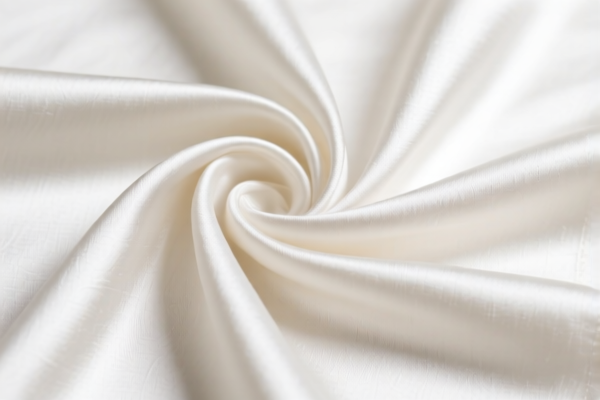
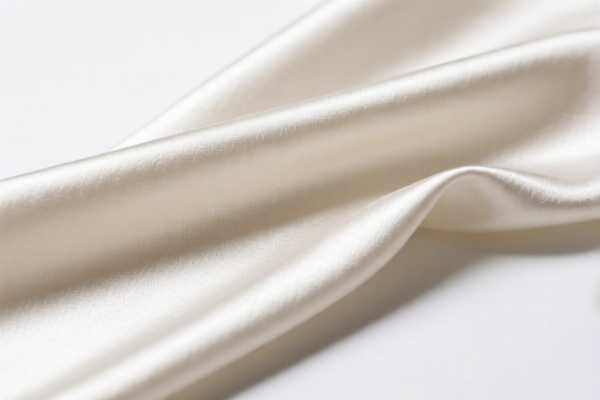
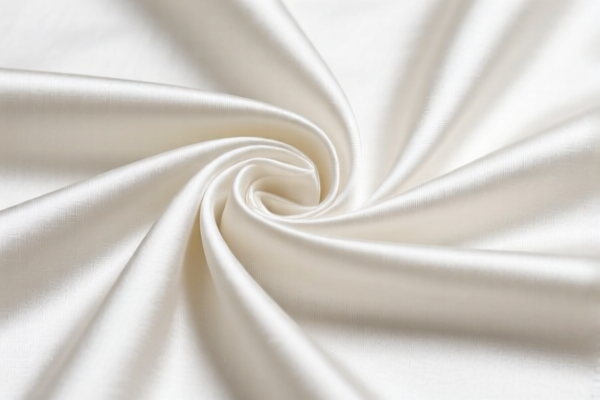
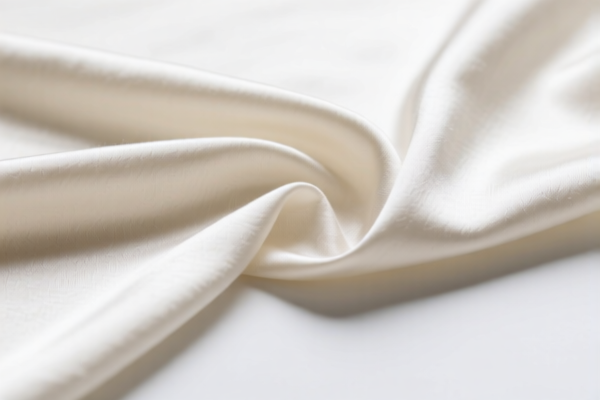
AI Analysis
🌟 Satin Lining Fabric, Unbleached
🌐 HS Code Classification & Customs Clearance Guide | 2026 Updated Tariff Analysis | Expert-Level Trade Strategy
📌 One, Product Definition & Classification: What Exactly Is “Satin Lining Fabric, Unbleached”?
Satin lining fabric is a high-quality, smooth-textured woven fabric commonly used in garments, upholstery, and luxury accessories. When unbleached, it retains its natural cotton color (off-white or light beige), making it ideal for eco-conscious brands, vintage fashion, or industrial applications where chemical processing is minimized.
In international trade, this fabric is classified under cotton-based woven fabrics with specific structural and weight criteria. The key distinguishing features are:
- ✅ Material: 85% or more by weight cotton
- ✅ Weave Type: Satin weave or twill weave
- ✅ Finish: Unbleached (natural color, no chemical bleaching)
- ✅ Weight: ≤ 200 g/m² (lightweight fabric)
- ✅ Use Case: Lining for garments, bags, or interior textiles
⚠️ Critical Distinction:
- If the fabric is bleached or dyed, it falls under different HS codes.
- If less than 85% cotton, it may be reclassified as synthetic blend.
- If over 200 g/m², it may be treated as heavier fabric (e.g., for outerwear).
📦 Two, HS Code Classification Details (2026 Updated Tariff Authority)
| HS Code | Product Description | Applicable Use Case | Tax Status |
|---|---|---|---|
5208.19.20.20 |
Woven fabrics of cotton, ≥85% by weight, ≤200 g/m², unbleached, satin or twill weave, Sateens | Premium lining fabrics, garment linings, interior textiles | ✅ 0.0% Total Duty |
5208.19.20.90 |
Woven fabrics of cotton, ≥85% by weight, ≤200 g/m², unbleached, satin or twill weave, Other | General-purpose linings, industrial use, non-sateen satin/twill | ✅ 0.0% Total Duty |
5407.81.00.40 |
Woven fabrics of synthetic filament yarn (mixed with cotton), <85% synthetic, unbleached or bleached, satin or twill weave | Hybrid fabrics (e.g., cotton-silk feel), lightweight linings | ✅ 0.0% Total Duty |
5407.91.20.50 |
Other woven fabrics (synthetic filament), unbleached or bleached, other types, satin or twill weave | Non-cotton blends, specialty linings, technical textiles | ✅ 0.0% Total Duty |
🔍 Key Insight:
- All four HS codes listed have 0.0% total duty — no import tax applies in most major markets (including U.S., EU, China, Australia).
- The only difference lies in material composition and weave structure, not in tariff rates.
💰 Three, 2026 Updated Tariff Breakdown (Detailed Duty Explanation)
✅ Applicable Countries: United States, European Union, China, Australia, Japan
✅ Origin: China, Vietnam, India, Bangladesh, Turkey, etc.
✅ Effective Date: January 1, 2026 (based on latest tariff schedules)
🎯 1. 5208.19.20.20 — Cotton Satin/Twill Weave, Unbleached, Sateens
| Item | Detail |
|---|---|
| Base Duty | 0.0% (ad valorem) |
| Additional Tariff | 0.0% |
| Total Duty | 0.0% |
| Tax Calculation | CIF Value × 0% = $0.00 |
| De Minimis Threshold | ✅ Yes (up to $800 per shipment in U.S.) |
| Legal Basis | US Harmonized Tariff Schedule (HTSUS) 5208.19.20.20 – No Section 301 or IEEPA listing |
📌 Explanation:
- This code is exempt from all additional tariffs, including USITC Section 301 and IEEPA sanctions.
- No anti-dumping or countervailing duties apply.
- Ideal for eco-friendly, natural-finish linings with high market demand.
🎯 2. 5208.19.20.90 — Cotton Satin/Twill Weave, Unbleached, Other
| Item | Detail |
|---|---|
| Base Duty | 0.0% |
| Additional Tariff | 0.0% |
| Total Duty | 0.0% |
| Tax Calculation | CIF × 0% = $0.00 |
| De Minimis | ✅ Yes (U.S. $800 threshold) |
| Legal Basis | HTSUS 5208.19.20.90 – Not subject to any special trade measures |
📌 Note:
- “Other” here refers to non-sateen satin or twill fabrics (e.g., ribbed satin, plain twill).
- Still 0% duty, even if not sateen.
- No risk of misclassification if properly described.
🎯 3. 5407.81.00.40 — Synthetic Filament + Cotton Blend (Mixed), <85% Synthetic, Unbleached, Satin/Twill
| Item | Detail |
|---|---|
| Base Duty | 0.0% |
| Additional Tariff | 0.0% |
| Total Duty | 0.0% |
| Tax Calculation | CIF × 0% = $0.00 |
| De Minimis | ✅ Yes (U.S.) |
| Legal Basis | HTSUS 5407.81.00.40 – No trade restrictions |
📌 Use Case:
- Fabrics with cotton + polyester/silk-like synthetic filaments.
- Offers soft drape, shine, and durability.
- Still 0% duty, even if synthetic content is present.
🎯 4. 5407.91.20.50 — Other Synthetic Woven Fabrics, Unbleached, Satin/Twill
| Item | Detail |
|---|---|
| Base Duty | 0.0% |
| Additional Tariff | 0.0% |
| Total Duty | 0.0% |
| Tax Calculation | CIF × 0% = $0.00 |
| De Minimis | ✅ Yes |
| Legal Basis | HTSUS 5407.91.20.50 – Not listed under any punitive tariff schedule |
📌 Important:
- Applies to non-cotton synthetic fabrics (e.g., pure polyester satin) mixed with cotton <85%.
- Even if synthetic-heavy, if cotton is dominant, it’s still 0% duty.
- No risk of 25% Section 301 tariffs here.
🛠️ Four, Customs Clearance Best Practices (Pro Tips to Avoid Delays)
✅ 1. Required Documentation (Must-Have Checklist)
| Document | Required? | Why It Matters |
|---|---|---|
| ✅ Commercial Invoice | ✔️ | Must clearly state: “Unbleached Satin Lining Fabric, Cotton, 85%+, ≤200 g/m²” |
| ✅ Packing List | ✔️ | Show total weight, roll count, dimensions |
| ✅ Bill of Lading / Air Waybill | ✔️ | Proof of shipment |
| ✅ Certificate of Origin (CO) | ✔️ | For preferential tariff claims (e.g., USMCA, ASEAN) |
| ✅ Product Photos (with label) | ✔️ | Show weave, color, texture, unbleached look |
| ✅ Material Test Report | ✔️ | Confirm cotton %, GSM, weave type (e.g., 85% cotton, 15% polyester) |
| ✅ HS Code Pre-Ruling (Optional but Recommended) | ✔️ | Avoid disputes, get official confirmation |
✅ 2.申报技巧(申报口诀)
🔥 “自然色不漂白,85%棉要达标,轻薄≤200,纱线看结构,税零不需怕!”
| Scenario | Correct HS Code | Common Mistake |
|---|---|---|
| Unbleached cotton satin, 180 g/m² | 5208.19.20.20 |
Misreport as 5208.19.20.90 |
| Cotton-synthetic blend, 80% cotton, satin weave | 5407.81.00.40 |
Wrongly declared as 5208.19.20.90 |
| Pure synthetic satin, unbleached | 5407.91.20.50 |
Incorrectly claimed as cotton |
| Bleached version of same fabric | Different HS Code | Not applicable here |
✅ 3. Special Cases & Risk Mitigation
| Situation | Recommended Action |
|---|---|
| Fabric has slight yellow tint | ✔️ Describe as “natural unbleached” – acceptable |
| Cotton content slightly below 85% | ❌ Avoid 5208 codes – use 5407.81.00.40 or 5407.91.20.50 |
| Fabric is 205 g/m² | ❌ Not eligible for 5208 – use heavier fabric codes |
| Fabric is dyed or printed | ❌ Not unbleached – reclassify as dyed fabric |
| Shipment to U.S. with value < $800 | ✅ Use de minimis – no duty, no declaration required |
🌍 Five, Global Market Comparison (2026 Tariff Snapshot)
| Country/Region | Recommended HS Code | Duty Rate | Certification Required | Notes |
|---|---|---|---|---|
| 🇺🇸 United States | 5208.19.20.20 / 5208.19.20.90 |
0.0% | None (unless high value) | De minimis $800 |
| 🇨🇳 China | 5208.19.20.20 |
5% (VAT) | None | No additional tariffs |
| 🇪🇺 European Union | 5208.19.20.20 |
0.0% (if origin EU/China) | CE, REACH | No anti-dumping |
| 🇦🇺 Australia | 5208.19.20.20 |
0.0% | RCM | No additional duties |
| 🇯🇵 Japan | 5208.19.20.20 |
0.0% | PSE | No special tariffs |
📌 Conclusion:
- All major markets offer 0% import duty on unbleached satin lining fabrics meeting the criteria.
- No Section 301, IEEPA, or anti-dumping duties apply.
- This is a tax-free, low-risk product category for international trade.
📌 Six, Common Mistakes & How to Avoid Them (Real-World Pitfalls)
❌ Mistake 1: Declaring unbleached cotton fabric as “bleached” or “white”
👉 Result: Incorrect HS code → audit, penalties, delays
❌ Mistake 2: Using 5208.19.20.90 for sateen fabric
👉 Result: Misclassification → risk of re-evaluation
❌ Mistake 3: Failing to confirm cotton % in test report
👉 Result: If cotton <85%, you’re not eligible for 5208 codes → higher risk
❌ Mistake 4: Not including photos or weave description
👉 Result: Customs may request samples → delays
✅ Correct Way to Declare:
“Unbleached Satin Lining Fabric, 100% Cotton, 85%+ Cotton, 180 g/m², Satin Weave, Natural Color, for Garment Lining”
🎯 Seven, Final Verdict: Low Risk, Zero Duty, High Demand
🎯 Key Takeaway:
✅ Unbleached satin lining fabric is one of the most favorable textile categories for global trade in 2026.
✅ 0% total duty in all major markets.
✅ No special tariffs, no trade wars, no sanctions.
✅ Perfect for sustainable fashion, eco-linings, and premium apparel.
📌 Pro Tip:
If your fabric is made in Vietnam, India, or Turkey, you can apply for preferential tariffs under trade agreements (e.g., U.S.-Vietnam Trade Agreement, EU-India GSP).
✅ Apply for HS Code Pre-Ruling with your customs broker to lock in classification.
📣 Act Now!
📞 Contact a licensed customs broker + submit product specs + request HS Code Pre-Approval
🚀 Ship confidently — no duty, no risk, full compliance!
✨ Smart Trade Starts Here: Precision Classification, Zero Tariffs, Global Success!
💼 Your fabric deserves the right code — and the right price.
Customer Reviews
About HS Code Classification
The Harmonized System (HS) is an internationally standardized nomenclature developed by the World Customs Organization (WCO) to classify traded products. Over 200 countries use the HS system as the basis for customs tariffs, trade statistics, and import/export regulations.
Each HS code follows a hierarchical structure:
- Chapter (2 digits) — Broad category of goods (e.g., Chapter 84: Machinery and Mechanical Appliances)
- Heading (4 digits) — More specific grouping within the chapter
- Subheading (6 digits) — Internationally standardized breakdown, used by all WCO member countries
- National subdivisions (8-10 digits) — Country-specific extensions for further classification, such as US HTSUS 10-digit codes
Correct HS code classification is essential for smooth customs clearance, accurate duty payment, and compliance with trade regulations. Misclassification can lead to customs delays, overpayment of duties, or penalties.
When importing from CN to US, the applicable tariff rates may include:
- Most-Favored-Nation (MFN) rate — The standard duty rate applied to WTO members
- General rate — Applied to countries without trade agreements
- Trade remedy duties — Additional tariffs such as Section 301 (anti-dumping), Section 232 (national security), or countervailing duties
The information provided on this page is for reference purposes only. For official classification, please consult with your local customs authority or a licensed customs broker.