shirt cufflinks
CN → US| HS Code | Tariff Rate | Origin | Destination | Doc |
|---|---|---|---|---|
| 9606296000 | 37.9% | CN | US | Official Doc |
| 9606216000 | 39.7% | CN | US | Official Doc |
| 7113195091 | 15.5% | CN | US | Official Doc |
| 7113193000 | 23.3% | CN | US | Official Doc |
| 7117110000 | 25.5% | CN | US | Official Doc |
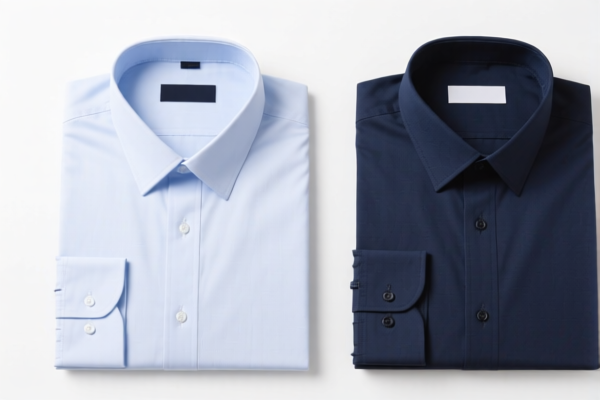
Product Images

AI Analysis
🔗 Shirt Cufflinks (Cuff Buttons)
🌐 HS Code Reference & Customs Clearance Guide | 2026 Tax Regime Analysis | Professional Strategy
📌 I. Product Definition & Classification: Do You Know What "Cufflinks" Really Are?
Shirt Cufflinks are decorative fasteners used to join the two sides of a shirt cuff. In international trade, their classification depends heavily on material composition (Plastic, Non-Precious Metal, Precious Metal) and functional intent (Fastener vs. Jewelry).
They fall into two primary logical categories: 1. Fasteners (Buttons/Closures): If viewed strictly as a functional part of clothing (buttons). 2. Jewelry/Accessories: If viewed as ornamental items made of precious metals or stones.
⚠️ Key Distinction Point:
- Material is King: A plastic cufflink is a button; a gold/platinum cufflink is jewelry.
- Form & Function: Does it look like a standard button? Or does it look like a piece of wearable art?
- The "Plastic" Rule: Plastic items often fall under generic buttons, attracting higher punitive tariffs (US Section 232/301).
📦 II. HS Code Classification Details (2026 Authoritative Mapping)
Based on current trade data and the provided tax logic, here are the 5 possible HS Codes for Shirt Cufflinks, ranging from lowest to highest tariff impact.
| HS Code | Classification Logic | Material / Composition | Suitability |
|---|---|---|---|
| 7113.19.50.91 | Jewelry Accessories (Jewelry) | Precious Metal / Gemstones (Generic jewelry niche) | Best for high-value, luxury cufflinks (e.g., Gold, Silver, Diamond-encrusted). |
| 7113.19.30.00 | Jewelry Accessories (Plating) | Gold/Silver Plated (Base metal) | Good for "Costume Jewelry" style made of base metal with precious plating. |
| 7117.11.00.00 | Base Metal Jewelry | Non-Precious Metal (Iron, Zinc, Brass) | Best for standard "business" cufflinks made of standard metals. |
| 9606.29.60.00 | Clothing Fasteners | Any Material (General Button category) | High-risk classification if not clearly jewelry; implies generic button. |
| 9606.21.60.00 | Plastic Buttons | Plastic | Highest Risk: If made of plastic, this is the default "button" category. |
🔍 Critical Logic:
- Jewelry Codes (7113/7117): Generally offer the lowest total tax (15.5% - 25.5%) if the material is clearly non-plastic.
- Button Codes (9606): These attract massive "Add-on" tariffs (25% or 30% total) due to US Section 301/232 restrictions on generic buttons/fasteners.
💰 III. 2026 Tax Rate Deep Dive (Detailed Breakdown)
✅ Target Market: United States (US)
✅ Origin: China (CN)
✅ Regime: Includes Base Tariff + Section 301/232 Add-ons + "122 Clause" (Section 232)
🎯 1. 7113.19.50.91 — LOWEST TAX: Jewelry Category
Why? Classified under "Jewelry" as a generic jewelry accessory. Tax Composition: - Base Duty: 5.5% - Section 301/232 Add-on: 0.0% (No punitive tax on generic jewelry parts) - "122 Clause": 10.0% (New Section 232 penalty)
💰 Total Tax Rate: 15.5%
💡 Analysis: This is the golden classification. If your cufflinks are made of base metal but styled as "jewelry" (e.g., branded, ornamental), this is the target. Avoid the "button" trap.
🎯 2. 7117.11.00.00 — BASE METAL JEWELRY
Why? Specifically for "Base Metal" articles (Iron, Zinc, Copper alloys) used as jewelry. Tax Composition: - Base Duty: 8.0% - Section 301/232 Add-on: 7.5% (Specific to base metal) - "122 Clause": 10.0%
💰 Total Tax Rate: 25.5%
💡 Analysis: A solid choice for standard stainless steel or brass cufflinks. The 7.5% penalty applies to base metals, making it higher than pure jewelry codes but significantly lower than plastic buttons.
🎯 3. 7113.19.30.00 — PRECIOUS METAL PLATING
Why? For items where the base metal is covered in gold or silver (Plated). Tax Composition: - Base Duty: 5.8% - Section 301/232 Add-on: 7.5% - "122 Clause": 10.0%
💰 Total Tax Rate: 23.3%
💡 Analysis: Slightly better than standard base metal due to lower base duty (5.8%), but still carries the base metal penalty. Ideal for "Silver-plated" fashion cufflinks.
🎯 4. 9606.29.60.00 — HIGH TAX: General Buttons
Why? Classified as "Other Buttons" (Clothing fasteners). This triggers the most aggressive US punitive tariffs. Tax Composition: - Base Duty: 2.9% (Low base, but...) - Section 301/232 Add-on: 25.0% (Huge Penalty) - "122 Clause": 10.0%
💰 Total Tax Rate: 37.9%
💡 Analysis: DANGEROUS. Unless the item is clearly a plastic button, do not use this. The 25% penalty is designed to punish generic Chinese fasteners.
🎯 5. 9606.21.60.00 — HIGHEST TAX: Plastic Buttons
Why? Specifically for "Plastic Buttons". The US views plastic fasteners as a strategic target for tariffs. Tax Composition: - Base Duty: 4.7% - Section 301/232 Add-on: 25.0% (Huge Penalty) - "122 Clause": 10.0%
💰 Total Tax Rate: 39.7%
💡 Analysis: WORST CASE SCENARIO. If your product has any plastic component or is wholly plastic, it defaults here. The 25% penalty is non-negotiable.
🛠️ IV. Customs Clearance Strategy & Practical Advice
✅ 1. Material Declaration is Critical
The difference between 15.5% and 39.7% is a 24.2% tax gap. You cannot "hide" the material. - Action: Clearly label the material in your commercial invoice (e.g., "Stainless Steel Cufflinks" vs. "Resin Cufflinks"). - Rule of Thumb: If it's Gold, Silver, or Base Metal, argue for Chapter 71 (Jewelry). - Rule of Thumb: If it's Plastic, you are likely stuck with Chapter 96 (Buttons).
✅ 2. The "Jewelry vs. Fastener" Argument
- Scenario A: You have a luxury silver cufflink with a gemstone.
- Strategy: Classify under 7113.19.50.91.
- Argument: "This is a piece of jewelry intended to be worn, not a functional button to be hidden."
- Scenario B: You have a cheap zinc alloy cufflink.
- Strategy: Classify under 7117.11.00.00.
- Argument: "This is a base metal article of jewelry." DO NOT call it a "Button."
✅ 3. Avoid the "122 Clause" Trap
The 10% "122 Clause" tax applies to ALL the HS codes listed above. - Note: This is a recent Section 232 surcharge (Steel/Aluminum related or general punitive) that applies even to low-tax items. - Implication: Even your best code (15.5%) is now 10% higher than it used to be. Factor this into your pricing immediately.
📌 V. Common Pitfalls & Mistakes (Avoid These!)
| ❌ Mistake | ✅ Consequence | 💡 Correction |
|---|---|---|
| Calling them "Buttons" | Forced into 9606 category (37.9% - 39.7% tax). | Never use the word "Button" on the invoice. Use "Cufflinks" or "Jewelry Accessories". |
| Mixing Plastic & Metal | If plastic is the dominant feature,海关 (Customs) may force 9606.21. | If it's a metal body with plastic inlay, argue for 7117 (Base Metal). |
| Vague Material Description | Customs suspects generic fastener → High penalty. | Be specific: "Stainless Steel," "Silver Plated Zinc," "18k Gold." |
| Ignoring "122 Clause" | Unexpected 10% surcharge on top of base tax. | Calculate Base + Penalty + 10% in your Landed Cost model. |
🌍 VI. Global Market Comparison (Snapshot)
| Market | Best HS Code | Est. Total Duty | Note |
|---|---|---|---|
| 🇺🇸 USA | 7113.19.50.91 |
15.5% | MUST avoid 9606 codes. |
| 🇨🇳 China | 7113.19.50.91 |
5.5% | Low base, no US Section 301. |
| 🇪🇺 EU | 7117.11.00.00 |
~0-2% | Often duty-free for jewelry accessories if value < threshold. |
| 🇯🇵 Japan | 7113.19.50.91 |
8-10% | Moderate tax on jewelry. |
🔑 Key Takeaway: The US is the only market where the distinction between "Jewelry" (Chapter 71) and "Buttons" (Chapter 96) results in a massive tax penalty. In Europe/Asia, the difference is often minor.
🚀 VII. Final Action Plan for Exporters
- Audit Your Inventory: Separate "Plastic Cufflinks" from "Metal Cufflinks".
- Rename Your SKU: Remove "Button" from product titles. Use "Jewelry," "Accessory," or "Fastener (for Clothing - Non-Button)".
- Choose the Right Code:
- Gold/Silver/Jewelry Style: Target 7113.19.50.91 (15.5%).
- Base Metal/Brass: Target 7117.11.00.00 (25.5%).
- Plastic: Prepare for 9606.21.60.00 (39.7%) – Consider raising prices or redesigning.
- Pre-Arrival Ruling: For large shipments, apply for a Binding Tariff Information (BTI) or Advance Ruling from US Customs to confirm your "Jewelry" classification before the container ships.
📌 Pro Tip:
"In the US, a Cufflink is Jewelry (15.5%). A Button is a Fastener (39.7%). One word changes $24,000 in taxes per $100k shipment."
✨ Export with Confidence!
💼 Accurate Classification = Higher Margins.
🚀 Don't let a classification error sink your profit!
Customer Reviews
About HS Code Classification
The Harmonized System (HS) is an internationally standardized nomenclature developed by the World Customs Organization (WCO) to classify traded products. Over 200 countries use the HS system as the basis for customs tariffs, trade statistics, and import/export regulations.
Each HS code follows a hierarchical structure:
- Chapter (2 digits) — Broad category of goods (e.g., Chapter 84: Machinery and Mechanical Appliances)
- Heading (4 digits) — More specific grouping within the chapter
- Subheading (6 digits) — Internationally standardized breakdown, used by all WCO member countries
- National subdivisions (8-10 digits) — Country-specific extensions for further classification, such as US HTSUS 10-digit codes
Correct HS code classification is essential for smooth customs clearance, accurate duty payment, and compliance with trade regulations. Misclassification can lead to customs delays, overpayment of duties, or penalties.
When importing from CN to US, the applicable tariff rates may include:
- Most-Favored-Nation (MFN) rate — The standard duty rate applied to WTO members
- General rate — Applied to countries without trade agreements
- Trade remedy duties — Additional tariffs such as Section 301 (anti-dumping), Section 232 (national security), or countervailing duties
The information provided on this page is for reference purposes only. For official classification, please consult with your local customs authority or a licensed customs broker.