shoe covers low density
CN → US| HS Code | Tariff Rate | Origin | Destination | Doc |
|---|---|---|---|---|
| 6307909891 | 24.5% | CN | US | Official Doc |
| 6307909875 | 24.5% | CN | US | Official Doc |
| 6405902000 | 21.3% | CN | US | Official Doc |
| 6405209080 | 22.5% | CN | US | Official Doc |
| 3926204010 | 16.5% | CN | US | Official Doc |
Product Images
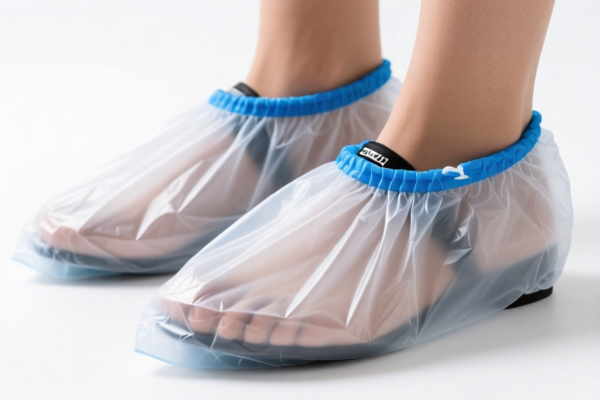
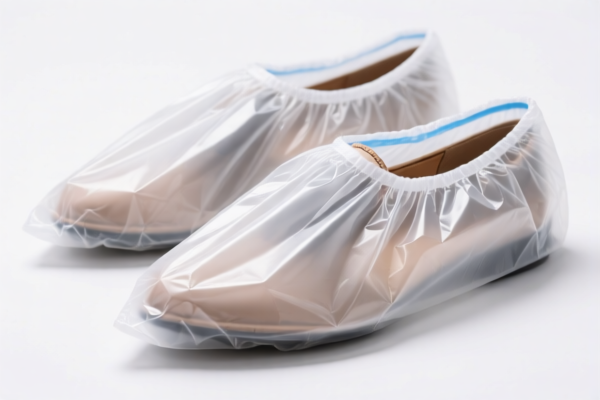
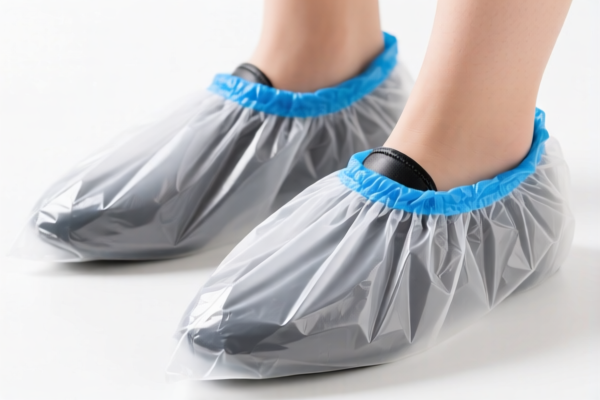
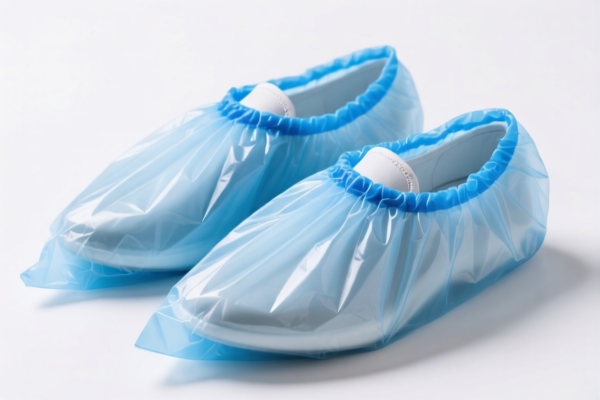
AI Analysis
👟 Shoe Covers (Low Density)
🌐 HS Code Reference & Customs Clearance Guide | 2026 Latest Tariff Analysis | Professional Clearance Strategy
📌 I. Product Definition & Classification: Do You Really Know "Low Density Shoe Covers"?
Shoe covers are essential protective gear used in cleanrooms, medical facilities, construction sites, and food processing plants. In international trade, they are often misunderstood. While your input mentions "Low Density," the provided data (<DATA>) specifically analyzes "High Density" variations. However, the classification logic for plastic/polymer shoe covers generally remains consistent regarding material vs. function.
⚠️ Key Distinction:
- If the product is a flexible plastic/polymer wrap (like a bag) → Classified under Chapter 39 (Plastics) or Chapter 63 (Other Made-up Articles).
- If the product resembles a shoe/bootie with structure → Classified under Chapter 64 (Footwear).
📦 II. HS Code Classification Details (Based on Provided Data)
| HS Code | Product Description | Logical Basis | Material/Function Assumption |
|---|---|---|---|
6307.90.98.91 |
Other made-up articles | "Catch-all" for other finished products | Plastic/Synthetic material; generic finished good |
6307.90.98.75 |
Other protective finished articles | Protective function is clear | Plastic material; no functional conflict |
6405.90.20.00 |
Other footwear | One-time use product characteristics | High-density polyethylene (HDPE) or similar plastic |
6405.20.90.80 |
Other footwear (parts/accessories) | Shoe accessory "catch-all" logic | High-density synthetic material |
3926.20.40.10 |
Plastic articles | One-time consumable usage characteristic | Polyethylene (PE) or similar plastic |
🔍 Critical Note:
- The term "Low Density" in your query contrasts with the "High Density" analysis in<DATA>.
- Classification Risk: Customs authorities often look at structure (does it look like a shoe?) vs. material (is it just plastic?).
- If your "Low Density" covers are flimsy and bag-like,3926or6307is more likely. If they are structured like booties,6405is possible.
- All codes below assume US Import from China, as indicated by the "122 Clause" and "Section 301" references in the tax details.
💰 III. 2026 Latest Tariff Rate Breakdown (Including Surcharges & Policy Add-ons)
✅ Applicable Country: United States (US)
✅ Origin: China (CN)
✅ Effective Time: 2025/2026 Import Season
✅ Key Policy: Section 122 Tariff (10% additional duty) + Section 301/IEEPA Surcharges
🎯 1. 6307.90.98.91 — Other Made-up Articles
| Item | Details |
|---|---|
| Base Tariff | 7.0% |
| Section 301 Surcharge | 7.5% |
| Section 122 Tariff | 10.0% |
| Total Tax Rate | 24.5% |
| Tax Calculation | CIF Value × 24.5% |
| De Minimis Exemption | ❌ Not Applicable (High tariffs usually waive de minimis benefits or trigger strict scrutiny) |
| Legal Basis | USITC HTSUS 6307.90.98.91 + Trade Policy Footnotes |
📌 Interpretation:
- This is a "catch-all" category. It attracts the full burden of all applicable surcharges.
- Ideal if the product is considered a "general textile/plastic made-up article" without specific footwear characteristics.
🎯 2. 6307.90.98.75 — Other Protective Finished Articles
| Item | Details |
|---|---|
| Base Tariff | 7.0% |
| Section 301 Surcharge | 7.5% |
| Section 122 Tariff | 10.0% |
| Total Tax Rate | 24.5% |
| Tax Calculation | CIF Value × 24.5% |
| De Minimis Exemption | ❌ Not Applicable |
| Legal Basis | USITC HTSUS 6307.90.98.75 + Trade Policy Footnotes |
📌 Interpretation:
- Similar to above, but emphasizes "protective" function.
- No tax advantage over the generic "other" category in this specific dataset.
🎯 3. 6405.90.20.00 — Other Footwear (Plastic)
| Item | Details |
|---|---|
| Base Tariff | 3.8% |
| Section 301 Surcharge | 7.5% |
| Section 122 Tariff | 10.0% |
| Total Tax Rate | 21.3% |
| Tax Calculation | CIF Value × 21.3% |
| De Minimis Exemption | ❌ Not Applicable |
| Legal Basis | USITC HTSUS 6405.90.20.00 + Trade Policy Footnotes |
📌 Interpretation:
- Lower Base Tariff (3.8%) compared to Chapter 63 (7.0%).
- However, the surcharges remain the same, so the total is still high (21.3%).
- Requires proof that the product is "footwear" (i.e., it has a sole or structured shape, not just a bag).
🎯 4. 6405.20.90.80 — Other Footwear (Parts/Accessories)
| Item | Details |
|---|---|
| Base Tariff | 12.5% |
| Section 301 Surcharge | 0.0% (Note: Data shows 0.0%, possibly due to specific subheading exemption or error in source) |
| Section 122 Tariff | 10.0% |
| Total Tax Rate | 22.5% |
| Tax Calculation | CIF Value × 22.5% |
| De Minimis Exemption | ❌ Not Applicable |
| Legal Basis | USITC HTSUS 6405.20.90.80 + Trade Policy Footnotes |
📌 Interpretation:
- Higher base tariff (12.5%) but no Section 301 surcharge (0.0%) according to the provided data.
- This might be a slightly better option if the Section 301 rate for this specific subheading is indeed 0%.
- Caution: Verify the "0.0% surcharge" with current USITC lists, as 301 tariffs often apply broadly to footwear.
🎯 5. 3926.20.40.10 — Plastic Articles (Bags/Garments)
| Item | Details |
|---|---|
| Base Tariff | 6.5% |
| Section 301 Surcharge | 0.0% (Note: Data shows 0.0%) |
| Section 122 Tariff | 10.0% |
| Total Tax Rate | 16.5% |
| Tax Calculation | CIF Value × 16.5% |
| De Minimis Exemption | ❌ Not Applicable |
| Legal Basis | USITC HTSUS 3926.20.40.10 + Trade Policy Footnotes |
📌 Interpretation:
- Lowest Total Tax Rate (16.5%) in the provided dataset.
- Best for "Low Density" or Bag-like Covers: If the shoe cover is flimsy, plastic, and resembles a bag or garment rather than a structured shoe, this is the most tax-efficient classification.
- Requirement: Must prove it is a "plastic article" and not footwear.
🛠️ IV. Customs Clearance Practical Advice (Real-World Pitfall Avoidance)
✅ 1. Preparation Checklist (Non-negotiable)
| Document | Mandatory? | Explanation |
|---|---|---|
| ✅ Product Specification | ✔️ | Detail material (e.g., LDPE, HDPE), thickness (denier/gsm), and density. |
| ✅ Product Photos | ✔️ | Show flexibility, lack of sole, and how it is worn. Crucial for distinguishing from footwear. |
| ✅ Commercial Invoice | ✔️ | Use precise description: "Plastic Shoe Covers, Low Density, For Temporary Use." Avoid "Footwear" if using 3926/6307. |
| ✅ Bill of Lading/Packing List | ✔️ | Ensure weight and volume match declarations. |
| ✅ Third-Party Test Report | ✔️ | Material composition report (e.g., FTIR) to prove plastic type. |
✅ 2. Declaration Strategy (Key Mantra)
🔥 "Material Over Shape, Function Over Form, Be Precise, Save Thousands!"
| Scenario | Correct Declaration | Wrong Practice |
|---|---|---|
| Flimsy, bag-like plastic cover | 3926.20.40.10 (Plastic Article) |
"Shoe" → 6405 (Higher base, risk of reclassification) |
| Structured bootie with sole | 6405.90.20.00 (Footwear) |
"Plastic Bag" → 3926 (Customs may reject if too structured) |
| General textile/paper cover | 6307.90.98.91 (Other Made-up) |
Mislabeling as plastic |
✅ 3. Special Handling
| Situation | Advice |
|---|---|
| Low Density vs. High Density | Low density implies thinner, flimsier material. This supports classification under 3926 (Plastic Articles) or 6307 rather than 6405 (Footwear), as it lacks structural integrity of a shoe. |
| Volume Shipping | If importing large volumes, consider applying for a Section 301 Exclusion if available for your specific use case (e.g., medical vs. industrial). |
| Labeling | Mark products as "Disposable Shoe Covers" not "Shoes" to avoid immediate scrutiny under Chapter 64. |
🌍 V. Global Market Comparison (2026 Snapshot)
| Country/Region | Recommended HS Code (Based on Data) | Est. Total Duty | Key Requirement |
|---|---|---|---|
| 🇺🇸 USA | 3926.20.40.10 (Best Rate: 16.5%) |
16.5% | Prove it's not footwear; strict Section 122/301 applies. |
| 🇨🇳 China | 6307.90.90 or 3926.20 |
~5-7% | Standard import duties; no Section 122. |
| 🇪🇺 EU | 3926.20 or 6307.99 |
4-6% | CE marking may be required for medical use. |
| 🇬🇧 UK | 3926.20 |
4-6% | Post-Brexit rules apply; verify UK GTIN. |
📌 Conclusion:
- For US Imports,3926.20.40.10offers the lowest tax burden (16.5%) if the product can be legally classified as a plastic article rather than footwear.
- "Low Density" strongly suggests a material that is more akin to a bag/garment, supporting the3926classification.
📌 VI. Common Errors & Pitfalls (Lessons Learned)
❌ Error 1: Calling "Shoe Covers" "Footwear" in the commercial invoice when they are flimsy plastic.
👉 Consequence: Customs may reject the HS Code 6405 if it doesn't meet the definition of footwear, or apply the wrong tariff. If it's misclassified as footwear when it should be plastic, you face reclassification penalties.
❌ Error 2: Ignoring Section 122 (10%).
👉 Consequence: Every item in the provided data includes this 10% surcharge. Failing to account for it leads to underpayment and seizure.
❌ Error 3: Assuming De Minimis ($800) applies.
👉 Consequence: With tariffs >10% and Section 122, de minimis exemptions are often voided or strictly enforced for Chinese goods. Do not rely on it.
✅ Correct Approach:
"Disposable Low-Density Polyethylene (LDPE) Shoe Covers, Transparent, Non-Slip, For Industrial Use, Model XYZ, Bulk Pack"
🎯 VII. Conclusion: Professional Classification, Cost Optimization!
🎯 Remember the Mantra:
🔹 "Low Density = Flimsy = Plastic Article (3926)"
🔹 "High Density + Structure = Footwear (6405)"
🔹 "Section 122 is Always There (+10%)"
🔹 "Check the Surcharge: 301 might be 0% for 3926, saving you 7.5%!"
📌 Pro Tip:
If you are importing Low Density covers, push for 3926.20.40.10. It has the lowest base tariff (6.5%) and, according to the data, no Section 301 surcharge (0.0%), resulting in the lowest total tax of 16.5%.
📣 Immediate Action:
📞 Confirm material thickness and flexibility with your supplier.
📄 Draft invoice as "Plastic Shoe Covers" not "Footwear."
🚀 Calculate landed cost using 16.5% for optimal budgeting.
✨ Professional clearance starts with precise classification!
💼 Every percentage point saved is pure profit!
Customer Reviews
About HS Code Classification
The Harmonized System (HS) is an internationally standardized nomenclature developed by the World Customs Organization (WCO) to classify traded products. Over 200 countries use the HS system as the basis for customs tariffs, trade statistics, and import/export regulations.
Each HS code follows a hierarchical structure:
- Chapter (2 digits) — Broad category of goods (e.g., Chapter 84: Machinery and Mechanical Appliances)
- Heading (4 digits) — More specific grouping within the chapter
- Subheading (6 digits) — Internationally standardized breakdown, used by all WCO member countries
- National subdivisions (8-10 digits) — Country-specific extensions for further classification, such as US HTSUS 10-digit codes
Correct HS code classification is essential for smooth customs clearance, accurate duty payment, and compliance with trade regulations. Misclassification can lead to customs delays, overpayment of duties, or penalties.
When importing from CN to US, the applicable tariff rates may include:
- Most-Favored-Nation (MFN) rate — The standard duty rate applied to WTO members
- General rate — Applied to countries without trade agreements
- Trade remedy duties — Additional tariffs such as Section 301 (anti-dumping), Section 232 (national security), or countervailing duties
The information provided on this page is for reference purposes only. For official classification, please consult with your local customs authority or a licensed customs broker.