sm restraint strap
CN → US| HS Code | Tariff Rate | Origin | Destination | Doc |
|---|---|---|---|---|
| 6307905010 | 17.5% | CN | US | Official Doc |
| 6307905020 | 17.5% | CN | US | Official Doc |
| 4205002000 | 35.0% | CN | US | Official Doc |
| 3926906090 | 39.2% | CN | US | Official Doc |
| 3926905900 | 37.4% | CN | US | Official Doc |
Product Images

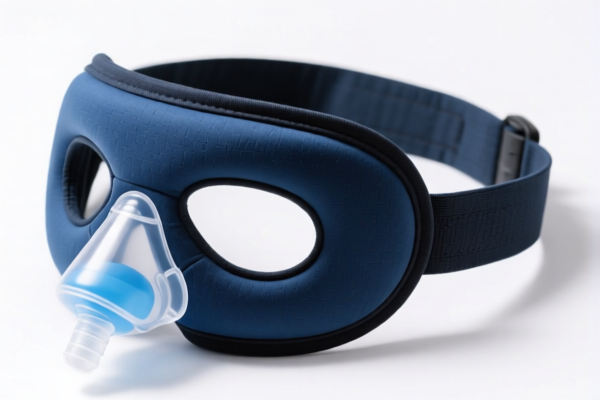
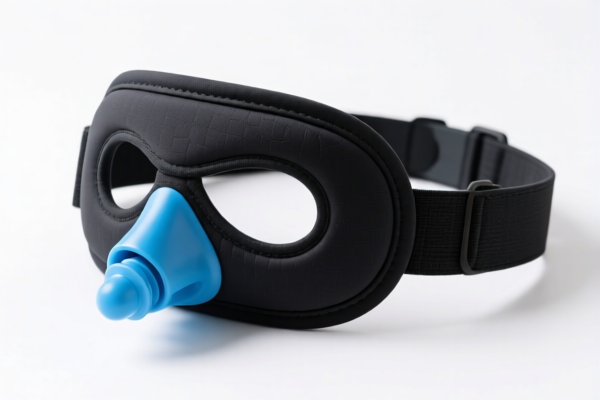
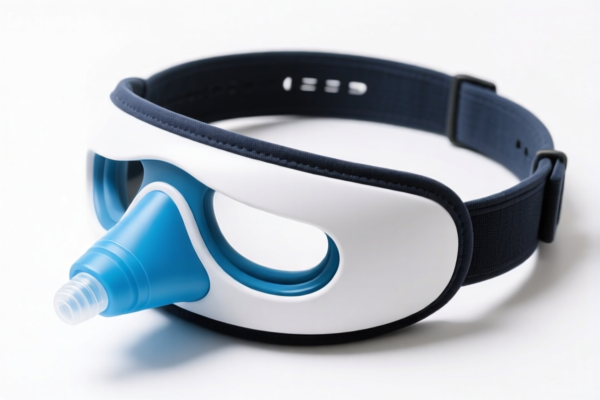
AI Analysis
🎀 SM Restraint Straps: Material-Based Classification & Clearance Guide (2026)
🌐 HS Code Reference & Customs Clearance Strategy | Material Logic Decoded | High-Tariff Avoidance Tactics
📌 I. Product Definition: Why "Material" is the Key to Classification
SM Restraint Straps are specialty accessories used for bondage and restraint. In international trade, they do not have a dedicated "Bondage" HS Code. Instead, they are classified based on their primary material composition under the "Other Made Articles" chapters.
The Critical Distinction:
Customs authorities classify these items strictly by what they are made of, not what they are for. Misclassifying based on "use" leads to severe penalties.
⚠️ Key Classification Rules:
- Cotton/Fabric → Chapter 63 (Other Made Articles)
- Leather/Synthetic Leather → Chapter 42 (Articles of Leather)
- Plastic/Synthetic Fiber → Chapter 39 (Articles of Plastics)
📦 II. HS Code Classification Matrix (Based on Provided Data)
| HS Code | Material Category | Summary Description | Tax Logic |
|---|---|---|---|
6307.90.50.10 |
Cotton or Textile | Cotton or textile material restraint straps. Fits logic of "Other Made Articles" regarding material and form. | Textile-based classification. |
6307.90.50.20 |
Non-Cotton Textile/Fabric | Similar laces/straps made of non-cotton materials. Fits other category rules. | Non-cotton textile classification. |
4205.00.20.00 |
Leather or Synthetic Leather | Leather or synthetic material restraint articles. Fits "Other" category under Leather/Reconstituted Leather. | Leather goods classification. |
3926.90.60.90 |
Plastic or Synthetic Fiber | Plastic or synthetic fiber strap articles. Classified as "Other belts" (non-synchronous). | Plastic goods classification. |
3926.90.59.00 |
Mixed Plastic/Textile | Strap articles containing plastic or textile fibers. Falls under "Other" catch-all principle. | Mixed material classification. |
🔍 Important Note:
- Do NOT try to classify as "Apparel" or "Safety Gear" unless explicitly stated.
- The primary material determines the chapter. If it's a blend, look for the component that gives the essential character.
💰 III. 2026 Tariff Rate Breakdown (Detailed Tax Analysis)
✅ Applicable Country: United States (US)
✅ Origin: China (CN)
✅ Effective Date: 2025/2026 Import Regulations
🎯 1. Textile-Based Straps (6307.90.50.10 & 6307.50.20)
| Item | Details |
|---|---|
| Base Tariff | 0.0% |
| Section 301 (Additional) | 7.5% |
| Section 122 Tariff | 10% |
| Total Effective Rate | 17.5% |
| Tax Calculation | CIF Value × 17.5% |
| Legal Path | Base Tariff → Section 301 (7.5%) → Section 122 (10%) |
📌 Explanation:
- Section 122 Tariff (10%): This is a specific additional levy on certain textile/apparel items.
- Section 301 (7.5%): Standard additional tariff on Chinese textile goods.
- Total: 17.5%. This is the lowest among the provided options for SM straps.
🎯 2. Leather-Based Straps (4205.00.20.00)
| Item | Details |
|---|---|
| Base Tariff | 0.0% |
| Section 301 (Additional) | 25.0% |
| Section 122 Tariff | 10% |
| Total Effective Rate | 35.0% |
| Tax Calculation | CIF Value × 35.0% |
| Legal Path | Base Tariff → Section 301 (25%) → Section 122 (10%) |
📌 Explanation:
- Section 301 (25%): Higher additional tariff for leather goods from China.
- Total: 35.0%. Significantly higher than textile options.
🎯 3. Plastic-Based Straps (3926.90.60.90)
| Item | Details |
|---|---|
| Base Tariff | 4.2% |
| Section 301 (Additional) | 25.0% |
| Section 122 Tariff | 10% |
| Total Effective Rate | 39.2% |
| Tax Calculation | CIF Value × 39.2% |
| Legal Path | Base Tariff (4.2%) → Section 301 (25%) → Section 122 (10%) |
📌 Explanation:
- Base Tariff (4.2%): Unlike textiles/leather, plastics have a base import duty.
- Total: 39.2%. This is the highest tax rate among the options.
🎯 4. Mixed Plastic/Textile Straps (3926.90.59.00)
| Item | Details |
|---|---|
| Base Tariff | 2.4% |
| Section 301 (Additional) | 25.0% |
| Section 122 Tariff | 10% |
| Total Effective Rate | 37.4% |
| Tax Calculation | CIF Value × 37.4% |
| Legal Path | Base Tariff (2.4%) → Section 301 (25%) → Section 122 (10%) |
📌 Explanation:
- Base Tariff (2.4%): Lower base than pure plastic, but still high total.
- Total: 37.4%. Avoid if possible due to high effective rate.
🛠️ IV. Customs Clearance Practical Advice (Avoid Pitfalls)
✅ 1. Critical Documentation Checklist
| Document | Requirement | Why It Matters |
|---|---|---|
| Material Composition Statement | ✔️ Mandatory | Must explicitly state % of Cotton, Leather, Plastic, etc. |
| Product Photos | ✔️ Mandatory | Show material texture (grain for leather, weave for cotton). |
| Functional Description | ✔️ Recommended | "Restraining accessory for adult use only" – helps avoid obscenity flags. |
| Commercial Invoice | ✔️ Mandatory | Must match HS Code description exactly (e.g., "Cotton Restraint Strap"). |
| Certificate of Origin | ✔️ Mandatory | To prove Chinese origin for Section 301/122 calculation. |
✅ 2. Declaration Tips (Key Mnemonics)
🔥 "Material First, Use Second! Cotton Wins, Plastic Loses!"
| Scenario | Correct HS Code | Incorrect Code | Risk |
|---|---|---|---|
| 100% Cotton Strap | 6307.90.50.10 (17.5%) |
4205.00.20.00 |
Overpaying by 17.5% |
| 100% Leather Strap | 4205.00.20.00 (35.0%) |
6307.90.50.10 |
Underpaying → Penalty/Seizure |
| Plastic-Coated Strap | 3926.90.60.90 (39.2%) |
6307.90.50.10 |
Underpaying → Penalty |
| Mixed Fabric/Plastic | 3926.90.59.00 (37.4%) |
6307.90.50.20 |
Underpaying → Penalty |
📌 Warning:
- Never declare as "Safety Equipment" or "Sports Gear" unless it meets specific industrial standards.
- Do not use vague terms like "Accessory" or "Bondage Gear" on the invoice. Use descriptive material terms: "Cotton Strap," "Leather Restraint."
✅ 3. Special Considerations
| Issue | Solution |
|---|---|
| Obscenity/Import Restrictions | Ensure product is marketed for "Adult Use" or "BDSM Community." Avoid suggestive imagery in marketing materials if importing to strict jurisdictions. |
| Mixed Material Products | If the item has both leather and plastic parts, determine which material provides the "Essential Character." Usually, the structural material (leather) dominates. |
| Samples vs. Commercial | Commercial shipments face full tariffs. Samples may qualify for duty exemption if valued under $800 (de minimis), but Section 301/122 often apply even to low-value shipments from China. Check current de minimis rules. |
🌍 V. Global Market Comparison (2026)
| Market | Recommended HS Code | Est. Total Duty | Notes |
|---|---|---|---|
| 🇺🇸 USA | 6307.90.50.10 (Cotton) |
17.5% | Lowest tax. Avoid 3926 codes. |
| 🇪🇺 EU | 6307.90 (Textile) |
~4-12% | No Section 301/122. VAT applies. |
| 🇨🇳 China | 6307.90 (Textile) |
5-10% | Import duty + VAT. |
| 🇬🇧 UK | 6307.90 (Textile) |
~4-12% | Post-Brexit rules apply. |
📌 Conclusion:
- The US is the most expensive market due to Section 301 and Section 122 tariffs.
- Textile (Cotton) straps are the most tax-efficient for US imports (17.5% vs 35-39%).
- Plastic straps are the most expensive to import into the US (39.2%).
📌 VI. Common Mistakes & How to Avoid Them
❌ Mistake 1: Classifying all SM straps as "Textile"
👉 Result: If made of leather, you face 35%+ back-taxes + penalties.
✅ Fix: Always verify material composition.
❌ Mistake 2: Under-declaring value to avoid Section 301
👉 Result: Customs audits, seizure, and blacklisting.
✅ Fix: Declare accurate CIF value.
❌ Mistake 3: Using vague product names
👉 Result: Customs holds shipment for classification review.
✅ Fix: Use precise descriptions: "100% Cotton Woven Restraint Strap."
🎯 VII. Final Strategy: Optimize Your Costs
🎯 Key Takeaway:
🔹 Choose Cotton/Textile materials for US imports to stay at 17.5%.
🔹 Avoid Plastic for US imports due to 39.2% total tariff.
🔹 Leather is mid-range at 35.0% – acceptable if luxury positioning.
📣 Immediate Action Items:
- Verify Material: Check supplier specs for exact material %.
- Select HS Code: Use the table above to pick the correct code.
- Prepare Docs: Draft invoices with precise material descriptions.
- Calculate Landed Cost: Include 17.5% (Cotton) or 35%+ (Leather/Plastic) in your pricing model.
✨ Smart Classification = Smarter Profits!
💼 Don’t let tariffs eat your margin – classify correctly!
Customer Reviews
About HS Code Classification
The Harmonized System (HS) is an internationally standardized nomenclature developed by the World Customs Organization (WCO) to classify traded products. Over 200 countries use the HS system as the basis for customs tariffs, trade statistics, and import/export regulations.
Each HS code follows a hierarchical structure:
- Chapter (2 digits) — Broad category of goods (e.g., Chapter 84: Machinery and Mechanical Appliances)
- Heading (4 digits) — More specific grouping within the chapter
- Subheading (6 digits) — Internationally standardized breakdown, used by all WCO member countries
- National subdivisions (8-10 digits) — Country-specific extensions for further classification, such as US HTSUS 10-digit codes
Correct HS code classification is essential for smooth customs clearance, accurate duty payment, and compliance with trade regulations. Misclassification can lead to customs delays, overpayment of duties, or penalties.
When importing from CN to US, the applicable tariff rates may include:
- Most-Favored-Nation (MFN) rate — The standard duty rate applied to WTO members
- General rate — Applied to countries without trade agreements
- Trade remedy duties — Additional tariffs such as Section 301 (anti-dumping), Section 232 (national security), or countervailing duties
The information provided on this page is for reference purposes only. For official classification, please consult with your local customs authority or a licensed customs broker.