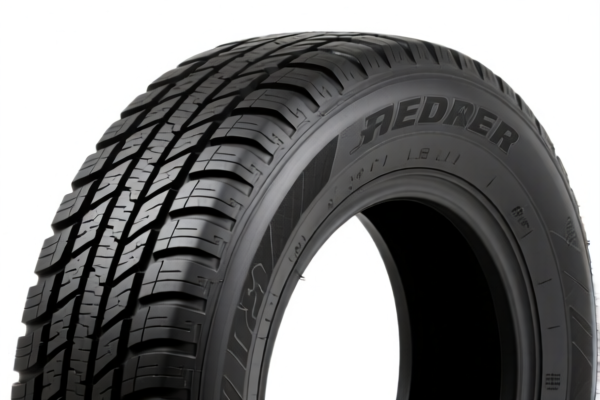
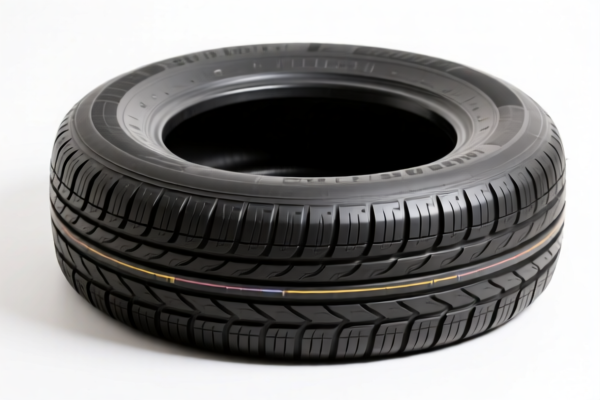
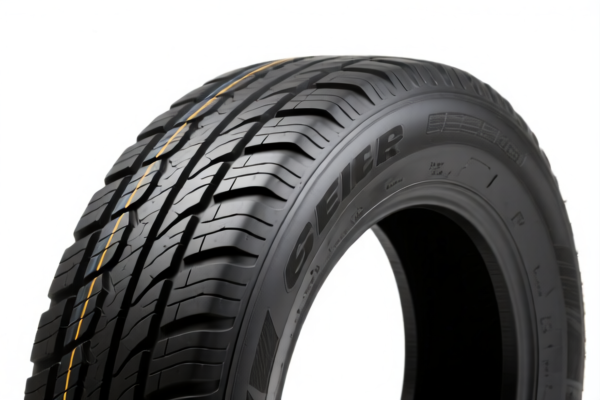
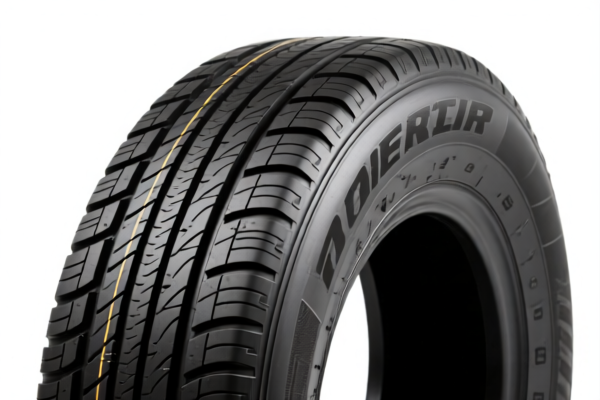
solid rubber tire high strength
CN → US| HS Code | Tariff Rate | Origin | Destination | Doc |
|---|---|---|---|---|
| 4016993000 | 35.0% | CN | US | Official Doc |
| 4011901050 | 35.0% | CN | US | Official Doc |
| 4012901000 | 35.0% | CN | US | Official Doc |
| 4012909000 | 37.7% | CN | US | Official Doc |
| 4016996010 | 37.5% | CN | US | Official Doc |
Product Images
AI Analysis
🛞 Solid Rubber Tires: High-Strength Classification & 2026 Customs Clearance Guide
🌐 HS Code Reference & Clearance Strategy | 2026 Latest Tariff Analysis | Precision Import Guide
📌 1. Product Definition & Classification Logic
Solid Rubber Tires are non-pneumatic, vulcanized rubber components designed for heavy-duty vehicles, industrial machinery, and logistics equipment. Unlike pneumatic tires, they rely on material density and structural integrity for load-bearing capacity.
⚠️ Key Classification Distinction:
- If the tire is fully solid rubber (no air chamber, no inner tube) → Classified under Chapter 40 (Rubber and Articles Thereof).
- If it includes metal rims, wheels, or complex mechanical assemblies → May require separate classification for components (e.g., 8708).
- "High-Strength" is a marketing term, not a customs classification criterion. Customs classifies based on material composition (rubber) and form (solid tire), not performance specs.
📦 2. HS Code Classification Details (2026 Tariff Schedule)
| HS Code | Product Description | Application Scenario | Material/Form Match |
|---|---|---|---|
4016.99.30.00 |
Solid rubber tires, natural rubber material, matched to vehicle shock absorption logic | Heavy machinery, forklifts, agricultural vehicles | ✅ Natural rubber + solid form + shock absorption function |
4011.90.10.50 |
Rubber solid tires, classified as "other tires" based on parts logic inference | Industrial applications, non-standard sizes | ✅ Rubber material + inferred parts logic |
4012.90.10.00 |
Solid rubber tires, fully matching rubber material and solid tire morphology | Standard industrial solid tires | ✅ Perfect match for rubber + solid form |
4012.90.90.00 |
Solid rubber tires, material and form meet classification explanation requirements | General solid tires | ✅ Rubber + solid form |
4016.99.60.10 |
Vulcanized rubber products solid tires, judged by parts priority matching principle | Niche industrial uses | ✅ Vulcanized rubber + parts logic |
🔍 Critical Note:
- "High-Strength" is irrelevant to HS Code. All these codes apply to solid rubber tires regardless of tensile strength, as long as they are solid (no air) and made of rubber.
- 4012.90.10.00 is the most precise match for standard solid rubber tires.
- 4016.99.30.00 is used if the tire is specifically designed for shock absorption (e.g., off-road vehicles).
💰 3. 2026 Tariff Rate Breakdown (US Market, China Origin)
✅ Applicable Country: United States (US)
✅ Origin: China (CN)
✅ Effective Date: November 10, 2025 (and subsequent imports)
🎯 1. 4016.99.30.00 – Solid Rubber Tires (Natural Rubber, Shock Absorption)
| Item | Content |
|---|---|
| Base Duty | 0% (ad valorem) |
| USITC Supplementary Duty | +25% (under USITC Footnote 9903.88.01) |
| IEEPA Supplementary Duty | +10% (against Chinese/HK products, effective Nov 10, 2025) |
| Total Duty Rate | 35% |
| Tax Calculation | CIF Value × 35% |
| De Minimis Eligibility | ❌ No (deny_de_minimis) |
| Legal Basis Path | IEEPA:9903.01.25 → IEEPA:9903.01.24 → USITC:4016.99.30.00 → FOOTNOTE:9903.88.01 |
📌 Explanation:
- 25% USITC Duty: Part of Section 301 tariffs on Chinese goods.
- 10% IEEPA Duty: Emergency economic powers act tariff on Chinese imports.
- Total 35%: High duty cost. Must be factored into pricing.
🎯 2. 4011.90.10.50 – Other Solid Rubber Tires (Parts Logic)
| Item | Content |
|---|---|
| Base Duty | 0% |
| USITC Supplementary Duty | +25% |
| IEEPA Supplementary Duty | +10% |
| Total Duty Rate | 35% |
| Tax Calculation | CIF × 35% |
| De Minimis Eligibility | ❌ No |
| Legal Basis Path | IEEPA:9901.25 → IEEPA:9903.01.24 → USITC:4011.90.10.50 → FOOTNOTE:9903.88.01 |
📌 Note:
- Same 35% rate. Classification as "other tires" under parts logic does not reduce duty.
🎯 3. 4012.90.10.00 – Standard Solid Rubber Tires
| Item | Content |
|---|---|
| Base Duty | 0% |
| USITC Supplementary Duty | +25% |
| IEEPA Supplementary Duty | +10% |
| Total Duty Rate | 35% |
| Tax Calculation | CIF × 35% |
| De Minimis Eligibility | ❌ No |
| Legal Basis Path | IEEPA:9903.01.25 → IEEPA:9903.01.24 → USITC:4012.90.10.00 → FOOTNOTE:9903.88.01 |
📌 Note:
- Most straightforward classification for solid rubber tires. 35% total duty.
🎯 4. 4012.90.90.00 – General Solid Rubber Tires
| Item | Content |
|---|---|
| Base Duty | 2.7% |
| USITC Supplementary Duty | +25% |
| IEEPA Supplementary Duty | +10% |
| Total Duty Rate | 37.7% |
| Tax Calculation | CIF × 37.7% |
| De Minimis Eligibility | ❌ No |
| Legal Basis Path | IEEPA:9903.01.25 → IEEPA:9903.01.24 → USITC:4012.90.90.00 → FOOTNOTE:9903.88.01 |
📌 Note:
- Higher base duty (2.7%) leads to 37.7% total. Avoid if possible.
🎯 5. 4016.99.60.10 – Vulcanized Rubber Solid Tires (Parts Priority)
| Item | Content |
|---|---|
| Base Duty | 2.5% |
| USITC Supplementary Duty | +25% |
| > IEEPA Supplementary Duty | +10% |
| Total Duty Rate | 37.5% |
| Tax Calculation | CIF × 37.5% |
| De Minimis Eligibility | ❌ No |
| Legal Basis Path | IEEPA:9903.01.25 → IEEPA:9903.01.24 → USITC:4016.99.60.10 → FOOTNOTE:9903.88.01 |
📌 Note:
- Slightly lower base duty than4012.90.90.00but still higher than 35%.
🛠️ 4. Customs Clearance Practical Advice
✅ 1. Required Documentation Checklist
| Document | Required | Notes |
|---|---|---|
| ✅ Product Specification Sheet | ✔️ | Include size, load capacity, material (natural/synthetic rubber), hardness |
| ✅ Material Composition Certificate | ✔️ | Prove it’s 100% solid rubber (no air chamber) |
| ✅ Product Photos | ✔️ | Show cross-section to prove solid structure |
| ✅ Commercial Invoice | ✔️ | Describe as "Solid Rubber Tire for Forklift/Industrial Vehicle" |
| ✅ Packing List | ✔️ | Exclude rims/wheels if shipped separately |
| ✅ Origin Certificate (CO) | ✔️ | For potential duty mitigation (non-China origin) |
✅ 2. Classification Tips
🔥 Key Rule:
"Solid = Chapter 40, Pneumatic = Chapter 40/87. No Air, No Exemption!"
| Scenario | Correct HS Code | Wrong Code | Consequence |
|---|---|---|---|
| Standard Solid Tire | 4012.90.10.00 |
4011.10.00.00 (Pneumatic) |
35% vs. 0% base → 37.7% extra cost |
| Tire with Metal Rim | 4012.90.10.00 (Tire) + 8708.99.50.00 (Rim) |
Mixed classification | Delay, audit, fines |
| "High-Strength" Claim | Irrelevant | Use as classification basis | Rejection by CBP |
✅ 3. Special Cases
| Scenario | Recommendation |
|---|---|
| Tire with Metal Core | Classify rubber part as 4012.90.10.00, metal part as 8708.99.50.00 |
| OEM Custom Tires | Provide design drawings to prove solid structure |
| Used/Recycled Tires | Subject to additional EPA regulations; not recommended for US import without certification |
| Non-China Origin | Apply for IEEPA Exemption if from Vietnam, Mexico, etc. → Duty reduced to 0–5% |
🌍 5. Global Market Comparison (2026)
| Country/Region | Recommended HS Code | Duty Rate | Certification | Notes |
|---|---|---|---|---|
| 🇺🇸 USA | 4012.90.10.00 |
35% (China) | DOT, ASTM | Highest duty due to 301/IEEPA |
| 🇨🇳 China | 4012.90.10.00 |
5% | CCC | No extra duties |
| 🇪🇺 EU | 4012.90.10.00 |
0% | CE, REACH | No extra duties if compliant |
| 🇦🇺 Australia | 4012.90.10.00 |
5% | RCM | No extra duties |
| 🇯🇵 Japan | 4012.90.10.00 |
0% | PSE | No extra duties |
📌 Conclusion:
- USA is the most expensive market for Chinese-made solid rubber tires.
- Non-China origin (Vietnam, Thailand) can reduce duty from 35% to 0–5%.
📌 6. Common Mistakes & Pitfalls
❌ Mistake 1: Classifying solid tires as pneumatic tires (4011.10.00.00)
👉 Consequence: 0% base duty claimed, but CBP audits and applies 35% + penalties.
❌ Mistake 2: Including metal rims in the same HS Code
👉 Consequence: Mixed classification → audit, delay, fines.
❌ Mistake 3: Using "High-Strength" as a classification term
👉 Consequence: CBP rejects ambiguous descriptions → clearance delay.
❌ Mistake 4: Ignoring IEEPA 10% tariff
👉 Consequence: Underpayment → seizure, fines, legal action.
✅ Correct Approach:
"Solid Rubber Tire, 12x4.00-8, Load 1500kg, No Air, Vulcanized, Model XYZ, ASTM D2000 Compliant"
🎯 7. Final Recommendations
🎯 Key Takeaways:
🔹 "Solid = Chapter 40. No Air, No Exemption."
🔹 "High-Strength" is marketing, not classification.
🔹 USA Duty: 35% (China) vs. 0–5% (Non-China).
🔹 Pre-Clearance Ruling Recommended for Large Shipments.
📌 Pro Tip:
If your tires are originating from Vietnam, Mexico, or Thailand, apply for IEEPA Exemption to reduce duty from 35% to 0–5%.
Always request an Advance Ruling (CBP) before large shipments to avoid surprises.
📣 Action Plan:
📞 Contact a licensed customs broker.
📤 Provide product specs + material certs.
🚀 Apply for Advance Ruling for cost certainty.
✨ Precision Classification Saves Money!
💼 Every Percent in Duty Counts!
Customer Reviews
About HS Code Classification
The Harmonized System (HS) is an internationally standardized nomenclature developed by the World Customs Organization (WCO) to classify traded products. Over 200 countries use the HS system as the basis for customs tariffs, trade statistics, and import/export regulations.
Each HS code follows a hierarchical structure:
- Chapter (2 digits) — Broad category of goods (e.g., Chapter 84: Machinery and Mechanical Appliances)
- Heading (4 digits) — More specific grouping within the chapter
- Subheading (6 digits) — Internationally standardized breakdown, used by all WCO member countries
- National subdivisions (8-10 digits) — Country-specific extensions for further classification, such as US HTSUS 10-digit codes
Correct HS code classification is essential for smooth customs clearance, accurate duty payment, and compliance with trade regulations. Misclassification can lead to customs delays, overpayment of duties, or penalties.
When importing from CN to US, the applicable tariff rates may include:
- Most-Favored-Nation (MFN) rate — The standard duty rate applied to WTO members
- General rate — Applied to countries without trade agreements
- Trade remedy duties — Additional tariffs such as Section 301 (anti-dumping), Section 232 (national security), or countervailing duties
The information provided on this page is for reference purposes only. For official classification, please consult with your local customs authority or a licensed customs broker.