storage container
CN → US| HS Code | Tariff Rate | Origin | Destination | Doc |
|---|---|---|---|---|
| 4202999000 | 55.0% | CN | US | Official Doc |
| 3923102000 | 35.0% | CN | US | Official Doc |
| 3926908700 | 40.3% | CN | US | Official Doc |
| 4421999880 | 38.3% | CN | US | Official Doc |
| 4823908680 | 35.0% | CN | US | Official Doc |
| 4421919880 | 38.3% | CN | US | Official Doc |
Product Images
AI Analysis
📦 Storage Containers: HS Code Classification & US Customs Clearance Guide (2026)
🌐 HS Code Reference & Clearance Strategy | Comprehensive Tariff Analysis | Expert Compliance Guide
📌 Part 1: Product Definition & Classification Logic
Storage containers are versatile organizational tools used for household, office, or industrial purposes. In international trade, they are not classified under a single HS code. The correct classification depends heavily on the primary material and specific intended use.
Common categories include:
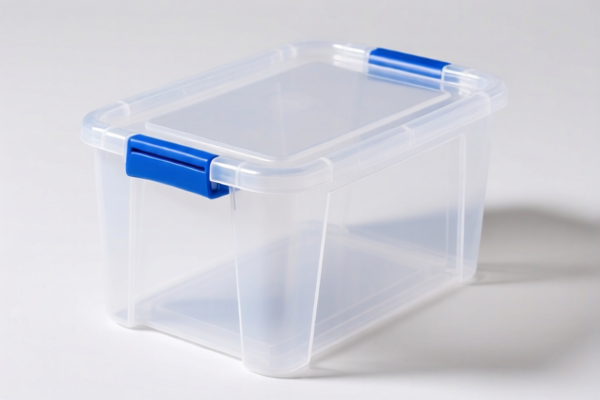
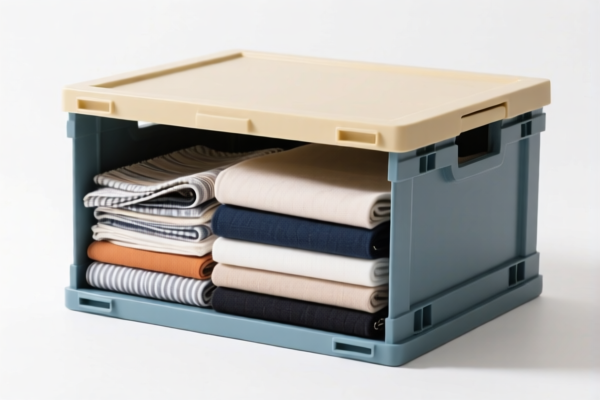
- Plastic Storage Boxes: Rigid, molded containers for general storage.
- Textile/Non-Woven Bags: Soft-sided boxes or bins made of fabric.
- Wooden Storage Units: Rigid containers made of wood.
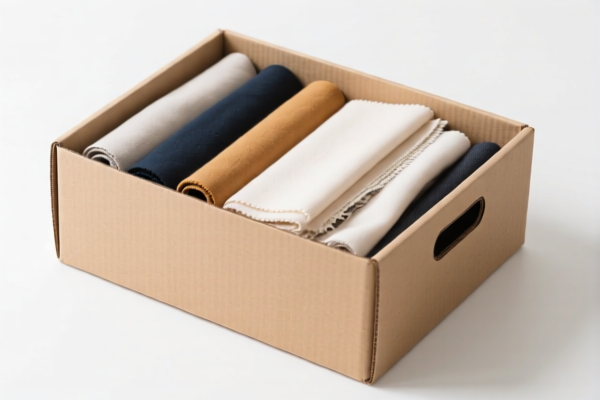
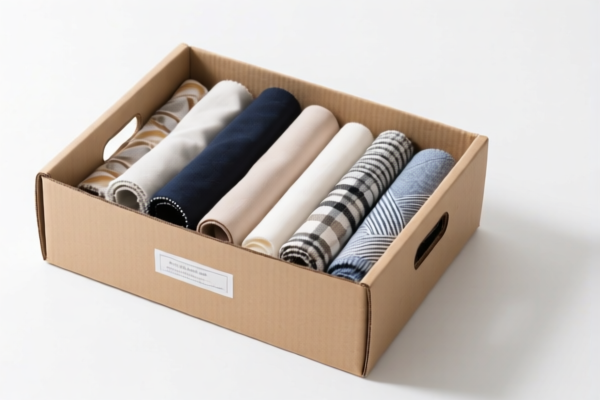
- Paper/Cardboard Containers: Folding boxes or structured paper packaging.
⚠️ Critical Distinction:
- If the item is rigid plastic and intended for general storage → Likely Chapter 39 or Chapter 42.
- If the item is textile-based (e.g., non-woven fabric bins) → Likely Chapter 42 or Chapter 63.
- If the item is wooden → Likely Chapter 44.
- If the item is cardboard/paper → Likely Chapter 48.
📋 Part 2: HS Code Classification Details (Based on Provided Data)
| HS Code | Product Description | Material / Use Case | Tax Rate Summary |
|---|---|---|---|
4202.99.90.00 |
Other containers and bags, not elsewhere specified | Plastic, textile, or cardboard materials; general-purpose containers | 55.0% |
3923.10.20.00 |
Articles for the conveyance or packing of goods, of plastics | Plastic storage boxes; fits "plastic packaging" characteristics | 35.0% |
3926.90.87.00 |
Other articles of plastics | Plastic card/organizer boxes; file-binding/organizing use | 40.3% |
4421.99.98.80 |
Other wooden articles | Wooden or mixed-material storage units; fallback for wood | 38.3% |
4823.90.86.80 |
Other paper/cardboard articles | Cardboard or paper-based storage boxes; structural paper goods | 35.0% |
🔍 Key Insight:
- Plastic containers generally fall under Chapter 39 (Plastics). The exact sub-code depends on whether it’s considered "packing" (3923.10) or "other plastic articles" (3926.90).
- Textile/fabric bins often fall under Chapter 42 (4202.99.90.00), but may have higher tariff exposure.
- Wooden and Paper containers are categorized under their respective material chapters (44 and 48).
💰 Part 3: 2026 US Tariff Rate Breakdown (Detailed)
✅ Applicable Country: United States (US)
✅ Origin: China (CN)
✅ Effective Date: 2025-11-10 (Includes subsequent imports)
🎯 1. 4202.99.90.00 – Other Containers & Bags (Textile/Cardboard/Plastic)
| Item | Detail |
|---|---|
| Base Duty | 20.0% |
| Section 301 Duty | +25.0% |
| IEEPA Duty (Section 122) | +10.0% |
| Total Effective Rate | 55.0% |
| Calculation Basis | CIF Value × 55.0% |
| De Minimis Exemption | ❌ Not Eligible |
| Legal Path | Base: 4202.99.90.00 → Sec301: 25% → IEEPA: 10% |
📌 Explanation:
- This is the highest tax bracket among the options.
- It applies to containers made of textile materials, mixed materials, or cardboard that do not fit neatly into plastic/wood/paper specific codes.
- Risk Alert: High tariff burden. Consider reclassifying if the material allows.
🎯 2. 3923.10.20.00 – Plastic Articles for Packing (Plastic Storage Boxes)
| Item | Detail |
|---|---|
| Base Duty | 0.0% |
| Section 301 Duty | +25.0% |
| IEEPA Duty (Section 122) | +10.0% |
| Total Effective Rate | 35.0% |
| Calculation Basis | CIF Value × 35.0% |
| De Minimis Exemption | ❌ Not Eligible |
| Legal Path | Base: 3923.10.20.00 → Sec301: 25% → IEEPA: 10% |
📌 Explanation:
- Recommended for standard plastic storage boxes.
- Base duty is 0%, making the total tax lower than the textile/mixed category.
- Fits the definition of "articles for conveyance or packing" made of plastic.
🎯 3. 3926.90.87.00 – Other Plastic Articles (Card Organizers/Small Plastics)
| Item | Detail |
|---|---|
| Base Duty | 5.3% |
| Section 301 Duty | +25.0% |
| IEEPA Duty (Section 122) | +10.0% |
| Total Effective Rate | 40.3% |
| Calculation Basis | CIF Value × 40.3% |
| De Minimis Exemption | ❌ Not Eligible |
| Legal Path | Base: 3926.90.87.00 → Sec301: 25% → IEEPA: 10% |
📌 Explanation:
- Applies to plastic items that are not for general packing (e.g., specific organizers, file holders, decorative plastic containers).
- Higher base duty (5.3%) makes it less favorable than3923.10.20.00for general storage boxes.
🎯 4. 4421.99.98.80 – Other Wooden Articles
| Item | Detail |
|---|---|
| Base Duty | 3.3% |
| Section 301 Duty | +25.0% |
| IEEPA Duty (Section 122) | +10.0% |
| Total Effective Rate | 38.3% |
| Calculation Basis | CIF Value × 38.3% |
| De Minimis Exemption | ❌ Not Eligible |
| Legal Path | Base: 4421.99.98.80 → Sec301: 25% → IEEPA: 10% |
📌 Explanation:
- Applies to wooden storage boxes or units.
- Base duty is 3.3%, but the total remains high due to additional tariffs.
🎯 5. 4823.90.86.80 – Other Paper/Cardboard Articles
| Item | Detail |
|---|---|
| Base Duty | 0.0% |
| Section 301 Duty | +25.0% |
| IEEPA Duty (Section 122) | +10.0% |
| Total Effective Rate | 35.0% |
| Calculation Basis | CIF Value × 35.0% |
| De Minimis Exemption | ❌ Not Eligible |
| Legal Path | Base: 4823.90.86.80 → Sec301: 25% → IEEPA: 10% |
📌 Explanation:
- Applies to cardboard/paper storage boxes (e.g., folding boxes, structured paper bins).
- Same total rate as plastic packing boxes (35.0%), but base duty is also 0%.
🛠️ Part 4: Customs Clearance Practical Advice
✅ 1. Essential Documentation Checklist
| Document | Required | Notes |
|---|---|---|
| Product Specifications | ✔️ | Must include material composition (e.g., 100% Plastic, Mixed Textile). |
| Product Photos | ✔️ | Show clear views of material texture, structure, and any labels. |
| Commercial Invoice | ✔️ | Clearly state "Storage Container" and material type. |
| Packing List | ✔️ | Detail contents, weight, and dimensions. |
| Material Certificates | ✔️ | If claiming plastic/wood, provide material test reports if requested. |
✅ 2. Classification Strategy & Pitfalls
🔥 Golden Rule: "Material First, Function Second!"
| Scenario | Recommended HS Code | Total Tax | Why? |
|---|---|---|---|
| Rigid Plastic Box | 3923.10.20.00 |
35.0% | Best for general plastic storage. Lower base duty. |
| Cardboard Box | 4823.90.86.80 |
35.0% | Best for paper-based containers. Zero base duty. |
| Wooden Crate/Box | 4421.99.98.80 |
38.3% | Only if wood is the primary material. |
| Fabric/Non-Woven Bin | 4202.99.90.00 |
55.0% | Avoid if possible. Highest tax. Try to reclassify if plastic parts dominate. |
| Plastic Organizer (Small) | 3926.90.87.00 |
40.3% | Only if it’s a small accessory, not a general container. |
⚠️ Common Mistakes:
- Misclassifying Plastic as "Textile": If your plastic box has fabric handles, it might still be classified as plastic if plastic is the primary material. Don’t default to4202.99.90.00unless it’s truly fabric-heavy.
- Ignoring IEEPA Tariffs: All the above rates include the 10% IEEPA duty. Never assume only 25% (Section 301) applies.
- Splitting Shipments: Do not split a set of containers into multiple HS codes to save tax. CBP may penalize for "fragmented valuation."
🌍 Part 5: Market Comparison (US Focus)
| Market | Recommended HS Code | Total Tax (China Origin) | Notes |
|---|---|---|---|
| 🇺🇸 USA | 3923.10.20.00 (Plastic) |
35.0% | High tariffs apply. Plan pricing accordingly. |
| 🇨🇳 China | 3923.10.20.00 |
~5-10% | Lower taxes. No Section 301/IEEPA. |
| 🇪🇺 EU | Varies by material | Varies (0-6%) | No Section 301. CE marking may be required. |
| 🇨🇦 Canada | 3923.10.20.00 |
~6-10% | CUSMA may offer benefits for eligible goods. |
📌 Conclusion:
- The US market is the most expensive due to Section 301 and IEEPA tariffs.
- Plastic (3923.10.20.00) and Paper (4823.90.86.80) are the most tax-efficient at 35%.
- Textile/Mixed (4202.99.90.00) is the most expensive at 55%. Avoid unless necessary.
📌 Part 6: Final Recommendations
- Material Declaration: Ensure your supplier’s invoice clearly states the primary material (e.g., "Polypropylene Plastic," "Cardboard").
- Pre-Ruling: For high-volume shipments, consider applying for a US Customs Ruling to confirm the HS code and avoid post-import audits.
- Cost Calculation: Always budget for 35-55% total landed cost impact from tariffs alone.
- Labeling: Ensure products are labeled "Made in China" clearly to comply with Country of Origin marking laws.
🚀 Pro Tip:
If you are importing plastic storage containers, aim for3923.10.20.00. It offers a 0% base duty, reducing the total tax burden to 35% (vs. 55% for textile/mixed). This can save significant margin per unit.
✨ Precision in Classification = Savings in Tariffs!
💼 Contact your freight forwarder to verify material composition before shipping!
Customer Reviews
About HS Code Classification
The Harmonized System (HS) is an internationally standardized nomenclature developed by the World Customs Organization (WCO) to classify traded products. Over 200 countries use the HS system as the basis for customs tariffs, trade statistics, and import/export regulations.
Each HS code follows a hierarchical structure:
- Chapter (2 digits) — Broad category of goods (e.g., Chapter 84: Machinery and Mechanical Appliances)
- Heading (4 digits) — More specific grouping within the chapter
- Subheading (6 digits) — Internationally standardized breakdown, used by all WCO member countries
- National subdivisions (8-10 digits) — Country-specific extensions for further classification, such as US HTSUS 10-digit codes
Correct HS code classification is essential for smooth customs clearance, accurate duty payment, and compliance with trade regulations. Misclassification can lead to customs delays, overpayment of duties, or penalties.
When importing from CN to US, the applicable tariff rates may include:
- Most-Favored-Nation (MFN) rate — The standard duty rate applied to WTO members
- General rate — Applied to countries without trade agreements
- Trade remedy duties — Additional tariffs such as Section 301 (anti-dumping), Section 232 (national security), or countervailing duties
The information provided on this page is for reference purposes only. For official classification, please consult with your local customs authority or a licensed customs broker.