sweatshirts
CN → US| HS Code | Tariff Rate | Origin | Destination | Doc |
|---|---|---|---|---|
| 6110202046 | 34.0% | CN | US | Official Doc |
| 6110303041 | 49.5% | CN | US | Official Doc |
| 6108920030 | 33.5% | CN | US | Official Doc |
| 6108910030 | 26.0% | CN | US | Official Doc |
| 6207913020 | 23.6% | CN | US | Official Doc |
Product Images
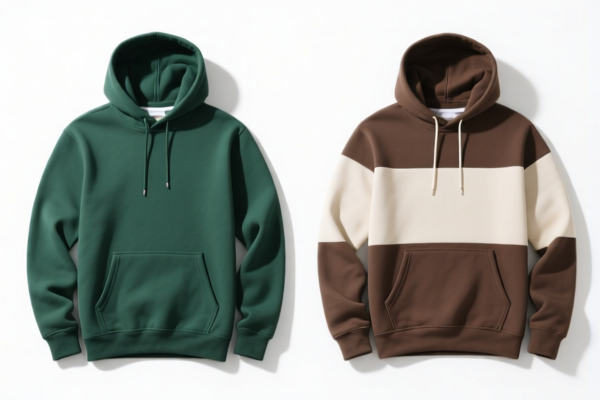
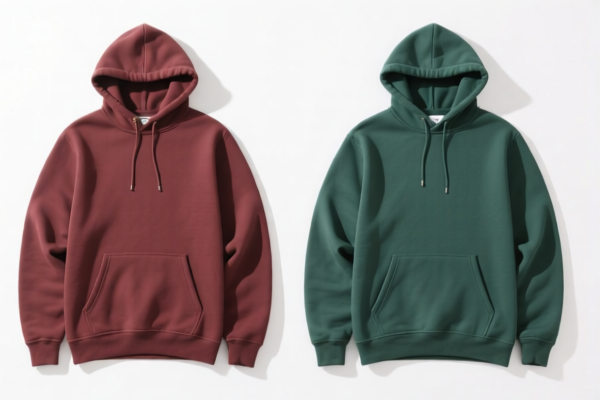
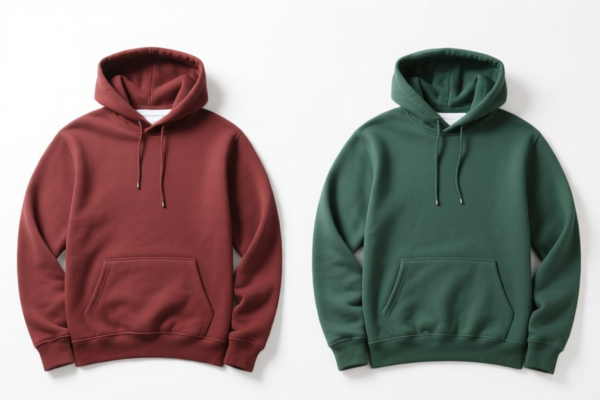

AI Analysis
👕 Sweatshirts & Hoodies: The Ultimate HS Code & Tariff Breakdown
🌐 HS Code Reference & Customs Clearance Guide | 2026 Latest Tariff Analysis | Professional Entry Strategy
📌 One, Two, Three, Four: Decoding the Cotton & Fiber Maze
Sweatshirts are not just "comfortable clothing." In international trade, they are a high-volume, high-compliance category where material composition and gender targeting dictate your tax bill. A slight misclassification can mean the difference between a 23.6% tax burden and a 49.5% nightmare.
⚠️ Critical Distinction:
- Knitted vs. Woven: Most sweatshirts are knitted (tricot/interlock), falling under Chapter 61. Woven sweatpants (less common) fall under Chapter 62. - Material Matters: Cotton (Natural) vs. Synthetic (Man-made Fiber). This shifts the HS Code and the Base Duty rate significantly. - Gender Specifics: "Men's" and "Women's" classifications often have different base duty rates due to historical tariff structures.
📦 Two, HS Code Classification Matrix (Based on Provided Data)
Below is the exact mapping from your data source. Note that the data provided covers Knitted Sweatshirts (Chapter 61) and Knitted Sweatpants/Trousers (Chapter 61 & 62).
| HS Code | Product Summary | Material/Gender | Total Tax Rate | Key Tax Components |
|---|---|---|---|---|
6110.20.20.46 |
Women's Cotton Knitted Sweatshirt | Women / Cotton | 34.0% | Base: 16.5% + Sec 301: 7.5% + Sec 122: 10% |
6110.30.30.41 |
Men's Man-made Fiber or Cotton Knitted Sweatshirt | Men / Synthetic or Cotton | 49.5% | Base: 32.0% + Sec 301: 7.5% + Sec 122: 10% |
6108.92.00.30 |
Women's/Girls' Cotton/Synthetic Knitted Sweatpants | Women/Girls / Mix | 33.5% | Base: 16.0% + Sec 301: 7.5% + Sec 122: 10% |
6108.91.00.30 |
Cotton Knitted Sweatpants (General/Other) | General / Cotton | 26.0% | Base: 8.5% + Sec 301: 7.5% + Sec 122: 10% |
6207.91.30.20 |
Cotton Knitted Sweatpants (Underwear/Shorts Type) | General / Cotton | 23.6% | Base: 6.1% + Sec 301: 7.5% + Sec 122: 10% |
🔍 Observation:
- Men's Sweatshirts are taxed the highest (49.5%) due to a high Base Duty (32.0%). - Women's Sweatshirts are significantly cheaper (34.0%) due to a lower Base Duty (16.5%). - Sweatpants generally have lower base duties than sweatshirts, ranging from 6.1% to 16.0%.
💰 Three, Tariff Structure Detailed Analysis
✅ Applicable Region: USA (Implied by "Section 122" and high combined rates)
✅ Origin: China (CN) (Implied by Section 301/122 additions)
✅ Structure: The tax is composed of three distinct layers.
🎯 1. The "Base Duty" (The Variable)
This is the standard Most Favored Nation (MFN) rate determined by the HS Code.
* Women's Sweater (6110.20): 16.5% – Moderate
* Men's Sweater (6110.30): 32.0% – High
* Sweatpants (6108.91/92): 8.5% – 16.0% – Low to Moderate
* Cotton Sweatpants (Special 6207.91): 6.1% – Lowest
📌 Why the gap?
The US Tariff Schedule historically places higher base duties on men's knitwear compared to women's or children's wear. If you are importing men's cotton sweatshirts, expect a heavy base hit.
🎯 2. The "Section 301" Surcharge (The Constant)
- Rate: +7.5%
- Source: Trade Remedy Council (Section 301 tariffs on Chinese goods).
- Applicability: Applies to ALL items listed above, regardless of material or gender.
- Note: This is a flat addition to the ad valorem rate.
🎯 3. The "Section 122" Surcharge (The Policy Add-on)
- Rate: +10%
- Source: Section 122 of the Trade Act of 1974 (Emergency Import Relief).
- Applicability: Applied to specific categories to balance trade deficits.
- Note: This is also an ad valorem addition.
🧮 Total Tax Calculation Formula
$$ \text{Total Tax} = \text{Base Duty} + 7.5\% (\text{Sec 301}) + 10\% (\text{Sec 122}) $$
Verification Examples: * Women's Cotton Sweatshirt: $16.5 + 7.5 + 10 = \mathbf{34.0\%}$ ✅ * Men's Syn-Cotton Sweatshirt: $32.0 + 7.5 + 10 = \mathbf{49.5\%}$ ✅ * Cotton Sweatpants (General): $8.5 + 7.5 + 10 = \mathbf{26.0\%}$ ✅
🛠️ Four, Customs Clearance Practical Advice
✅ 1. Material Declaration is King
Customs officers will scrutinize the fiber content label on the garment.
* "100% Cotton": Triggers codes like 6110.20.20.46 (Women) or 6108.91.00.30 (Pants).
* "Polyester Blend" or "Man-made Fiber": Triggers codes like 6110.30.30.41 (Men) or 6108.92.00.30 (Women).
* Risk: If you declare "Sweatshirt" but the label says "80% Polyester, 20% Cotton," and you use the Cotton HS Code, you risk misclassification penalties.
✅ 2. Gender Classification Nuances
- Unisex Sweatshirts: Generally declared as Men's (
6110.30) if they lack specific female tailoring (waist shaping, bust darts). This is dangerous because Men's base duty (32%) is nearly double Women's base duty (16.5%). - Strategy: If the garment is cut for females (even if labeled "Unisex"), declare as Women's (
6110.20) to save 15.5% in base duty.
✅ 3. Sweatpants vs. Sweatshirts
- Sweatpants are cheaper to tax. If you are designing a "Set," consider if the pants can be classified under the lower base duty codes (
6108.91or6207.91). - Underwear/Shorts Exception: Note code
6207.91.30.20(23.6% total). This applies to Cotton Knitted Sweatpants categorized as underwear/shorts. Ensure the product truly fits "shorts/underwear" definition (e.g., boxers, briefs style) to access this low rate.
✅ 4. Documentation Checklist
| Document | Requirement | Reason |
|---|---|---|
| Commercial Invoice | List HS Code explicitly | Prevents reclassification by CBP |
| Packing List | Detail item count by gender | Ensures correct duty split (Men vs. Women) |
| Label Photos | Show Fiber Content (e.g., "100% Cotton") | Verifies Base Duty rate (16.5% vs 32.0%) |
| Manufacturer Certificate | Proof of Origin | Critical for Sec 301/122 applicability |
🌍 Five, Global Market Comparison (Contextual Note)
- 🇺🇸 USA: High total tax (23.6% – 49.5%) due to Sec 301 & 122. Focus on Men's vs. Women's duty difference.
- 🇪🇺 EU: Generally lower base duties for textiles (0-12%), no Sec 301/122. Total tax significantly lower than US.
- 🇨🇳 China: Import duties vary, but often lower for raw cotton. Export subsidies may apply.
📌 Conclusion:
- The US market is the most expensive for Chinese-origin sweatshirts due to layered tariffs. - Men's Cotton/Synthetic Sweatshirts are the most expensive item (49.5%). - Women's Cotton Sweatshirts offer a 15.5% saving in base duty compared to Men's. - Sweatpants are a better margin product due to lower base duties (23.6% – 33.5%).
📌 Six, Common Mistakes & Pitfalls
❌ Mistake 1: Declaring "Unisex" as "Men's" when it's clearly female-cut.
👉 Consequence: Paying 32% base instead of 16.5%. Loss of 15.5% margin.
❌ Mistake 2: Ignoring the "Man-made Fiber" definition in 6110.30.30.41.
👉 Consequence: If you have a Men's Polyester sweatshirt, it falls under 6110.30. If you wrongly declare it as Cotton (6110.20), you risk fraud charges and seizure.
❌ Mistake 3: Assuming "Sweatpants" are always 6108.91.
👉 Consequence: If they are women's, use 6108.92 (16% base). If they are "underwear/shorts" type, use 6207.91 (6.1% base). Saving up to 10% base duty.
✅ Correct Approach:
"Women's 100% Cotton Knitted Crewneck Sweatshirt, Model W-100, Labeled 'Made in China', HS 6110.20.20.46"
🎯 Seven, Final Verdict & Action Plan
🎯 Key Takeaway:
🔹 Women's Cotton Sweatshirts are the "Sweet Spot" (34% Total).
🔹 Men's Syn-Cotton Sweatshirts are the "Black Hole" (49.5% Total).
🔹 Sweatpants are the "Margin Saver" (23.6% - 33.5% Total).
🚀 Action Items:
1. Audit your SKU List: Separate Men's, Women's, and Unisex items.
2. Verify Fiber Content: Ensure tags match the HS Code (Cotton vs. Synthetic).
3. Optimize Cuts: Use female cuts for "Unisex" items to qualify for lower Women's duties.
4. Pre-Rule: If importing large volumes, request a Customs Binding Ruling to confirm the HS Code for specific designs.
✨ Pro Tip:
Always keep the garment label photo handy. CBP will ask: "Is this 100% Cotton or Poly-Cotton Blends?" The answer determines if you pay 16.5% or 32.0% base duty. Don't guess!
📞 Contact a Licensed Customs Broker to validate your HS Codes before shipping.
💼 Precision in Classification = Profit in Your Pocket.
Customer Reviews
About HS Code Classification
The Harmonized System (HS) is an internationally standardized nomenclature developed by the World Customs Organization (WCO) to classify traded products. Over 200 countries use the HS system as the basis for customs tariffs, trade statistics, and import/export regulations.
Each HS code follows a hierarchical structure:
- Chapter (2 digits) — Broad category of goods (e.g., Chapter 84: Machinery and Mechanical Appliances)
- Heading (4 digits) — More specific grouping within the chapter
- Subheading (6 digits) — Internationally standardized breakdown, used by all WCO member countries
- National subdivisions (8-10 digits) — Country-specific extensions for further classification, such as US HTSUS 10-digit codes
Correct HS code classification is essential for smooth customs clearance, accurate duty payment, and compliance with trade regulations. Misclassification can lead to customs delays, overpayment of duties, or penalties.
When importing from CN to US, the applicable tariff rates may include:
- Most-Favored-Nation (MFN) rate — The standard duty rate applied to WTO members
- General rate — Applied to countries without trade agreements
- Trade remedy duties — Additional tariffs such as Section 301 (anti-dumping), Section 232 (national security), or countervailing duties
The information provided on this page is for reference purposes only. For official classification, please consult with your local customs authority or a licensed customs broker.