tire hs code 4011201005
CN → US| HS Code | Tariff Rate | Origin | Destination | Doc |
|---|---|---|---|---|
| 4011201035 | 39.0% | CN | US | Official Doc |
| 4011205030 | 38.4% | CN | US | Official Doc |
| 4011205050 | 38.4% | CN | US | Official Doc |
| 4011300010 | 35.0% | CN | US | Official Doc |
| 4011300050 | 35.0% | CN | US | Official Doc |
Product Images
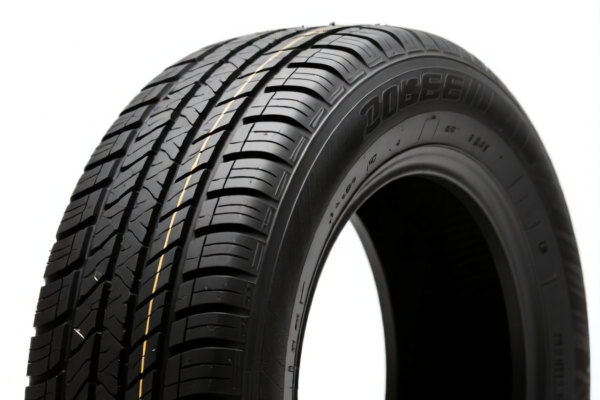
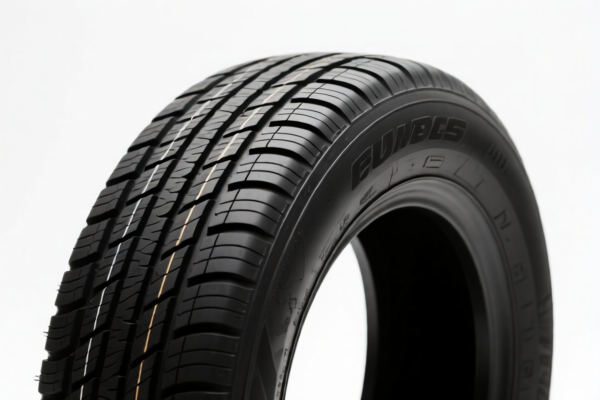
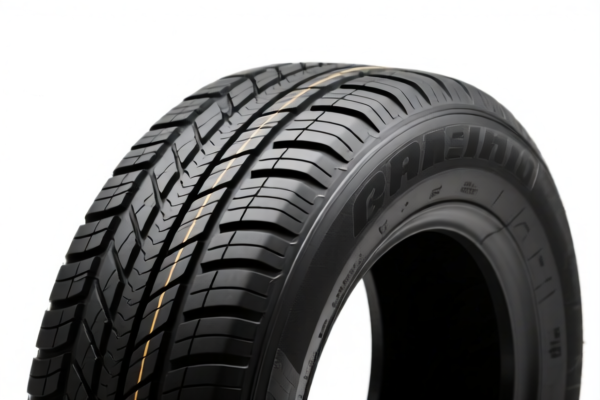
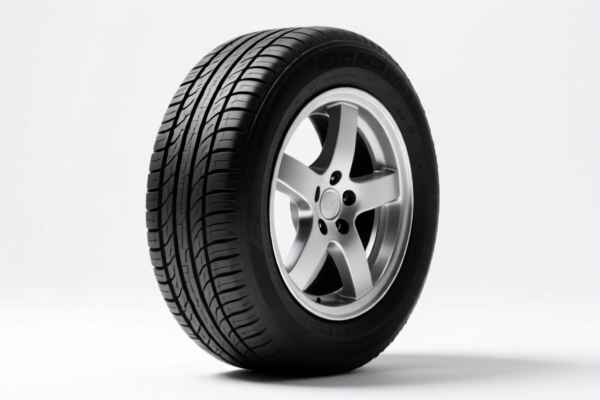
AI Analysis
🚛 Tire (Tires for Buses or Trucks)
🌐 HS Code Reference & Customs Clearance Guide | 2026 Latest Tariff Breakdown | Professional Compliance Strategy
📌 I. Product Definition & Classification: Decoding "Tires for Buses or Trucks"
The tire, a critical component in global logistics and transportation, is classified under Chapter 40 (Rubber and articles thereof). Specifically, for tires for buses or trucks, the classification hinges on three key factors:
1. Material: Rubber (specifically pneumatic/rated).
2. Form: Pneumatic (air-filled) tires.
3. Specific Use: Designed for buses or trucks (heavy-duty vehicles).
⚠️ Key Distinction:
- If the tire is for cars/passenger vehicles →归入 4011.10
- If the tire is for buses or trucks → 归入 4011.20 (This is the correct chapter for your query)
- If the tire is non-pneumatic (solid) → 归入 4011.90
For HS Code 4011.20, the specific subheading 4011.20.10.05 (or similar 10-digit variations like 4011.20.10.35 in some datasets) refers to pneumatic tires for buses or trucks.
📦 II. HS Code Classification Details (2026 Tariff Alignment)
Based on the provided data, here are the matching HS Codes and their rationales for tires for buses or trucks:
| HS Code | Product Description | Matching Logic | Tax Rate Summary |
|---|---|---|---|
| 4011.20.10.35 | Pneumatic tires for buses or trucks | Exact Match: Material (Rubber), Form (Pneumatic), Use (Bus/Truck) fully aligns with HS 4011.20. | 39.0% |
| 4011.20.50.30 | Other pneumatic tires for buses/trucks | Direct Correspondence: Matches the definition of HS 4011.20.50. Rubber pneumatic tires for bus/truck use. | 38.4% |
| 4011.20.50.50 | Other pneumatic tires (General) | Reasonable Inference: No conflict in material/form. Since specific use isn't specified, inferred as non-highway/other. | 38.4% |
🔍 Important Note:
- 4011.30.00.10 / 4011.30.00.50 are NOT correct for buses/trucks. These codes refer to motorcycle tires or aeroplane tires (depending on the specific 8-digit breakdown). The summary states they match "tire" generically but are categorized under "Other" or specific non-bus/truck uses. Avoid these for heavy-duty vehicle tires.
💰 III. 2026 Latest Tariff Rate Breakdown (Detailed Tax Clauses)
✅ Applicable Country: United States (US)
✅ Origin: China (CN) (Implied by 122 Clause and USITC footnotes)
✅ Effective Date: Post-2025 (Current trade environment)
The tariff structure for rubber tires from China involves a complex layering of base duties, Section 301 tariffs, and Section 122 tariffs.
🎯 1. Primary Match: 4011.20.10.35
Scenario: Specific pneumatic tires for buses or trucks.
| Item | Content |
|---|---|
| Base Duty Rate | 4.0% (Standard MFN rate for pneumatic tires for buses/trucks) |
| Section 301 Tariff (USITC) | +25% (Additional duty on Chinese goods, per Footnote 9903.88.01) |
| Section 122 Tariff | +10% (Additional duty on steel/aluminum/rubber articles from China, per IEEPA Section 122) |
| Total Effective Tax Rate | 39.0% |
| Calculation | CIF Value × 39.0% |
| De Minimis Exemption | ❌ Not Eligible (Deny de minimis for high-tariff Chinese goods) |
| Legal Pathway | IEEPA:122 → USITC:9903.88.01 → HS:4011.20.10.35 |
📌 Explanation:
- Base 4%: The standard import duty for pneumatic tires for buses/trucks.
- 25% Section 301: The "Trump Tariff" or "Trade War Tariff" on Chinese products.
- 10% Section 122: A separate additional duty on specific imports (often overlapping with steel/rubber products).
- Total 39%: This is a very high tariff, significantly increasing the cost of Chinese bus/truck tires.
🎯 2. Alternative Match: 4011.20.50.30 / 4011.20.50.50
Scenario: Other pneumatic tires (less specific classification).
| Item | Content |
|---|---|
| Base Duty Rate | 3.4% (Slightly lower base rate for "other" pneumatic tires) |
| Section 301 Tariff | +25% |
| Section 122 Tariff | +10% |
| Total Effective Tax Rate | 38.4% |
| Calculation | CIF Value × 38.4% |
📌 Note:
- The difference is only 0.6% lower than the specific bus/truck code.
- Do not use these codes if the tire is clearly for buses/trucks, as misclassification can lead to penalties. Only use if the specific application is ambiguous and falls under "other."
🛠️ IV. Customs Clearance Practical Advice (Pitfall Avoidance)
✅ 1. Required Documentation Checklist
| Document | Mandatory? | Notes |
|---|---|---|
| ✅ Product Specification Sheet | ✔️ | Must specify: Radial/Bias, Size, Load Index, Speed Rating, Vehicle Type (Bus/Truck) |
| ✅ Commercial Invoice | ✔️ | Clearly state: "Pneumatic Rubber Tire for Bus/Truck" |
| ✅ Packing List | ✔️ | Number of tires, dimensions, weight |
| ✅ Country of Origin Certificate | ✔️ | Essential for proving CN origin (triggers 301/122) |
| ✅ Third-Party Test Report | ✔️ | DOT certification, FMVSS compliance (if US-bound) |
✅ 2. Declaration Tips
🔥 "Be Specific, Avoid Generalizations"
| Situation | Correct Declaration | Incorrect Declaration | Risk |
|---|---|---|---|
| Bus/Truck Tire | "Pneumatic Tire for Truck, Size 11R22.5, Radial" | "Tire" or "Rubber Tire" | High risk of misclassification, potential fines |
| Mixed Shipment | List each tire type separately | Group all as "Tires" | Customs may apply the highest tariff to all items |
| Origin: China | Explicitly state "Made in China" | Omit origin | Severe penalties for origin fraud |
✅ 3. Special Considerations
| Scenario | Advice |
|---|---|
| Tires for Electric Buses | Still classified as 4011.20 for buses/trucks. No special tariff exemption yet. |
| Used Tires | Banned from import into the US (19 U.S.C. 1306). Do not attempt to declare as "recycled" to bypass. |
| Re-treaded Tires | Classified under 4011.20 as well, but may have different base duties. Check specific re-tread codes. |
| Transshipment via Mexico/Vietnam | High Risk. US CBP aggressively investigates rules of origin. Substantial transformation required. Avoid if possible. |
🌍 V. Global Market Comparison (2026)
| Country | HS Code | Base Duty | Additional Duties (China) | Total Rate | Notes |
|---|---|---|---|---|---|
| 🇺🇸 USA | 4011.20.10.35 | 4.0% | +25% (301) +10% (122) | 39.0% | Highest cost. Strict origin checks. |
| 🇨🇳 China (Import) | 4011.20.10.00 | 5.0% | None | 5.0% | Low duty. High demand. |
| 🇪🇺 EU | 4011.20.10.00 | 4.5% | None | 4.5% | No Section 301/122. Standard MFN. |
| 🇯🇵 Japan | 4011.20.10.00 | 5.0% | None | 5.0% | Stable, low duty. |
| 🇦🇺 Australia | 4011.20.10.00 | 5.0% | None | 5.0% | Low duty. CEPA may offer 0% for some origins. |
📌 Conclusion:
- USA is the most expensive market for Chinese tires due to layered tariffs.
- EU, Japan, Australia offer much more competitive duty rates (5% or less).
- Consider supply chain diversification if targeting the US market heavily.
📌 VI. Common Mistakes & Pitfalls
❌ Mistake 1: Declaring "Tire" without specifying vehicle type.
👉 Consequence: Customs may assign a generic code with higher base duty or audit for misclassification.
❌ Mistake 2: Using 4011.10 (Car tires) for Bus/Truck tires.
👉 Consequence: Severe penalty. Bus/truck tires have different safety standards and tariff structures.
❌ Mistake 3: Ignoring Section 122 Tariff.
👉 Consequence: Underpayment of duties. The 10% additional duty is often overlooked but mandatory for rubber articles from China.
❌ Mistake 4: Claiming "De Minimis" Exemption (Under $800).
👉 Consequence: Rejected. US CBP has explicitly excluded many Chinese rubber products from de minimis treatment due to trade remedies.
✅ Correct Approach:
"Pneumatic Rubber Tire, Radial, for Truck Use, Size 295/75R22.5, DOT Certified, Made in China"
🎯 VII. Conclusion: Precision Saves Money!
🎯 Remember the Formula:
🔹 Base Duty + 25% (301) + 10% (122) = 39% Total
🔹 HS Code Accuracy = Avoid Fines
🔹 Origin Declaration = Avoid Seizure
📌 Tip:
If you are importing tires for buses or trucks, ensure your commercial invoice clearly states the vehicle application. Misclassification can lead to liquidated damages and entry delays. Consider applying for an Advance Ruling from US CBP to confirm the HS Code before shipment.
📣 Immediate Action:
📞 Consult a licensed US Customs Broker
📄 Verify HS Code: 4011.20.10.35
🚀 Clear Customs Smoothly, Minimize Costs, Maximize Profit!
✨ Professional Clearance Starts with Accurate Classification!
💼 Every Percentage Point of Duty Counts!
Customer Reviews
About HS Code Classification
The Harmonized System (HS) is an internationally standardized nomenclature developed by the World Customs Organization (WCO) to classify traded products. Over 200 countries use the HS system as the basis for customs tariffs, trade statistics, and import/export regulations.
Each HS code follows a hierarchical structure:
- Chapter (2 digits) — Broad category of goods (e.g., Chapter 84: Machinery and Mechanical Appliances)
- Heading (4 digits) — More specific grouping within the chapter
- Subheading (6 digits) — Internationally standardized breakdown, used by all WCO member countries
- National subdivisions (8-10 digits) — Country-specific extensions for further classification, such as US HTSUS 10-digit codes
Correct HS code classification is essential for smooth customs clearance, accurate duty payment, and compliance with trade regulations. Misclassification can lead to customs delays, overpayment of duties, or penalties.
When importing from CN to US, the applicable tariff rates may include:
- Most-Favored-Nation (MFN) rate — The standard duty rate applied to WTO members
- General rate — Applied to countries without trade agreements
- Trade remedy duties — Additional tariffs such as Section 301 (anti-dumping), Section 232 (national security), or countervailing duties
The information provided on this page is for reference purposes only. For official classification, please consult with your local customs authority or a licensed customs broker.