trunk actuator
CN → US| HS Code | Tariff Rate | Origin | Destination | Doc |
|---|---|---|---|---|
| 8431499005 | 85.0% | CN | US | Official Doc |
| 8501524000 | 38.7% | CN | US | Official Doc |
| 8431310060 | 85.0% | CN | US | Official Doc |
Product Images
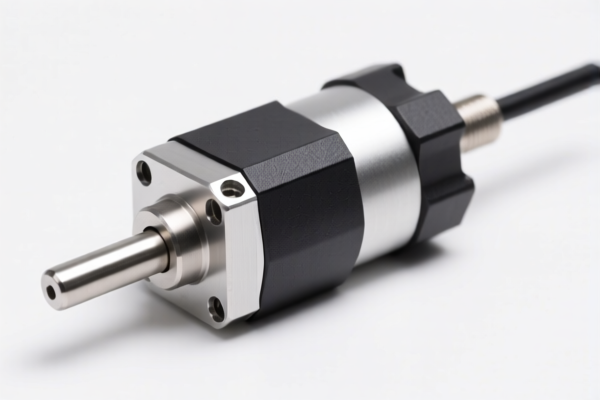
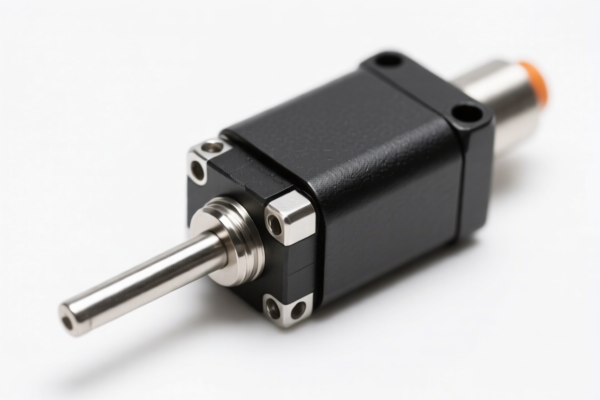
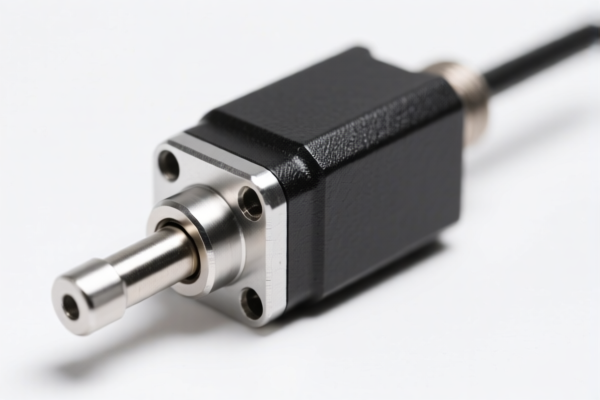
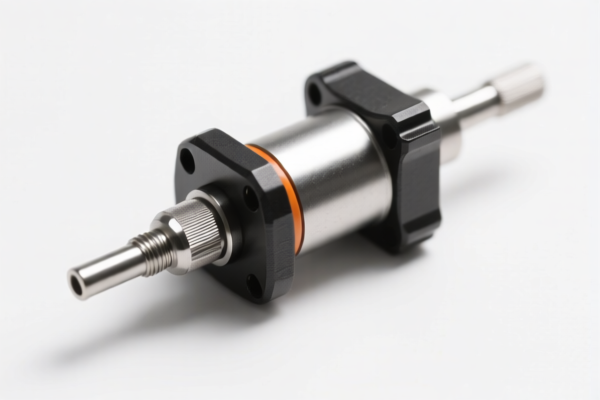
AI Analysis
🚗 Trunk Actuator (Power Tailgate/Trunk Lid Actuators)
🌐 HS Code Reference & Customs Clearance Guide | 2026 Latest Tariff Analysis | Professional Clearance Strategy
📌 I. Product Definition & Classification: What Exactly is a "Trunk Actuator"?
A Trunk Actuator is an electromechanical device used to automatically open, close, or latch the trunk lid (boot lid) or tailgate of a vehicle. It functions as the core component of a Power Tailgate System.
In international trade, classification depends heavily on its functional integration: * Pure Actuator/Linear Motor: A component that provides linear motion or locking force, often classified as a mechanical part or an electric motor component. * Integrated Motor Assembly: If it functions primarily as a rotary electric motor driving a gear system, it may fall under electric motor classifications.
⚠️ Key Distinction:
- If the item is a standalone linear actuator used to push/pull the trunk lid → It is likely a Mechanical Part or Accessory.
- If the item is primarily a small electric motor with a built-in gear reduction for rotation → It may be classified as an Electric Motor Component.
📦 II. HS Code Classification Details (2026 Latest Tariff Authority Cross-Reference)
Based on the provided data, here are the three potential HS Codes with their logical derivations:
| HS Code | Product Description | Application Scenario | Classification Logic |
|---|---|---|---|
8431.31.00.60 |
Mechanical Parts (Metal/Plastic Actuators) | Standalone linear actuators, plastic/metal housing, non-specific mechanical function. | Mechanical Nature: Classified as a "part of machinery" made of metal or plastic. Fits the attribute of "non-specific mechanical parts." |
8431.49.90.05 |
Parts & Accessories for Vehicles | Attachments installed on vehicles, specifically for mechanical operation (e.g., trunk opening mechanisms). | Vehicle Accessory: Infered as a vehicle mechanical component. It is an accessory attached to the vehicle's machinery, fitting the definition of "parts/accessories for machinery." |
8501.52.40.00 |
Electric Motors/Generators (Parts) | Actuators functioning as drive units, providing motive power/output. | Motor/Drive Function: Based on usage, the actuator serves as a drive component. Its power output function aligns with Electric Motors and their parts. |
🔍 Critical Insight:
-8431.31.00.60: Best for linear actuators where the primary identity is a mechanical push/pull device.
-8431.49.90.05: Best for assembly units specifically recognized as vehicle parts/accessories.
-8501.52.40.00: Best if the device is predominantly an electric motor with integrated gearing, focusing on the electrical drive aspect.
💰 III. 2026 Latest Tariff Rate Breakdown (Including Additional Taxes & Policy Surcharges)
✅ Applicable Country: United States (US)
✅ Country of Origin: China (CN)
✅ Effective Date: Current (Includes Section 301 & IEEPA surcharges)
🎯 1. 8431.31.00.60 — Mechanical Parts (Actuators)
| Item | Content |
|---|---|
| Base Tariff | 0.0% (ad valorem) |
| Section 301 Surcharge | +25.0% (From USITC Footnote 9903.88.01) |
| Section 232 Surcharge | +50% (For Steel, Aluminum, or Copper Products under Section 232) |
| Total Tariff Rate | 85.0% |
| Tax Calculation | CIF Value × 85.0% |
| De Minimis Eligibility | ❌ No (deny_de_minimis) |
| Legal Basis Path | Section 232 (Steel/Al/Cu) + Section 301 → 8431.31.00.60 |
📌 Explanation:
- Base Rate: 0% for many mechanical parts.
- Section 301: Standard 25% surcharge on Chinese goods.
- Section 232: If the actuator housing is steel, aluminum, or copper, an additional 50% applies.
- Total: 85% is extremely high. Material composition matters! If it’s mostly plastic, Section 232 might not apply, but customs often scrutinize this.
🎯 2. 8431.49.90.05 — Vehicle Parts/Accessories
| Item | Content |
|---|---|
| Base Tariff | 0.0% (ad valorem) |
| Section 301 Surcharge | +25.0% (From USITC Footnote 9903.88.01) |
| Section 232 Surcharge | +50% (For Steel, Aluminum, or Copper Products under Section 232) |
| Total Tariff Rate | 85.0% |
| Tax Calculation | CIF Value × 85.0% |
| De Minimis Eligibility | ❌ No (deny_de_minimis) |
| Legal Basis Path | Section 232 (Steel/Al/Cu) + Section 301 → 8431.49.90.05 |
📌 Explanation:
- Identical tax structure to the previous code.
- Risk: If declared as a "vehicle part," customs may still apply Section 232 if metal components exceed thresholds.
- Total: 85%. High cost impact.
🎯 3. 8501.52.40.00 — Electric Motors/Generators (Parts)
| Item | Content |
|---|---|
| Base Tariff | 3.7% (ad valorem) |
| Section 301 Surcharge | +25.0% (From USITC Footnote 9903.88.01) |
| Section 122 Surcharge | +10% (Specific surcharge for certain goods) |
| Section 232 Surcharge | Not Applicable (Unless pure metal content triggers it, but generally motors are exempt if not primarily steel/al) |
| Total Tariff Rate | 38.7% |
| Tax Calculation | CIF Value × 38.7% |
| De Minimis Eligibility | ❌ No (deny_de_minimis) |
| Legal Basis Path | Section 301 + Section 122 → 8501.52.40.00 |
📌 Explanation:
- Base Rate: 3.7% (standard for many electric motors).
- Section 301: 25% surcharge applies.
- Section 122: Additional 10% surcharge.
- Section 232: Typically not applied to electric motors unless they are purely steel/aluminum structures without electrical components.
- Total: 38.7%. This is the lowest effective rate among the three options.
🛠️ IV. Customs Clearance Practical Advice (Real-World Pitfall Avoidance)
✅ 1. Preparation Checklist (Non-Negotiable)
| Document | Required | Explanation |
|---|---|---|
| ✅ Product Specification Sheet | ✔️ | Must detail: Voltage, Power (Watts), Type (Linear/Rotary), Material (Plastic/Metal ratio). |
| ✅ Circuit Diagram / Schematic | ✔️ | Crucial to prove it is an electric device (supporting 8501) vs. a mechanical part (8431). |
| ✅ Product Photos (Labeled) | ✔️ | Show connections, connectors, and any metal housing. |
| ✅ Commercial Invoice | ✔️ | Describe accurately: "Electric Linear Actuator for Vehicle Trunk, Model XYZ, 12V DC, 50W" |
| ✅ Bill of Lading | ✔️ | Ensure packaging matches invoice details. |
✅ 2. Declaration Strategy (Key Mantra)
🔥 "Motor Function Wins, Mechanism Loses Tax!"
| Scenario | Recommended HS Code | Risk if Misdeclared |
|---|---|---|
| Electric Motor with Gears | 8501.52.40.00 |
Declaring as 8431 → 85% Tax (vs 38.7%) |
| Pure Mechanical Pusher | 8431.31.00.60 |
Declaring as 8501 → Customs Rejection (No electrical function) |
| Vehicle-Specific Assembly | 8431.49.90.05 |
Declaring as 8501 → Customs Rejection (Not a motor) |
📌 Strategic Advice:
- Priority: Try to classify under8501.52.40.00to save ~46% in taxes compared to the8431codes.
- Justification: Emphasize the electric motor aspect. Describe it as an "Electric Motor Assembly for Trunk Lactuation" rather than just a "Plastic/Metal Actuator."
- Material Check: If using8431codes, ensure no steel/aluminum/copper content > thresholds to avoid the 50% Section 232 hit.
✅ 3. Special Cases
| Scenario | Handling Advice |
|---|---|
| Hydraulic Actuator | Not covered here. Likely different HS Code. |
| OEM Custom Actuator | Provide OEM drawings to prove it is a "part of a machine" (8431) or "motor" (8501). |
| Mixed Shipment | Separate electric actuators (8501) from purely mechanical parts (8431) to optimize tax. |
🌍 V. Global Market Comparison (2026 Update)
| Country/Region | Recommended HS Code | Effective Tariff (CN Origin) | Certification |
|---|---|---|---|
| 🇺🇸 USA | 8501.52.40.00 |
38.7% (Best Option) | FCC (if wireless), UL/CE |
| 🇺🇸 USA | 8431.31.00.60 |
85.0% (If metal/plastic part) | No specific |
| 🇪🇺 EU | 8501.52.40.00 |
0% - 3% | CE, RoHS |
| 🇨🇳 China | 8501.52.40.00 |
3.7% - 5% | CCC (if applicable) |
📌 Conclusion:
- USA: High tariffs apply.8501is significantly cheaper than8431.
- EU/China: Tariffs are low, so classification is less critical for cost, but accuracy is still needed for compliance.
📌 VI. Common Errors & Pitfalls (Lessons Learned)
❌ Mistake 1: Declaring an Electric Actuator as a Mechanical Part (8431)
👉 Result: Pay 85% tax instead of 38.7%.
👉 Fix: Provide electrical specs to support 8501.
❌ Mistake 2: Ignoring Section 232 on 8431 codes
👉 Result: If the actuator has a steel housing, you face an extra 50% on top of 25%.
👉 Fix: Choose 8501 to avoid Section 232 entirely.
❌ Mistake 3: Vague Description ("Part for Car")
👉 Result: Customs delay, manual inspection, potential misclassification.
👉 Fix: Use precise terms: "12V DC Electric Linear Actuator, 50W, for Power Tailgate."
✅ Correct Declaration Example:
"Electric Motor Assembly (Actuator) for Vehicle Trunk, 12V DC, 50W, Model XYZ, FCC Certified"
🎯 VII. Conclusion: Professional Declaration, Save Costs, Speed Up Clearance!
🎯 Remember the Mantra:
🔹 "Electric Motor Wins, Mechanism Pays Double!"
🔹 "HS Code Decides Fate, 38% vs 85%, Don't Let It Slide!"
📌 Pro Tip:
If your actuator is originally from Vietnam, Mexico, or Thailand, you may be eligible for IEEPA/USMCA exemptions, reducing tariffs to 0%~5%.
Recommend applying for an Advance Ruling from US Customs (CBP) to lock in the 8501.52.40.00 classification before shipping.
📣 Immediate Action:
📞 Contact a professional broker + Provide electrical specs + Apply for HS Code Advance Ruling
🚀 Let your Trunk Actuators Clear Smoothly, Export Efficiently, and Boost Profits!
✨ Professional Customs Clearance Starts with Precise Classification!
💼 Every Penny of Cost, Deserves Precise Calculation!
Customer Reviews
About HS Code Classification
The Harmonized System (HS) is an internationally standardized nomenclature developed by the World Customs Organization (WCO) to classify traded products. Over 200 countries use the HS system as the basis for customs tariffs, trade statistics, and import/export regulations.
Each HS code follows a hierarchical structure:
- Chapter (2 digits) — Broad category of goods (e.g., Chapter 84: Machinery and Mechanical Appliances)
- Heading (4 digits) — More specific grouping within the chapter
- Subheading (6 digits) — Internationally standardized breakdown, used by all WCO member countries
- National subdivisions (8-10 digits) — Country-specific extensions for further classification, such as US HTSUS 10-digit codes
Correct HS code classification is essential for smooth customs clearance, accurate duty payment, and compliance with trade regulations. Misclassification can lead to customs delays, overpayment of duties, or penalties.
When importing from CN to US, the applicable tariff rates may include:
- Most-Favored-Nation (MFN) rate — The standard duty rate applied to WTO members
- General rate — Applied to countries without trade agreements
- Trade remedy duties — Additional tariffs such as Section 301 (anti-dumping), Section 232 (national security), or countervailing duties
The information provided on this page is for reference purposes only. For official classification, please consult with your local customs authority or a licensed customs broker.