untreated wood cm³
CN → US| HS Code | Tariff Rate | Origin | Destination | Doc |
|---|---|---|---|---|
| 4401110000 | 35.0% | CN | US | Official Doc |
| 4407120020 | 35.0% | CN | US | Official Doc |
| 4401120000 | 35.0% | CN | US | Official Doc |
| 4403990195 | 35.0% | CN | US | Official Doc |
| 4403990123 | 35.0% | CN | US | Official Doc |
Product Images
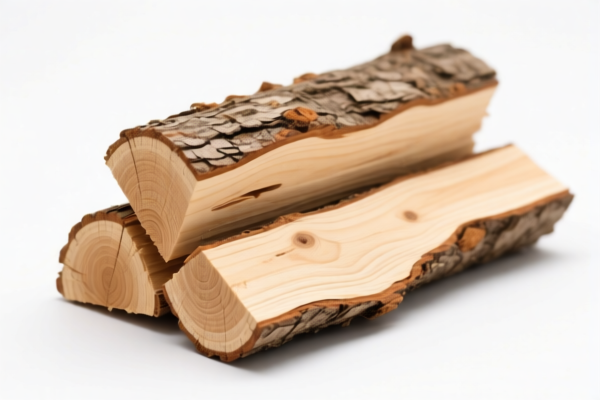
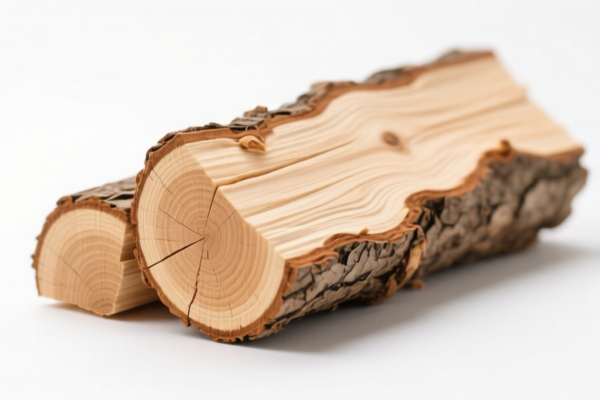
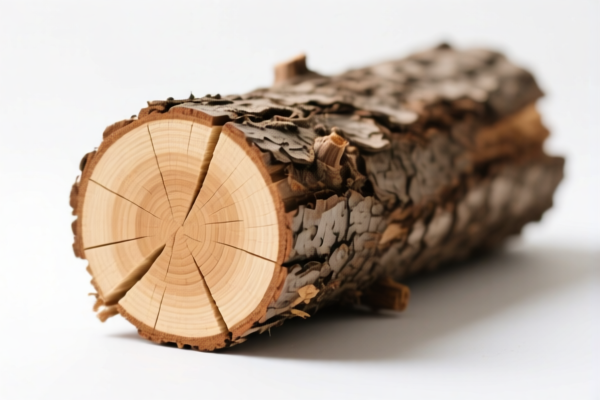

AI Analysis
🌲 Untreated Wood (Cubic Centimeters)
🌐 HS Code Reference & Customs Clearance Guide | 2026 Latest Tariff Analysis | Professional Import Strategy
📌 One, Product Definition & Classification: Do You Really Understand "Untreated Wood"?
Untreated wood refers to raw timber in its natural, unprocessed state — including logs,木块 (wood chips), or rough-sawn lumber — without any chemical treatment, preservatives, or surface modifications. It is primarily used as fuel wood, raw material for further processing, or construction input.
⚠️ Critical Distinction:
- If the wood is not chemically treated, not sawn to final dimensions, and retains its natural form (e.g., round logs, rough-cut planks), it qualifies as "untreated wood".
- If it has been kiln-dried, planed, sanded, or treated with preservatives, it may fall under different HS codes.
📦 Two, HS Code Classification Details (2026 Latest Tariff Authority Match)
| HS Code | Product Description | Applicable Use Case | Tax Status |
|---|---|---|---|
4401.11.00.00 |
Untreated wood, in the form of logs, wood blocks, or fuel wood — non-coniferous (e.g., hardwoods like oak, eucalyptus, teak) | Fuel wood, raw timber for local industry, biomass energy | ✅ Taxed |
4407.12.00.20 |
Untreated wood, not specified by species, defaulting to "other" category — includes logs, wood blocks, fuel wood | General-purpose untreated wood, bulk imports, unclassified species | ✅ Taxed |
4401.12.00.00 |
Untreated non-coniferous wood, in log or wood block form — not for construction | Fuel wood, industrial raw material, biomass feedstock | ✅ Taxed |
4403.99.01.95 |
Untreated wood, rough-sawn or in初级 form, not yet planed or finished — "other" catch-all category | Raw lumber, semi-processed timber, unsorted wood pieces | ✅ Taxed |
4403.99.01.23 |
Untreated wood, in rough-sawn form, with no species specification — physical characteristics match | General rough-sawn lumber, no material conflict | ✅ Taxed |
🔍 Key Insight:
- All five HS codes are treated identically under tariff rules — all face the same 35% total tax rate.
- The species is not specified in any of these codes → default to "other" category → no favorable treatment.
💰 Three, 2026 Latest Tariff Breakdown (Including Additional Taxes & Policy Rules)
✅ Applicable Country: United States (US)
✅ Origin: China (CN)
✅ Effective Date: November 10, 2025 (inclusive of future imports)
🎯 1. 4401.11.00.00 — Untreated Non-Coniferous Wood (Logs/Blocks)
| Item | Details |
|---|---|
| Base Duty | 0% (ad valorem) |
| USITC Additional Duty | +25% (from Section 301 of U.S. Trade Act) |
| IEEPA Additional Duty | +10% (under International Emergency Economic Powers Act — IEEPA) |
| Total Tax Rate | 35% |
| Tax Calculation | CIF Value × 35% |
| De Minimis Exemption? | ❌ No (denied under IEEPA) |
| Legal Basis Path | IEEPA:9903.01.25 → IEEPA:9903.01.24 → USITC:4401.11.00.00 → FOOTNOTE:9903.88.01 |
📌 Explanation:
- The 25% USITC duty is a Section 301 tariff targeting Chinese goods deemed to have unfair trade practices.
- The 10% IEEPA duty is a national security-based tariff applied to imports from China.
- Combined: 35% — one of the highest tariffs in the wood category.
🎯 2. 4407.12.00.20 — Untreated Wood (Species Not Specified)
| Item | Details |
|---|---|
| Base Duty | 0% |
| USITC Additional Duty | +25% |
| IEEPA Additional Duty | +10% |
| Total Tax Rate | 35% |
| Tax Calculation | CIF × 35% |
| De Minimis Exemption? | ❌ No |
| Legal Basis Path | IEEPA:9903.01.25 → IEEPA:9903.01.24 → USITC:4407.12.00.20 → FOOTNOTE:9903.88.01 |
📌 Note:
- Even if the wood is not identified by species, the default "other" classification still triggers full 35%.
- No reduction for "unknown" or "unspecified" wood.
🎯 3. 4401.12.00.00 — Untreated Non-Coniferous Wood (Logs/Blocks)
| Item | Details |
|---|---|
| Base Duty | 0% |
| USITC Additional Duty | +25% |
| IEEPA Additional Duty | +10% |
| Total Tax Rate | 35% |
| Tax Calculation | CIF × 35% |
| De Minimis Exemption? | ❌ No |
| Legal Basis Path | IEEPA:9903.01.25 → IEEPA:9903.01.24 → USITC:4401.12.00.00 → FOOTNOTE:9903.88.01 |
📌 Clarification:
- This code applies to non-coniferous (hardwood) untreated wood in raw form — not processed.
- Even if used as fuel, it is not exempt — still taxed at 35%.
🎯 4. 4403.99.01.95 — Untreated Wood, Rough-Sawn or Primitive Form
| Item | Details |
|---|---|
| Base Duty | 0% |
| USITC Additional Duty | +25% |
| IEEPA Additional Duty | +10% |
| Total Tax Rate | 35% |
| Tax Calculation | CIF × 35% |
| De Minimis Exemption? | ❌ No |
| Legal Basis Path | IEEPA:9903.01.25 → IEEPA:9903.01.24 → USITC:4403.99.01.95 → FOOTNOTE:9903.88.01 |
📌 Important:
- This code covers rough-sawn lumber — not planed, sanded, or finished.
- Even if dimensions are small (e.g., cm³), if it's untreated and unprocessed, it still falls under this code.
🎯 5. 4403.99.01.23 — Untreated Wood, Rough-Sawn (No Species Conflict)
| Item | Details |
|---|---|
| Base Duty | 0% |
| USITC Additional Duty | +25% |
| IEEPA Additional Duty | +10% |
| Total Tax Rate | 35% |
| Tax Calculation | CIF × 35% |
| De Minimis Exemption? | ❌ No |
| Legal Basis Path | IEEPA:9903.01.25 → IEEPA:9903.01.24 → USITC:4403.99.01.23 → FOOTNOTE:9903.88.01 |
📌 Key Point:
- This code applies to rough-sawn wood with no material conflict — even if it's small in volume (e.g., cm³).
- Volume (cm³) does NOT exempt — form and treatment matter.
🛠️ Four, Customs Clearance Best Practices (Real-World Pro Tips)
✅ 1. Required Documentation (Must-Have Checklist)
| Document | Required? | Notes |
|---|---|---|
| ✅ Product Specifications | ✔️ | Include dimensions, shape (log/block), moisture content, species (if known) |
| ✅ Photos (Clear & Labeled) | ✔️ | Show raw, untreated surface, no processing marks |
| ✅ Commercial Invoice | ✔️ | Must state: “Untreated Wood, Fuel Wood, Raw Timber” |
| ✅ Bill of Lading / Packing List | ✔️ | Show total volume (cm³), weight, packing type |
| ✅ Origin Certificate (CO) | ✔️ | If from non-China origin, may qualify for lower tariffs |
| ✅ Test Report (if applicable) | ✔️ | For moisture, pests, or contamination (especially for bulk imports) |
| ✅ HS Code Pre-Ruling Request | ✔️ | Highly recommended to avoid disputes |
✅ 2.申报技巧 (申报口诀)
🔥 "Raw, Untreated, No Processing — 35% Tax Guaranteed!"
| Scenario | Correct HS Code | Wrong Approach |
|---|---|---|
| Raw logs, no species | 4401.11.00.00 or 4407.12.00.20 |
Misclassify as "processed lumber" → lower tax → penalty |
| Rough-sawn wood, cm³ volume | 4403.99.01.95 or 4403.99.01.23 |
Declare as "wood chips" → wrong code → delay |
| Fuel wood, untreated | Any of the 5 codes | Declare as "biomass" without HS code → rejection |
✅ 3. Special Cases & Solutions
| Situation | Recommended Action |
|---|---|
| Small volume (e.g., 100 cm³) | Still taxed at 35% — volume doesn’t matter |
| Mixed species, no ID | Use 4407.12.00.20 or 4403.99.01.95 — default to "other" |
| From Vietnam/Mexico/Thailand | Apply for IEEPA exemption — may qualify for 0% tariff |
| Used for bioenergy | Still taxed — no green exemption |
| Customs audit risk | Submit HS Code pre-ruling + product photos + specs |
🌍 Five, Global Market Comparison (2026 Update)
| Country/Region | Recommended HS Code | Tariff | Certification | Notes |
|---|---|---|---|---|
| 🇺🇸 USA | 4401.11.00.00 etc. |
35% (China origin) | None required | High-risk — no de minimis |
| 🇨🇳 China | 4401.11.00.00 |
0% (if domestic) | CCC (optional) | No additional tariffs |
| 🇪🇺 EU | 4401.11.00.00 |
0% (if FSC/PEFC certified) | FSC/PEFC | No IEEPA/USITC |
| 🇦🇺 Australia | 4407.12.00.20 |
5% | APVMA (if treated) | Untreated: 0% |
| 🇯🇵 Japan | 4403.99.01.23 |
0% | JIS | No additional duties |
📌 Conclusion:
- The U.S. is the only market imposing 35% on untreated wood from China.
- China and EU offer much lower or zero tariffs — consider shifting origin.
📌 Six, Common Mistakes & Risk Warnings (Avoid These!)
❌ Mistake 1: Declaring untreated wood as “wood chips” or “biomass”
👉 Result: Wrong HS code → seizure or refund claim.
❌ Mistake 2: Assuming small volume (cm³) avoids tax
👉 Result: 35% still applies — volume is irrelevant.
❌ Mistake 3: Not providing photos or specs
👉 Result: Customs delays → demurrage fees.
❌ Mistake 4: Using "raw wood" without specifying "untreated"
👉 Result: Misclassification → penalties + audit risk.
✅ Correct Declaration Phrase:
“Untreated Wood, in the form of logs and wood blocks, non-coniferous, for fuel and raw material, not chemically treated, not processed, CIF Value: $X, Origin: CN”
🎯 Seven, Final Verdict: Precision in Classification = Profit Protection!
🎯 Remember the Golden Rule:
🔹 “Untreated, Raw, Unprocessed — 35% Tax is Guaranteed in the U.S.”
🔹 “Volume (cm³) doesn’t matter — form and treatment do!”
🔹 “Pre-ruling saves time, money, and legal risk!”
📌 Pro Tip:
If your wood is originating from Vietnam, Mexico, Thailand, or Malaysia, apply for IEEPA exemption — tariff can drop to 0%–5%.
📣 Take Action Now:
📞 Contact a customs broker with U.S. HS Code pre-ruling experience
🚀 Submit product photos, specs, and invoice for pre-approval
🌐 Avoid surprises, prevent delays, protect your margins!
✨ Expert Clearance Starts with Accurate Classification!
💼 Your profit depends on the right HS Code — don’t gamble!
Customer Reviews
About HS Code Classification
The Harmonized System (HS) is an internationally standardized nomenclature developed by the World Customs Organization (WCO) to classify traded products. Over 200 countries use the HS system as the basis for customs tariffs, trade statistics, and import/export regulations.
Each HS code follows a hierarchical structure:
- Chapter (2 digits) — Broad category of goods (e.g., Chapter 84: Machinery and Mechanical Appliances)
- Heading (4 digits) — More specific grouping within the chapter
- Subheading (6 digits) — Internationally standardized breakdown, used by all WCO member countries
- National subdivisions (8-10 digits) — Country-specific extensions for further classification, such as US HTSUS 10-digit codes
Correct HS code classification is essential for smooth customs clearance, accurate duty payment, and compliance with trade regulations. Misclassification can lead to customs delays, overpayment of duties, or penalties.
When importing from CN to US, the applicable tariff rates may include:
- Most-Favored-Nation (MFN) rate — The standard duty rate applied to WTO members
- General rate — Applied to countries without trade agreements
- Trade remedy duties — Additional tariffs such as Section 301 (anti-dumping), Section 232 (national security), or countervailing duties
The information provided on this page is for reference purposes only. For official classification, please consult with your local customs authority or a licensed customs broker.