vintage clock
CN → US| HS Code | Tariff Rate | Origin | Destination | Doc |
|---|---|---|---|---|
| 9706900060 | 17.5% | CN | US | Official Doc |
| 9706100060 | 17.5% | CN | US | Official Doc |
| 9105295000 | 0.0% | CN | US | Official Doc |
| 9105996000 | 0.0% | CN | US | Official Doc |
Product Images

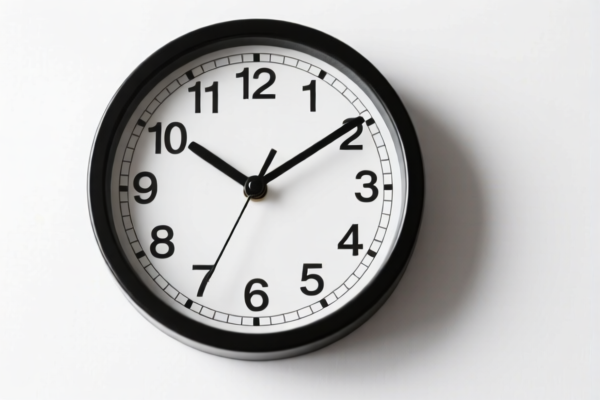

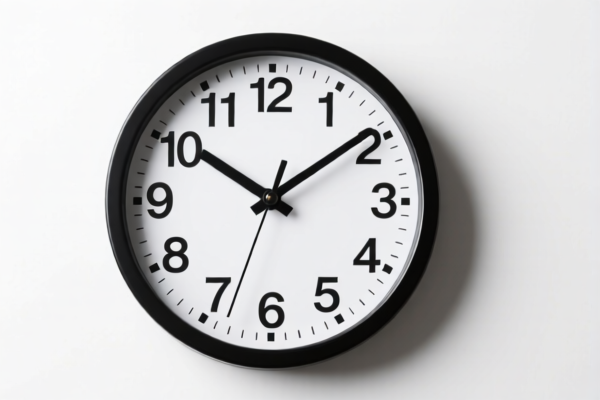
AI Analysis
🕰️ Vintage Clock (Antique Clocks)
🌐 HS Code Reference & Customs Clearance Guide | 2026 Latest Tariff Analysis | Professional Clearance Strategy
📌 I. Product Definition & Classification: Do You Really Understand "Vintage Clock"?
In international trade, "Vintage Clock" is not a single HS code but a category that splits based on age, type, and value. The term "Vintage" often implies "Antique," but customs authorities rely strictly on the 100-year rule for antiques.
There are two distinct paths for valuation and classification: 1. Antique Clocks (Age > 100 years): These benefit from 0% Base Duty due to their historical/cultural value, but are still subject to additional surcharges. 2. Modern Clocks (Age < 100 years): These are standard manufactured goods. Their classification depends on whether they are Wall Clocks or Other Clocks (e.g., Mantel, Desk, Pocket), and their unit value (specifically if >$5).
⚠️ Key Distinction Point:
- If the clock is over 100 years old → It is an Antique (HS 9706.xx).
- If the clock is less than 100 years old → It is a Standard Clock (HS 9105.xx).
- Wall Clocks vs. Other Clocks: Wall clocks have specific subheadings (9105.29), while other types fall under "Other" (9105.99).
- Valuation: For standard clocks, items valued over $5 each have specific sub-headings in the US HTSUS.
📦 II. HS Code Classification Details (2026 Latest Tariff Authority Comparison)
Based on the provided data, here are the precise HS Codes for "Vintage Clocks" depending on their actual age and type.
| HS Code | Product Description | Age Requirement | Base Duty | Section 301 (Additional) | Total Tax Burden |
|---|---|---|---|---|---|
9706.90.00.60 |
Antiques: Of an age exceeding 100 years, Other | > 100 Years | 0.0% | 7.5% | 7.5% |
9706.10.00.60 |
Antiques: Of an age exceeding 100 years, Of an age exceeding 250 years, Other | > 250 Years | 0.0% | 7.5% | 7.5% |
9105.29.50.00 |
Other Clocks: Wall Clocks: Other: Other: Valued over $5 each | < 100 Years | 30¢ each + 4.3% | 7.5% | 30¢ each + 11.8% |
9105.99.60.00 |
Other Clocks: Other: Other: Other: Valued over $5 each | < 100 Years | 23¢ each + 3.2% | 7.5% | 23¢ each + 10.7% |
🔍 Critical Reminder:
- "Vintage" ≠ "Antique": If your clock is 50 years old (1970s), it is NOT an antique. It must be classified under 9105.xx and taxed accordingly.
- Proof of Age: For HS 9706 codes, you must provide documentation (auction records, expert appraisal, brand history) proving the item is >100 years old. Without proof, Customs will reclassify it as a standard clock (HS 9105) and backtax + penalties.
💰 III. 2026 Latest Tariff Rate Breakdown (Including Additional Taxes)
✅ Applicable Country: United States (US)
✅ Origin: China (CN) (Assumed based on "Section 301" context in source data)
✅ Effective Time: Current Rates Apply
🎯 1. 9706.90.00.60 & 9706.10.00.60 — Antique Clocks (>100 Years)
This is the most beneficial category for true antiques.
| Item | Content |
|---|---|
| Base Duty | 0.0% (Duty-Free for Antiques) |
| Section 301 Surcharge | +7.5% |
| Total Effective Rate | 7.5% |
| Tax Calculation | CIF Value × 7.5% |
| De Minimis Eligibility | ❌ No (Antiques are generally not eligible for low-value exemption if formal entry is required, but primarily because the base duty is 0%, the 7.5% still applies). |
| Legal Basis Path | HTSUS:9706 → Section 301:7.5% |
📌 Explanation:
- The US harmonized tariff schedule exempts antiques over 100 years old from base customs duties.
- However, Section 301 tariffs (USITC Footnote 9903) still apply to goods originating from China.
- Result: You only pay 7.5%, compared to 10-20% for modern clocks.
- ⚠️ Warning: Misdeclaring a modern clock as an antique is Customs Fraud. Penalties include seizure, fines, and loss of importing privileges.
🎯 2. 9105.29.50.00 — Wall Clocks (Valued > $5, Non-Antique)
For modern wall clocks valued over $5.
| Item | Content |
|---|---|
| Base Duty | 30¢ each + 4.3% (Ad Valorem + Specific) |
| Section 301 Surcharge | +7.5% |
| Total Effective Rate | 30¢ each + 11.8% (4.3% + 7.5%) |
| Tax Calculation | (CIF Value × 11.8%) + (Number of Units × $0.30) |
| De Minimis Eligibility | ❌ No |
| Legal Basis Path | HTSUS:9105.29.50 → Section 301:7.5% |
📌 Explanation:
- Specific Duty: $0.30 per piece regardless of value. This hurts high-volume, low-cost shipments.
- Ad Valorem: 4.3% base + 7.5% surcharge = 11.8% on the value.
- Example: A $10 Wall Clock:
- Value Tax: $10 × 11.8% = $1.18
- Specific Tax: $0.30
- Total Tax: $1.48 per unit (Effective rate: 14.8%)
🎯 3. 9105.99.60.00 — Other Clocks (Valued > $5, Non-Antique)
For modern mantel, desk, or other non-wall clocks valued over $5.
| Item | Content |
|---|---|
| Base Duty | 23¢ each + 3.2% (Ad Valorem + Specific) |
| Section 301 Surcharge | +7.5% |
| Total Effective Rate | 23¢ each + 10.7% (3.2% + 7.5%) |
| Tax Calculation | (CIF Value × 10.7%) + (Number of Units × $0.23) |
| De Minimis Eligibility | ❌ No |
| Legal Basis Path | HTSUS:9105.99.60 → Section 301:7.5% |
📌 Explanation:
- Slightly lower base rate than wall clocks (3.2% vs 4.3%) and lower specific duty ($0.23 vs $0.30).
- Example: A $20 Desk Clock:
- Value Tax: $20 × 10.7% = $2.14
- Specific Tax: $0.23
- Total Tax: $2.37 per unit (Effective rate: 11.85%)
🛠️ IV. Customs Clearance Practical Advice (Battle-Tested Pitfall Guide)
✅ 1. Preparation Checklist (Non-Negotiable)
| Document | Must Provide | Description |
|---|---|---|
| ✅ Antique Proof | ✔️ (For HS 9706) | Auction catalogs, expert appraisals, or brand archives proving age >100 years. |
| ✅ Product Photos | ✔️ | Clear images showing mechanism, maker’s mark, and overall condition. |
| ✅ Commercial Invoice | ✔️ | Must explicitly state: "Antique Clock, Age >100 Years" OR "Wall Clock, Model XYZ, New". |
| ✅ Unit Value Declaration | ✔️ | For HS 9105, clearly state "Valued over $5 each" to match the subheading. |
| ✅ Packing List | ✔️ | Itemize each clock separately; do not bundle as "Lot of Clocks" if claiming per-unit specific duty. |
✅ 2. Declaration Tips (Key Mantra)
🔥 “Antique Needs Proof, Modern Needs Value, Wall vs Other Is Key!”
| Scenario | Correct HS Code | Wrong Practice |
|---|---|---|
| True Antique (>100 yrs) | 9706.90.00.60 |
Declaring as 9105.29.50.00 → Overpaying tax + Risk of audit if age is questioned. |
| Modern Wall Clock (>100 yrs) | 9105.29.50.00 |
Declaring as "Other Clock" → Incorrect classification, potential penalties. |
| Modern Desk Clock (>100 yrs) | 9105.99.60.00 |
Declaring as "Wall Clock" → Overpaying specific duty ($0.30 vs $0.23). |
| Clock Valued <$5 | Not in Data | ❓ Consult Expert: Subheadings for <$5 may differ (often lower specific duties). |
📌 Crucial Note on "Valued Over $5":
The provided HS codes (9105.29.50.00and9105.99.60.00) explicitly apply to items valued over $5 each.
- If your clock is valued under $5, these codes may NOT apply. You must check HTSUS for subheadings like9105.29.50.00vs lower-value counterparts.
- Misdeclaring a $2 clock as $5+ to avoid lower-duty codes or misclassifying a $6 clock as <$5 can lead to seizure.
✅ 3. Special Circumstances Handling
| Situation | Handling Advice |
|---|---|
| "Vintage" Decor Item (Fake Antique) | If the clock is a replica (made in 1990s but styled like 1800s), it MUST be declared as 9105.xx. Do not claim antique status. |
| Bundles/Lots | If shipping 100 clocks as one "Lot," Customs may assess the highest value item in the lot or reclassify based on the majority. Ship separately or declare line-by-line. |
| Movement Type | While not a primary factor in the provided data, mechanical vs. quartz can sometimes influence duty in other countries. For US HS 9105/9706, it does not change the code, but provenance does. |
| Partial Antiques | If a clock has original parts >100 years but was restored recently, it may still qualify as antique if it retains its "historic character." Provide restoration records. |
🌍 V. Global Market Comparison (2026 Latest)
| Country/Region | Recommended HS Code | Tariff Rate | Certification | Remarks |
|---|---|---|---|---|
| 🇺🇸 USA | 9706.90.00.60 (Antique) |
7.5% | None | 0% Base Duty for antiques. |
| 🇺🇸 USA | 9105.29.50.00 (Modern Wall) |
30¢ + 11.8% | None | High specific duty per unit. |
| 🇪🇺 EU | 9706.00.00.00 |
0% | CE (if electrical) | Antiques duty-free. Modern clocks ~2.5-4%. |
| 🇬🇧 UK | 9706.00.00.00 |
0% | UKCA | Similar to EU. |
| 🇨🇳 China (Export) | 9706.90.00.00 |
0% | None | No export duty on antiques from China (usually). |
📌 Conclusion:
- USA is the most complex market due to Section 301 tariffs and specific duties.
- EU/UK are more straightforward: Antiques are generally duty-free across the board without heavy surcharges like Section 301.
📌 VI. Common Mistakes & Pitfall Guide (Lessons Learned)
❌ Mistake 1: Calling any old clock an "Antique" without proof.
👉 Consequence: Customs reclassifies as 9105, backcharges 11.8% + specific duties, and adds penalties.
❌ Mistake 2: Declaring a $10 Wall Clock as "Valued under $5" to save money.
👉 Consequence: Incorrect classification. The $0.30 specific duty is correct for >$5. If <$5, the code changes, but if value is misdeclared, it’s fraud.
❌ Mistake 3: Ignoring the "Valued Over $5" threshold in HS 9105.
👉 Consequence: Using 9105.29.50.00 for a $2 clock may result in wrong duty calculation. Check HTSUS for <$5 subheadings (often lower specific duties but different ad valorem).
❌ Mistake 4: Packing antiques with modern clocks in one shipment without separate line items.
👉 Consequence: Customs may audit the whole shipment, delay clearance, or apply the highest tariff to the entire lot.
✅ Correct Practice:
"Antique Wall Clock, Circa 1890, Mechanical Movement, Provenance Provided" → HS 9706.90.00.60
"Modern Wall Clock, Quartz, Plastic Frame, Model ABC, Price $12.00" → HS 9105.29.50.00
🎯 VII. Conclusion: Professional Declaration, Save Costs, Clear Smoothly!
🎯 Remember the Mantra:
🔹 "Antique Needs Proof, Modern Needs Value, Wall vs Other Is Key!"
🔹 "HS 9706 for Antiques (7.5% Only), HS 9105 for Modern (Specific + Ad Valorem)!"
📌 Pro Tip:
If you are exporting modern clocks from China to the US, the specific duty (23¢-30¢ per unit) can eat into margins for low-cost items.
- Strategy: Consider bundling accessories or ensuring the unit value exceeds $5 to fit the described subheadings correctly, or check if <$5 subheadings offer lower total tax for bulk low-value items.
- For Antiques: Always keep provenance documents handy. The difference between 7.5% and 11.8%+ is significant.
📣 Immediate Action:
📞 Contact a Customs Broker + Provide Photos/Proof + Verify Unit Value
🚀 Ensure Correct HS Code, Avoid Penalties, Maximize Profit!
✨ Professional Clearance Starts with Accurate Classification!
💼 Your Every Penny Matters!
Customer Reviews
About HS Code Classification
The Harmonized System (HS) is an internationally standardized nomenclature developed by the World Customs Organization (WCO) to classify traded products. Over 200 countries use the HS system as the basis for customs tariffs, trade statistics, and import/export regulations.
Each HS code follows a hierarchical structure:
- Chapter (2 digits) — Broad category of goods (e.g., Chapter 84: Machinery and Mechanical Appliances)
- Heading (4 digits) — More specific grouping within the chapter
- Subheading (6 digits) — Internationally standardized breakdown, used by all WCO member countries
- National subdivisions (8-10 digits) — Country-specific extensions for further classification, such as US HTSUS 10-digit codes
Correct HS code classification is essential for smooth customs clearance, accurate duty payment, and compliance with trade regulations. Misclassification can lead to customs delays, overpayment of duties, or penalties.
When importing from CN to US, the applicable tariff rates may include:
- Most-Favored-Nation (MFN) rate — The standard duty rate applied to WTO members
- General rate — Applied to countries without trade agreements
- Trade remedy duties — Additional tariffs such as Section 301 (anti-dumping), Section 232 (national security), or countervailing duties
The information provided on this page is for reference purposes only. For official classification, please consult with your local customs authority or a licensed customs broker.