Plastic Synchronous Belt (for Molding)
CN → US| HS Code | Tariff Rate | Origin | Destination | Doc |
|---|---|---|---|---|
| 5910001020 | 39.0% | CN | US | Official Doc |
| 3926909989 | 22.8% | CN | US | Official Doc |
| 3926906010 | 39.2% | CN | US | Official Doc |
| 3926905900 | 37.4% | CN | US | Official Doc |
Product Images
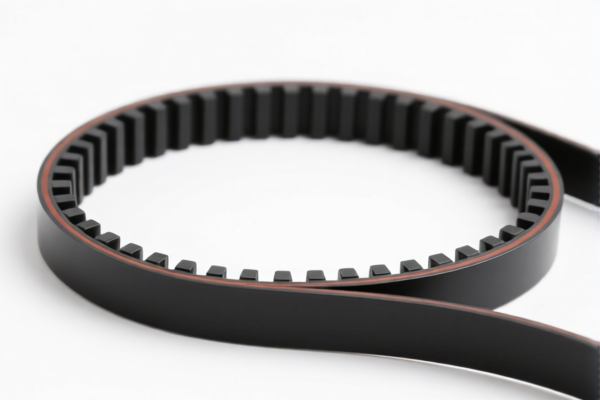
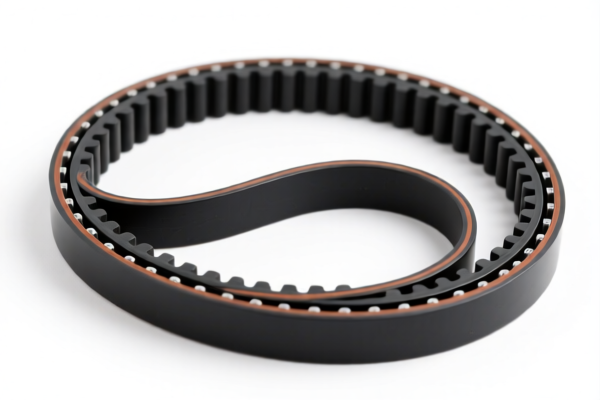
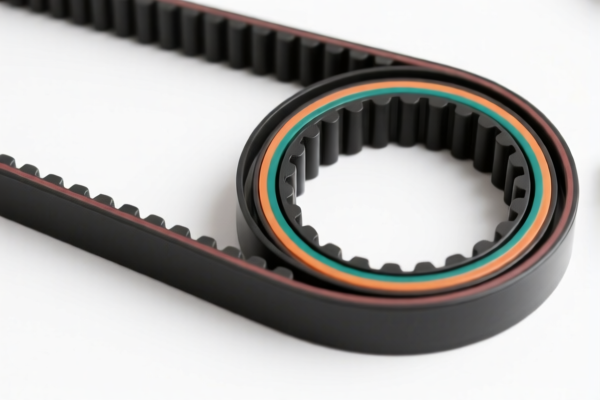
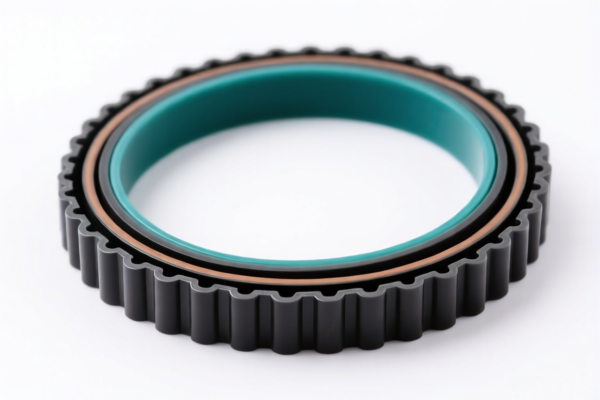
AI Analysis
🏭 Plastic Synchronous Belt (for Molding)
🌐 HS Code Reference & Customs Clearance Guide | 2026 Latest Tariff Analysis | Professional Clearance Strategy
📌 I. Product Definition & Classification: What Exactly is a "Plastic Synchronous Belt"?
The Plastic Synchronous Belt (specifically for Molding applications) is a critical power transmission component in modern industrial automation and plastic processing machinery. Unlike traditional rubber belts, these belts are engineered from high-performance synthetic materials (typically Polyurethane/TPU with steel or fiberglass tensile cords) to offer:
- Synchronization: Precise timing and zero-slip power transmission.
- Chemical & Heat Resistance: Essential for hot, oily, or chemical-heavy molding environments.
- Low Maintenance: No lubrication required, clean operation.
⚠️ Critical Classification Distinction:
The classification hinges on two factors:
1. Primary Function: Is it a Transmission Belt (power transmission) or merely a Plastic Article (general use)?
2. Material Composition: While the cover is plastic, the core often contains steel/fiberglass. However, if the plastic material constitutes the essential character or if no specific "transmission belt" code exists for the exact material mix, it may fall under general plastic articles.
Key Decision Point:
- If the belt is strictly for transmitting motion/power (synchronous timing), it typically falls under Chapter 59 (Textiles/Impregnated Fabrics) or specific Plastic Transmission Belt codes.
- If the customs authority views it primarily as a "Plastic Article" due to the dominant plastic composition or lack of specific textile backing, it falls under Chapter 39 (Plastics).
📦 II. HS Code Classification Details (Based on Provided Data)
The provided data offers four potential classifications. Below is the detailed breakdown of why each applies, along with the associated tax implications.
| HS Code | Description & Matching Logic | Total Tax Rate | Tax Detail Breakdown |
|---|---|---|---|
| 5910.00.10.20 | Logic: The name explicitly contains "Synchronous Belts" (sync belts) and "Plastic". This fits the logic of power transmission belts made of artificial fibers/synthetic plastics. It aligns with the definition of synchronous belts under Chapter 59. | 39.0% | Base Duty: 4.0% Section 301 Duty: 25.0% Section 122 Duty: 10% |
| 3926.90.99.89 | Logic: The material is 'Plastic'. The form is a 'Belt'. It falls under "Other articles of plastics" because it may not fit strictly into specific textile-based transmission codes, serving as a catch-all for plastic products. | 22.8% | Base Duty: 5.3% Section 301 Duty: 7.5% Section 122 Duty: 10% |
| 3926.90.60.10 | Logic: The name explicitly includes Material (Plastic) and Use (Synchronous Belts). It fully complies with the material and specific category requirements in the classification explanation. | 39.2% | Base Duty: 4.2% Section 301 Duty: 25.0% Section 122 Duty: 10% |
| 3926.90.59.00 | Logic: 'Plastic' corresponds to plastic articles; 'Synchronous Belts' corresponds to transmission belts/belts. Since this is an 'Other' (catch-all) category, and there is no conflict in material or form, it is used as a fallback. | 37.4% | Base Duty: 2.4% Section 301 Duty: 25.0% Section 122 Duty: 10% |
🔍 Analysis Note:
- Codes 5910.00.10.20, 3926.90.60.10, and 3926.90.59.00 all incur high Section 301 duties (25%), totaling 37.4% - 39.2%.
- Code 3926.90.99.89 is the most cost-effective option listed, with a lower Section 301 rate (7.5%), resulting in a total tax of 22.8%. This suggests that classifying it as a general "Plastic Article" rather than a specific "Transmission Belt" significantly reduces tariff exposure.
💰 III. 2026 Latest Tariff Rate Breakdown (Including Surtaxes & Policy Add-ons)
✅ Applicable Country: United States (US)
✅ Origin: China (CN)
✅ Effective Time: 2025/2026 (Current Trade Policies)
🎯 1. 5910.00.10.20 — Synchronous Belts (Plastic/Textile Hybrid)
| Item | Content |
|---|---|
| Base Duty | 4.0% |
| Section 301 Surtax | +25.0% (Heavy surtax on industrial belts) |
| Section 122 Surtax | +10.0% |
| Total Tax Rate | 39.0% |
| Calculation | CIF Value × 39.0% |
| De Minimis Exemption | ❌ Not Eligible (High value industrial goods) |
| Legal Basis | Chapter 59 (Textile-based transmission belts) + 301/122 clauses |
📌 Explanation:
- This code is chosen if the belt is considered a textile-based or impregnated transmission belt.
- High Risk: The 25% Section 301 duty makes this expensive.
🎯 2. 3926.90.99.89 — Other Plastic Articles (Optimal Cost Choice)
| Item | Content |
|---|---|
| Base Duty | 5.3% |
| Section 301 Surtax | +7.5% (Lower tier for certain plastic articles) |
| Section 122 Surtax | +10.0% |
| Total Tax Rate | 22.8% |
| Calculation | CIF Value × 22.8% |
| De Minimis Exemption | ❌ Not Eligible |
| Legal Basis | Chapter 39 (Plastics) + 301/122 clauses |
📌 Advantage:
- Savings: Saves ~16-17% in total duty compared to other codes.
- Justification: If the belt is predominantly plastic (e.g., TPU with fiberglass cord, not heavy textile), it can be argued as a "Plastic Article."
🎯 3. 3926.90.60.10 — Plastic Synchronous Belts (Specific)
| Item | Content |
|---|---|
| Base Duty | 4.2% |
| Section 301 Surtax | +25.0% |
| Section 122 Surtax | +10.0% |
| Total Tax Rate | 39.2% |
| Calculation | CIF Value × 39.2% |
| De Minimis Exemption | ❌ Not Eligible |
📌 Note:
- Despite being a "Plastic" code, it carries the highest total tax (39.2%). This implies that specific plastic transmission belt codes are heavily taxed.
🎯 4. 3926.90.59.00 — Other Plastic Articles (Fallback)
| Item | Content |
|---|---|
| Base Duty | 2.4% |
| Section 301 Surtax | +25.0% |
| Section 122 Surtax | +10.0% |
| Total Tax Rate | 37.4% |
| Calculation | CIF Value × 37.4% |
| De Minimis Exemption | ❌ Not Eligible |
📌 Note:
- Lower base duty (2.4%) but still hit by 35% surtaxes.
🛠️ IV. Customs Clearance Practical Advice (Pitfall Avoidance Guide)
✅ 1. Document Preparation Checklist (Non-Negotiable)
| Document | Required | Purpose |
|---|---|---|
| ✅ Product Specification Sheet | ✔️ | Must detail: Material (e.g., TPU, Polyamide), Cord Material (Steel/Fiberglass), Tooth Profile, Width, Length. |
| ✅ Technical Drawings | ✔️ | Show cross-section to prove Plastic dominance if aiming for HS 3926.90.99.89. |
| ✅ Product Photos | ✔️ | Clear images of teeth, smooth side, and any branding. |
| ✅ Certificate of Origin (CO) | ✔️ | If not China-origin, check for free trade agreements. |
| ✅ Commercial Invoice | ✔️ | Clearly state "Plastic Synchronous Belt for Molding Machinery." Avoid vague terms like "Rubber Belt." |
| ✅ Packing List | ✔️ | Include gross/net weight. |
✅ 2. Declaration Strategy (Key Mnemonic)
🔥 "Material is King, Function is Queen, Choose 3926.99 for Savings!"
| Scenario | Recommended HS Code | Why? |
|---|---|---|
| Belt is mostly Plastic (TPU/PU) with Fiberglass Core | 3926.90.99.89 | Lowest Tax (22.8%). Argue it's a "Plastic Article" rather than a textile belt. |
| Belt is Textile-based (Canvas/Rayon) with Plastic Coating | 5910.00.10.20 | Standard for textile-based sync belts. High tax (39.0%). |
| Belt is Metal/Steel Chain-like | N/A | Not applicable. Must be plastic/plastic-composite. |
| Belt is for Food/Pharma (FDA Compliant) | 3926.90.99.89 | Still best to classify as plastic article for tax savings, ensure FDA docs are ready. |
⚠️ Warning:
- Do NOT declare as "Rubber Belt" if it is plastic. This leads to misclassification penalties.
- Do NOT split a set of belts into individual pieces to lower value; declare as a set.
✅ 3. Special Cases
| Case | Handling Advice |
|---|---|
| OEM Custom Belts | Provide customer drawings to prove custom nature. |
| Belt with Guide Rails | If sold separately, declare as "Plastic Parts" (3926.90.99.89). If attached, declare as part of the belt. |
| Used/Refurbished Belts | Prohibited/Restricted in many cases. Declare as new. |
| Samples | Value must be accurate. Low value may still face 22.8% tax. |
🌍 V. Global Market Comparison (2026)
| Country/Region | Recommended HS Code | Estimated Duty | Certification | Remarks |
|---|---|---|---|---|
| 🇺🇸 USA | 3926.90.99.89 | 22.8% | None specific | Best option due to lower 301 duty. |
| 🇺🇸 USA | 5910.00.10.20 | 39.0% | None | High tax, avoid if possible. |
| 🇪🇺 EU | 3926.90.97.90 | ~4-6% | CE (if machinery) | No Section 301/122. Much cheaper. |
| 🇨🇳 China | 3926.90.90.90 | ~5-10% | CCC (if for specific machinery) | Import duties apply. |
| 🇬🇧 UK | 3926.90.99.90 | ~4-6% | UKCA | Post-Brexit rules apply. |
📌 Conclusion:
- USA is the most expensive market due to Section 301 & 122 tariffs.
- Strategy: Aim for 3926.90.99.89 to minimize US duties.
- Alternative: Consider transshipment (if legal) or origin shifting (e.g., from Vietnam/Mexico) for US market to avoid 301/122 tariffs entirely.
📌 VI. Common Mistakes & Pitfalls (Lessons Learned)
❌ Mistake 1: Declaring as "Rubber Belt" when it is Plastic
👉 Result: Misclassification, fines, potential seizure.
✅ Fix: Use "Plastic Synchronous Belt" in all docs.
❌ Mistake 2: Ignoring Section 122 Tariff
👉 Result: Underpayment of 10%.
✅ Fix: Ensure invoice value includes all costs to calculate 122 correctly.
❌ Mistake 3: Using "General Plastic Product" for High-Value Sync Belts
👉 Result: Customs may reclassify to 5910 if textile content is high.
✅ Fix: Provide material composition proof (e.g., % plastic vs. cord).
❌ Mistake 4: No Technical Drawing
👉 Result: Delayed clearance, requests for more info.
✅ Fix: Always attach a spec sheet showing tooth profile and material.
🎯 VII. Conclusion: Professional Declaration, Cost Efficiency!
🎯 Remember the Mantra:
🔹 "Plastic Core, 3926.99.89, Save 16%, Avoid 39%!"
🔹 "Section 301 is High, Choose Wisely!"
🔹 "HS Code Determines Profit, Don't Guess!"
📌 Pro Tip:
If your plastic synchronous belt is originating from Vietnam, Thailand, or Mexico, it may be exempt from Section 301/122 tariffs.
👉 Action: Apply for Pre-Ruling or verify Origin Rules.
👉 Result: Duty could drop to 4-6% (Base Duty Only).
📣 Immediate Action:
📞 Contact your customs broker with Material Specs + Drawings.
🚀 Declare as3926.90.99.89to save ~16-17% in US duties.
💼 Your Profit Margin Depends on Precision!
✨ Clear Customs, Clear Profits!
💼 Every Percentage Point Counts!
Customer Reviews
About HS Code Classification
The Harmonized System (HS) is an internationally standardized nomenclature developed by the World Customs Organization (WCO) to classify traded products. Over 200 countries use the HS system as the basis for customs tariffs, trade statistics, and import/export regulations.
Each HS code follows a hierarchical structure:
- Chapter (2 digits) — Broad category of goods (e.g., Chapter 84: Machinery and Mechanical Appliances)
- Heading (4 digits) — More specific grouping within the chapter
- Subheading (6 digits) — Internationally standardized breakdown, used by all WCO member countries
- National subdivisions (8-10 digits) — Country-specific extensions for further classification, such as US HTSUS 10-digit codes
Correct HS code classification is essential for smooth customs clearance, accurate duty payment, and compliance with trade regulations. Misclassification can lead to customs delays, overpayment of duties, or penalties.
When importing from CN to US, the applicable tariff rates may include:
- Most-Favored-Nation (MFN) rate — The standard duty rate applied to WTO members
- General rate — Applied to countries without trade agreements
- Trade remedy duties — Additional tariffs such as Section 301 (anti-dumping), Section 232 (national security), or countervailing duties
The information provided on this page is for reference purposes only. For official classification, please consult with your local customs authority or a licensed customs broker.